The Beginner's Guide to Buying an Antique Victorian Cameo Necklace
Discover how to identify, authenticate, and style an antique Victorian cameo necklace. Learn about shell vs. lava materials and pricing.

Introduction to Victorian Cameos
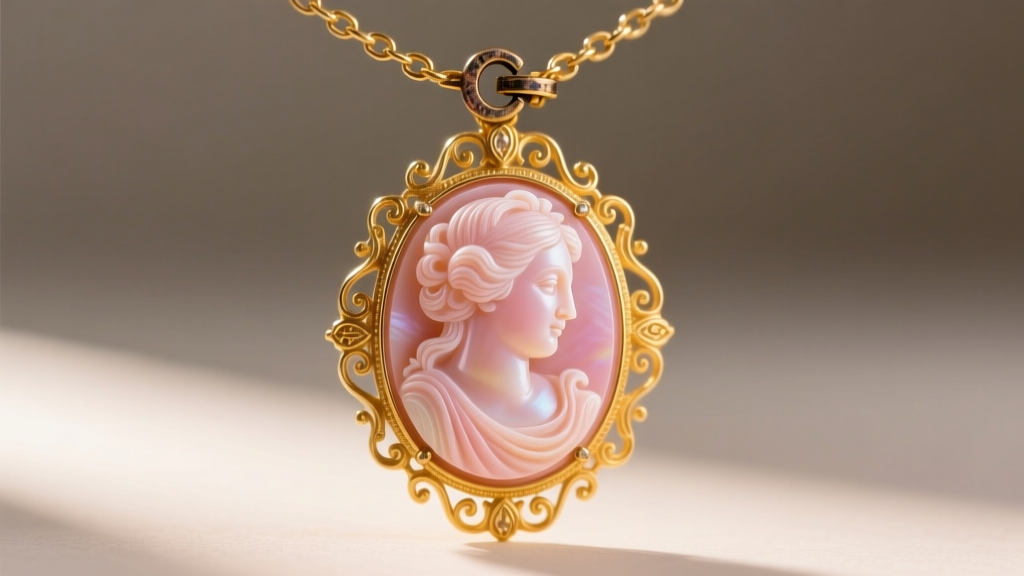
The Victorian era (1837–1901) remains one of the most influential periods in jewelry history, and few pieces capture its romantic, melancholic, and highly symbolic essence quite like the cameo. For modern collectors and vintage jewelry enthusiasts, an antique Victorian cameo necklace is more than just an accessory; it is a wearable piece of history. Queen Victoria herself was an avid collector and wearer of cameos, sparking a massive trend that saw these miniature sculptures transition from aristocratic cabinets of curiosity to the necklines of the rising middle class.
However, the modern vintage market is flooded with 20th-century reproductions, laser-carved imitations, and molded resin fakes. Whether you are browsing estate sales, antique malls, or online auctions, knowing how to authenticate, value, and care for these delicate artifacts is essential. This beginner-friendly explainer will equip you with the gemological and historical frameworks needed to confidently purchase a genuine Victorian piece.
Decoding the Materials: Shell, Lava, and Hardstone
The first step in identifying an authentic piece is understanding the materials used by 19th-century artisans. The value, durability, and origin of the necklace are deeply tied to its base material.
1. Helmet and Conch Shell
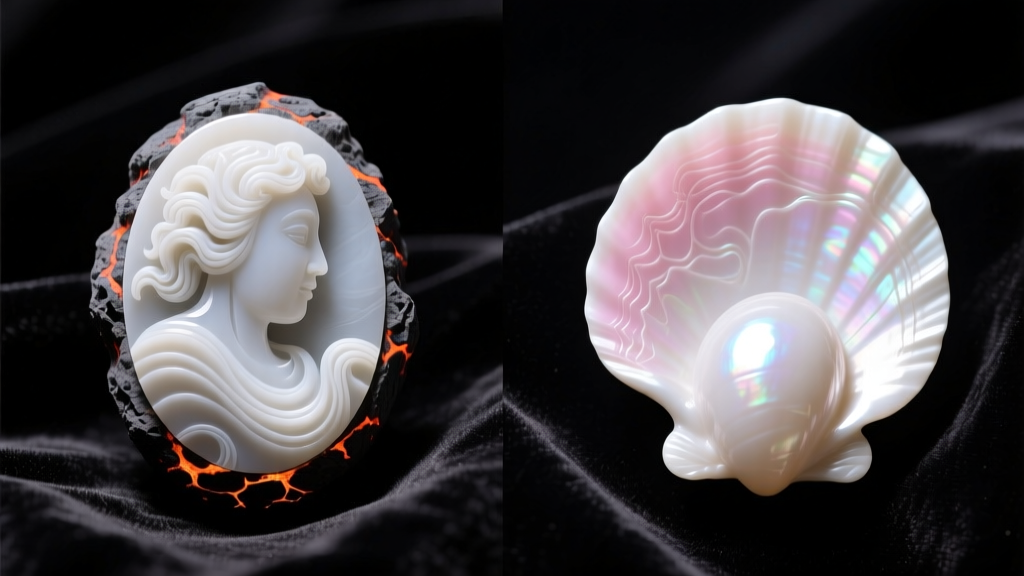
The most common and iconic Victorian cameos were carved from marine shells. Artisans specifically sought out the Cassis madagascariensis (helmet shell) and Cassis rufa (bullmouth shell) for their distinct, contrasting color layers. When carved, the top layer reveals a stark white or cream color, while the underlying layer provides a warm peach, pink, or deep orange-brown background. According to the Lang Antiques University, the finest shell cameos exhibit a translucent quality when held up to a strong light, a feature impossible to replicate in glass or resin.
2. Vesuvian Lava Stone
During the 19th century, the "Grand Tour" of Europe was a rite of passage for the wealthy. Travelers visiting Italy often purchased cameos carved from the volcanic lava stone of Mount Vesuvius. These pieces are typically monochromatic, featuring shades of grey, brown, or pale green. While less delicate than shell, lava cameos possess a matte, porous texture that is highly distinctive.
3. Agate and Carnelian (Hardstone)
Hardstone cameos were the luxury tier of the Victorian era. Carved from banded agate, onyx, or carnelian, these pieces required immense skill and time to produce due to the hardness of the stone. They are heavier, colder to the touch, and often feature more intricate, deeply undercut relief work than their shell counterparts.
The Authentication Checklist: Spotting Fakes and Reproductions
Distinguishing a true 19th-century antique from a 1970s tourist souvenir requires a systematic approach. Grab a 10x jeweler's loupe and run through these critical diagnostic tests.
The Pin Test and Thermal Conductivity
Shell and hardstone are naturally cold and retain temperature differently than synthetic materials. If you touch a steel pin to the surface, a genuine shell or stone cameo will feel instantly cool and will not melt or dent. If the material yields, feels warm, or smells like burnt plastic when a hot pin is applied to an inconspicuous area, you are looking at celluloid, Bakelite, or modern resin.
Magnification: Tool Marks vs. Mold Lines
Under 10x magnification, a hand-carved antique cameo will reveal tiny, parallel striations left by the engraver's burins and chisels. You will also notice "undercutting"—areas where the carver has hollowed out the background to make the subject (often a profile of Athena, Flora, or Bacchus) pop in three dimensions. Conversely, molded reproductions will show a lack of tool marks, rounded edges, and occasionally tiny air bubbles or seam lines along the perimeter.
Analyzing the Findings and Clasps
The metalwork holding the cameo is just as telling as the carving itself. As noted by the Victoria and Albert Museum's jewelry archives, Victorian findings were distinctly different from modern manufacturing standards:
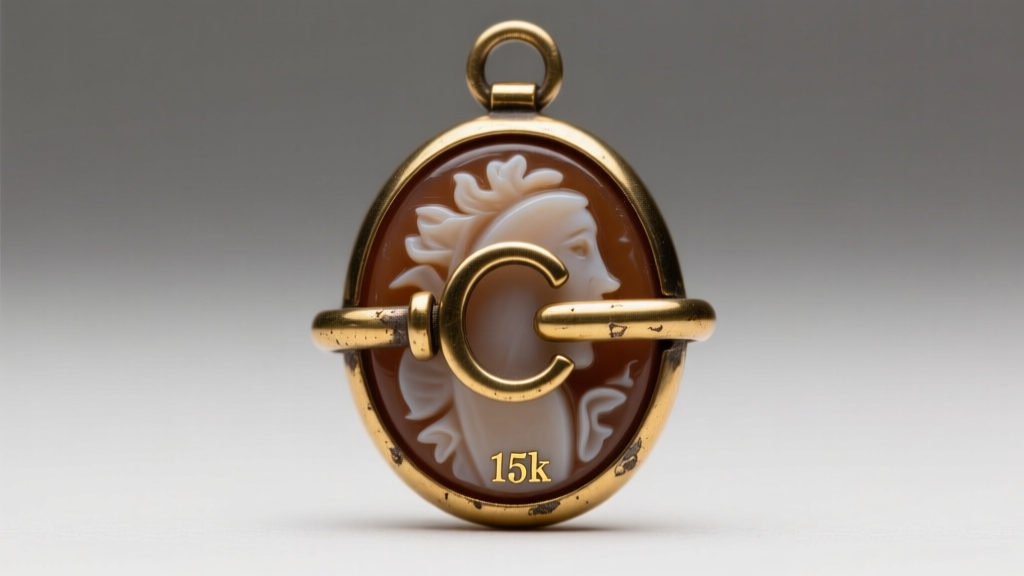
- The C-Clasp: Genuine Victorian brooches and pendant conversions almost exclusively used a simple "C" shaped clasp without the modern rolling safety catch.
- T-Hinge: Look for a "tube" or "T" hinge on the pin stem, rather than the stamped, rounded hinges introduced in the 1920s.
- Gold Purity: British Victorian pieces were frequently crafted in 15k or 18k gold, while American pieces leaned toward 14k. Rolled gold or gold-filled settings were also common for the middle-class market.
| Feature | Authentic Victorian (1837-1901) | 20th Century / Modern Reproduction |
|---|---|---|
| Clasp Type | Simple 'C' clasp, no safety catch | Rolling safety catch, locking mechanisms |
| Carving Marks | Visible parallel tool marks, deep undercutting | Smooth, rounded edges, lack of depth, mold seams |
| Material Response | Cold to touch, translucent edges (shell) | Room temperature, opaque, yields to hot pin |
| Subject Profile | Classical Roman/Greek noses, intricate hair braids | Modern facial features, generic silhouettes |
Understanding Valuation: What Should You Pay?
Pricing an antique Victorian cameo necklace depends on a triad of factors: material rarity, carving quality, and the preciousness of the metal setting. Here is a realistic pricing framework for the current collector's market:
Tier 1: The Accessible Antique ($150 – $400)
These are typically shell cameos set in gold-filled, rolled gold, or low-karat (9k) gold settings. The carving is pleasant but may lack deep undercutting. Many pieces in this tier were originally brooches that have been converted into pendants by adding a modern bail—a common and acceptable practice, provided the conversion is disclosed.
Tier 2: The Collector's Standard ($500 – $1,500)
Here you will find high-relief helmet shell cameos set in solid 15k or 18k yellow gold. The subjects often feature intricate floral borders, seed pearl halos, or classical deities with finely detailed hair. Lava cameos with exceptional contrast and silver-gilt settings also fall into this bracket.
Tier 3: The Museum Quality ($2,000 – $10,000+)
Hardstone agate or carnelian cameos, particularly those featuring signed artist marks, original fitted boxes, or elaborate enameling (such as en résille or taille d'épargne), command premium prices. Pieces that retain their original, unaltered Victorian necklace chains and clasps are exceptionally rare and highly valued by serious horologists and jewelers.
"A true Victorian cameo is not merely jewelry; it is a miniature sculpture that captures the romanticism, classical revival, and mourning culture of the 19th century. Treat the carving with the same reverence you would a marble statue."
Preservation: Caring for Century-Old Carvings
Antique cameos are remarkably resilient but require specific care protocols to prevent irreversible damage. Shell, in particular, is an organic material that can dry out, crack, or craze over time.
The Hydration Protocol
Never use ultrasonic cleaners, steamers, or harsh chemical dips on a shell or lava cameo. The vibrations can shatter microscopic fissures in the carving. Instead, clean the piece gently with a soft, damp cloth and mild castile soap. Once a year, apply a microscopic drop of pure mineral oil to the back of a shell cameo using a cotton swab to maintain its internal hydration and prevent the pink/orange layers from fading to a chalky white.
Styling for Modern Necklines
While Victorian cameos were traditionally worn tightly at the throat on black velvet ribbons (a nod to the era's mourning jewelry trends), modern styling allows for more versatility. Pair a 20-inch gold-set cameo pendant with a crisp white button-down shirt or a deep V-neck cashmere sweater. The juxtaposition of the ornate, historical goldwork against minimalist, contemporary fabrics creates a striking, curated aesthetic that honors the piece's heritage without looking costumey.
Final Thoughts for the Aspiring Collector
Purchasing an antique Victorian cameo necklace is an exercise in historical detective work. By focusing on the tactile realities of the materials, scrutinizing the mechanics of the clasps, and respecting the organic nature of the carvings, you can build a collection that is both financially sound and deeply meaningful. Take your time, use your loupe, and let the history of the piece guide your acquisition.


