Vintage Aurora Borealis Crystal Necklace: Authentication Guide
Master the authentication, valuation, and restoration of a vintage Aurora Borealis crystal necklace with our expert technical deep dive.

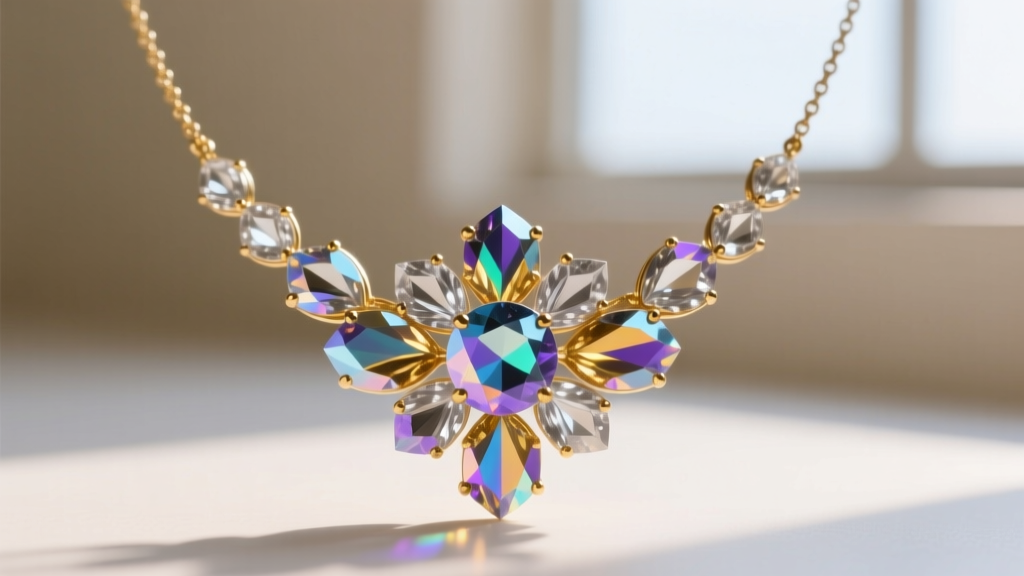
When evaluating a vintage aurora borealis crystal necklace, collectors and gemologists must look far beyond the superficial rainbow sparkle. The mid-century jewelry market was flooded with iridescent glass beads, but the technical execution, material composition, and hardware mechanics separate high-end couture pieces from mass-produced costume jewelry. This expert deep dive explores the vacuum metallization science, material degradation failure modes, and structural authentication markers required to properly identify and value mid-century AB crystal necklaces.
The Physics of Vacuum Metallization and the AB Effect
The Aurora Borealis (AB) effect was not a naturally occurring phenomenon but a triumph of mid-century materials science. Invented in 1955 through a collaboration between Manfred Swarovski and Christian Dior, the process utilized vacuum metallization. According to archives documented by the Victoria and Albert Museum (V&A) Jewelry Archives, the technique involved placing cut lead glass beads into a vacuum chamber depressurized to approximately 10^-4 Torr. Microscopic layers of titanium and gold (or occasionally silver) were vaporized and sputtered onto the surface of the glass.
The resulting metallic coating is incredibly thin—often less than two microns. This thinness is precisely what allows light to penetrate the metallic layer, refract through the high-lead glass base, and bounce back through the coating, creating the signature iridescent interference pattern. If the coating is too thick, the bead appears opaque and mirror-like; if too thin, the iridescence fails to manifest. Understanding this delicate physical balance is critical when assessing the condition of vintage pieces.
Material Composition: Swarovski vs. Czechoslovakian Glass
Not all vintage AB beads were created equal. The base glass composition drastically affects the refractive index (RI), specific gravity (SG), and ultimately the visual fire of the necklace. The Gemological Institute of America (GIA) notes that lead oxide (PbO) content is the primary differentiator in mid-century glass manufacturing.
| Property | Vintage Swarovski (Austria) | Vintage Jablonec (Czechoslovakia) | Mass-Market Acrylic |
|---|---|---|---|
| Lead Oxide (PbO) Content | 30% - 32% | 20% - 24% | 0% |
| Refractive Index (RI) | ~1.71 | ~1.62 | ~1.49 |
| Specific Gravity (SG) | 3.0 - 3.1 | 2.7 - 2.8 | 1.1 - 1.2 |
| Facet Precision | Machine-cut, razor-sharp | Molded or tumbled, softer edges | Molded, rounded seams |
| Coating Adhesion | High (chemically bonded) | Moderate (prone to flaking) | Low (surface painted) |
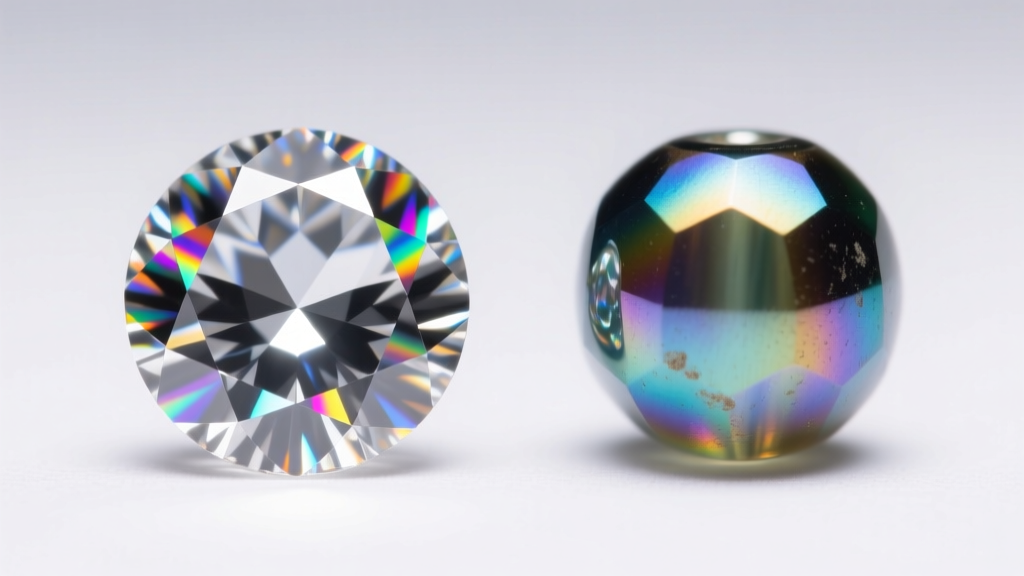
To differentiate between Swarovski and Czech glass without destructive testing, experts rely on tactile and thermal cues. High-lead Swarovski crystals feel noticeably heavier (higher SG) and remain cooler to the touch longer than acrylic or lower-lead alternatives due to the thermal conductivity of leaded glass. Furthermore, examining the drill holes under a 10x loupe will reveal clean, sharp entry points on Swarovski beads, whereas Czech glass often exhibits micro-chipping or 'blowout' at the drill exit.
Structural Authentication: Clasps, Gimps, and Stringing
The hardware and stringing materials used in a vintage aurora borealis crystal necklace provide vital chronological and qualitative data. High-end mid-century designers like Miriam Haskell, Schiaparelli, and Dior utilized specific findings that serve as authentication markers.
Clasp Mechanics and Hallmarks
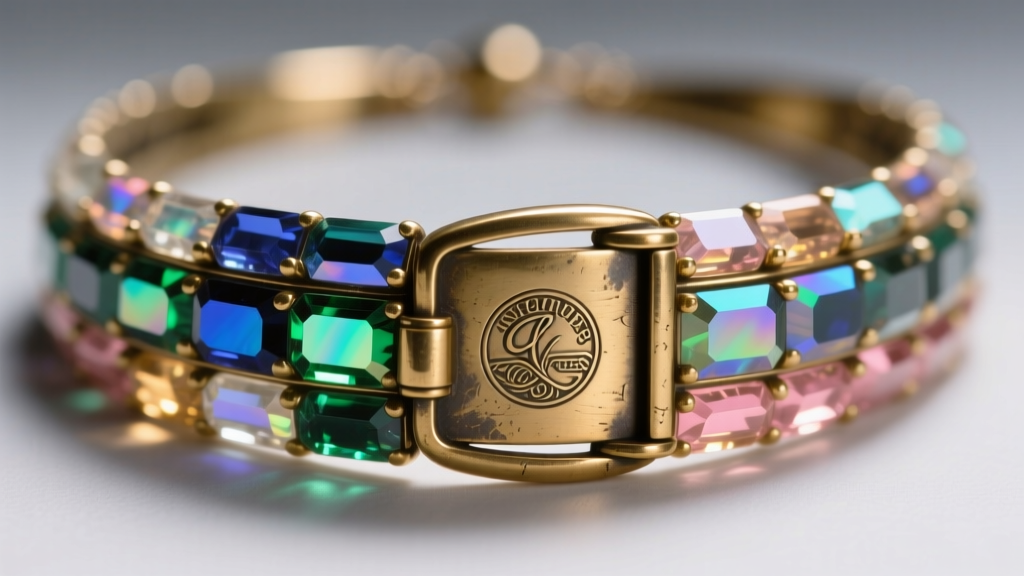
Prior to the widespread adoption of the modern lobster clasp, vintage necklaces relied on trombone clasps (push-pull barrel mechanisms), fold-over safety clasps, and intricate box clasps with figure-eight safety catches. Authentic vintage fold-over clasps were typically stamped from brass or base metal and heavily plated in gold or rhodium. Look for microscopic maker's marks or patent numbers (such as 'PAT. PEND.') cast into the interior of the clasp mechanism. The presence of a modern, lightweight aluminum lobster clasp is an immediate indicator of a restrung or altered piece.
French Wire and Thread Guards
Because crystal beads have sharp, unpolished edges at the drill holes, high-quality vintage necklaces utilize French wire (also known as bullion or gimp) to protect the stringing material. This delicate, coiled metal wire—usually measuring between 0.3mm and 0.5mm in diameter—acts as a sacrificial barrier preventing the glass from sawing through the silk or nylon thread. The absence of French wire on a heavy, multi-strand crystal collar necklace suggests either a lower-tier manufacturer or an amateur modern restringing job.
Degradation Failure Modes and Chemical Sensitivities
The micron-thin metallic coating of AB crystals is highly susceptible to environmental and chemical degradation. Understanding these failure modes is essential for both buyers and restorers.
- Delamination and Flaking: Often caused by extreme temperature fluctuations or prolonged exposure to high humidity, which compromises the bond between the glass substrate and the metallic layer. Once flaking begins, it cannot be reversed.
- Sulfur Tarnishing: If the AB coating utilized silver rather than titanium/gold, contact with sulfur compounds found in human sweat, rubber bands, or polluted air will cause the coating to blacken or develop a mottled gray patina.
- Cavitation Erosion: A catastrophic failure mode caused by improper cleaning. Placing AB crystals in an ultrasonic jewelry cleaner generates microscopic cavitation bubbles that implode against the glass, literally blasting the fragile metallic coating off the surface.
- Acid Etching: Frequent contact with acidic cosmetics, hairsprays, or perfumes will chemically etch the base glass beneath the coating, resulting in a permanent cloudy appearance that no amount of polishing can fix.
Expert Warning: Never use commercial silver dips, ammonia-based glass cleaners, or ultrasonic machines on AB crystals. Cleaning should be strictly limited to a dry, ultra-soft microfiber cloth or a barely damp cloth with distilled water and a pH-neutral surfactant.
Valuation Tiers and Provenance in the Modern Market
The valuation of a vintage aurora borealis crystal necklace depends heavily on provenance, condition, and the complexity of the setting. Pieces set in pronged brass or rhodium-plated settings command significantly higher premiums than simple strung beads.
- Tier 1: Couture Provenance ($800 - $3,500+): Documented pieces by Christian Dior, Elsa Schiaparelli, or early Miriam Haskell. These feature complex wire-wrapping, chaton settings, and pristine AB coatings with zero delamination.
- Tier 2: Mid-Century Designer ($250 - $750): Signed pieces by makers like Coro, Trifari, or Weiss. Often feature heavy gold-plated settings and high-quality Swarovski stones.
- Tier 3: Unsigned / Mass Market ($40 - $150): Simple strung necklaces using Czechoslovakian glass beads with basic barrel clasps. Value is dictated entirely by the condition of the coating and the integrity of the stringing material.
Ultimately, authenticating and valuing these mid-century treasures requires a synthesis of gemological knowledge, historical context, and a meticulous eye for structural integrity. By understanding the science of the AB effect and the mechanics of vintage jewelry construction, collectors can confidently navigate the market and preserve these iridescent artifacts of 20th-century design.


