Chunky Chain Silver Necklace: Material & Alloy Guide
Discover how to choose a durable chunky chain silver necklace. Compare sterling, Argentium, and plated alloys for weight, tarnish, and longevity.

The Metallurgy of Heavy Chains: Why Alloy Matters
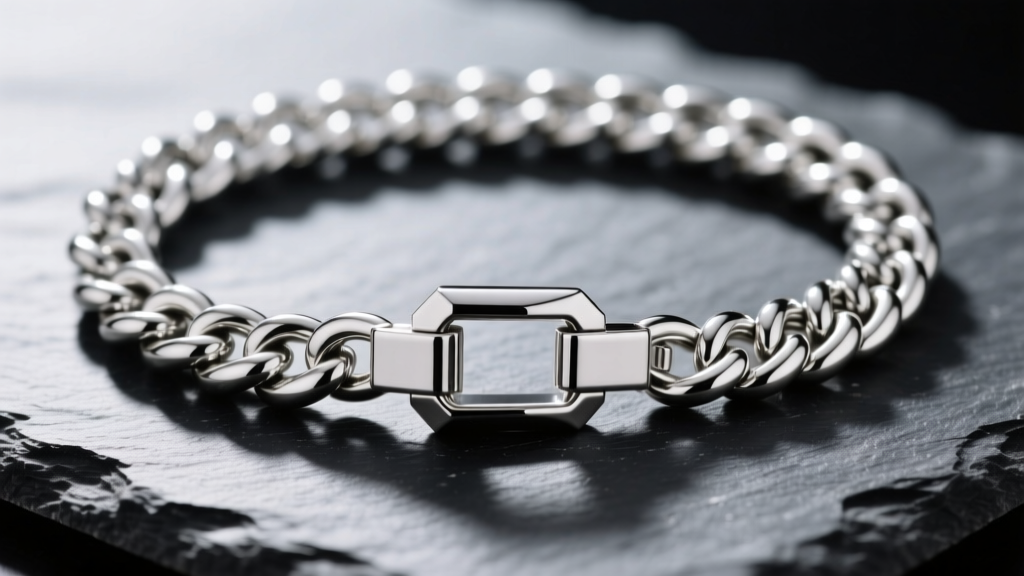
When investing in a chunky chain silver necklace, the visual appeal of heavy, interlocking links is only half the equation. The structural integrity of the metal dictates whether your piece will become a lifelong heirloom or a tangled, broken disappointment. Heavy chain styles—such as 10mm to 14mm Cuban links, thick Figaros, and oversized paperclip chains—place immense tensile stress on individual links and solder joints. Unlike delicate pendant chains that weigh mere grams, a solid 20-inch chunky chain can easily exceed 100 grams. This dead weight, combined with dynamic forces from daily movement, requires an alloy with specific metallurgical properties to prevent stretching, clasp failure, and severe abrasion.
Pure silver (999 fine) is entirely unsuitable for heavy chains. With a Vickers hardness (HV) of just 25, pure silver is too malleable; the links would quickly deform and pull apart under their own weight. Therefore, alloying metals must be introduced to increase hardness and durability. However, the choice of alloying elements drastically affects the chain's tarnish resistance, skin reactivity, and long-term polish. According to the Gemological Institute of America (GIA), understanding these alloy compositions is the first step in distinguishing high-quality jewelry from inferior mass-produced alternatives.
Sterling Silver (925) vs. Argentium (935/960)
Traditional Sterling Silver (925) is composed of 92.5% pure silver and 7.5% copper. The copper provides the necessary tensile strength, raising the hardness to approximately 65 HV. However, copper is highly reactive to sulfur compounds in the air and on human skin, resulting in the familiar black tarnish (copper sulfide) that plagues heavy silver chains. Furthermore, when sterling silver is soldered at the link joints, the copper oxidizes to form 'firescale'—a stubborn purple-gray stain that can bleed through polished surfaces over time.

Enter Argentium Silver, a modern metallurgical marvel that is rapidly becoming the gold standard for premium heavy chains. Argentium replaces a portion of the copper with the metalloid germanium. Available in 935 and 960 purities, Argentium offers several distinct advantages for chunky chains:
- Extreme Tarnish Resistance: The germanium forms a transparent, protective oxide layer on the surface, virtually eliminating copper sulfide tarnish. A chunky Argentium chain requires a fraction of the polishing maintenance of standard sterling.
- Firestain Elimination: Because germanium prevents copper oxidation during the laser-welding or torch-soldering processes used to close heavy links, there is no firescale. This ensures the links maintain a uniform, bright white luster.
- Heat Hardening: While standard sterling is work-hardened, Argentium can be heat-hardened in a kiln to reach an impressive 130 HV. This makes the links highly resistant to the scratching and denting that inevitably occurs when thick silver links clink together.
For a comprehensive breakdown of these advanced alloys, jewelry manufacturers often refer to the technical data provided by Rio Grande, a leading authority on precious metal fabrication.
The Deception of 'Silver-Toned' Chunky Chains
The market is flooded with chunky chains marketed with ambiguous terms like 'silver-toned,' 'silver-plated,' or 'silver-filled.' When dealing with heavy chains, the base metal's specific gravity (density) drastically alters the wear experience and longevity. A 12mm Cuban link chain requires a substantial volume of metal. If that metal is not solid silver, you are wearing a fundamentally different product.
| Material | Specific Gravity (g/cm³) | Tarnish Profile | Longevity of Chunky Links |
|---|---|---|---|
| Solid 925 Sterling | 10.49 | Moderate (requires polishing) | Excellent (can be re-soldered) |
| Solid Argentium 935 | 10.35 | Very Low (highly resistant) | Exceptional (harder, durable) |
| 316L Stainless Steel | 8.00 | None (but cannot be resized) | High (but links cannot be easily soldered) |
| Rhodium-Plated Brass | 8.40 - 8.70 | High (plating wears off, brass turns skin green) | Poor (plating fails on high-friction link joints) |
Notice the specific gravity differences. Silver is significantly denser than steel or brass. A genuine solid silver 10mm chain will feel noticeably heavier and more substantial in the hand than a brass-based counterfeit of the exact same dimensions. Furthermore, the Federal Trade Commission (FTC) Jewelry Guides strictly regulate the use of the word 'silver.' If a product is merely plated, it must be disclosed. Always look for the '925' or '935' hallmark stamped directly onto the clasp or the final end-link of the chain.
Clasp Mechanics and Tensile Failure Points
The most common point of catastrophic failure on a chunky chain silver necklace is not the links themselves, but the clasp. A heavy 150-gram chain exerts continuous static tension on the clasp, but dynamic forces—such as the chain catching on a sweater or being dropped onto a table—can create sudden shear forces exceeding 15 Newtons.
Why Lobster Clasps Fail on Heavy Chains
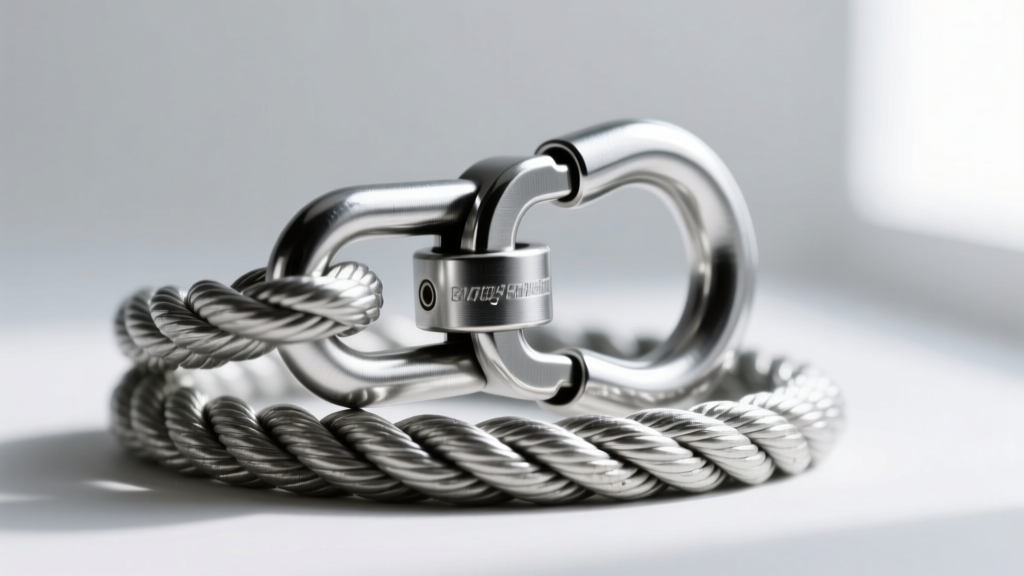
Standard lobster clasps and spring rings rely on a tiny internal steel spring and a thin lever. Under the lateral shear stress of a heavy Cuban or rope chain, the lever can bend, or the tiny weld holding the clasp loop can snap. Never trust a standard lobster clasp on a chain wider than 6mm or heavier than 50 grams.
The Solution: Tongue-in-Box and Magnetic Locks
For authentic chunky chains, the hardware must match the metallurgy. The industry standard for heavy silver chains is the tongue-in-box clasp (also known as a push-in clasp). This mechanism uses a folded piece of spring-tempered silver that compresses into a hollow box, locking securely into place. For added security, high-end chains feature a 'figure-eight' safety latch—a secondary wire loop that snaps over a small peg on the opposite side of the box, ensuring the chain stays attached even if the primary tongue mechanism is accidentally depressed.
Maintenance and Polishing Protocols for Heavy Links
Maintaining a chunky silver chain requires specific protocols to avoid damaging the structural integrity of the links. The tight tolerances between interlocking links make them magnets for skin oils, lotions, and environmental dust, which act as an abrasive paste that slowly wears down the metal.
- Ultrasonic Cleaning: While ultrasonic cleaners are excellent for dislodging grime from tight link joints, they should only be used on solid, un-oxidized silver. If your chain features intentional black oxidation (antiquing) in the crevices of a rope chain, the ultrasonic cavitation will strip the patina, leaving the chain looking flat and overly bright.
- Avoid Silver Dips: Chemical silver dips (thiourea-based solutions) remove tarnish instantly but leave behind a porous, microscopically rough surface. On heavy chains, this rough surface accelerates future tarnishing and creates a dull, chalky finish that requires intense hand-polishing to fix.
- Microfiber and Rouge Cloths: For weekly maintenance, wipe the chain down with a clean microfiber cloth. For deeper polishing, use a treated jeweler's rouge cloth. Pull the chain through the cloth while applying gentle tension to ensure the polishing compound reaches the inner curves of the links.
Final Verdict: Choosing Your Alloy
If you are purchasing a chunky chain silver necklace for occasional wear and prioritize upfront cost, traditional 925 Sterling Silver remains a beautiful, classic choice—provided you commit to regular polishing and inspect the solder joints annually. However, if you intend to wear a heavy chain daily as a signature piece, the premium paid for heat-hardened Argentium 935 silver is vastly justified by its superior scratch resistance, brilliant white luster, and near-total immunity to tarnish. Always verify the hallmark, test the heft of the metal, and ensure the clasp hardware is engineered to handle the substantial weight of the links.


