Freshwater Pearl Lei Necklace: Budget & Value Guide
Discover how to assess the true value of a freshwater pearl lei necklace. Compare pricing, grading, and materials to ensure your budget buys quality.

The Evolution and Anatomy of the Pearl Lei Necklace
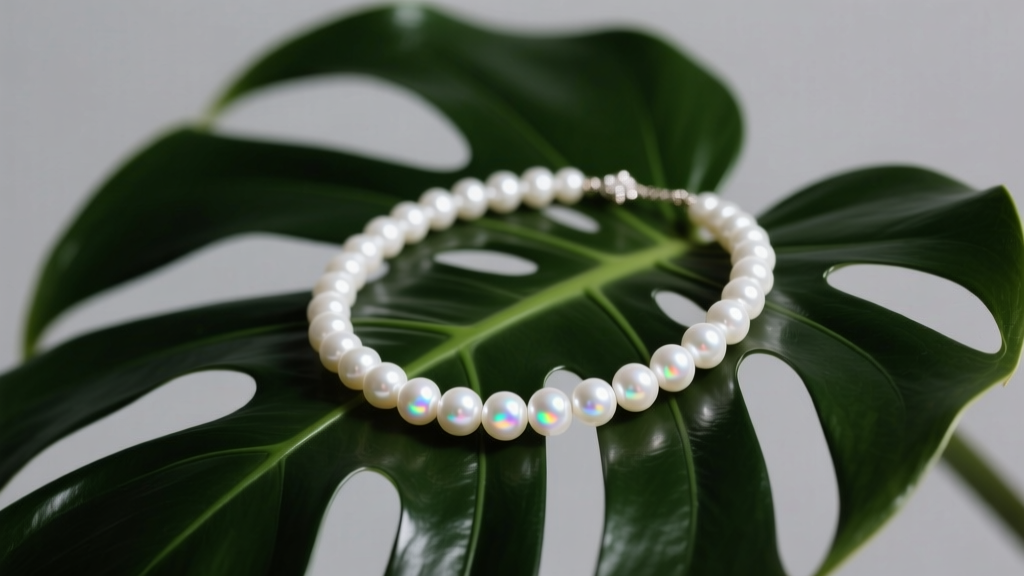
The lei necklace has transcended its traditional Hawaiian floral roots to become a staple of permanent, high-end jewelry. While fresh orchid and pikake leis are reserved for fleeting celebrations, the modern pearl lei necklace offers a lifelong alternative that bridges cultural reverence with contemporary luxury. However, as the market floods with mass-produced imitations, assessing the true value of a pearl or shell lei requires a discerning eye. Whether you are budgeting for a 36-inch opera-length freshwater pearl strand or a tight 16-inch puka shell choker, understanding the intersection of material grade, construction techniques, and market pricing is essential for making a sound investment in 2026.
Historically, the lei represents affection, respect, and aloha. When translated into permanent jewelry, the structural integrity and material authenticity must honor that weight. A genuine lei necklace is not merely a string of beads; it is a meticulously knotted sequence of organic gems that requires specific care and precise craftsmanship. In this guide, we break down the exact metrics you need to evaluate before purchasing a lei necklace, ensuring your budget aligns with genuine quality.
Material Breakdown: Real Pearls vs. Treated Shells vs. Synthetics
The foundation of any lei necklace's value lies in its primary material. The market is currently segmented into three distinct tiers, each with vastly different price points and longevity profiles.
1. Freshwater Pearls (Hyriopsis cumingii)
Freshwater pearls dominate the premium lei market. Unlike their saltwater counterparts (Akoya or Tahitian), modern freshwater pearls are cultivated in mussels and offer incredible durability. There are two main types you will encounter:
- Tissue-Nucleated (Traditional): These are solid nacre, making them highly resistant to chipping. They often come in 'rice' or 'potato' shapes, which are budget-friendly but lack the perfect spherical geometry of high-end leis.
- Bead-Nucleated (Edison Pearls): Introduced over the last decade and perfected by 2026, Edison pearls feature a spherical bead nucleus, resulting in large (11mm-14mm), perfectly round pearls with metallic luster. These command luxury pricing.
2. Puka and Cone Shells
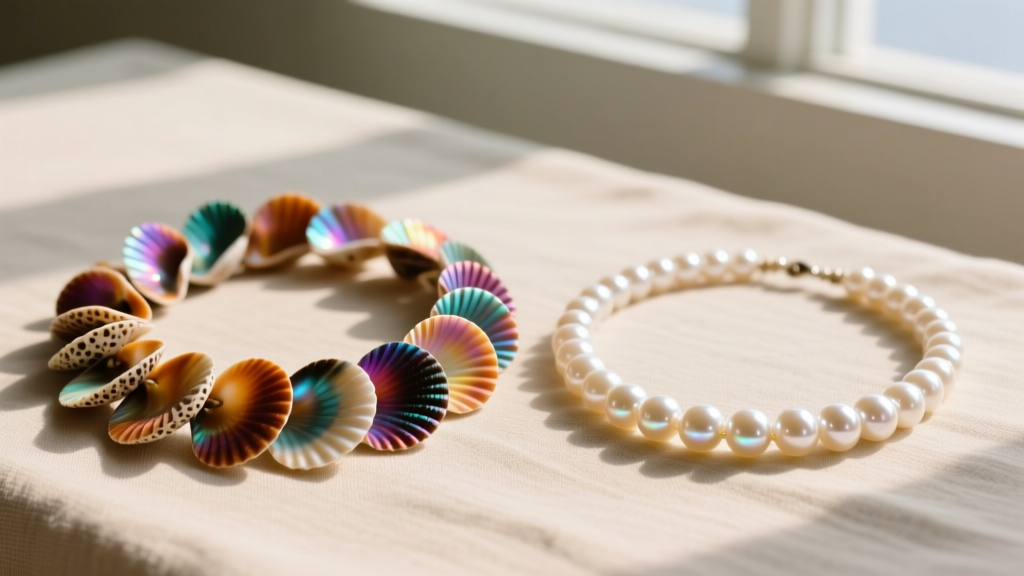
Authentic puka shells are naturally occurring cone snail shells found on Hawaiian beaches, characterized by their naturally occurring central holes ('puka' means hole in Hawaiian). True vintage puka is rare and expensive. Today, 95% of commercial 'puka' lei necklaces are actually made from Trocas or other sea snail shells that are machine-tumbled, dyed, and drilled. While beautiful, dyed shells hold significantly less intrinsic value than freshwater pearls.
3. Glass, Resin, and Plastic
Often sold in tourist hubs, these synthetic alternatives mimic the weight and look of pearls but lack the thermal properties (real pearls feel cool to the touch) and the microscopic crystalline nacre structure. They hold zero resale value.
The GIA Grading Framework Applied to Lei Necklaces
To accurately assess a freshwater pearl lei, you must apply the standardized grading metrics established by the Gemological Institute of America (GIA). When evaluating a strand, look closely at these four pillars:
- Luster: The most critical value factor. High-quality pearls will have sharp, bright reflections. If the pearl looks chalky or dull, it has been harvested prematurely, resulting in thin nacre.
- Surface Quality: Organic gems naturally have blemishes. A 'clean' surface (no visible pits, cracks, or wrinkles) increases the price exponentially. For a 36-inch lei, slight blemishing is expected in the mid-tier, but cracks are an immediate dealbreaker.
- Shape: Perfect rounds are the most expensive. Near-rounds offer the best budget-to-value ratio, appearing perfectly spherical to the naked eye when worn, but costing 30% less than true rounds.
- Nacre Thickness: While saltwater pearls require strict nacre thickness checks, tissue-nucleated freshwater pearls are 100% nacre. However, bead-nucleated Edison pearls must be evaluated to ensure the nacre hasn't peeled or cracked at the drill holes.
The 2026 Pricing Matrix: What Should You Actually Pay?
Pricing for lei necklaces varies wildly based on length (a standard full lei is 36 to 42 inches, while chokers are 16 to 18 inches) and material grade. Use this matrix to benchmark your budget against current market realities.
| Material & Grade | Standard Length (36") | Choker Length (16") | Value Retention |
|---|---|---|---|
| Synthetic / Glass | $25 - $60 | $15 - $30 | None |
| Dyed Trocas 'Puka' Shell | $80 - $180 | $45 - $90 | Low |
| Commercial Freshwater (Rice/Potato) | $150 - $350 | $75 - $150 | Low-Medium |
| Gem-Grade Freshwater (Near-Round, 7-8mm) | $600 - $1,200 | $250 - $500 | Medium-High |
| Edison Pearls (Round, 11-13mm, High Luster) | $2,500 - $5,000+ | $1,000 - $2,200 | High |
Note: Prices reflect unbranded, high-quality jewelers. Designer markups from luxury houses can multiply these baseline costs by 3x to 5x.
Construction and Failure Modes: Where Cheap Lei Necklaces Break
A common mistake buyers make is focusing solely on the pearls while ignoring the stringing material. The structural failure of a lei necklace is almost always a result of poor construction.
The Thread: Silk vs. Nylon
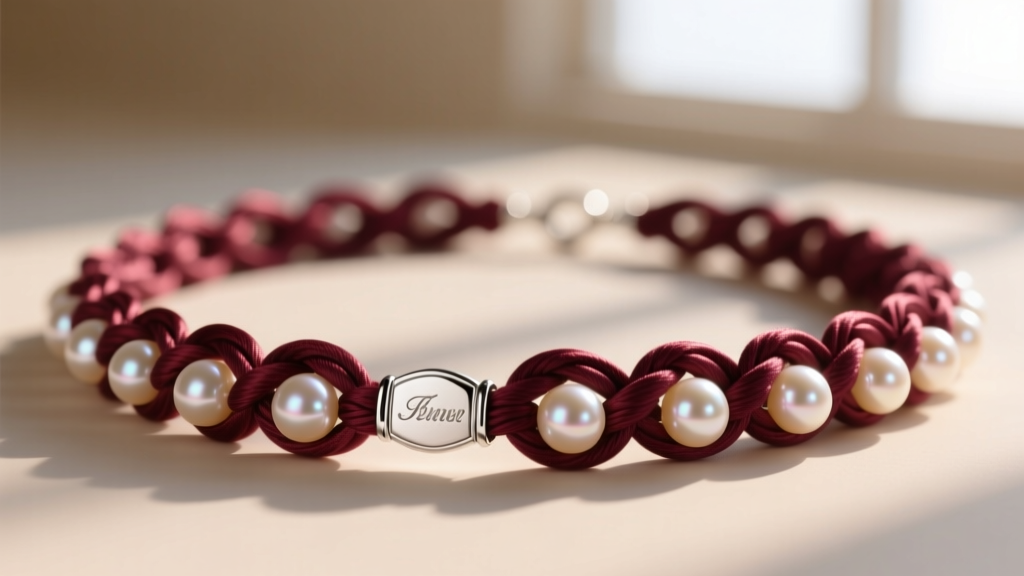
Authentic, high-value pearl leis are strung on 100% silk thread, typically Griffin Size F or G (0.35mm to 0.45mm), depending on the drill hole diameter. Silk knots beautifully and drapes with a fluid, liquid-like motion. Mass-market manufacturers often use nylon or synthetic braided cords. While nylon is technically stronger, it stretches over time. A stretched nylon cord will cause the pearls to gap, creating an unsightly 'empty space' effect between the gems and eventually leading to catastrophic snapping.
The Knotting Technique
Every pearl in a premium lei should be individually hand-knotted. This serves two purposes: it prevents the pearls from rubbing against each other (which damages the nacre), and it ensures that if the strand breaks, you only lose one pearl. Inspect the strand closely. If there are no knots, or if the knots are uneven and loose, walk away. The knots should be tight against the pearl, with no visible fraying.
Hardware and Clasps
Traditional pearl leis often use a 'fishhook' clasp, which is secure but can be difficult to fasten alone. Modern iterations frequently use 14k gold or sterling silver lobster clasps. Ensure the jump rings connecting the clasp to the silk are soldered closed; open jump rings will easily pull apart under the weight of a 36-inch pearl strand.
How to Authenticate and Assess Value In-Store
When shopping in person, deploy these three expert-level authentication techniques to verify the value of the lei necklace you are holding:
- The Tooth Test: Gently rub the pearl against the biting edge of your front teeth. A real freshwater pearl will feel distinctly gritty or sandy due to its microscopic crystalline nacre structure. Glass or plastic imitations will feel perfectly smooth.
- The Drill Hole Inspection: Use a jeweler's loupe (10x magnification) to examine the drill holes. In dyed shells or low-grade dyed pearls, you will see a concentration of dark dye pooling around the edges of the hole. Genuine, untreated white freshwater pearls will show clean, sharp drill holes with no color bleeding.
- The Temperature Test: Real pearls and genuine sea shells are thermal insulators. They should feel noticeably cool to the touch when first picked up, taking a few seconds to warm to your skin temperature. Resin and plastic will feel room-temperature immediately.
According to the GIA Pearl Care Guidelines, organic gems like pearls and shells are highly susceptible to acids found in human sweat and cosmetics. Always put your lei necklace on after applying perfumes and lotions, and wipe it down with a soft, damp cloth after wearing to preserve the nacre's luster.
Final Verdict: Budgeting for Your Lei
Assessing the value of a lei necklace requires looking past the initial aesthetic appeal and scrutinizing the organic origins and structural engineering of the piece. If your budget is under $100, a high-quality dyed shell lei from a reputable artisan is a stylish, culturally respectful choice. However, if you are seeking an heirloom piece with genuine intrinsic value, allocate a minimum of $600 to $1,200 for a 36-inch, gem-grade near-round freshwater pearl lei strung on hand-knotted silk. By prioritizing nacre luster, precise knotting, and untreated materials, you ensure that your lei necklace remains a vibrant, enduring symbol of aloha for decades to come.


