Clover Necklace Meaning: Symbolism & Craft Details
Explore the clover necklace meaning, from shamrock symbolism to quatrefoil luxury. Plus, expert technical guides on metals, inlays, and sizing.

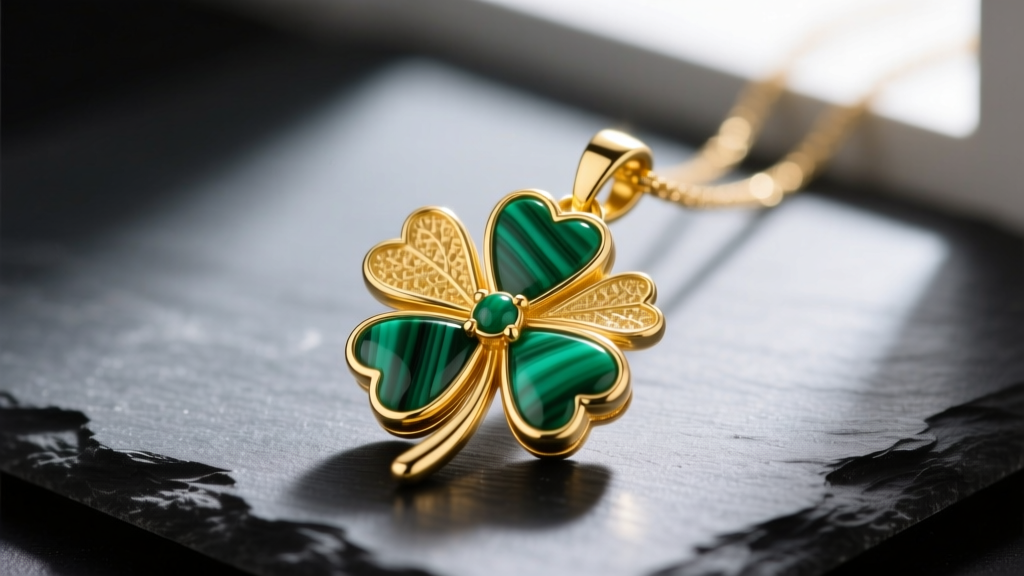
When consumers search for the clover necklace meaning, they are often met with superficial anecdotes about luck and St. Patrick’s Day. However, from a horological and lapidary perspective, the clover pendant represents a fascinating intersection of botanical symbolism, Gothic architectural motifs, and complex gemstone inlay engineering. Whether you are evaluating a vintage piece, a modern luxury quatrefoil, or a bespoke botanical casting, understanding the technical nuances of these pendants is critical for making an informed acquisition.
Decoding the Clover Necklace Meaning: Botanical vs. Architectural
To truly understand the clover necklace meaning, one must distinguish between the biological plant and the geometric motif used in fine jewelry. The true clover (Trifolium) typically features three leaves. According to Britannica, the three-leaf shamrock was historically used by St. Patrick to explain the Holy Trinity, cementing its association with faith, hope, and love. A four-leaf clover is a rare genetic mutation occurring in roughly 1 in 10,000 plants, which birthed its association with serendipity and luck.
However, in high jewelry—most notably popularized by Van Cleef & Arpels’ Alhambra collection—the "clover" is actually a quatrefoil. The quatrefoil is an architectural symbol consisting of four overlapping circles, heavily utilized in Gothic tracery and Islamic art to represent harmony and proportion. When jewelers craft a "four-leaf clover" pendant, they are almost always utilizing the mathematically symmetrical quatrefoil geometry rather than an organic botanical casting, ensuring perfect lobe proportions that appeal to the luxury market.
Material Science: Metals and Hardstone Inlays
The structural integrity of a clover pendant relies heavily on the metallurgical choices and lapidary techniques used to secure the inlays. Because the quatrefoil or clover shape features deep, sweeping inner curves (the "clefts" between the leaves), prong settings are mechanically unviable for hardstones. Instead, master jewelers employ flush bezel settings or channel-set inlays.
Common Hardstones and Their Physical Properties
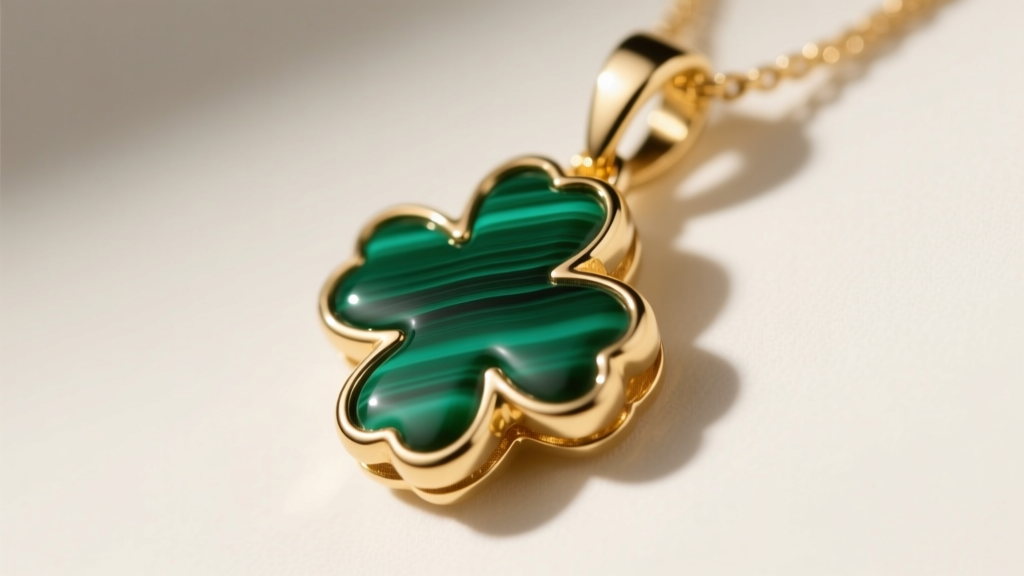
- Malachite: A copper carbonate hydroxide mineral (Mohs 3.5–4.0). Its striking banding makes it a staple in clover pendants, but its low hardness and specific gravity (3.6–4.05) require a fully supportive, closed-back bezel to prevent cracking upon impact.
- Black Onyx: A banded chalcedony (Mohs 7.0). Onyx is highly durable, resistant to scratching, and possesses a lower specific gravity (2.65), allowing for larger, oversized clover pendants that do not drag down the chain.
- Mother of Pearl (Nacre): Composed of aragonite platelets (Mohs 2.5–4.5). Nacre provides an iridescent luster but is highly susceptible to acid etching from perfumes and skin oils.
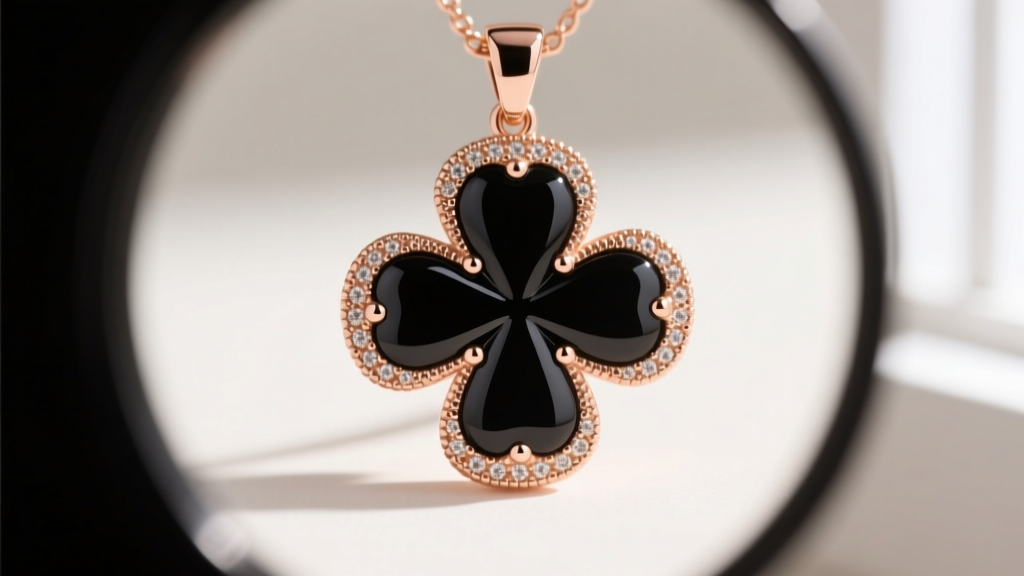
For the metalwork, 18k gold (75% pure gold alloyed with copper, silver, or palladium) is the industry standard. The 25% alloy matrix provides the necessary tensile strength to hold the bezel edges tightly against the hardstone. 14k gold is occasionally used for entry-level pieces, offering higher scratch resistance but a noticeably paler yellow hue that contrasts less effectively with malachite.
Technical Specifications: Sizing, Proportions, and Chain Pairing
A common failure point in necklace styling is mismatching the pendant's surface area and weight with an inadequate chain gauge. The sweeping geometry of a clover pendant catches light—and clothing—differently than a simple solitaire drop. Below is a technical matrix for pairing clover pendants with appropriate chain architectures.
| Pendant Width | Classification | Recommended Chain Gauge | Optimal Chain Style | Clasp Requirement |
|---|---|---|---|---|
| 12mm - 15mm | Delicate / Layering | 0.8mm - 1.0mm | Cable or Curb | Spring Ring (5mm) |
| 16mm - 20mm | Standard / Everyday | 1.1mm - 1.3mm | Box or Wheat | Lobster Claw (10mm) |
| 25mm - 35mm | Statement / Vintage | 1.5mm - 2.0mm | Rope or Figaro | Heavy Lobster (15mm) |
Box chains and wheat chains are highly recommended for standard clover pendants. Their interlocking geometric links mirror the symmetry of the quatrefoil motif, while providing superior tensile strength compared to delicate cable chains, which are prone to kinking when subjected to the pendulum-like swing of a wide, flat pendant.
Evaluating Craftsmanship: Open vs. Closed Backing
When assessing the provenance and quality of a clover necklace, turn the pendant over. The backing technique reveals the manufacturing tier.
Open-Back Settings
In open-back designs, the hardstone is visible against the skin. While this reduces the overall gold weight (and cost) of the piece, it exposes porous stones like malachite and turquoise to the acidic pH of human sweat and cosmetic lotions. Over time, this chemical exposure degrades the polish and can cause the stone's color to dull or shift.
Closed-Back and Guilloché Enamel
High-end clover pendants utilize a closed-back design, sealing the stone in a protective gold vault. In luxury iterations, the interior gold backing is engraved with a guilloché pattern and coated with translucent enamel. This not only protects the stone but creates a reflective cavity that enhances the optical depth of translucent stones like carnelian or white agate. Furthermore, a closed back ensures the pendant sits flush against the sternum without the sharp edges of the stone bezel irritating the skin.
Care, Maintenance, and Ultrasonic Warnings
The maintenance protocol for a clover necklace is strictly dictated by its inlay material. According to the Gemological Institute of America (GIA), malachite is highly sensitive to heat, acids, and harsh chemicals. It must never be cleaned in an ultrasonic jewelry cleaner. The high-frequency cavitation bubbles generated by ultrasonics can easily fracture the internal crystalline structure of banded malachite, causing the inlay to split inside the bezel.
For routine maintenance, use a dry, untreated microfiber cloth to gently buff the gold bezel and the surface of the hardstone. If the onyx or nacre inlay accumulates skin oils, a slightly damp cloth with distilled water is safe, provided the piece is immediately dried to prevent water from seeping into the microscopic tolerances between the stone and the gold bezel wall. For long-term storage, keep the necklace in a low-humidity, anti-tarnish pouch to preserve the high-polish finish of the gold clefts, which are notoriously difficult to re-polish without rounding the sharp inner corners of the clover motif.
Ultimately, the clover necklace meaning extends far beyond simple luck. It is a testament to the wearer's appreciation for geometric harmony, historical symbolism, and the meticulous lapidary arts required to transform raw earth minerals into enduring, symmetrical masterpieces.


