Chunky Cross Necklace Gold: Material & Karat Comparison Guide
Discover the best karats and alloys for a chunky cross necklace gold. Compare 10k, 14k, 18k, and 22k gold for durability, weight, and everyday wear.

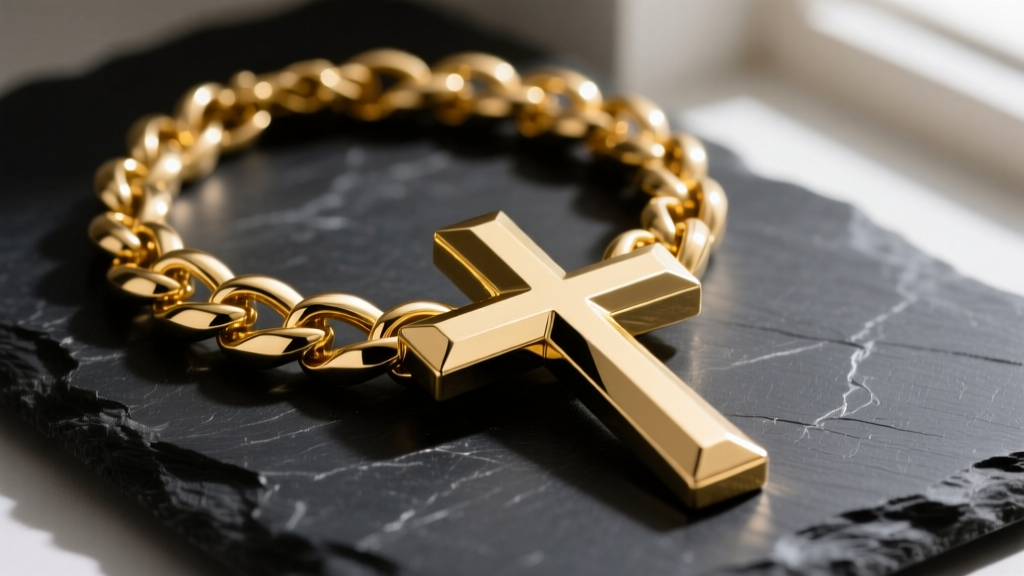
The Anatomy of a Chunky Cross Necklace Gold
When searching for the perfect statement piece, a chunky cross necklace gold design remains a timeless staple in both streetwear and high jewelry. However, the term 'chunky' is often misused. In the professional jewelry market, a true chunky cross pendant is defined by its mass and volume, typically weighing between 15 and 50 grams, with vertical dimensions ranging from 1.5 to 3.5 inches. Because of this significant weight, the metallurgical properties of the gold used are not just a matter of color or prestige—they dictate the structural integrity, drape, and longevity of the piece.
In 2026, with gold spot prices continuing their upward trajectory, buyers are increasingly scrutinizing the alloy compositions of heavy pendants. Understanding the difference between a 10k, 14k, 18k, and 22k gold cross is critical to avoiding structural failure modes like bail warping, clasp snapping, or surface denting. According to the Gemological Institute of America (GIA), the alloy metals mixed with pure gold fundamentally alter its Vickers hardness (HV), which is the primary metric for scratch and dent resistance in heavy jewelry.
Karat Breakdown: 10k vs. 14k vs. 18k vs. 22k
Choosing the right karat for a heavy pendant requires balancing purity with tensile strength. Pure gold (24k) is far too malleable for a heavy cross; a 40-gram 24k cross would bend under its own dynamic load when the wearer moves. Therefore, alloying is mandatory.
10k Gold (41.7% Purity / 417 Stamp)
10k gold is the most durable option available in the US market. With a Vickers hardness of approximately 140 HV, it is highly resistant to scratching and deformation. However, it contains more alloy metals (like copper, zinc, and silver) than actual gold, giving it a slightly paler yellow hue. For a chunky cross intended for rigorous daily wear, sports, or manual labor, 10k is virtually indestructible, though it lacks the rich luster of higher karats.
14k Gold (58.3% Purity / 585 Stamp)
14k gold is the undisputed sweet spot for heavy pendants. Sitting at around 120 HV, it offers excellent structural integrity while maintaining a warm, classic yellow gold color. A 30-gram solid 14k gold cross will typically cost between $1,200 and $1,800 in the current market, making it an accessible yet premium choice. The bail (the loop connecting the cross to the chain) in 14k gold is thick enough to resist warping from the friction of a heavy chain.
18k Gold (75% Purity / 750 Stamp)
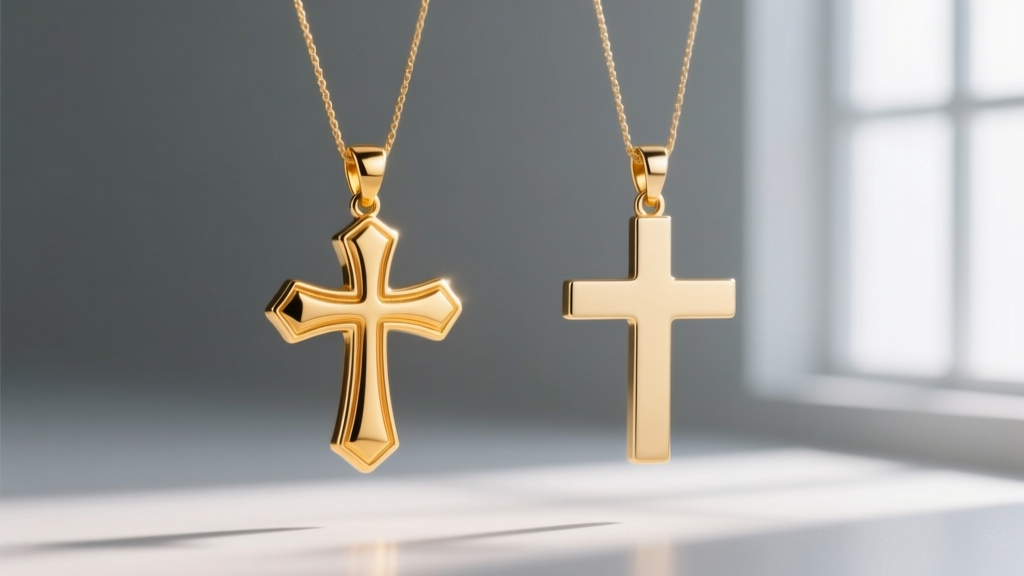
18k gold boasts a deep, saturated yellow hue that is highly prized in luxury jewelry. However, its Vickers hardness drops to roughly 90 HV. While perfectly suitable for a chunky cross worn in casual or professional settings, an 18k piece requires more mindful wear. If the cross is excessively heavy (over 40 grams), the bail may slowly stretch over years of wear if paired with a thick, abrasive chain link. Pricing for a solid 18k chunky cross generally ranges from $2,200 to $3,800.
22k Gold (91.6% Purity / 916 Stamp)
22k gold is rarely recommended for heavy, chunky crosses unless the design incorporates reinforced structural elements or is worn strictly for ceremonial occasions. At 60 HV, it is highly susceptible to denting and edge wear. The World Gold Council notes that while 22k is preferred in many global markets for investment jewelry, its softness makes it a liability for heavy, swinging pendants subject to kinetic energy.
Material Properties & Tensile Strength Table
To make an informed decision, refer to this comparative breakdown of gold alloys commonly used in heavy pendant manufacturing:
| Karat | Gold Purity | Vickers Hardness (HV) | Tarnish Risk | Best Use Case |
|---|---|---|---|---|
| 10k | 41.7% | ~140 HV | Moderate | Active lifestyles, everyday abuse |
| 14k | 58.3% | ~120 HV | Low | Daily wear, optimal balance of strength/color |
| 18k | 75.0% | ~90 HV | Very Low | Luxury wear, collector pieces, careful use |
| 22k | 91.6% | ~60 HV | None | Ceremonial wear, investment, light chains only |
Why Alloy Composition Matters for Heavy Pendants
Beyond karat, the specific alloy mix dictates the cross's color and skin reactivity. A standard yellow gold alloy uses a mix of silver and copper. If the copper content is too high in lower karats (like 10k), the cross can develop a dark patina or tarnish when exposed to sweat and environmental sulfur. White gold chunky crosses are alloyed with nickel or palladium and plated with rhodium. For heavy pieces, palladium-alloyed white gold is superior, as the rhodium plating on a large surface area will eventually wear off, and re-plating a massive chunky cross is expensive and tedious.
Hollow vs. Solid Gold Construction
One of the most critical material considerations when buying a chunky cross necklace gold design is the internal structure. Manufacturers often use electroforming or resin-casting techniques to create 'hollow' gold jewelry. This allows them to produce a massive, 3-inch cross that weighs only 8 grams, keeping the price under $600.
While visually impressive at first glance, hollow gold is a structural nightmare for heavy pendants. The walls of electroformed gold are often less than 0.3mm thick. If a hollow cross is dropped on a tile floor, or even squeezed too hard, it will dent irreparably. Furthermore, hollow crosses cannot be easily resized, repaired, or polished without risking a complete collapse of the structure. Always insist on solid cast or die-struck gold for a piece meant to last a lifetime. A solid 25-gram cross will have a satisfying heft and a specific gravity (19.3 g/cm³ for pure gold) that gives it a premium, luxurious drape against the chest.

Chain Pairing: Matching Gauge and Tensile Limits
A chunky cross is only as strong as the chain it hangs from. A common failure mode in heavy jewelry is the clasp spring-ring snapping or the jump-ring pulling apart under dynamic load. When you walk, a 30-gram cross generates kinetic force that multiplies the static weight on the chain's weakest link.
- Chain Width: For a cross weighing 15-25 grams, a chain width of 3.0mm to 4.0mm is required. For crosses exceeding 30 grams, step up to a 4.5mm to 6.0mm width.
- Link Style: Cuban links, Figaro chains, and rope chains offer excellent tensile strength due to their interlocking geometry. Avoid delicate box chains or thin snake chains, which will kink and snap under heavy loads.
- Clasp Mechanism: Never use a standard spring-ring clasp for a chunky cross. Always opt for a lobster claw clasp (minimum 12mm in length) or, ideally, a heavy-duty box clasp with a safety figure-eight latch.
- Bail Sizing: Ensure the bail (the loop on the cross) has an internal diameter at least 1.5mm larger than the chain's width to prevent excessive friction and metal-on-metal grinding.
Long-Term Maintenance and Wear
Maintaining a solid gold chunky cross is relatively straightforward, but its large surface area means scratches and fingerprints are more visible. Use a soft microfiber cloth for daily wiping. For deeper cleaning, a mild solution of warm water and dish soap with a soft-bristled baby toothbrush will remove trapped sebum and lotions from the crevices of the cross design. Avoid ultrasonic cleaners if your cross features any tension-set gemstones or porous stones like turquoise or opals, as the high-frequency vibrations can fracture the stones or loosen the settings.
Final Verdict: Which Karat Should You Choose?
If you want a piece of jewelry that balances rich color, structural integrity, and long-term value, 14k solid gold remains the ultimate choice for a chunky cross necklace. It provides the necessary Vickers hardness to withstand the dynamic swinging of a heavy pendant without bail deformation, while still offering the unmistakable warmth of fine gold. For those building a luxury collection who are willing to baby their jewelry, 18k offers an unmatched, deep yellow saturation that elevates the cross from a streetwear staple to a high-jewelry artifact.


