The Ultimate Material Guide for Chunky Gold Necklaces
Compare solid, vermeil, and plated chunky gold necklaces. Learn how karats, alloys, and plating thickness impact weight, durability, and price.

The Physics and Wear Reality of Heavy Chains
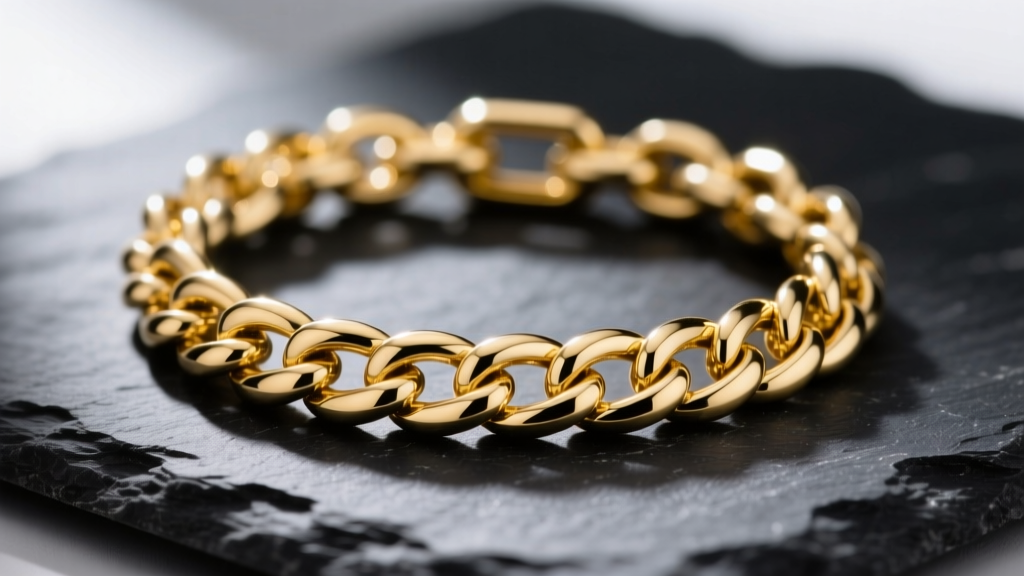
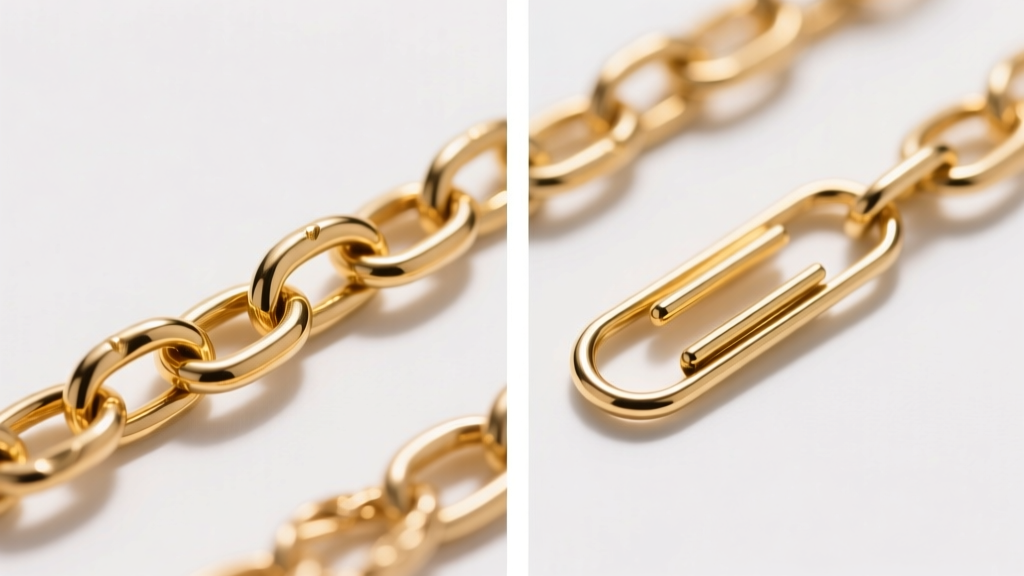
When shopping for statement jewelry, chunky gold necklaces dominate the market. From 10mm Cuban links to oversized paperclip chains, these pieces are designed to command attention. However, the sheer surface area and weight of these designs exponentially magnify the properties—and flaws—of the materials used to make them. A delicate 1mm chain might survive for years with a thin layer of flash plating, but a 100-gram chunky chain will rapidly destroy subpar materials through sheer friction, tensile stress, and environmental exposure.
Understanding the metallurgy and manufacturing standards behind these pieces is the difference between acquiring a lifelong heirloom and wasting money on a disposable trend. In this guide, we break down the exact material properties, alloy compositions, and failure modes of chunky gold chains to help you make an informed, structurally sound investment.
Solid Gold: Metallurgy and Karat Selection
Solid gold is the benchmark for fine jewelry, but "solid" does not mean "pure." Pure 24-karat gold is far too soft for jewelry, possessing a Vickers hardness (HV) of roughly 25. To create durable chains, gold is alloyed with metals like copper, silver, zinc, and sometimes palladium. According to the Gemological Institute of America (GIA), the karatage dictates not just the color, but the tensile strength of the chain.
14K Gold: The Structural Standard
Comprising 58.5% pure gold, 14K gold is the undisputed king of heavy chain link jewelry. The remaining 41.5% consists of strengthening alloys, pushing the Vickers hardness up to 120-150 HV. For chunky gold necklaces that weigh over 50 grams, 14K provides the necessary rigidity to prevent the links from stretching or warping under their own weight. It also offers superior resistance to scratching and denting, which is critical for high-impact pieces like curb and Figaro chains.
18K Gold: The Luxury Compromise
At 75% pure gold, 18K offers a richer, deeper yellow hue and is highly prized in luxury markets. However, its Vickers hardness drops to around 100-120 HV. While perfectly suitable for pendants and lighter chains, 18K is a liability in heavy, chunky styles. The continuous pulling force of a thick, heavy 18K rope or Cuban chain can cause the lower links to gradually elongate over time, leading to permanent structural deformation.
The Plating Spectrum: Vermeil, Filled, and Flash Plated
If solid gold is outside your budget, you will encounter various plated alternatives. The Federal Trade Commission (FTC) Jewelry Guides strictly regulate the terminology used for these materials, yet marketing often blurs the lines. Here is how the plating spectrum actually performs in heavy chain applications.
| Material Type | Base Metal | Gold Layer Thickness | Durability in Chunky Styles |
|---|---|---|---|
| Solid Gold | None (Alloyed) | 100% Gold | Lifetime; can be polished and repaired |
| Gold Filled | Jeweler's Brass | 5% of total weight (Mechanically bonded) | High; withstands heavy friction for 5-10+ years |
| Gold Vermeil | Sterling Silver | Minimum 2.5 microns (Electroplated) | Moderate; prone to friction wear at the nape |
| Gold Plated | Brass or Copper | 0.5 to 1.0 microns | Low; will rub off quickly on heavy chains |
| Flash Plated | Base Alloys | Less than 0.175 microns | Extremely Low; essentially decorative only |
Why Gold Filled Outperforms Vermeil for Heavy Chains
While vermeil (thick gold plating over sterling silver) is highly respected in fine jewelry, it is not always the best choice for chunky gold necklaces. Heavy chains create significant friction against the skin and clothing, particularly at the back of the neck. This constant micro-abrasion will wear through a 2.5-micron vermeil layer within a few years of daily wear. Gold filled material, however, features a gold layer that is mechanically bonded under extreme heat and pressure, resulting in a gold exterior that is up to 100 times thicker than standard plating. For thick chains that cannot be easily re-plated due to their complex link structures, gold filled is the superior budget alternative.
Failure Modes: How Chunky Chains Actually Break
Material quality is only half the battle; structural engineering dictates the lifespan of a heavy necklace. When thick chains fail, they rarely snap in the middle of a link. They fail at specific stress points.
- Clasp Fatigue: A standard 12mm lobster clasp relies on a tiny internal steel spring. When supporting a 150-gram chunky chain, the constant tension causes spring fatigue, leading to a clasp that won't stay closed. Heavy chains require a locking box clasp with a figure-8 safety catch, or a heavy-duty spring ring with a reinforced soldered jump ring.
- Jump Ring Separation: The jump ring connecting the chain to the clasp is the weakest link. In cheap manufacturing, these are left unsoldered. Under the pendulum-like swing of a heavy Cuban link, an unsoldered jump ring will easily pull apart. Always inspect the connection point to ensure the jump ring is seamlessly laser or torch soldered.
- Hollow Link Crushing: To reduce the exorbitant cost of solid gold, some manufacturers create "hollow" chunky chains. While they look identical to solid links from the outside, they are essentially gold tubes. These are highly susceptible to crushing, denting, and kinking, and are virtually impossible for a jeweler to repair once damaged.
Pricing Framework: What You Should Actually Pay
Understanding material properties allows you to spot inflated pricing and deceptive marketing. The price of chunky gold necklaces should scale linearly with the gram weight of the gold used, plus a manufacturing premium for the labor-intensive link soldering.
Solid 14K Gold (10mm Cuban Link, 20 inches, approx. 90 grams): Expect to pay between $4,500 and $6,500. The price is tied directly to the daily spot price of gold. If a seller offers a "solid 14K" chain of this size for $800, it is either hollow, heavily alloyed below 14K standards, or outright counterfeit.
Gold Filled (10mm Cuban Link, 20 inches): Typically ranges from $120 to $250. The price reflects the cost of the brass base and the mechanical bonding process.
Vermeil (Sterling Silver Base, 10mm): Ranges from $300 to $600. You are paying for the intrinsic value of the heavy sterling silver base metal and the 2.5-micron gold electroplating process.
Expert Verdict: Matching Material to Lifestyle
Choosing the right material for your chunky gold necklace depends entirely on your wear habits and budget. If you intend to wear the piece daily, expose it to water, or pass it down as an heirloom, solid 14K gold is the only metallurgically sound choice. Its tensile strength will support the heavy links, and it can be endlessly polished to remove scratches.
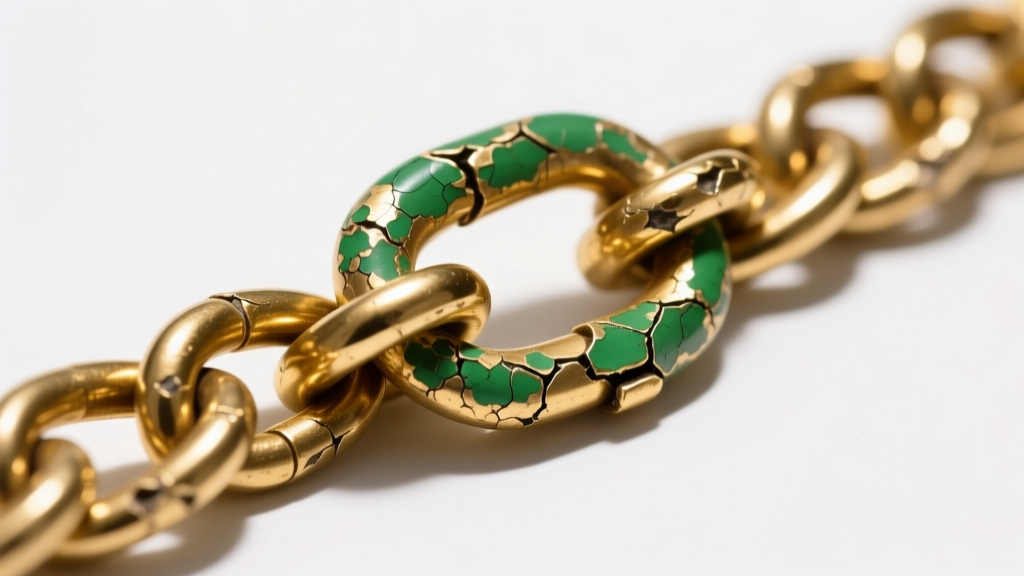
If you want the aesthetic of a heavy chain for seasonal wear or occasional styling, opt for high-quality gold filled pieces. Avoid flash-plated brass chains entirely; the heavy weight of the links will cause the plating to chip and flake rapidly, exposing the reactive brass underneath, which will oxidize and turn your skin green. By prioritizing material integrity over superficial thickness, you ensure your statement piece remains a staple in your wardrobe for decades.


