Cigarette Holder Necklace Materials: 2026 Buyer Guide
Discover the best metals and glass for a cigarette holder necklace. We compare heat resistance, weight, and tarnish rates for functional and decorative pieces.

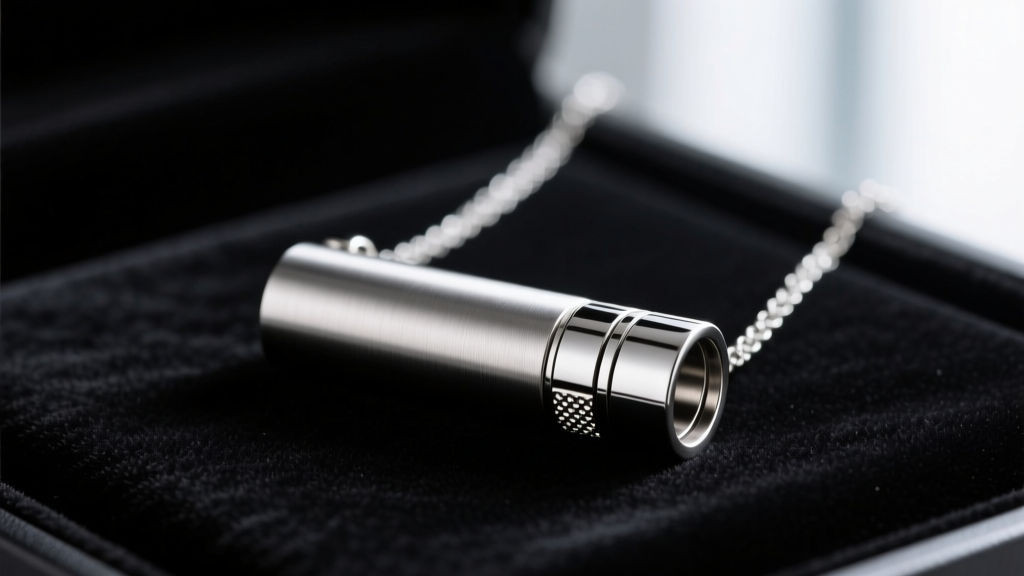
The Anatomy of a Functional vs. Decorative Cigarette Holder Necklace
The cigarette holder necklace is a polarizing, avant-garde accessory that bridges 1920s flapper glamour, gothic subculture, and modern streetwear. Whether you are sourcing a functional piece designed to actually hold a lit cigarette or a purely decorative pendant mimicking the silhouette, the material composition dictates its longevity, safety, and wearability. In 2026, advancements in CNC micro-machining and metallurgy have expanded the options far beyond vintage bakelite and basic brass.
When evaluating these pieces, we must first distinguish between functional and decorative designs. A functional holder requires strict thermal management; the material must not transfer heat to the user's lips or the connecting chain, and it must withstand repeated exposure to combustible ash and acidic saliva. Decorative pieces, conversely, prioritize aesthetic patina, intricate casting, and weight distribution, allowing for a broader range of porous or heat-sensitive materials like zinc alloys, carved bone, or epoxy resins.
Thermal Conductivity & Heat Resistance: The Crucial Metrics
If you intend to use your necklace as an actual smoking accessory, thermal conductivity (measured in Watts per meter-Kelvin, or W/m·K) is the single most important metric. This value determines how quickly heat travels from the burning ember through the pendant and up the chain.
Materials with high thermal conductivity, such as pure copper (approx. 385 W/m·K) or sterling silver (approx. 429 W/m·K), are exceptionally dangerous for functional use. They will rapidly transfer heat to the lips and can cause the metal bail (the loop connecting the pendant to the chain) to become hot enough to burn the skin or singe clothing. Conversely, materials with low thermal conductivity act as insulators. Borosilicate glass (approx. 1.1 W/m·K) and Grade 23 Titanium (approx. 6.7 W/m·K) dissipate heat slowly, keeping the bite zone and the chain safely cool even during continuous use.
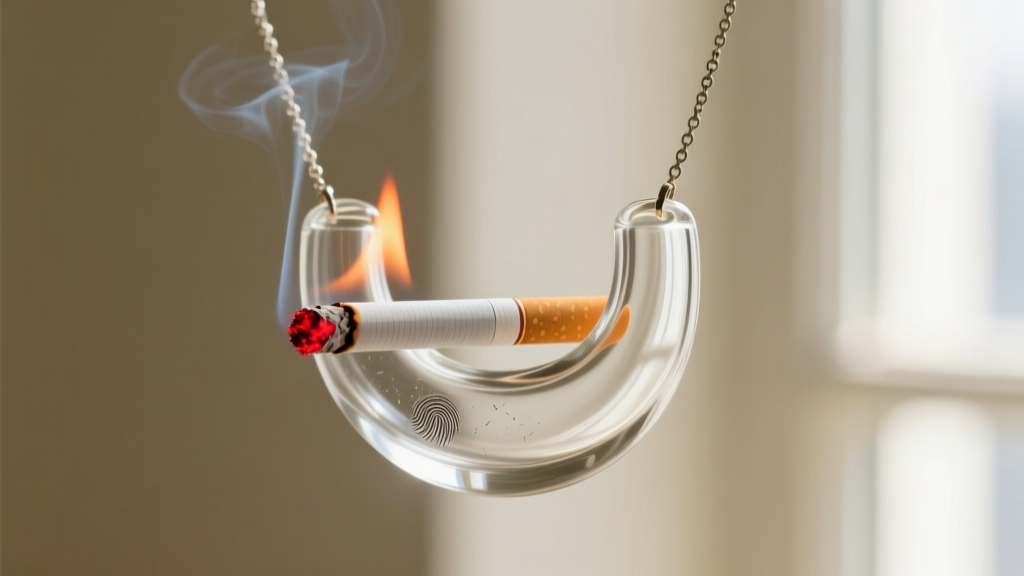
Material Breakdown: Pros, Cons, and Metallurgical Grades
316L Surgical Stainless Steel
316L stainless steel is the workhorse of modern functional body jewelry and avant-garde accessories. The 'L' denotes low carbon, while the inclusion of 2-3% molybdenum drastically increases resistance to chlorides and industrial solvents. For a cigarette holder necklace, 316L is highly recommended due to its non-porous surface, which prevents tar and nicotine from embedding into the metal. According to Encyclopedia Britannica, the chromium oxide layer that forms on stainless steel makes it highly resistant to the corrosive acids found in human saliva and cigarette ash. However, its moderate thermal conductivity (approx. 16 W/m·K) means functional designs must incorporate internal air baffles or silicone O-rings to break the thermal bridge.
925 Sterling Silver & Argentium
Standard 925 sterling silver is an alloy of 92.5% silver and 7.5% copper. While visually stunning for decorative vintage-style flapper necklaces, the copper content makes it highly susceptible to tarnishing when exposed to sulfur compounds present in cigarette smoke. If you prefer the look of silver, seek out Argentium Silver. Argentium replaces some of the copper with germanium, which creates a transparent, self-healing oxide layer that virtually eliminates tarnish and firescale. The Gemological Institute of America (GIA) notes that while silver is a precious metal, its softness (Vickers hardness of ~65) means functional silver holders will dent easily if dropped on hard surfaces.
Borosilicate Glass & Quartz
Borosilicate glass (often known by the brand name Pyrex) is the gold standard for functional glass pipes and translates perfectly to cigarette holder pendants. By incorporating boron trioxide into the glass matrix, manufacturers achieve an incredibly low coefficient of thermal expansion (CTE). This means the glass will not shatter when exposed to the rapid temperature changes of a lit cigarette and cold ambient air. Borosilicate is completely non-porous, chemically inert, and offers the lowest thermal conductivity of any jewelry material, ensuring the chain remains completely cool.
Grade 23 Titanium (Ti 6Al-4V)
Grade 23 Titanium, also known as Ti 6Al-4V ELI (Extra Low Interstitial), is an aerospace and medical-grade alloy. It is 45% lighter than stainless steel, making it ideal for oversized, avant-garde cigarette holder pendants that would otherwise cause neck strain. Titanium is entirely biocompatible and hypoallergenic, containing zero nickel. Its natural oxide layer makes it impervious to ash corrosion, though its porous surface finish when matte-brushed can trap tar if not cleaned regularly.
Comparative Data Table: Weight, Heat, and Cost
| Material | Density (g/cm³) | Thermal Conductivity (W/m·K) | Tarnish Resistance | Avg. Price Range (2026) |
|---|---|---|---|---|
| 316L Stainless Steel | 8.00 | 16.0 | Excellent | $45 - $120 |
| Argentium 960 Silver | 10.36 | 300+ | Very Good | $180 - $350 |
| Borosilicate Glass | 2.23 | 1.1 | Perfect (Inert) | $30 - $90 |
| Grade 23 Titanium | 4.43 | 6.7 | Excellent | $150 - $400 |
| Cast Brass (Decorative) | 8.50 | 109.0 | Poor (Patina) | $25 - $75 |
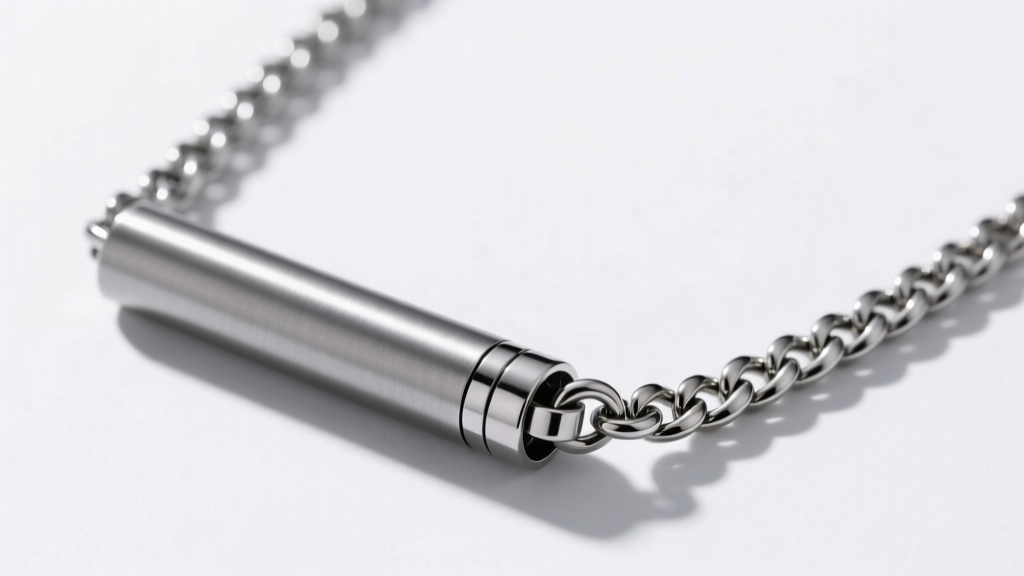
Chain Pairing and Clasp Hardware Considerations
A common failure point in heavy pendant necklaces is the hardware. A solid steel or brass cigarette holder pendant can easily weigh between 45 and 75 grams. Suspending this weight on a standard 1mm cable chain or a delicate box chain will inevitably lead to metal fatigue and snapping at the bail.
- Chain Selection: Opt for chains with a minimum thickness of 3mm to 5mm. Cuban link, curb, and rope chains offer superior tensile strength and distribute the pendant's weight evenly across the cervical spine.
- Clasp Hardware: Avoid spring ring clasps, which are prone to slipping open under dynamic loads. A heavy-duty lobster clasp or a magnetic neodymium clasp with a secondary safety latch is mandatory for pendants exceeding 40 grams.
- Bail Construction: Ensure the bail (the loop on the pendant) is cast or machined as a single piece with the body, or securely laser-welded. Soldered jump rings will eventually pull apart under the pendulum effect of a heavy holder swinging during movement.
Maintenance and Patina Management
Functional cigarette holder necklaces require rigorous maintenance to prevent the buildup of tar, nicotine, and ash residue, which can harbor bacteria and degrade the material over time.
For 316L Steel and Titanium, an ultrasonic jewelry cleaner using a mild degreasing solution is the most effective method. The high-frequency cavitation bubbles will dislodge microscopic tar particles from brushed or matte finishes without scratching the metal. For Borosilicate Glass, submerging the pendant in 91% isopropyl alcohol with a pinch of coarse salt, followed by a gentle shake, will dissolve stubborn resin and tar buildup, restoring optical clarity.
If you own a Sterling Silver decorative piece, avoid harsh chemical dips, which can strip the rhodium plating or damage oxidized (blackened) detailing. Instead, use a specialized silver polishing cloth infused with micro-abrasives to gently lift sulfur tarnish caused by environmental exposure and smoke. By understanding the metallurgical and thermal properties of these materials, you can select a cigarette holder necklace that is not only a striking fashion statement but also a safe, enduring piece of functional art.


