The Ultimate Circle Charm Necklace Buying Guide: Metals & Chains
Discover what to look for in a circle charm necklace. Our buying guide covers metal grades, chain types, clasp security, and proportion rules.

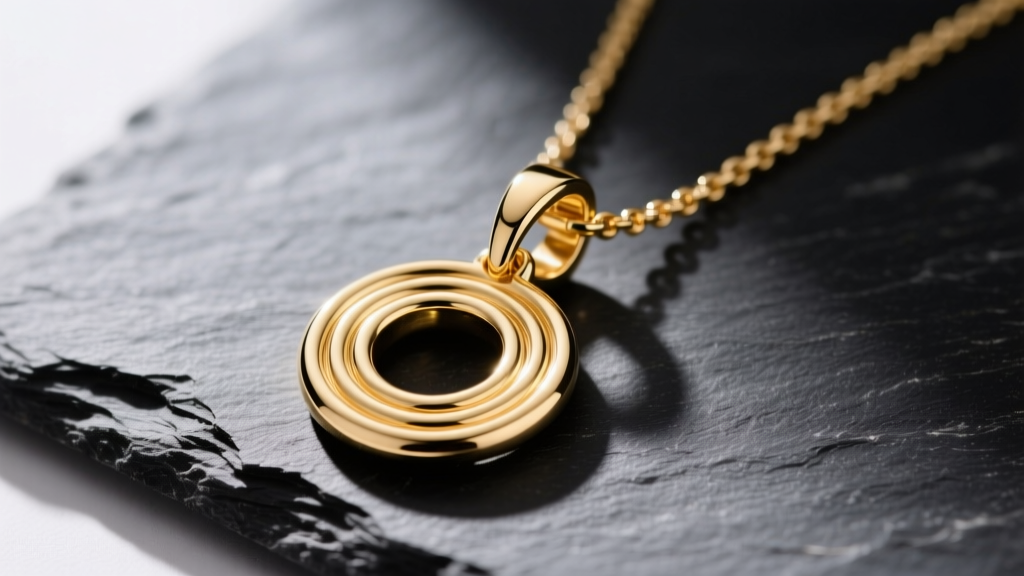
The circle charm necklace is a masterclass in minimalist jewelry design. Representing eternity, wholeness, and seamless continuity, the geometric simplicity of a circular pendant makes it a foundational piece in any capsule wardrobe. However, its unadorned nature means there is nowhere for poor craftsmanship to hide. Without the distraction of intricate gemstone settings or elaborate filigree, the structural integrity, metal quality, and proportional balance of a circle charm necklace are laid bare.
Whether you are investing in a solid gold everyday piece or shopping for a durable sterling silver layering staple, understanding the mechanics of jewelry manufacturing is critical. This comprehensive buying guide will walk you through the exact specifications, material grades, and failure modes you need to evaluate before purchasing your next circle charm necklace.
The Anatomy of a High-Quality Circle Charm
Before evaluating the metal, you must understand how the charm itself is manufactured. Circle charms are generally produced using one of two methods: die-striking (stamping) or casting.
Die-Struck vs. Cast Charms
Die-struck charms are created by applying immense pressure to a sheet of metal, cutting and shaping it simultaneously. This process compresses the metal's molecular structure, resulting in a denser, harder, and more scratch-resistant pendant. A die-struck 14k gold circle charm will maintain its polished finish significantly longer and is less prone to bending if caught on clothing.
Casting, specifically lost-wax casting, involves pouring molten metal into a mold. While this allows for three-dimensional or textured designs (like a braided or granulated circle charm), cast metal is inherently more porous. If a cast charm is dropped on a hard surface, it is more likely to crack or snap at the bail (the loop connecting the charm to the chain) compared to its die-struck counterpart. When buying a flat, minimalist circle charm, always opt for die-struck manufacturing for superior longevity.
Decoding Metal Grades and Plating Standards
The longevity of your necklace hinges entirely on its metallurgical composition. According to the Gemological Institute of America (GIA), understanding karatage and alloy mixtures is essential for predicting how a metal will wear over time.
Solid Gold: 14k vs. 18k
For an everyday circle charm necklace that will never tarnish or fade, solid gold is the benchmark. 14k gold (58.5% pure gold) is the gold standard for durability. The higher percentage of alloy metals (like copper, silver, and zinc) gives 14k gold the tensile strength needed to support heavier chains and resist scratching. 18k gold (75% pure gold) offers a richer, warmer yellow hue but is noticeably softer. An 18k circle charm will develop a patina of micro-scratches much faster than 14k, which some collectors appreciate as a 'lived-in' vintage look.
Sterling Silver and the Rhodium Factor
Sterling silver (stamped 925) is an excellent, affordable alternative, but it is prone to oxidation. To combat this, high-end manufacturers apply a flash plating of rhodium. When buying a silver circle charm, look for a rhodium thickness of at least 0.75 to 1.0 microns. Anything thinner will wear off within months of daily friction, exposing the silver to sulfur in the air and causing rapid tarnishing.
The Vermeil Threshold and Plating Failures
Gold vermeil and standard gold plating are frequently confused, but their lifespans are vastly different. The Federal Trade Commission (FTC) Jewelry Guides dictate that for a piece to be legally marketed as 'vermeil' in the United States, it must have a sterling silver base and a gold plating of at least 2.5 microns thick. Standard gold-plated jewelry often uses a brass or copper base with a microscopic gold layer (sometimes less than 0.5 microns).
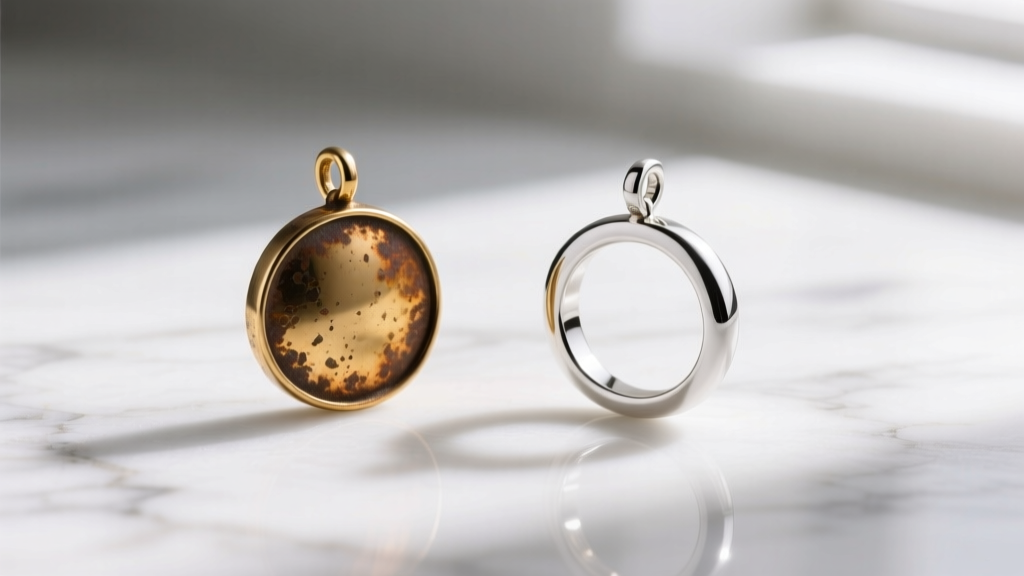
Failure Mode Alert: Brass-based plated circle charms will eventually bleed a greenish-black oxidation through the gold layer, especially at the high-friction bail area. If you are buying a gold-toned necklace on a budget, strictly verify that the base metal is 925 sterling silver and the plating meets the 2.5-micron vermeil threshold.
Chain Gauge and Proportion Matrix
A common mistake buyers make is mismatching the visual weight and physical mass of the circle charm with an inadequate chain. A chain that is too delicate will snap under the pendulum-like swinging motion of a heavy charm, while a chain that is too thick will visually overpower a minimalist disc.
The table below provides a structural framework for matching charm diameters to appropriate chain gauges, assuming the charm is crafted from solid 14k gold or sterling silver.
| Charm Diameter | Approx. Weight (Solid 14k) | Min. Chain Gauge (mm) | Recommended Chain Style |
|---|---|---|---|
| 10mm - 12mm | 1.2g - 1.8g | 0.9mm - 1.0mm | Cable, Box, or Snake |
| 15mm - 18mm | 2.5g - 4.0g | 1.2mm - 1.5mm | Rope, Figaro, or Bead |
| 20mm - 25mm | 5.0g - 8.5g | 1.8mm - 2.2mm | Curb, Mariner, or Wheat |
Link Welding Integrity
When inspecting the chain, look closely at the individual links. High-quality chains feature laser-welded or traditionally soldered links, meaning every single oval or box link is completely closed. Cheaper mass-produced chains often use 'flash soldering' or omit soldering entirely on links under 1.2mm. If a link is merely bent shut without a solder seal, the repetitive friction of the circle charm's bail will eventually pry the link open, resulting in a lost pendant.
Clasp and Jump Ring Failure Modes
The clasp and the jump ring (the small circular wire that connects the charm to the chain or the clasp to the chain) are the primary structural vulnerabilities of any necklace.
The Jump Ring: Soldered vs. Open
The jump ring holding your circle charm must be soldered shut. An open jump ring (one with a visible diagonal cut) will inevitably warp and gap over time as the charm swings and catches on fabrics. If the charm is attached via an open jump ring, take the necklace to a local jeweler to have it laser-welded or soldered closed before wearing it daily.
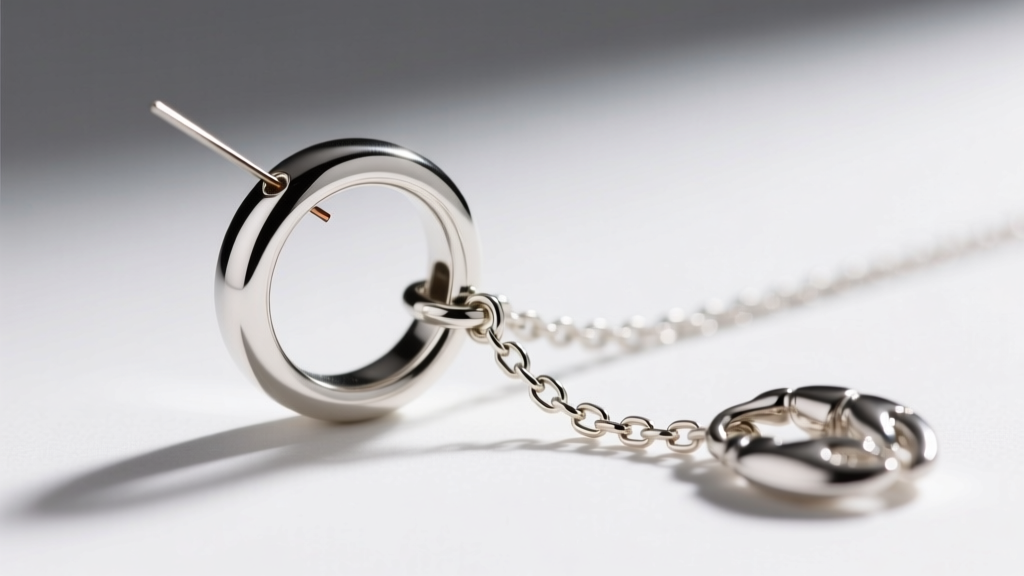
Clasp Mechanics: Lobster vs. Spring Ring
For circle charms weighing over 2 grams, avoid spring ring clasps. Spring rings rely on a tiny internal steel spring that is highly susceptible to moisture, sweat, and cosmetic chemicals, frequently seizing up or snapping. Lobster clasps are vastly superior; they feature a solid internal mechanism and a wider gate that accommodates thicker chain links. For premium necklaces, look for a 'self-closing' lobster clasp with a high-tension spring to ensure it doesn't accidentally unhook when tangled.
Pricing Tiers: What Should You Expect to Pay?
Understanding the market pricing for circle charm necklaces prevents you from overpaying for plated metals or underestimating the cost of solid gold. Prices fluctuate with the spot market, but these baseline ranges apply to standard 15mm-18mm minimalist circle charms with 18-inch chains.
- Fashion / Flash Plated ($25 - $60): Brass or copper base with less than 1 micron of gold. Expect a lifespan of 6 to 12 months with regular wear before tarnishing occurs.
- Gold Vermeil ($85 - $180): 925 Sterling silver base with 2.5+ microns of 14k or 18k gold. A great mid-tier option that can last 3 to 5 years if kept dry and stored properly.
- Solid 10k or 14k Gold ($350 - $850): The true investment tier. Pricing is dictated by the gram weight of the chain and the charm. This is a generational piece that requires zero plating maintenance.
- Solid 18k Gold ($900 - $2,000+): Premium luxury tier, often featuring hand-finished edges, diamond-cut bevels, or integrated diamond accents within the circle's geometry.
The Final Inspection Checklist
Before finalizing your purchase, run the necklace through this expert checklist to ensure you are getting a piece built for longevity:
- Hallmark Verification: Is the chain and charm stamped with a recognized purity mark (e.g., 14k, 585, 925) and a manufacturer's trademark?
- Bail Construction: Is the bail (the loop on the charm) seamlessly integrated or securely soldered, rather than pinched or glued?
- Jump Ring Security: Is the jump ring connecting the charm to the chain completely soldered shut with no visible seams?
- Chain Link Integrity: Are the links on the chain individually soldered, particularly near the clasp and the charm bail?
- Clasp Tension: Does the lobster clasp snap back into place instantly and firmly when released?
- Edge Finishing: Run your finger along the edge of the circle charm. Is it slightly beveled or rounded? Sharp, 90-degree stamped edges will act like a saw blade against your chain's jump ring, wearing through the metal prematurely.
By prioritizing structural mechanics and metallurgical transparency over fleeting brand hype, you can secure a circle charm necklace that remains a flawless, enduring staple in your jewelry rotation for decades to come.


