The Anatomy of a Circular Necklace: Torques, Hinges, and Alloys
Explore the metallurgy, hinge engineering, and ergonomic geometry of rigid circular necklaces, torques, and collars for lasting structural integrity.

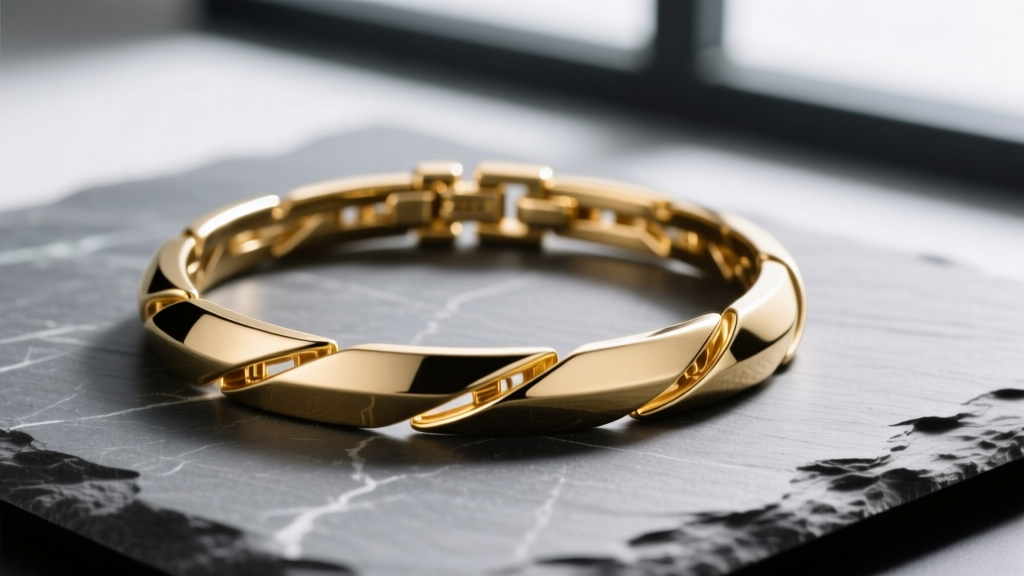
Introduction to Rigid Circular Geometry
When discussing the architecture of fine jewelry, the circular necklace represents one of the most demanding structural challenges in metallurgy and design. Unlike flexible chain necklaces that drape and conform to the body through gravity and linked articulation, rigid circular forms—commonly known as torques, collars, and continuous rings—must maintain their geometric integrity while enduring the kinetic stress of human movement. A true circular necklace is not merely a wire bent into a loop; it is an engineered tension structure. In this expert deep dive, we examine the material science, hinge engineering, and ergonomic geometry required to craft a structurally sound rigid circular necklace that survives daily wear without catastrophic failure.
Metallurgical Constraints: Yield Strength and Work Hardening
The primary enemy of any rigid circular necklace is metal fatigue. When a wearer puts on or removes a torque, the metal must flex just enough to clear the jawline and shoulders before snapping back to its original resting diameter. This repeated deformation pushes the alloy to its yield strength threshold. If the stress exceeds the metal's elastic limit, plastic deformation occurs, meaning the necklace permanently bends out of its circular shape. Over time, this cyclical loading causes work hardening, leading to micro-fractures and eventual snapping.
To combat this, master jewelers rely on specific alloy compositions and precise annealing protocols. According to technical guidelines from Rio Grande, 14k and 18k yellow gold are preferred for high-end torques because their copper and silver ratios can be manipulated to increase spring-back properties. Pure 24k gold is entirely unsuitable due to its low Vickers hardness (HV 25-30) and high malleability. Conversely, 925 sterling silver, while affordable, suffers from severe fatigue failure in rigid circular applications unless heavily alloyed with trace elements like germanium or silicon to alter its grain structure.
The Problem with Metal Memory
Metal memory refers to an alloy's ability to return to its pre-stressed shape. Grade 5 Titanium (Ti-6Al-4V) possesses exceptional metal memory and a high modulus of elasticity, making it an increasingly popular choice for modern, lightweight circular collars. However, titanium's extreme hardness requires specialized CNC milling and laser welding, as traditional soldering techniques used for gold and silver are impossible with this reactive metal.
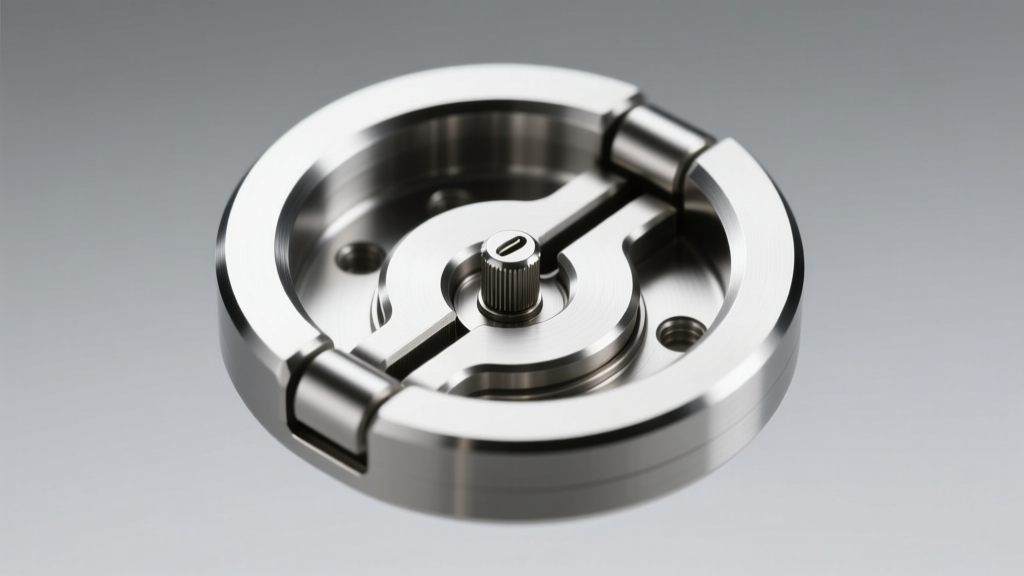
Hinge and Closure Engineering
The clasp or hinge is the most critical failure point on any circular necklace. Because the rigid body of the torque cannot absorb shock, all kinetic energy and torsional stress are transferred directly to the closure mechanism. A poorly engineered clasp will warp, unseat, or snap under the lateral pressure of a turning head.
- Bayonet Clasps: The gold standard for rigid circular necklaces. A cylindrical pin slides into a receiving tube and locks via a spring-loaded pusher or a twist-and-click mechanism. Machined from hardened steel or the same karat gold as the body, bayonet clasps offer near-invisible seams and immense shear strength.
- Tongue-and-Groove Hinges: Often used on hinged bangles and heavy collars, this system uses a V-shaped tongue that slots into a corresponding groove, secured by a friction pin or a secondary magnetic safety catch. The tolerance must be machined to within 0.05mm to prevent the hinge from developing a 'wobble' over time.
- Neodymium Magnetic Closures: While popular in mass-market jewelry, rare-earth magnets are strictly discouraged for heavy, rigid circular necklaces. Lateral shearing forces can easily overcome the magnetic pull, resulting in the loss of the piece.
Material Science: Comparing Alloys for Circular Torques
Selecting the right material dictates the minimum gauge (thickness) required to maintain the circular geometry without adding excessive weight. Below is a technical comparison of common alloys used in rigid collar engineering.
| Material Grade | Yield Strength (MPa) | Vickers Hardness (HV) | Minimum Wire Gauge | Biocompatibility |
|---|---|---|---|---|
| 18k Yellow Gold (Annealed) | ~250 | 125 | 10-Gauge (2.58mm) | High (Nickel-Free) |
| 14k White Gold (Rhodium) | ~400 | 160 | 12-Gauge (2.05mm) | Moderate (Contains Nickel) |
| Grade 5 Titanium (ASTM F136) | ~880 | 334 | 14-Gauge (1.62mm) | Exceptional (Hypoallergenic) |
| 316L Surgical Steel | ~170 | 150 | 8-Gauge (3.26mm) | Good (Contains Trace Nickel) |
For clients requiring continuous, permanent circular jewelry or those with severe contact dermatitis, ASTM F136 compliant titanium is the undisputed benchmark. Its lack of nickel and copper eliminates the risk of galvanic skin reactions, a common issue when sweat acts as an electrolyte against lower-grade alloyed collars.

Ergonomic Geometry: Circle vs. Ellipse
A common misconception in novice jewelry design is that the human neck is a perfect cylinder. In reality, the cross-section of the human neck and upper chest is distinctly elliptical. A mathematically perfect circular necklace with a 15cm diameter will sit poorly: it will gap awkwardly at the front hollow of the throat while pinching the soft tissue at the lateral sides of the neck.
"True ergonomic mastery in torque design requires forging the metal into an oval or elliptical geometry that mirrors the clavicle and cervical spine, ensuring the rigid circular necklace rests flush against the body without creating pressure points." - Advanced Jewelry Fabrication Principles, GIA
To achieve this, manufacturers utilize 3D CAD modeling to map the average clavicular angle, subsequently bending the rigid wire on custom elliptical mandrels rather than circular ones. This ensures the torque glides over the collarbone while maintaining the visual illusion of a perfect circle from a frontal perspective.
Maintenance and Structural Fatigue
Even the most meticulously engineered circular necklace requires proactive maintenance to prevent catastrophic failure. The rigid nature of the piece means it cannot absorb impacts; dropping a solid gold torque on a hard surface can cause internal crystalline fractures that are invisible to the naked eye.
Troubleshooting Micro-Fractures
Jewelers should inspect the hinge and clasp junctions of rigid collars every 12 months using a 10x loupe or microscopic imaging. Look for stress lines radiating from the solder joints or laser welds. If a client reports a 'clicking' sound when opening the bayonet clasp, the internal spring mechanism has likely suffered from metal fatigue and requires immediate replacement. Furthermore, ultrasonic cleaning should be avoided for hinged circular necklaces containing tension-set gemstones, as the high-frequency vibrations can compromise the structural integrity of the friction fittings.
By understanding the metallurgical limits, ergonomic realities, and mechanical engineering required to produce a high-quality piece, both designers and consumers can appreciate the true complexity of the rigid circular necklace. It is not just an accessory; it is a triumph of wearable structural engineering.


