Mastering Necklace Lengths for Men: A Step-by-Step Sizing Guide
Learn how to measure, select, and style the perfect necklace lengths for men. Our step-by-step guide covers chain gauges, pendant weights, and fit.

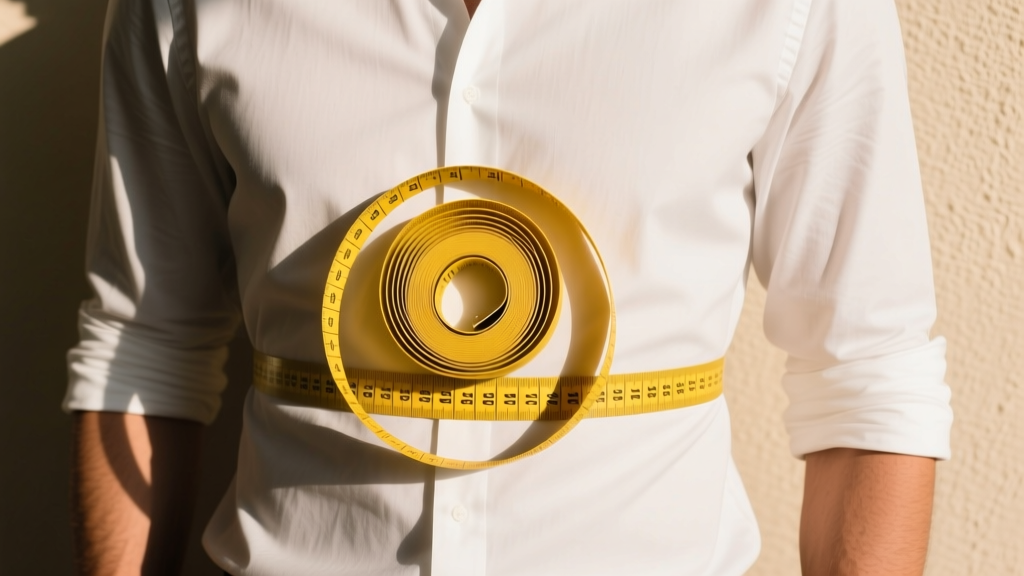
Choosing the right jewelry is an exercise in proportion, geometry, and personal style. While women's jewelry guides often dominate the market, men's neckwear requires a distinctly different approach to anatomy and weight distribution. A chain that looks perfectly proportioned on a man with a 14-inch neck will look like a choking hazard on someone with a 17-inch neck. In 2026, the shift toward personalized, bespoke men's styling means that off-the-rack guessing is no longer acceptable. Whether you are investing in a heavy 14k gold Cuban link or a minimalist surgical steel pendant, understanding the exact science of fit is crucial.
This step-by-step guide will walk you through the precise mechanics of measuring, selecting, and styling the ideal necklace lengths for men, eliminating the guesswork and ensuring your chain sits exactly where it should.
Step 1: Accurately Measure Your Neck Base
Before looking at standard jewelry sizes, you must establish your baseline neck circumference. Do not rely on shirt collar sizes, as these include an extra half-inch to an inch of ease for breathing and movement.
- The Tool: Use a flexible fiberglass tailor's measuring tape. If you do not have one, use a non-stretchable piece of string or a shoelace, mark the overlap with a pen, and measure the string against a rigid steel ruler.
- The Placement: Wrap the tape around the base of your neck, exactly where your Adam's apple rests. Keep the tape parallel to the floor.
- The Tension: Pull the tape snug, but do not dig into the skin. You should be able to slide one index finger comfortably between the tape and your neck.
- The Calculation: Note this exact measurement. To find your absolute minimum chain length (a choker or tight crew fit), add exactly 2 inches to your base measurement. For a standard, comfortable drop, add 4 to 5 inches.
Step 2: Map Standard Necklace Lengths for Men to Your Frame
Jewelry manufacturers produce chains in standard increments. However, how these lengths manifest on your body depends entirely on your base neck size and shoulder slope. The industry standard sizing charts assume an average male neck size of 15 inches. If your neck is larger, you must size up to achieve the same visual drop.
| Standard Length | Drop Location (Avg 15" Neck) | Visual Effect & Best Use Case |
|---|---|---|
| 18 Inches | Base of the neck (Choker) | Tight fit. Best for men with necks under 16". Ideal for thin 1mm-2mm chains worn tucked under a shirt. |
| 20 Inches | Collarbone line | The most versatile standard length. Sits perfectly at the crew-neck t-shirt line. Excellent for medium pendants. |
| 22 Inches | 2-3 inches below collarbone | Relaxed, confident drop. Perfect for wearing over t-shirts or with unbuttoned collared shirts. Ideal for heavier chains. |
| 24 Inches | Upper sternum | Streetwear and statement territory. Required for large, heavy pendants (e.g., crosses, medallions) to hang freely without bouncing. |
| 30+ Inches | Mid-chest / Solar plexus | Layering piece or outerwear statement. Exclusively worn over clothing. Requires thick gauges (5mm+) to avoid looking fragile. |
According to the Jewelers of America, purchasing a chain without accounting for personal neck circumference is the leading cause of returns in men's fine jewelry. If your neck measures 17 inches, a standard 20-inch chain will sit like an 18-inch choker on you. Always add your personal differential to the standard charts above.
Step 3: Factor in Pendant Weight and Chain Gauge
Length does not exist in a vacuum; it is intrinsically tied to the chain's gauge (thickness) and the weight of the pendant. A 24-inch chain that is only 1.5mm thick will tangle constantly, kink, and eventually snap under its own dynamic movement.
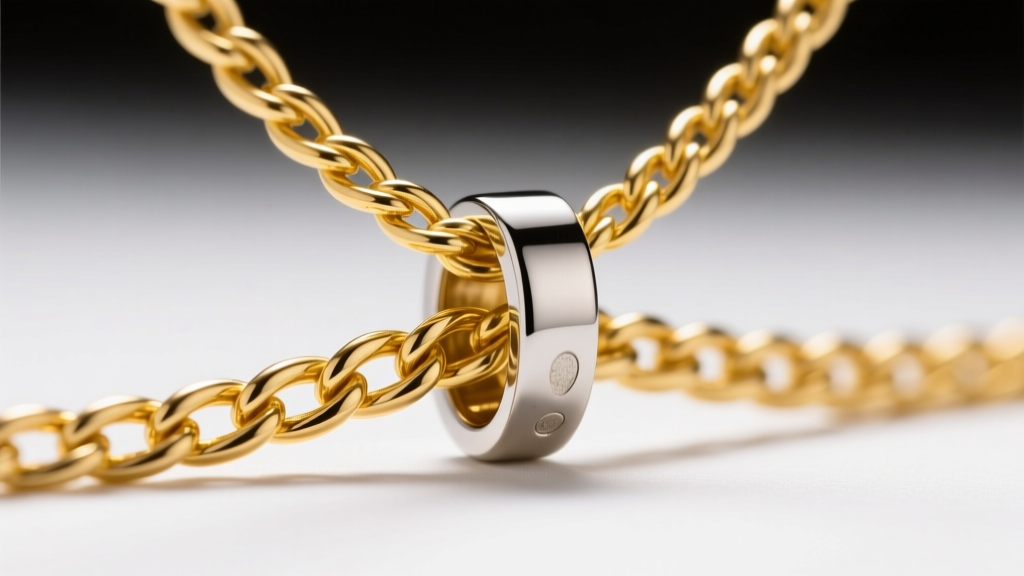
The Gauge-to-Length Ratio Rule
As chain length increases, the minimum viable gauge must also increase to maintain structural integrity and visual proportion. Use this framework when selecting your hardware:
- 18" - 20" Lengths: 1.5mm to 3mm gauge. Best for lightweight pendants (under 10 grams) or wearing bare.
- 22" - 24" Lengths: 3mm to 5mm gauge. Necessary to support medium-to-heavy pendants (15g - 30g) without the chain bowing or stretching at the nape of the neck.
- 26" - 30"+ Lengths: 5mm to 8mm+ gauge. At this length, a thin chain will look like a thread and tangle incessantly. Heavy Cuban links or thick rope chains are mandatory here.
Bail Clearance and Friction
If you are adding a pendant, the inner diameter of the pendant's bail (the loop it hangs from) must be at least 1.5mm larger than the chain's thickness. A 4mm chain requires a bail with a minimum 5.5mm inner opening. If the fit is too tight, the friction will prematurely wear down the metal links, leading to catastrophic failure, a phenomenon well-documented by the Gemological Institute of America (GIA) in their metal wear-and-tear studies.
Step 4: Select the Right Material and Clasp for Longevity
The material you choose dictates not only the price but the maintenance required and the failure modes of the chain. As of 2026, market pricing and material technology offer several distinct tiers for men's chains.
Material Grades and Pricing (Per Ounce/Gram)
- 316L Surgical Stainless Steel ($40 - $150): The undisputed king of everyday durability. It will not tarnish, is highly resistant to sweat and saltwater, and requires zero maintenance. Look for PVD (Physical Vapor Deposition) gold plating if you want the look of gold without the softness.
- Sterling Silver 925 ($150 - $600): Beautiful but high-maintenance. Silver oxidizes and tarnishes rapidly when exposed to the sulfur in human sweat. If you choose silver for a daily-wear 22-inch chain, ensure it is rhodium-plated to delay tarnishing.
- 14k Solid Gold ($1,200 - $4,000+): The ideal balance of luxury and durability. 14k gold is alloyed with copper and zinc, making it significantly harder and more resistant to stretching than 18k or 24k gold, which is critical for longer, heavier chains.
Clasp Mechanics: The Weakest Link
A chain is only as strong as its clasp. For men's chains over 20 inches and 3mm thick, standard spring-ring clasps are a liability. The internal spring mechanism frequently fails under the lateral torque of a heavy, swinging chain. Always upgrade to a lobster clasp for chains up to 5mm, and a box clasp with a figure-eight safety latch for anything thicker or heavier than 50 grams.
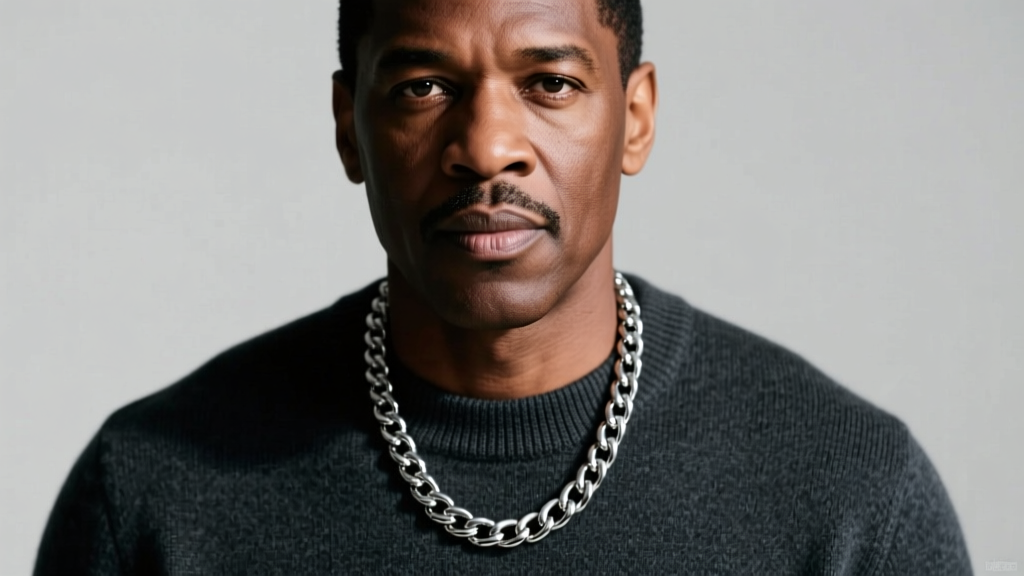
Step 5: Adjust for Necklines and Occasions
The final step in mastering necklace lengths for men is contextual styling. The chain must interact harmoniously with the geometry of your clothing.
"A necklace should never compete with the collar; it should either frame it or bisect it cleanly. Clashing geometries ruin the silhouette."
- Crew Neck T-Shirts: A 20-inch or 22-inch chain sits perfectly just below the ribbed collar, creating a clean, parallel line. Avoid 18-inch chains here, as they will bunch up against the fabric and look restrictive.
- V-Necks and Henleys: Opt for a 22-inch or 24-inch chain with a vertical pendant. The pendant should follow the V-shape of the shirt, elongating the torso. Ensure the pendant rests at least one inch above the bottom button or seam of the V.
- Button-Down Collared Shirts: You have two choices. Wear an 18-inch or 20-inch thin chain tucked entirely inside the shirt, resting against the skin for a subtle, professional look. Alternatively, wear a 24-inch statement piece entirely over the unbuttoned shirt. Never let a chain get caught halfway through a collar.
Troubleshooting: Why Your Chain Keeps Flipping Upside Down
A common frustration with men's chains, particularly those in the 22-inch to 24-inch range, is the clasp constantly migrating from the back of the neck to the front. This is not bad luck; it is a physics issue related to the center of gravity.
If your clasp is heavier than the individual links of the chain, gravity will pull the heaviest point to the lowest possible position—the front of your chest. To fix this, swap the heavy brass clasp for a lightweight titanium or hollowed stainless steel alternative. Alternatively, if you are wearing a pendant, ensure the chain is heavy enough to act as a counterbalance. A 25-gram pendant requires a chain that weighs at least 30 to 40 grams to maintain proper equilibrium and keep the clasp anchored at the nape of your neck.
By treating your jewelry selection as a precise measurement exercise rather than an afterthought, you ensure that every piece you wear enhances your physique, withstands daily wear, and projects deliberate, calculated style.


