Troubleshooting an Initial and Birthstone Necklace for Mom
Learn how to fix tangling, stone damage, and clasp failures in an initial and birthstone necklace for mom with expert jewelry troubleshooting tips.

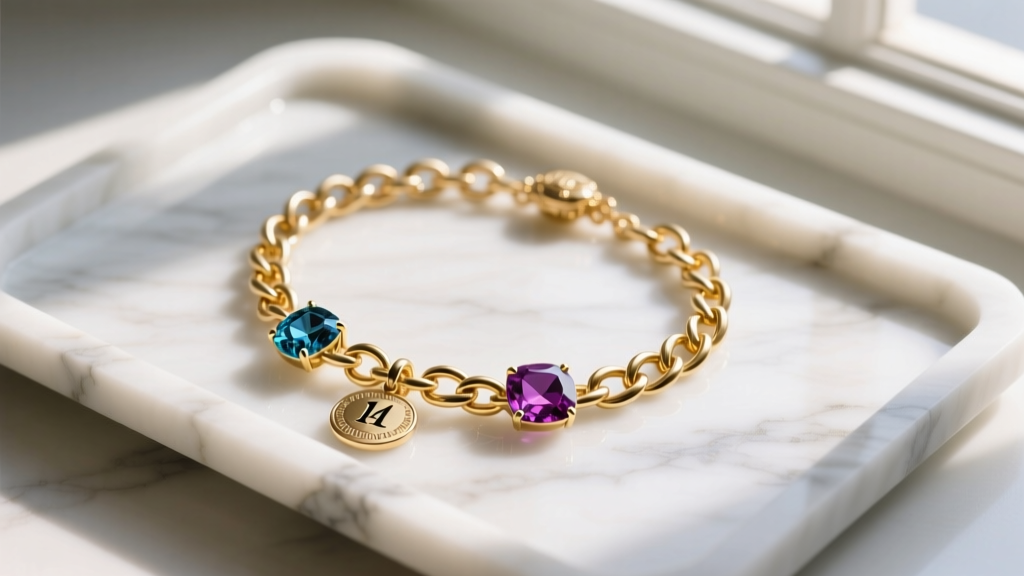
Gifting or designing an initial and birthstone necklace for mom is one of the most deeply sentimental choices in fine jewelry. It represents family, love, and legacy. However, from a structural and metallurgical perspective, multi-charm necklaces are notorious for presenting unique wear-and-tear challenges. The combination of varying pendant weights, delicate gemstones, and continuous friction often leads to a tangled, damaged, or broken piece within the first year of daily wear.
As jewelry specialists, we see countless heirloom-quality pieces returned for repairs that could have been prevented with proper structural planning. Whether you are troubleshooting an existing piece that keeps knotting or designing a custom initial and birthstone necklace for mom from scratch, this comprehensive guide will help you solve the most common mechanical and gemological failures.
The Multi-Charm Dilemma: Why Mom's Necklace Keeps Tangling
The most frequent complaint we hear regarding multi-pendant necklaces is chronic tangling. This is not merely bad luck; it is a matter of physics. When you suspend multiple pendants of different shapes and weights—such as a heavy gold letter 'M' next to a lightweight teardrop birthstone—on a standard cable chain, the chain twists to accommodate the shifting center of gravity. The links catch on one another, creating stubborn knots.
Solution: Upgrade the Chain Profile
To eliminate tangling, you must change the chain architecture. Avoid standard cable or curb chains for multi-charm setups. Instead, opt for a box chain or a rolo chain. Box chains feature square, interlocking links that lay flat against the collarbone and resist twisting. For a necklace holding three to five charms, a box chain with a width between 1.2mm and 1.5mm provides the perfect balance of flexibility and structural rigidity.
Additionally, ensure the jump rings connecting the charms to the chain are soldered shut. Standard open jump rings, even those in a thick 18-gauge wire, will eventually pull apart under the dynamic, shifting load of multiple pendants. A jeweler can easily apply a quick laser weld or solder to the jump ring seams, permanently securing the charms.
Birthstone Hardness & Durability: Preventing Scratches and Fading
Not all birthstones are created equal. A major troubleshooting issue arises when soft, porous gemstones are set in high-exposure prong settings, leading to chipped edges and cloudy surfaces. According to the Gemological Institute of America (GIA), gemstone durability is measured on the Mohs scale of mineral hardness, which dictates how a stone will survive daily friction against clothing, skin, and other charms.
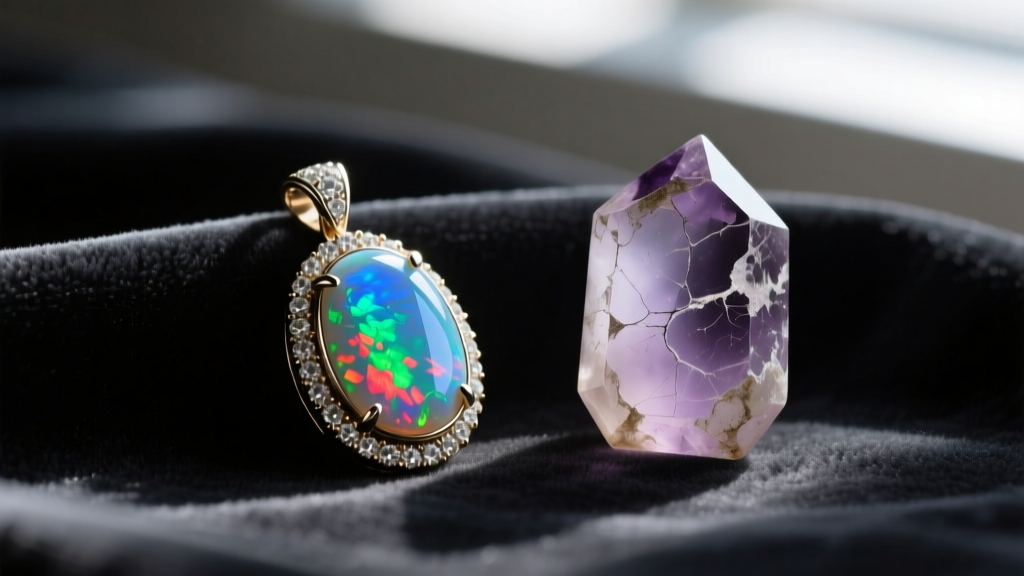
For example, a September baby (Sapphire, Mohs 9) can easily withstand a delicate four-prong setting. However, an October baby (Opal, Mohs 5.5-6.5) or a June baby (Pearl, Mohs 2.5-4.5) will quickly chip or scratch if left exposed in a prong setting, especially when knocking against heavier metal initial charms.
Birthstone Troubleshooting Matrix
| Birth Month | Common Stone | Mohs Hardness | Recommended Setting | Cleaning Protocol |
|---|---|---|---|---|
| January | Garnet | 6.5 - 7.5 | Prong or Bezel | Ultrasonic safe, warm soapy water |
| April | Diamond | 10 | Prong | Ultrasonic safe, steam safe |
| June | Pearl / Moonstone | 2.5 - 6.5 | Bezel or Halo | Damp cloth only, NO chemicals |
| August | Peridot | 6.5 - 7 | Bezel | Warm soapy water, avoid acid |
| October | Opal / Tourmaline | 5.5 - 7.5 | Bezel | Damp cloth only, avoid heat |
| December | Tanzanite | 6.5 - 7 | Bezel or Halo | Warm soapy water, no ultrasonic |
Pro Tip: If your mother's necklace features soft stones like Opal or Pearl, have a jeweler retrofit the pendants with a bezel setting. A bezel wraps a continuous ribbon of metal around the gemstone's girdle, protecting the vulnerable edges from impact damage.
Clasp Failures: Supporting the Weight of Multiple Pendants
A beautiful initial and birthstone necklace for mom is useless if the clasp fails. Standard spring-ring clasps (the small circular ones with a tiny lever) are designed for lightweight, single-pendant chains. When loaded with 15 to 25 grams of gold letters and gemstones, the internal spring mechanism fatigues, and the clasp pops open unexpectedly.
The Fix: Lobster and Toggle Clasps
For multi-charm necklaces, upgrade to a lobster clasp or a toggle clasp.
- Lobster Clasps: Look for a 9mm or 11mm solid 14k or 18k gold lobster clasp. The internal spring is heavier, and the lever mechanism is more secure against lateral pulling.
- Toggle Clasps: A T-bar toggle is exceptionally secure for heavier necklaces because the weight of the charms actually pulls the T-bar tightly against the O-ring, making it nearly impossible to slip out accidentally.
Furthermore, inspect the end links of the chain. If the chain terminates in a standard 1.0mm link, the clasp will eventually wear through the soft gold. Request that your jeweler add a heavy-duty soldered end tag (at least 2.0mm thick) to provide a robust anchor point for the clasp.
Metal Allergies & Tarnish: Solving Skin Irritation
It is incredibly common for women to develop sudden contact dermatitis from a necklace they have worn for years. This is particularly prevalent with white gold chains. According to the Federal Trade Commission (FTC) Jewelry Guides, 14k white gold is an alloy that frequently contains nickel to achieve its silvery hue. Over time, the rhodium plating wears off from the friction of the pendants sliding back and forth, exposing the nickel to the skin.
Hypoallergenic Alternatives
If your mother experiences redness or itching along her neckline, the troubleshooting solution is metallurgical. You have three viable options:
- Re-plate with Rhodium: Have the white gold chain professionally polished and re-plated with a thick layer of rhodium. This must be repeated every 12-18 months.
- Switch to Platinum: Platinum is naturally white, hypoallergenic, and significantly denser than gold, making it highly resistant to the friction wear caused by sliding charms.
- Use 18k Yellow or Rose Gold: Higher karat yellow and rose gold alloys typically use copper, silver, or zinc instead of nickel, drastically reducing the risk of allergic reactions.
"When designing custom family jewelry, always prioritize the structural integrity of the chain and the protective setting of the stones over sheer daintiness. A slightly thicker 1.5mm chain will outlast a fragile 0.8mm chain by decades." — American Gem Society (AGS) Bench Jeweler Guidelines.
Length & Proportion: Fixing the 'Stacked Charm' Look
Another aesthetic and functional problem occurs when all the initial and birthstone charms slide to the very bottom of the chain, stacking on top of one another. This not only looks cluttered but causes the metal letters to scratch the gemstones.
Implementing Spacer Bars and Soldered Links
To maintain a beautiful, spread-out layout across the collarbone, utilize spacer bars or have the charms soldered at fixed intervals. A horizontal gold spacer bar with multiple loops will hold the pendants parallel to one another, preventing them from overlapping. Alternatively, a skilled bench jeweler can permanently solder the jump rings to specific links on a rolo chain, ensuring the 'M', 'A', and 'T' initials remain evenly spaced exactly 1.5 inches apart, regardless of how the necklace moves.
Summary Checklist for a Flawless Custom Piece
Before finalizing or repairing an initial and birthstone necklace for mom, run through this expert troubleshooting checklist:
- Chain Type: Is it a 1.2mm+ box or rolo chain to prevent twisting?
- Jump Rings: Are all charm connectors soldered shut?
- Gemstone Settings: Are soft stones (under Mohs 7) protected by bezel settings?
- Clasp Security: Is the clasp a 9mm+ lobster or toggle, anchored to a heavy end tag?
- Metal Purity: Is the alloy nickel-free to prevent contact dermatitis?
By addressing these mechanical and gemological pain points, you ensure that this deeply personal piece of jewelry remains a flawless, wearable treasure rather than a tangled frustration sitting in a jewelry box.


