The Turquoise Station Necklace: Stone & Chain Material Guide
Discover how to evaluate a turquoise station necklace. Compare stone grades, chain metals, and pricing to find authentic, durable jewelry.

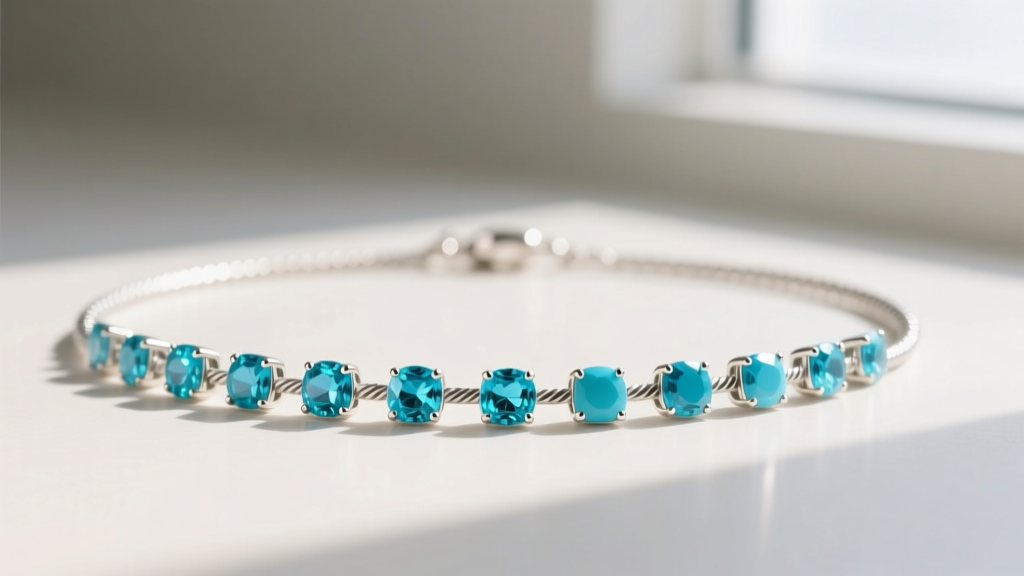
When evaluating a turquoise station necklace, the aesthetic appeal of the spaced-out gemstones often overshadows the critical material properties that dictate the piece's longevity. A station necklace distributes weight and tension across multiple points on a chain, meaning both the gemstone treatment and the chain metal's tensile strength must be perfectly matched. In the 2026 jewelry market, where synthetic simulants and heavily treated stones are increasingly sophisticated, understanding the exact material composition of your turquoise and its supporting chain is essential for making an informed investment.
Understanding Turquoise Grades in Station Necklaces
Turquoise is a hydrous phosphate of copper and aluminum, ranking between 5 and 6 on the Mohs hardness scale. Its natural porosity makes it highly susceptible to discoloration from skin oils, cosmetics, and environmental pollutants. Because of this, the vast majority of turquoise used in commercial station necklaces undergoes some form of treatment. According to the Gemological Institute of America (GIA), understanding these treatments is the first step in evaluating a necklace's true value.
Natural vs. Stabilized vs. Reconstituted
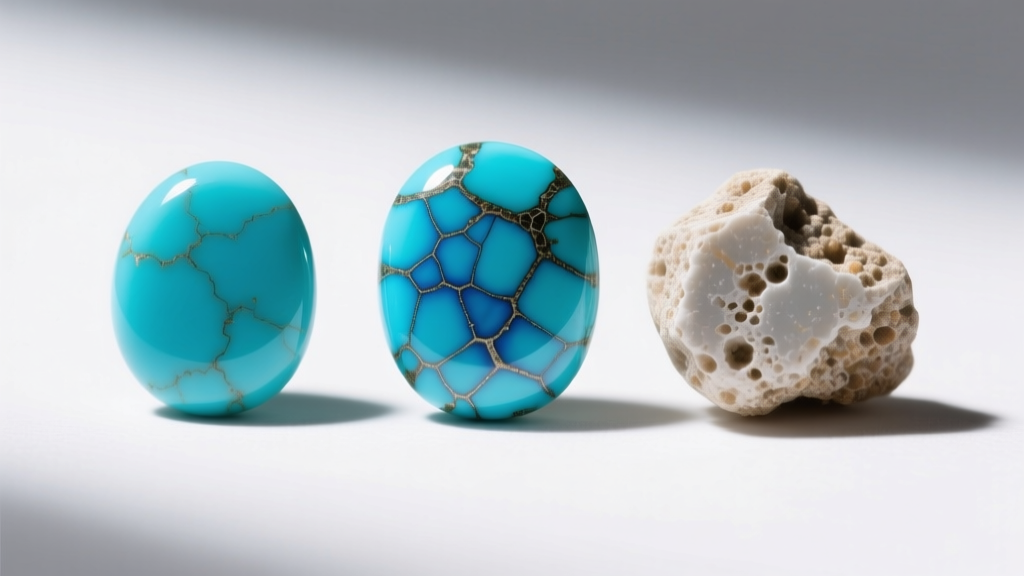
Natural (Untreated) Turquoise: Only about 3% to 5% of mined turquoise is hard and dense enough to be cut and polished without stabilization. Natural stones, particularly high-grade Persian or premium Sleeping Beauty, are exceptionally rare. While beautiful, natural turquoise in a station necklace requires meticulous care, as it will absorb oils and darken over time.
Stabilized Turquoise: This is the industry standard for high-quality jewelry. Lower-grade 'chalk' turquoise is subjected to a vacuum or pressure process where an epoxy resin or plastic is forced into the stone's pores. This increases the Mohs hardness to around 6.5, prevents color shifting, and allows for precise cabochon cutting. A premium stabilization method is the Zachery treatment, which uses a potassium/sodium silicate solution rather than plastic, maintaining the stone's natural feel and electrical properties.
Reconstituted Turquoise: Often found in budget-friendly station necklaces (under $50), reconstituted turquoise is made from turquoise dust and chalk bonded with dyes and epoxy resins. While it provides a uniform color, it lacks the unique matrix patterns and value retention of solid stone.
Chain Metal Properties: What Holds Your Stations?
The failure point of most station necklaces is not the stone, but the chain link where the station is attached. The constant friction and weight distribution require a metal with high tensile strength and appropriate gauge thickness. Avoid hollow-core chains or anything below a 1.0mm gauge for stone stations.
| Metal Type | Tarnish Resistance | Recommended Gauge | Avg. Price Range (18-inch) |
|---|---|---|---|
| Sterling Silver (925) | Low (Requires polishing) | 1.2mm - 1.5mm Cable | $85 - $250 |
| 14k Gold-Filled (GF) | High (Mechanically bonded) | 1.0mm - 1.2mm Rolo | $120 - $300 |
| Solid 14k Gold | Very High | 0.9mm - 1.2mm Cable | $450 - $900+ |
| Vermeil (Silver + Gold) | Medium (Wears over time) | 1.2mm+ Box Chain | $90 - $200 |
For station necklaces, soldered jump rings are critical. If the stations are attached via unsoldered split rings or thin wire wraps, the wire will eventually act like a saw against the chain links, causing the necklace to snap. Always inspect the connection points under a loupe to ensure the metal loops holding the turquoise are fully soldered shut.
Identifying Fakes: Dyed Howlite and Magnesite
As genuine turquoise prices have surged following the 2012 closure of the legendary Sleeping Beauty mine and stricter export regulations from China's Hubei province, the market has been flooded with dyed howlite and magnesite. The Federal Trade Commission (FTC) Jewelry Guides mandate that sellers must disclose if a stone is a simulant, but misrepresentation remains common in online marketplaces.
Visual and Physical Failure Modes of Simulants
- Dye Pooling: Under a 10x jeweler's loupe, dyed howlite reveals concentrated dark dye pooling in the natural crevices and cracks of the stone, whereas genuine turquoise matrix (the host rock) has distinct, sharp geological boundaries.
- The Acetone Test: A cotton swab dipped in acetone (nail polish remover) rubbed on an inconspicuous area of a dyed stone will often lift the artificial color. This will not affect properly stabilized genuine turquoise.
- Weight and Temperature: Howlite and magnesite have different specific gravities than turquoise. Furthermore, genuine turquoise feels distinctly cooler to the touch initially compared to plastic-heavy reconstituted beads or dyed howlite.

Pricing Framework & Value Retention
When shopping for a turquoise station necklace, pricing is heavily dictated by the origin and treatment of the stone, combined with the chain metal. Use this framework to assess if a piece is fairly priced in the current market:
- Entry-Level ($30 - $80): Features reconstituted turquoise or dyed howlite on a sterling silver or silver-plated chain. Suitable for fast fashion, but holds zero resale value.
- Mid-Tier ($150 - $350): Features stabilized turquoise (often Kingman or Chinese origin with visible matrix) on a heavy 925 sterling silver or 14k gold-filled chain. This is the sweet spot for durable, everyday wear.
- Investment Grade ($500 - $1,500+): Features natural, untreated high-grade turquoise (such as Number 8, Lander Blue, or vintage Sleeping Beauty) set in solid 14k or 18k gold with soldered station links. These pieces appreciate in value as raw material scarcity increases.
Expert Insight: Always ask the jeweler for the specific mine origin and the exact stabilization method used. A reputable dealer will provide this data; a vague answer like 'genuine turquoise' is a red flag for treated or reconstituted material.
Care and Maintenance by Material Type
The maintenance required for your station necklace depends entirely on the material properties of both the stone and the chain.
Cleaning Natural and Stabilized Turquoise
Never use ultrasonic cleaners, steam cleaners, or harsh chemical jewelry dips on any form of turquoise. Ultrasonic vibrations can shatter natural stones and degrade the epoxy bonds in stabilized stones. Instead, use a soft, damp microfiber cloth with a drop of mild, phosphate-free dish soap. Gently wipe the cabochons and immediately dry them to prevent water from seeping into any micro-fissures.
Chain Maintenance
If your station necklace features a sterling silver chain, store it in an anti-tarnish bag with a silica gel packet when not in wear. The sulfur in the air reacts with the copper alloy in 925 silver, causing blackening. For gold-filled and solid gold chains, a simple soak in warm soapy water followed by a gentle brush with a baby-soft toothbrush will remove lotion and skin oil buildup from the chain links, restoring the metal's luster without risking damage to the turquoise stations.