Citrine Cross Necklace Trends 2026: Style & Layering Guide
Discover 2026 citrine cross necklace trends, from heat-treated vs. natural quartz grades to expert layering techniques and neckline pairings.

The 2026 Resurgence: Spiritual Maximalism and the Citrine Cross
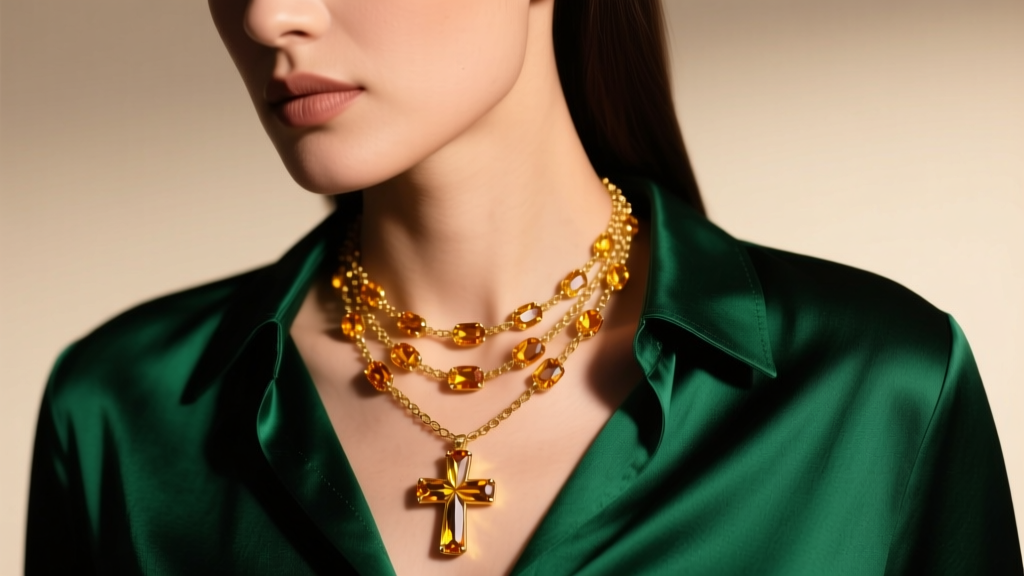
As we navigate the jewelry landscape of 2026, the industry has decisively pivoted from the understated "quiet luxury" of previous years into an era that trend forecasters are calling "spiritual maximalism." At the absolute forefront of this movement is the citrine cross necklace. No longer relegated to vintage estate jewelry or strictly traditional religious contexts, the citrine cross has been reclaimed by high fashion and everyday stylists as a bold, sun-drenched statement piece. The warm, honeyed hues of citrine offer a striking alternative to the cool brilliance of diamonds or the deep greens of emeralds, providing a versatile pop of color that bridges the gap between casual daywear and elevated evening layering.
But styling a gemstone-encrusted or solid-carved quartz cross requires more than just slipping it over your head. It demands an understanding of gemological grading, chain metallurgy, and spatial layering. This comprehensive guide breaks down the exact specifications, material grades, and styling frameworks you need to master the citrine cross trend this year.
Gemology Deep Dive: Natural vs. Heat-Treated Citrine
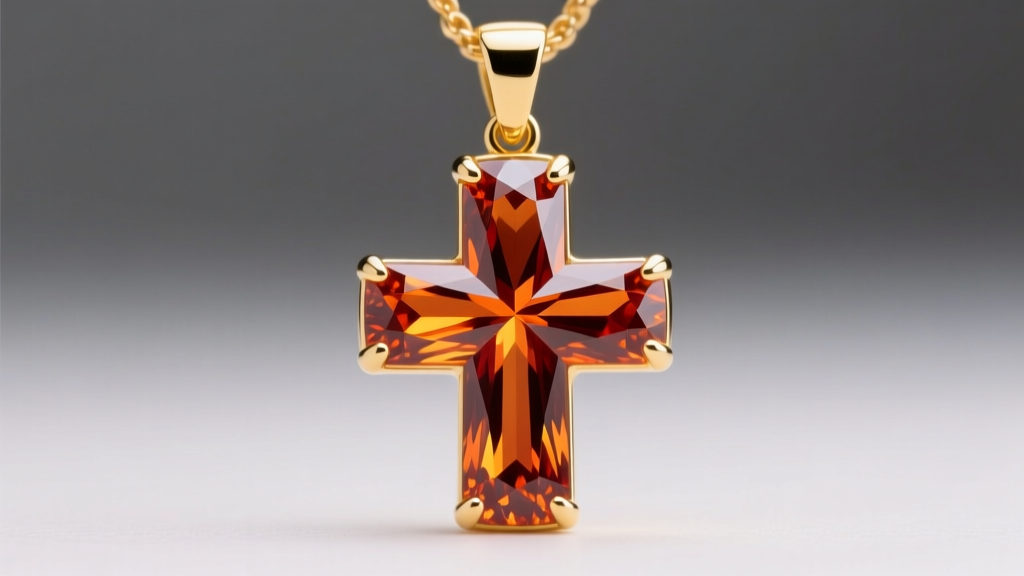
To truly appreciate a citrine cross pendant, you must understand the stone's origin. Citrine is the yellow-to-orange variety of macrocrystalline quartz (SiO2), registering a 7 on the Mohs hardness scale. This makes it highly suitable for daily-wear necklaces, as it resists scratching from common environmental dust (which contains quartz particles at a 7). However, the gemological reality of the modern market is that over 95% of commercial citrine is actually heat-treated amethyst or smoky quartz.
According to the Gemological Institute of America (GIA), baking purple amethyst at temperatures between 470°C and 560°C alters its iron impurities, transforming it into the yellow and orange hues we recognize as citrine. Natural, unheated citrine is exceptionally rare, typically presenting as a very pale, smoky yellow rather than the vibrant orange tones favored in modern jewelry design.
Citrine Grade Comparison Chart
| Trade Name | Color Profile | Origin / Treatment | Estimated Market Value (Per Carat) |
|---|---|---|---|
| Pale / Lemon Citrine | Light, pastel yellow | Natural or mild heat | $10 - $30 |
| Golden / Honey Citrine | Rich, saturated yellow | Heat-treated amethyst | $30 - $80 |
| Madiera Citrine | Deep reddish-orange | High-heat amethyst (Uruguay/Brazil) | $80 - $250+ |
| Fire Citrine | Vivid orange with red flashes | Rare natural (mostly treated) | $150 - $400+ |
When shopping for a high-end citrine cross necklace in 2026, look for "Madeira" or "Fire" grades if you want the pendant to command attention against the skin. For a more subtle, everyday layering piece, a pale lemon citrine set in white gold provides a beautiful, understated contrast.
Chain Metallurgy: Pairing the Right Metal and Gauge
A common failure mode in gemstone pendants is chain fatigue. A solid quartz cross, or a gold cross pavé-set with multiple citrine stones, carries significant weight—often between 4 to 12 grams depending on the dimensions. Suspending this weight on a delicate 0.8mm cable chain is a recipe for disaster, as the solder points on the links will eventually stretch and snap under the dynamic load of daily movement.
Recommended Chain Gauges by Pendant Weight
- Under 3 grams (Delicate Cross): 1.0mm to 1.2mm Cable or Snake Chain. Best for layering.
- 3 to 8 grams (Standard Cross): 1.5mm to 2.0mm Box Chain or Figaro. The interlocking geometry of a box chain distributes weight evenly, preventing link distortion.
- Over 8 grams (Chunky / Solid Carved Cross): 2.5mm to 3.5mm Curb or Rope Chain. Requires a heavy-duty lobster clasp with a reinforced jump ring.
Regarding metal color, 14k yellow gold (58.5% pure gold, Vickers hardness ~140 HV) is the industry standard for citrine. Its warm undertones amplify the golden hues of the quartz. However, 2026 has seen a massive spike in mixed-metal styling. Pairing a warm Madeira citrine cross with a stark, rhodium-plated 18k white gold chain creates a high-contrast, editorial look that prevents the jewelry from appearing overly vintage or dated.
Masterclass: Layering Your Citrine Cross Pendant
The architecture of a successful necklace stack relies on the "Rule of Thirds" and varying chain textures. Because a cross pendant has strong geometric lines (both vertical and horizontal), it acts as an anchor piece. Your surrounding chains should complement, not compete with, this geometry.
The 2026 Editorial Stack Framework
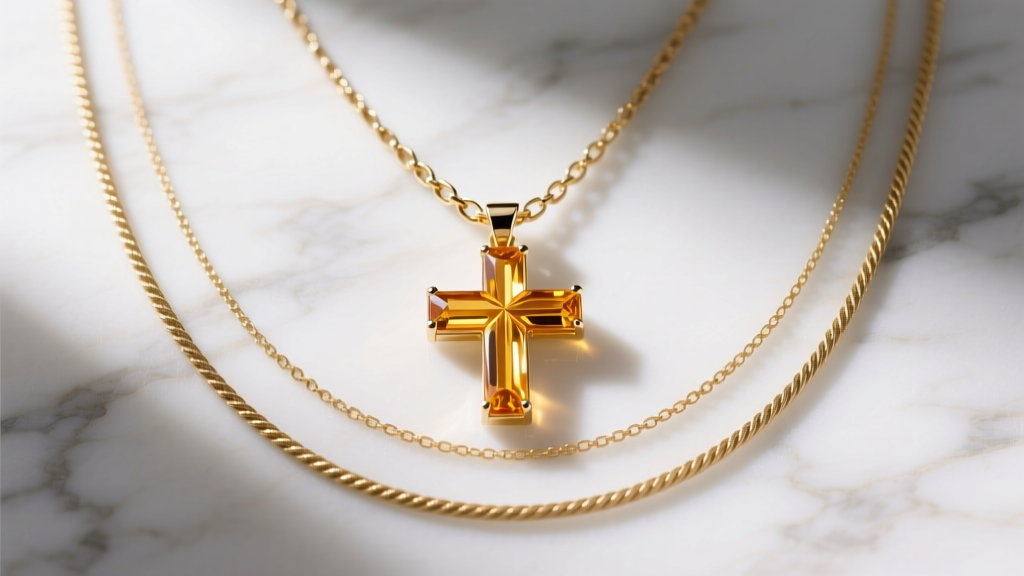
- The Base (16 inches): Start with a 16-inch 1.5mm yellow gold snake chain or a small-baroque pearl strand. This sits high on the collarbone and frames the face.
- The Anchor (18 to 20 inches): Your citrine cross necklace sits here. Ensure the bail (the loop connecting the pendant to the chain) is large enough to slide freely on a 2.0mm box chain. The pendant should rest precisely at the hollow of the throat or just above the sternum.
- The Trailer (24 to 28 inches): Finish with a long, lightweight 1.0mm rope chain, perhaps featuring a tiny, bezel-set diamond or plain gold bead at the terminus. This draws the eye downward, elongating the torso.
Neckline Architecture: Framing the Cross
The interplay between your clothing's neckline and your citrine cross necklace dictates the overall silhouette. Here is how to map your jewelry to your wardrobe:
- Deep V-Neck: The natural geometry of a V-neck perfectly mirrors the vertical drop of a cross pendant. Use an 18-inch chain so the cross floats in the negative space of the neckline without touching the fabric.
- Crew Neck / T-Shirts: A tight crew neck fights with shorter chains. Opt for a 22-inch or 24-inch chain, allowing the citrine cross to rest below the collarbone, breaking up the solid block of cotton fabric.
- Turtlenecks and Mock Necks: This is where dark, moody fabrics shine. A large, chunky Madeira citrine cross on a 28-inch blackened silver or oxidized gold rope chain worn over a black cashmere turtleneck is a quintessential 2026 winter aesthetic.
- Off-the-Shoulder / Boat Neck: These wide necklines expose the collarbones. Avoid long pendants that will swing and tangle. Instead, wear a choker-length (15-inch) citrine cross that sits tight against the base of the throat.
Care & Maintenance: Preventing Quartz Fatigue
While quartz lacks true cleavage planes—meaning it won't split along predictable fault lines like a diamond or topaz—it is highly susceptible to thermal shock and girdle chipping. The Mindat mineral database notes that rapid temperature changes can cause internal fracturing in quartz specimens.
Crucial Care Rules:
- Avoid Steam Cleaners: Never use a high-pressure steam cleaner on a citrine cross. The sudden blast of heat can cause microscopic fractures, especially if the stone has liquid inclusions.
- Ultrasonic Caution: Ultrasonic cleaners are generally safe for solid, unfractured citrine, but if your cross features pavé-set stones, the high-frequency vibrations can loosen the adhesive or bend the delicate prongs.
- Prong Maintenance: If your cross features faceted citrines held by 14k gold prongs, have a jeweler check the prong tension every 12 months. Quartz is hard enough that if a prong pulls back, the stone will easily pop out upon impact with a hard surface.
- UV Exposure: While citrine is more color-stable than amethyst, prolonged, direct exposure to intense UV light (like leaving it on a sunny dashboard) can slowly degrade the color saturation of heat-treated stones over several years.
Final Verdict
The citrine cross necklace has successfully transcended its traditional roots to become a cornerstone of modern, expressive jewelry styling in 2026. By understanding the gemological differences between natural and heat-treated quartz, selecting the correct chain gauge to prevent structural failure, and applying deliberate layering frameworks, you can transform this historic motif into a deeply personal, fashion-forward statement. Whether you opt for a pale lemon quartz on a delicate white gold cable or a massive Madeira cross on a heavy yellow gold Figaro chain, the key is intentionality. Treat your citrine cross not just as an accessory, but as a piece of wearable, sun-captured architecture.


