Clam Necklace Materials: Natural Shell vs. Metal vs. Resin
Compare clam necklace materials including natural shell, mother of pearl, cast metals, and resin. Discover durability, care, and pricing insights.

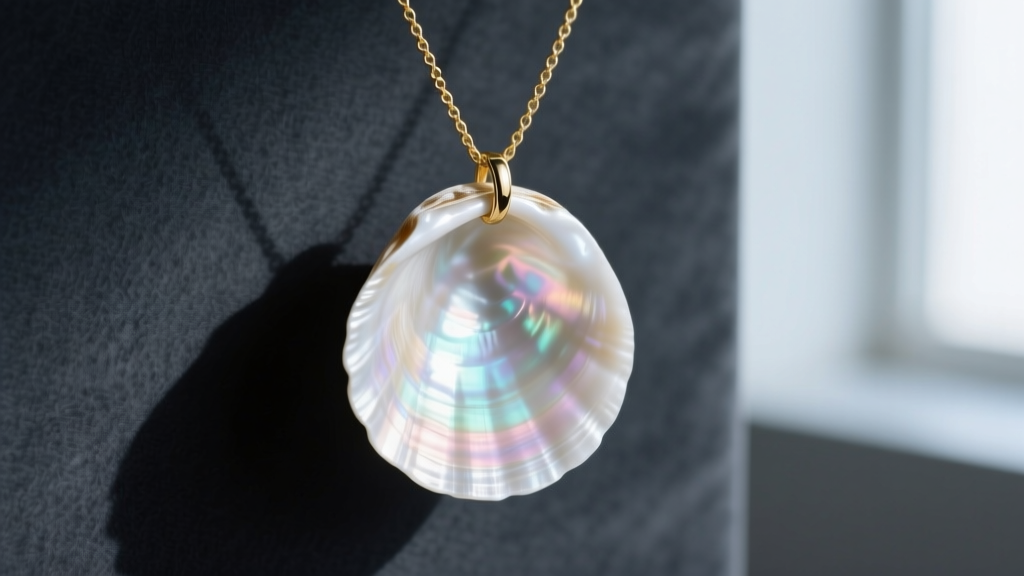
As marine-inspired aesthetics and coastal-core jewelry continue to dominate style radars in 2026, the clam necklace has evolved from a simple beach souvenir into a sophisticated staple of modern accessorizing. However, not all clam necklaces are created equal. The term encompasses a wide spectrum of materials, ranging from literal organic calcium carbonate shells to meticulously cast precious metals and synthetic resins.
Choosing the right material dictates not only the aesthetic and weight of the pendant but also its longevity, water resistance, and required maintenance. This comprehensive material comparison guide breaks down the physical properties, structural vulnerabilities, and pricing tiers of the most common materials used in clam necklaces today.
The Mineralogy of Natural Clam & Shell Necklaces
True natural shell necklaces are primarily composed of calcium carbonate in the form of aragonite or calcite, bound together by an organic protein matrix called conchiolin. According to mineralogical data from Mindat.org, aragonite registers between 3.5 and 4.0 on the Mohs hardness scale, making it significantly softer than quartz or diamond but durable enough for daily wear if protected from impact.
Quahog vs. Mother of Pearl (MOP)
When shopping for a natural shell clam necklace, you will typically encounter two distinct materials:
- Quahog Shell (Mercenaria mercenaria): Prized for its rare, deep purple and lavender hues. Quahog shells are thicker and denser than most bivalves, offering superior impact resistance. Because the purple pigment is non-nacreous, it lacks the mirror-like iridescence of pearl but offers a striking, matte-to-satin organic finish.
- Mother of Pearl (Pinctada maxima): Often marketed as "clam shell," MOP is technically derived from pearl oysters. It is highly nacreous, meaning its microscopic aragonite platelets diffract light to create a brilliant iridescence. The Gemological Institute of America (GIA) notes that nacre thickness and quality directly dictate the luster and structural integrity of the material.
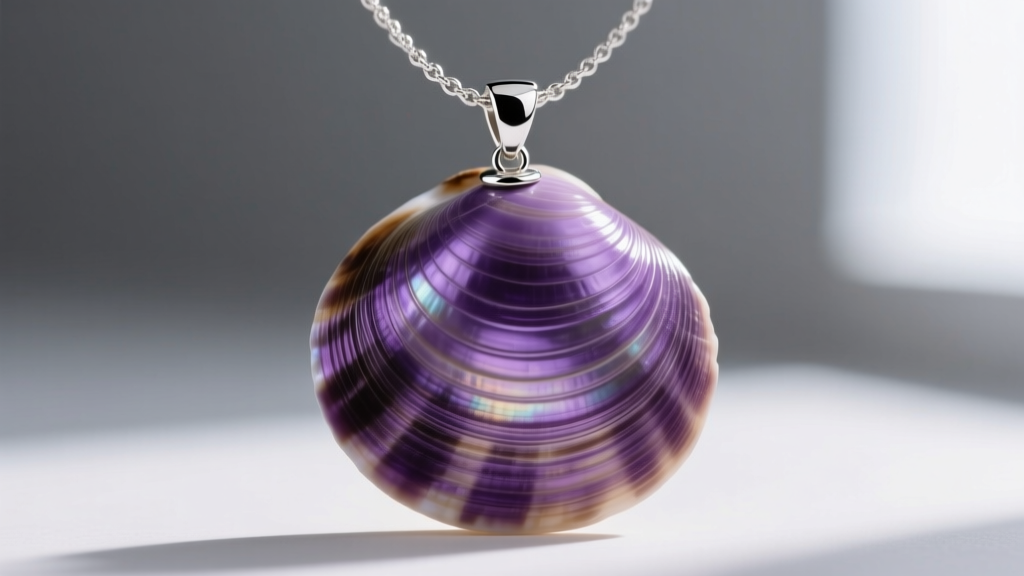
Price Range: Mass-produced MOP pendants range from $15 to $45. Rare, hand-carved Quahog pieces command between $60 and $150, depending on the saturation of the purple coloration.
Cast Metals: The Clam Motif in Silver and Gold
For those who want the aesthetic of a clam without the porosity and fragility of organic shell, cast metal clam charms are the premier alternative. These are typically produced via lost-wax casting, allowing for intricate replication of the shell's exterior ridges (umbo and growth lines) and interior nacreous texture.
Sterling Silver (925) and Gold Alloys
Sterling silver remains the most popular metal for clam motifs due to its cool tone, which mimics the oceanic origin of the design. However, silver is prone to sulfur-induced tarnishing. To combat this, many high-end jewelers apply a micro-thin layer of rhodium plating over the 925 silver.
When moving up to 14k or 18k gold, the pendant gains significant heft. A solid 14k gold clam charm (approximately 15mm x 12mm) will weigh around 2.5 to 3.5 grams. This weight requires a sturdier chain—such as a 1.5mm to 2.0mm rope or box chain—to prevent the chain from kinking under the pendant's pendulum-like motion.
Enamel Applications: Vitreous vs. Cold
Many metal clam necklaces feature colored interiors to mimic the nacre. It is vital to distinguish between the two enamel types used:
- Vitreous Enamel: Kiln-fired glass powder melted onto the metal at roughly 800°C. It is highly scratch-resistant (Mohs 5.0-6.0) and will not fade, but it can shatter if dropped on a hard surface.
- Cold Enamel: A two-part epoxy resin cured at room temperature. It is impact-resistant and flexible but will scratch easily and degrade under prolonged UV exposure.
Synthetic Resins: Epoxy and Polymer Alternatives
In the fast-fashion and indie-handmade sectors, resin and polymer clay clam necklaces are ubiquitous. Epoxy resin pendants are created by pouring liquid resin into silicone molds, often embedding real sand, dried sea glass, or metallic pigments to simulate the interior of a clam.
Durability and Photodegradation
While cured epoxy resin boasts a Shore D hardness of around 80-85 (making it highly scratch-resistant compared to natural shell), it suffers from photodegradation. Without the addition of high-quality UV stabilizers (like HALS - Hindered Amine Light Stabilizers), clear resin will yellow and become brittle after 12 to 18 months of direct sunlight exposure. Polymer clay, conversely, is opaque and avoids the yellowing issue but is prone to snapping if the pendant is thinner than 3mm at the drill hole.
Price Range: Resin and polymer clam necklaces are highly accessible, typically retailing between $12 and $35.
Comprehensive Material Comparison Matrix
To make an informed purchasing decision, refer to the structural and practical comparison of the primary clam necklace materials below.
| Material | Mohs Hardness | Water / Sweat Resistance | Weight Profile | Average Price Range |
|---|---|---|---|---|
| Natural MOP (Nacre) | 2.5 - 3.5 | Poor (Acid sensitive) | Light to Medium | $15 - $45 |
| Quahog Shell | 3.0 - 4.0 | Moderate | Medium | $60 - $150 |
| 925 Sterling Silver | 2.5 (Metal) / 5.5 (Rhodium) | High (Tarnish risk) | Medium to Heavy | $40 - $120 |
| 14k Solid Gold | 3.5 - 4.0 | Excellent | Heavy | $250 - $600+ |
| Epoxy Resin | ~3.0 (Shore D 80) | Excellent | Very Light | $12 - $35 |
Hardware, Bails, and Galvanic Corrosion
The longevity of a natural shell clam necklace is often determined not by the shell itself, but by how it connects to the chain. The hardware interface is a critical point of failure.
Drilled Holes vs. Glue-On Bails
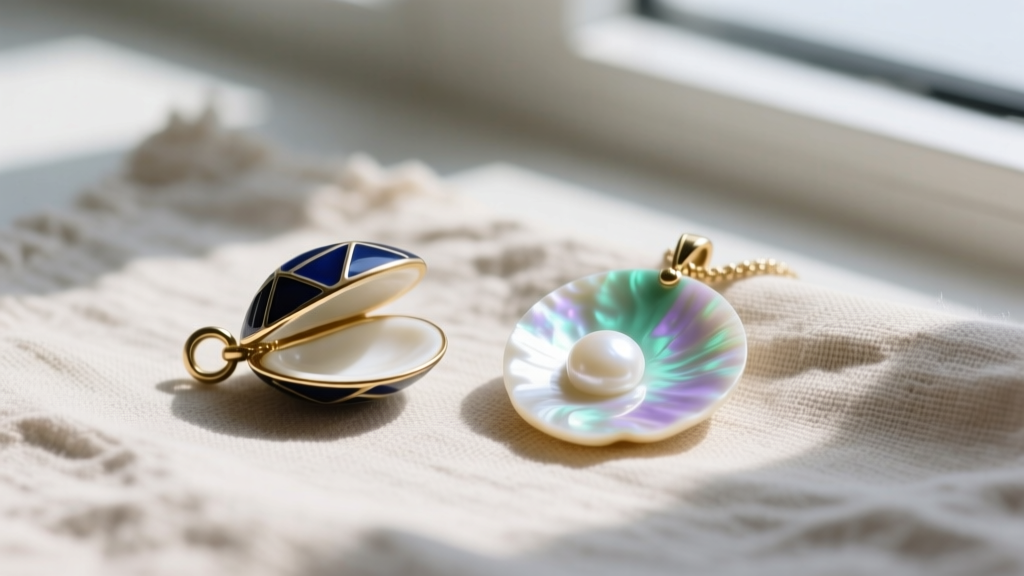
Cheaper shell necklaces utilize glue-on bails adhered directly to the nacre with cyanoacrylate or basic epoxy. Over time, the natural oils from the skin and the slight flexing of the shell cause the adhesive to fail, resulting in a lost pendant.
Superior craftsmanship involves drilling a 1.5mm to 2.0mm hole through the thickest part of the shell's hinge (the umbo). To prevent the metal jump ring from grinding against the calcium carbonate and enlarging the hole, expert jewelers insert a microscopic silicone O-ring or a flush-fitted metal grommet into the drill hole. This acts as a shock absorber and prevents structural fracturing.
Galvanic Reactions
When natural shell is constantly exposed to moisture (sweat or swimming), it can act as a mild electrolyte. If a base metal chain or brass bail is used in conjunction with a silver or gold jump ring, galvanic corrosion can occur, leaving permanent dark stains on the porous edges of the shell. Always ensure that any metal touching a natural shell is either solid gold, platinum, or high-grade surgical titanium to prevent metallic staining.
Long-Term Care and Degradation Framework
Maintaining a clam necklace requires an understanding of its specific material vulnerabilities. Natural shells are highly susceptible to acidic environments. Human sweat has a pH ranging from 4.5 to 7.0. Prolonged contact with acidic sweat will literally dissolve the calcium carbonate matrix of a Mother of Pearl clam pendant, leaving it dull, chalky, and stripped of its iridescent luster.
What to Avoid
- Ultrasonic Cleaners: Never put natural shell or resin in an ultrasonic cleaner. The high-frequency cavitation bubbles will pit the nacre and shatter cold enamel.
- Ammonia and Bleach: Common jewelry dips contain ammonia, which will permanently cloud the surface of both natural shell and epoxy resin.
- Perfumes and Hairsprays: The alcohol and chemical solvents in cosmetics will degrade the protein matrix (conchiolin) in natural shells, causing delamination.
The Proper Cleaning Protocol
For natural shell and MOP clam necklaces, use a damp, lint-free microfiber cloth with a drop of mild, pH-neutral castile soap. Wipe gently, rinse quickly under lukewarm distilled water (to avoid hard water mineral deposits), and pat dry immediately. Store the necklace in a soft cotton pouch away from direct sunlight and harder gemstones that could scratch its relatively soft surface.
Final Verdict: Which Material is Right for You?
If you prioritize authenticity, iridescence, and organic uniqueness, a natural Mother of Pearl or Quahog clam necklace is unmatched, provided you are willing to adhere to strict care protocols and remove it before swimming or exercising.
If you desire a heirloom-quality, waterproof piece that can be worn daily without anxiety, a solid 14k gold or rhodium-plated sterling silver cast clam motif is the superior investment. Finally, for bold, colorful, and lightweight fashion statements, high-grade UV-stabilized resin offers the most versatility at an accessible price point. By understanding the mineralogy and metallurgy behind these pieces, you can select a clam necklace that perfectly aligns with your lifestyle and aesthetic preferences.


