How to Clean a 14k Gold Necklace Macy's Shoppers Love
Learn expert cleaning and maintenance tips for your 14k gold necklace Macy's shoppers love. Keep your fine jewelry shining with our pro care guide.

The Science Behind Your 14k Gold Alloy
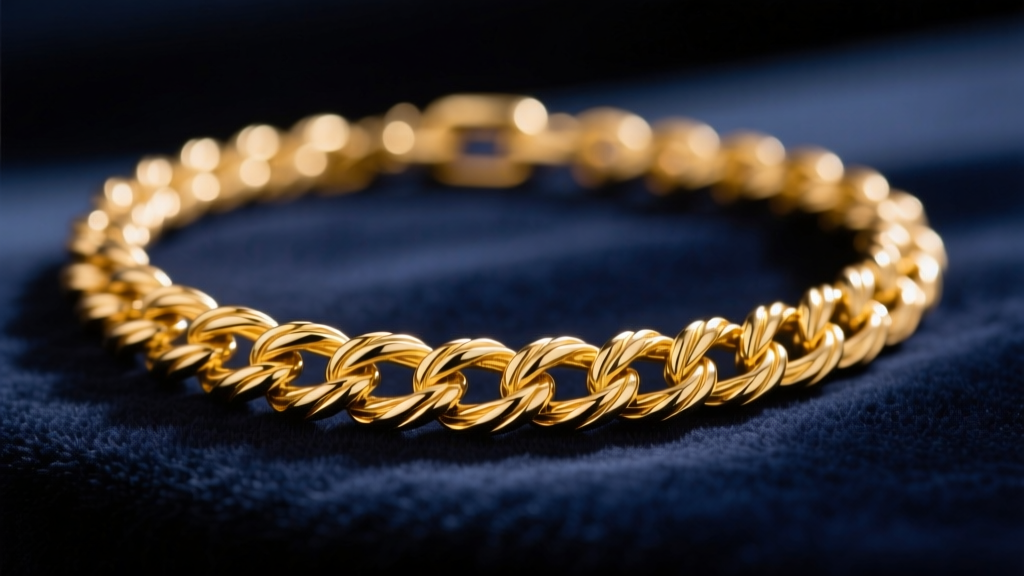
When you invest in a beautiful piece of fine jewelry, particularly a 14k gold necklace Macy's shoppers frequently rave about from brands like Effy or BERRICLE, you are buying into a specific metallurgical formula. Pure 24k gold is too soft for daily wear; it would bend and scratch under the slightest pressure. To create a durable chain or pendant, jewelers alloy the gold with other metals. A 14k gold piece contains exactly 58.3% pure gold and 41.7% alloy metals. Understanding this ratio is the first step in proper maintenance, as it is the alloy metals—not the gold itself—that dictate how your necklace reacts to its environment.
How Alloy Metals Cause Tarnish
Gold is a noble metal, meaning it does not react with oxygen or moisture. However, the copper, silver, zinc, or nickel mixed into your 14k gold are highly reactive. When these alloy metals are exposed to sulfur compounds in the air, chlorine in tap water, or the natural acids and salts in your sweat, they undergo a chemical reaction that creates a dark, dull film on the surface known as tarnish. If your favorite Macy's pendant has suddenly lost its luster, you are not seeing 'dirty' gold; you are seeing a microscopic layer of copper or silver sulfide.
The Professional Cleaning Protocol
Forget the abrasive home remedies you might find on social media. Toothpaste, baking soda, and harsh chemical dips are strictly forbidden for fine jewelry. Baking soda has a Mohs hardness of around 2.5, which is enough to leave micro-scratches on high-polish gold and softer gemstones. Instead, follow this jeweler-approved cleaning framework to restore your necklace's brilliance safely.
Step 1: The Distilled Water Soak
Fill a small glass bowl with warm distilled water. Avoid tap water, as municipal water supplies often contain trace amounts of chlorine and fluoride, which can accelerate the tarnishing of the copper alloys in your 14k gold. Add exactly three drops of a pH-neutral, lotion-free dish soap (such as original blue Dawn). Submerge your necklace and let it soak for 15 to 20 minutes. This loosens sebum, dead skin cells, and cosmetic residue trapped in the chain links and pendant bails.
Step 2: The Micro-Brush Agitation
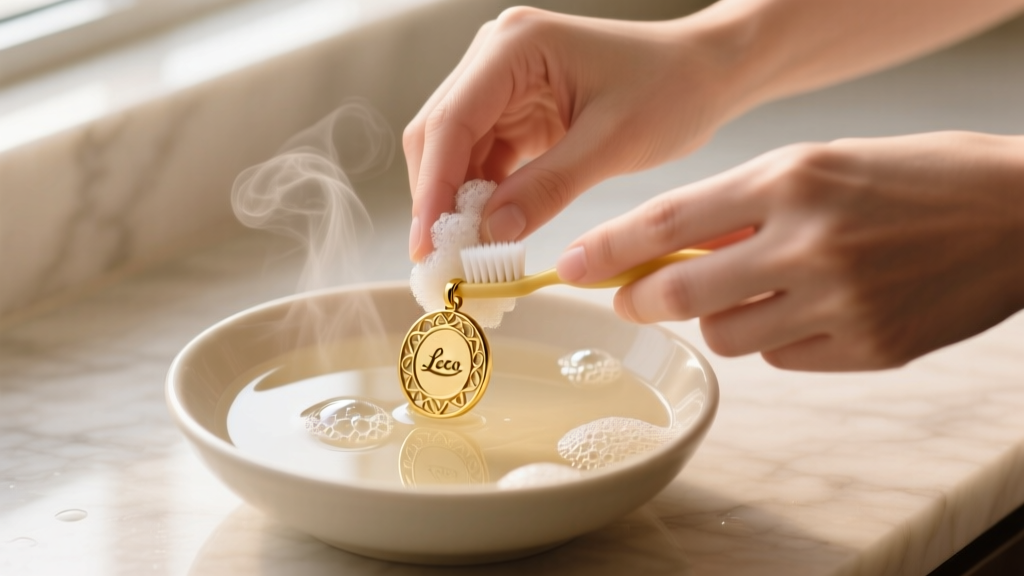
Remove the necklace from the soak and lay it flat on a clean microfiber towel. Using an extra-soft baby toothbrush, gently agitate the soapy water over the chain and pendant. Pay special attention to the back of the pendant and the clasp mechanism, where lotion and skin oils accumulate heavily. Never use a standard adult toothbrush, as the bristles are too stiff and will create a matte, scratched finish on polished gold surfaces.
Step 3: The Lint-Free Dry
Rinse the necklace thoroughly under a gentle stream of lukewarm distilled water. Pat it dry with a lint-free microfiber cloth. Do not use paper towels or tissues; wood pulp fibers can cause microscopic scratching and leave behind stubborn lint that catches in the clasp.
Navigating Gemstone Vulnerabilities
Many 14k gold necklaces sold at Macy's feature diamond accents or colorful gemstone pendants. You must adjust your cleaning protocol based on the specific stones in your piece. According to the Gemological Institute of America (GIA), gemstones have varying levels of porosity and fracture toughness that dictate how they can be cleaned.
- Diamonds, Sapphires, and Rubies (Mohs 8-10): These are highly durable and can withstand the warm soapy soak and gentle brushing described above. They also tolerate ultrasonic cleaners well, provided they do not have significant internal inclusions or fracture fillings.
- Emeralds and Opals (Mohs 5.5-7.5): These stones are highly sensitive to thermal shock and chemicals. Emeralds are almost always fracture-filled with cedar oil or synthetic resins. Soaking them in soapy water will strip the oil, leaving the stone looking cloudy and heavily included. Clean these only with a barely damp, soft cloth.
- Pearls and Coral (Organic Gems): Never submerge organic gems. They are highly porous and will absorb soapy water, which can degrade their nacre or cause the silk thread inside a pearl pendant to stretch and rot.
White Gold Maintenance: The Rhodium Factor
If your Macy's purchase is a 14k white gold necklace, you are dealing with an additional layer of maintenance. White gold alloys (mixed with nickel or palladium) naturally have a faint yellowish-gray tint. To achieve the brilliant, mirror-like chrome finish, the jewelry is electroplated with a microscopic layer of rhodium, a rare platinum-group metal. This plating is typically only 0.75 to 1.0 microns thick.
Over time, friction from your skin and clothing will wear this plating away, particularly on the back of the pendant and the links that rest against your collarbone. When your white gold necklace begins to look slightly yellow or dull, no amount of cleaning will fix it. You must take it to a professional jeweler to have it re-rhodium plated, a service that typically costs between $40 and $75 and should be done every 12 to 18 months depending on wear.
Strategic Storage Solutions
How you store your necklace when it is not on your neck is just as critical as how you clean it. Tossing a delicate 14k gold chain into a communal jewelry box guarantees two things: severe tangling (which can stretch and snap fine links) and accelerated tarnishing due to exposure to ambient air and moisture.
| Storage Method | Tarnish Prevention | Tangle Prevention | Best For |
|---|---|---|---|
| Open Jewelry Box Trays | Poor | Good | Short-term display only |
| Standard Ziplock Bags | Fair | Excellent | Travel (if air is squeezed out) |
| Anti-Tarnish Cloth Pouches | Excellent | Fair | Daily drawer storage |
| Hanging Velvet Organizers | Good | Excellent | Long chains and layered sets |
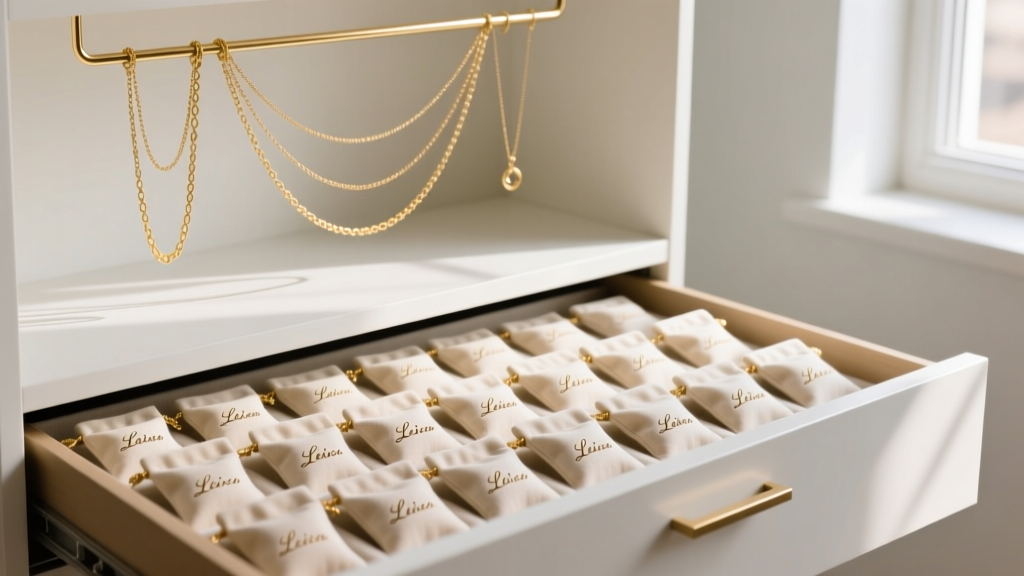
For optimal preservation, store your 14k gold necklace in an individual anti-tarnish cloth pouch. These pouches are treated with silver sulfide-binding compounds that neutralize sulfur in the air before it can reach your jewelry. If you prefer to keep your necklaces visible, use a hanging organizer with individual velvet compartments, and ensure the clasp is left slightly outside the zippered section to prevent the chain from pulling through and knotting.
Troubleshooting Common Chain Issues
Even with meticulous care, mechanical issues can arise with fine chains like box, rope, or serpentine links. Here is how to handle the most common problems without causing further damage:
- Stiff Lobster Clasps: If the spring mechanism in your clasp becomes sticky or difficult to pull back, do not force it or apply WD-40. Place a single drop of mineral oil on a cotton swab and apply it directly to the clasp hinge. Work the lever back and forth gently until the oil penetrates the spring, then wipe away any excess.
- Severe Chain Kinks: Fine chains easily fold back on themselves, creating tight kinks that weaken the metal. To remove a kink, lay the chain flat on a glass surface. Use two sewing needles to gently tease the loop open. Never pull the ends of the chain in opposite directions to 'snap' a kink out; this will permanently stretch the gold links and lead to a break.
- Caught Links and Snags: If your chain snags on a sweater, do not yank it. Carefully unweave the fabric from the gold. If a link has been pulled open, it must be soldered shut by a professional using a laser welder to avoid melting the surrounding delicate links.
By treating your fine jewelry with the respect its metallurgy demands, your 14k gold necklace will remain a brilliant, enduring staple in your wardrobe for decades. For more comprehensive guidelines on precious metal care, always refer to the standards set by Jewelers of America.


