Sterling Silver Small Cross Necklace: Troubleshooting Tarnish & Snaps
Is your sterling silver small cross necklace tarnishing or breaking? Discover expert troubleshooting tips for chain snaps, bail wear, and black oxidation.

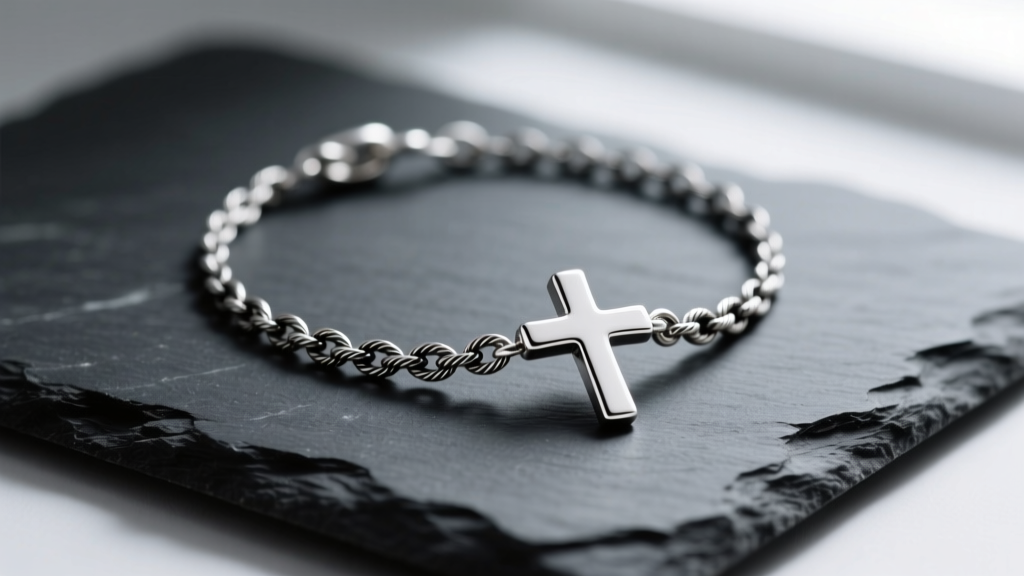
A delicate sterling silver small cross necklace is a timeless staple, offering a subtle nod to faith, fashion, or personal meaning. However, because these pieces rely on ultra-fine chains and miniature cast components, they are uniquely prone to specific failure modes. From rapid black oxidation and green skin discoloration to the dreaded "sawing effect" that snaps chains, owning a 925 silver cross pendant requires targeted maintenance. In this 2026 troubleshooting guide, we break down the exact metallurgical and mechanical reasons your necklace is failing—and provide actionable, jeweler-approved solutions to fix them.
The Metallurgy of 925 Silver and Pendant Casting
To troubleshoot effectively, you must first understand the material. Pure silver is too soft for daily wear, so the jewelry industry uses Sterling Silver, an alloy containing exactly 92.5% silver and 7.5% copper (or occasionally zinc). According to the The Silver Institute, this copper addition provides the necessary tensile strength for fine jewelry, but it is also the root cause of your most common headaches: tarnish and skin discoloration.
Furthermore, small cross pendants are typically created via lost-wax casting. If the sprue (the channel where molten metal enters the mold) is cut too close to the bail—the loop that connects the cross to the chain—it can leave a microscopic weak point. Over time, the friction of the chain rubbing against this cast bail will wear through the metal, causing the pendant to detach and fall off unnoticed.
Troubleshooting Rapid Black Tarnish and Green Skin
If your sterling silver small cross necklace is turning black or leaving a greenish-gray smudge on your collarbone, you are witnessing a chemical reaction, not a sign of "fake" silver. Silver itself does not tarnish; the 7.5% copper alloy reacts with sulfur compounds in the air, your sweat, and everyday products like lotions or perfumes, creating silver sulfide (Ag2S).

The Galvanic Tarnish Removal Method
Never use commercial liquid silver dips on a small cross necklace. These dips contain thiourea, a toxic chemical that strips away a microscopic layer of silver, leaving the surface porous and more susceptible to future tarnishing. Instead, use an electrolytic reduction bath to reverse the chemical reaction without removing any metal.
- Step 1: Line a glass bowl with heavy-duty aluminum foil, shiny side up.
- Step 2: Add 1 tablespoon of baking soda and 1 tablespoon of non-iodized salt.
- Step 3: Pour boiling water over the mixture and stir until dissolved.
- Step 4: Submerge your necklace, ensuring the silver touches the aluminum foil.
- Step 5: Leave for 3 to 5 minutes. The sulfur will transfer from the silver to the aluminum.
Jeweler's Warning: Do not use this method if your small cross features an intentional "antique" or oxidized finish in its crevices, as the bath will strip the dark detailing. It is also unsafe for crosses inlaid with soft, porous stones like turquoise, opal, or pearl.
Solving the Green Skin Issue
If the copper in the alloy reacts with the acidity in your sweat, it creates copper chloride, which stains the skin green. To prevent this without switching to platinum, have a local jeweler apply a flash of rhodium plating to the back of the cross pendant. Rhodium is a hypoallergenic platinum-group metal that creates an invisible, non-reactive barrier. Expect to pay between $35 and $60 for this service, which typically lasts 1 to 2 years with daily wear.
The "Sawing Effect": Why Your Chain Keeps Snapping
The most frequent complaint regarding a sterling silver small cross necklace is the chain snapping at the clasp or right above the bail. This is rarely due to the weight of the pendant. A standard 12mm x 18mm solid silver cross weighs merely 1.5 to 2.5 grams. The true culprit is friction and geometry.
When a pendant hangs on a chain, the bail acts as a pivot point. If the inside of the bail or the connecting jump ring has a sharp, unpolished edge from the manufacturing process, every step you take causes the chain to slide back and forth across that edge. Over weeks of wear, the silver chain is literally sawed in half.
Chain Gauge and Style Compatibility Chart
Choosing the correct chain thickness and style is critical for distributing friction. Below is a troubleshooting matrix for pairing chains with small cross pendants weighing under 3 grams.
| Chain Style | Wire Gauge (mm) | Tensile Vulnerability | Best Use Case for Cross Pendants |
|---|---|---|---|
| Cable Chain | 0.7mm - 0.9mm | High (Prone to sawing) | Ultra-lightweight, flat, stamped crosses only. |
| Box Chain | 0.9mm - 1.1mm | Medium (Links can kink) | Standard 3D cast crosses; provides a smooth surface that resists friction. |
| Wheat Chain | 1.0mm - 1.2mm | Low (Highly durable) | Heavier solid crosses; the braided links prevent the bail from sawing through. |
| Rope Chain | 1.2mm+ | Low (Very strong) | Statement crosses; may overpower very petite, minimalist pendant designs. |
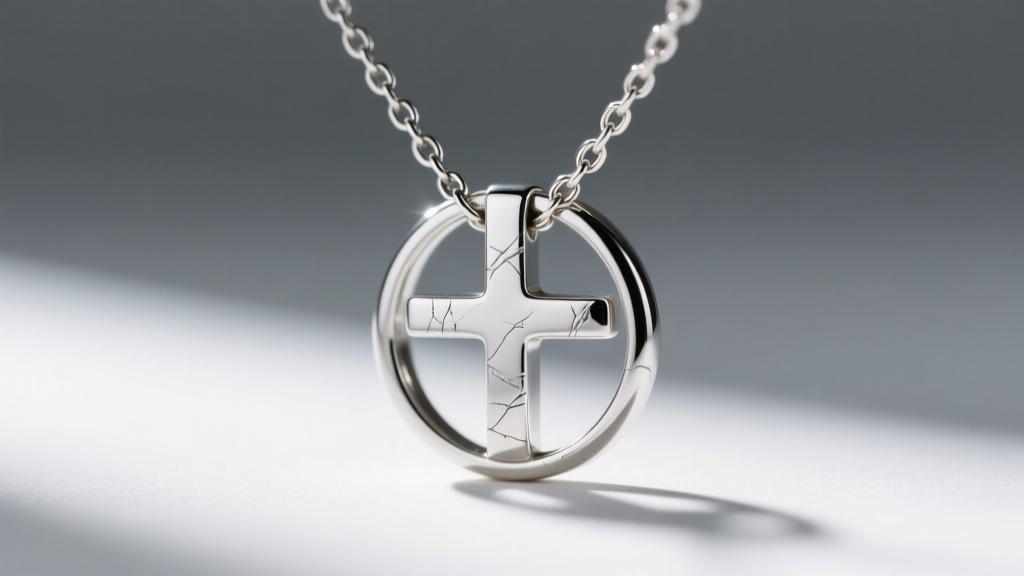
The Fix: Inspect the bail hole of your cross pendant under a magnifying glass. If you feel a sharp ridge, take it to a jeweler to have the bail hole "burred" or polished smooth. Additionally, upgrade your jump ring (the small ring connecting the clasp to the chain) to a thicker gauge or a split-ring design to eliminate weak points.
Solving the Upside-Down Cross Flip
A frustrating quirk of wearing a sterling silver small cross necklace is the pendant constantly flipping upside down or showing its back. This is a physics issue related to the pendant's center of gravity and the bail's orientation.
Latin crosses (where the bottom arm is longer) have a low center of gravity. If the bail is soldered too high on the vertical axis, or if the jump ring on the chain is too wide, the cross will swing freely and rotate. According to jewelry design principles outlined by the Gemological Institute of America (GIA), the suspension point must align perfectly with the pendant's natural resting axis.
Actionable Fixes for Pendant Rotation
- The Silicone Stopper: Thread two microscopic clear silicone earring stoppers onto the chain, one on each side of the pendant bail. This restricts the lateral movement and forces the cross to lay flat against the sternum.
- The Counterweight Bead: If the chain allows, add a tiny 2mm silver bead directly opposite the bail. This shifts the center of mass and anchors the pendant.
- Bail Replacement: Have a jeweler remove the standard loop bail and solder on a "tapered" or "V-shaped" bail, which naturally locks into the V-shape of the collarbone, preventing rotation.
Professional Interventions and Preventative Care
While home troubleshooting can resolve tarnish and minor friction issues, structural failures require professional intervention. If your chain has snapped, do not attempt to bend the links back together with pliers; this work-hardens the silver and guarantees it will snap again in the exact same spot.
Instead, seek out a jeweler who utilizes laser welding. Traditional torch soldering requires heating a large section of the delicate chain, which can melt the intricate links of a fine box or wheat chain. Laser welding uses a highly focused beam to fuse the metal at a microscopic level without affecting the surrounding links, resulting in a repair that is often stronger than the original factory weld.
For long-term care, the Jewelers of America recommends storing your sterling silver small cross necklace in an anti-tarnish cloth pouch (such as Pacific Silvercloth) rather than leaving it exposed on a jewelry tree. Exposure to ambient humidity and airborne sulfur from cooking or heating systems will accelerate oxidation, even when the piece is not being worn. By understanding the metallurgy and mechanics of your jewelry, you can ensure your cross necklace remains a pristine, enduring accessory for decades to come.


