George Frost Bravery Chain Necklace: Expert Review & Guide
An expert technical review of the George Frost Bravery chain necklace, covering alloy metallurgy, link soldering, and casting details.

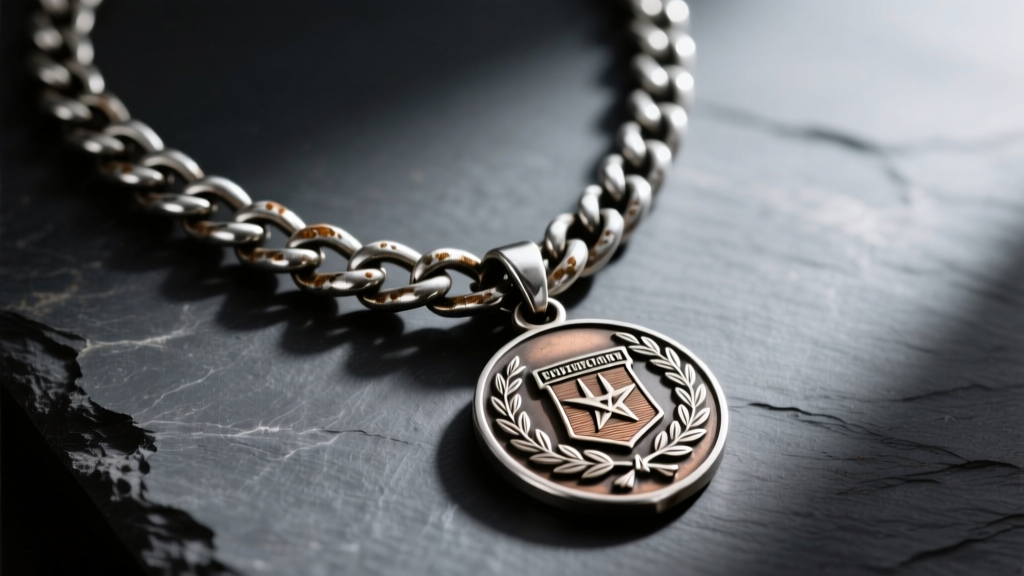
In the landscape of contemporary masculine and avant-garde jewelry, the George Frost Bravery chain necklace stands out not merely as an aesthetic statement, but as a triumph of small-batch metallurgical engineering. While many commercial brands rely on hollow electroformed links and stamped pendants to cut costs, Frost’s approach utilizes solid-cast elements, heavy-gauge wire, and intentional oxidation techniques that require a deep understanding of material science. This technical deep dive dissects the anatomy, alloy composition, and structural integrity of the Bravery chain and pendant configuration, offering a masterclass in rugged luxury.
The Metallurgy of George Frost: Alloys and Oxidation
The foundation of the George Frost Bravery chain necklace lies in its material composition. The primary alloy utilized is 925 Sterling Silver, an industry-standard mixture comprising 92.5% pure silver and 7.5% copper. While pure silver is too malleable for heavy daily wear (rating at roughly 25 on the Vickers hardness scale), the addition of copper increases the hardness to approximately 60-70 HV in its annealed state, and significantly higher once work-hardened during the chain-drawing process.
However, the copper content serves a dual purpose beyond structural integrity; it is the chemical key to the brand's signature antiqued finish. When exposed to liver of sulfur (potassium sulfide), the copper in the alloy reacts to form copper sulfide, creating a deep, black patina. Frost leverages this reaction to highlight the high-relief details of the Bravery pendant and the textured edges of the chain links. For collectors who prefer a warmer, evolving tone, Frost occasionally releases the Bravery motif in raw jewelers brass (typically 85% copper and 15% zinc), which develops a natural verdigris and rich brown patina over time due to skin acidity and environmental exposure.
Chain Architecture: Link Gauge and Soldering
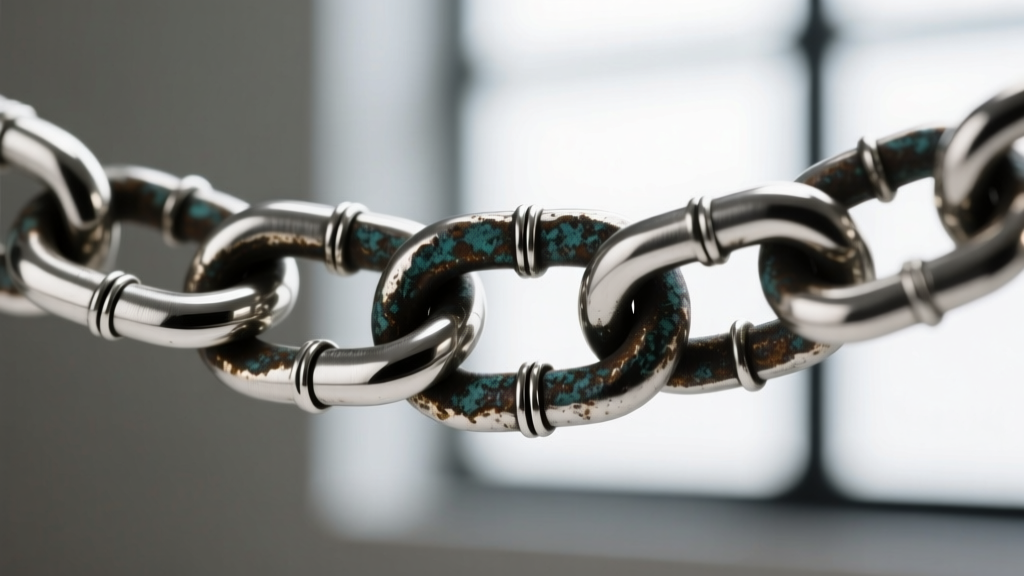
The chain supporting the Bravery pendant is typically a heavy curb link design. Unlike standard cable chains where links sit perpendicular to one another, curb links are flattened and twisted so they lay flush against the skin. This requires a multi-step manufacturing process: round wire is drawn through a draw plate, cut into uniform loops, interlocked, flattened in a rolling mill, and finally twisted.
Tensile Strength and the Necessity of Soldered Links
A critical technical distinction in the George Frost Bravery chain necklace is the soldering of every individual link. In lighter chains (under 30 grams), unsoldered links are common. However, a heavy-gauge curb chain paired with a solid cast medal can easily exceed 100 grams. The sheer gravitational pull and dynamic stress of daily wear would cause unsoldered links to elongate—a metallurgical phenomenon known as 'creep'—eventually leading to catastrophic failure. By silver-soldering each link shut, the tensile strength of the chain is exponentially increased, ensuring the structural integrity of the necklace even under the heavy load of the Bravery pendant.
"A heavy chain is only as strong as its weakest soldered seam. In small-batch jewelry, the flush-filing of these solder joints is what separates master craftsmanship from mass production."
Technical Specifications Chart
Below is a breakdown of the standard technical specifications for the medium-to-heavy iterations of the George Frost Bravery chain and pendant setup. Note that exact weights fluctuate slightly due to the hand-finished nature of lost-wax casting.
| Feature | Technical Specification |
|---|---|
| Primary Alloy | 925 Sterling Silver (Oxidized) / Jewelers Brass |
| Link Profile | Flattened & Twisted Curb |
| Link Width | 6.5mm (Standard) / 8.5mm (Heavy) |
| Wire Gauge | 10 AWG (approx. 2.3mm thickness) |
| Link Soldering | 100% Silver-Soldered Closed Links |
| Clasp Type | Reinforced Custom Cast Lobster |
| Total Average Weight | 95g - 140g (depending on length and pendant) |
The Bravery Pendant: Lost-Wax Casting Details
The Bravery pendant itself is a masterclass in the lost-wax casting method. The process begins with a master model carved from jeweler's wax, which is then encased in a steel flask filled with investment plaster. Once the plaster cures, the flask is placed in a kiln at approximately 1300°F. The wax melts and vaporizes (hence 'lost wax'), leaving a perfect negative cavity.
Molten sterling silver is then forced into this cavity via centrifugal force or vacuum casting. Once cooled and quenched, the raw casting features a 'sprue'—the thick channel where the molten metal entered the mold. In the George Frost Bravery necklace, this sprue is meticulously cut away with a jeweler's saw and filed flush, ensuring the back of the medal sits perfectly flat against the wearer's chest. The high-relief engraving on the medal is designed with deep recesses specifically to trap the antiquing solution, creating a stark, legible contrast against the hand-brushed high spots.
Clasp Mechanics and Failure Points
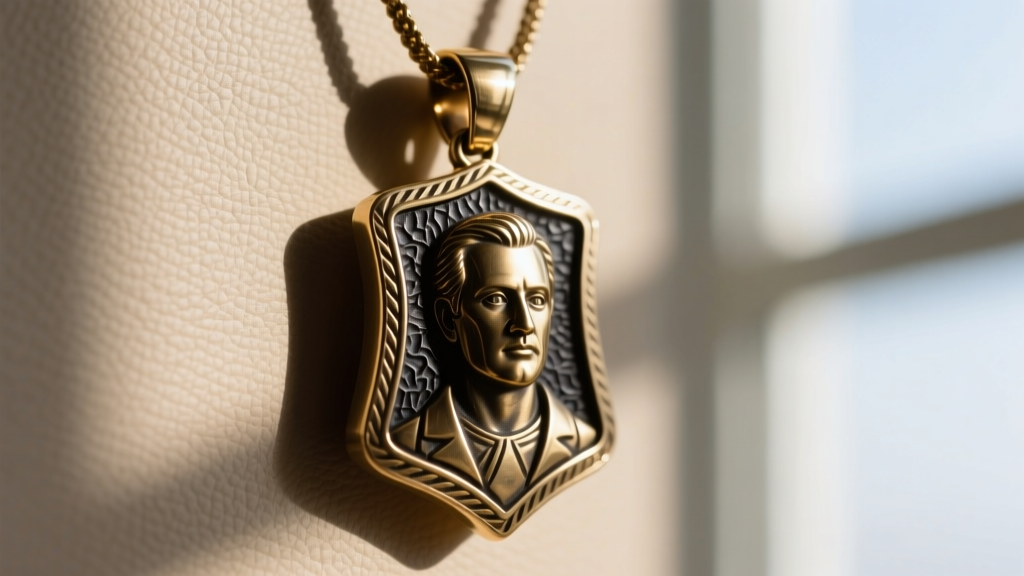
Standard commercial lobster clasps utilize a thin, stamped steel internal spring that frequently fails under the 100g+ weight of a heavy chain. To counter this, the George Frost Bravery chain necklace employs a custom-machined or heavily cast lobster clasp with a thicker internal spring wire and a reinforced catch mechanism. Furthermore, the jump ring connecting the clasp to the chain is always soldered closed, eliminating the risk of the clasp pulling through an open gap under stress.
Maintenance: Managing Patina and Tarnish
Maintaining the intentional oxidation of the Bravery necklace requires specific care protocols. Standard jewelry cleaning methods will ruin the piece's aesthetic.
- Avoid Liquid Dips: Never use liquid silver cleaners containing thiourea. These harsh chemicals will strip the intentional liver-of-sulfur patina, leaving the piece with a flat, chalky white finish that requires professional re-antiquing.
- Targeted Polishing: Use a dry, treated polishing cloth (such as a Sunshine cloth) only on the raised, high-polish edges of the curb links and the raised relief of the Bravery pendant. Avoid rubbing the recessed areas.
- Ultrasonic Cleaners: Do not use ultrasonic cleaners. The high-frequency vibrations can loosen the tension in the custom clasp spring and degrade the hand-applied oxidation over time.
- Brass Care: If you own the brass variant, regular wear will naturally polish the high points while keeping the recesses dark. For a uniform reset, a mild abrasive like Brasso can be used, followed by a thorough rinse and dry.
Sourcing and Authentication
Due to the brand's cult following and limited production runs, the secondary market for George Frost jewelry is highly active. When sourcing a George Frost Bravery chain necklace, always verify the hallmark. Authentic pieces are typically stamped with '925' and the George Frost maker's mark on a discreet tag near the clasp or on the bail of the pendant. For detailed insights into the brand's casting techniques and material sourcing, resources like Ganoksin offer excellent foundational knowledge on the lost-wax processes utilized by artisan jewelers, while the official George Frost archives provide provenance for specific limited-edition medal drops.


