How to Clean, Care for, and Style a Kay Ruby Necklace
Learn how to properly clean, maintain, and style your Kay ruby necklace. Expert steps for lab-created and treated natural rubies to ensure lasting brilliance.

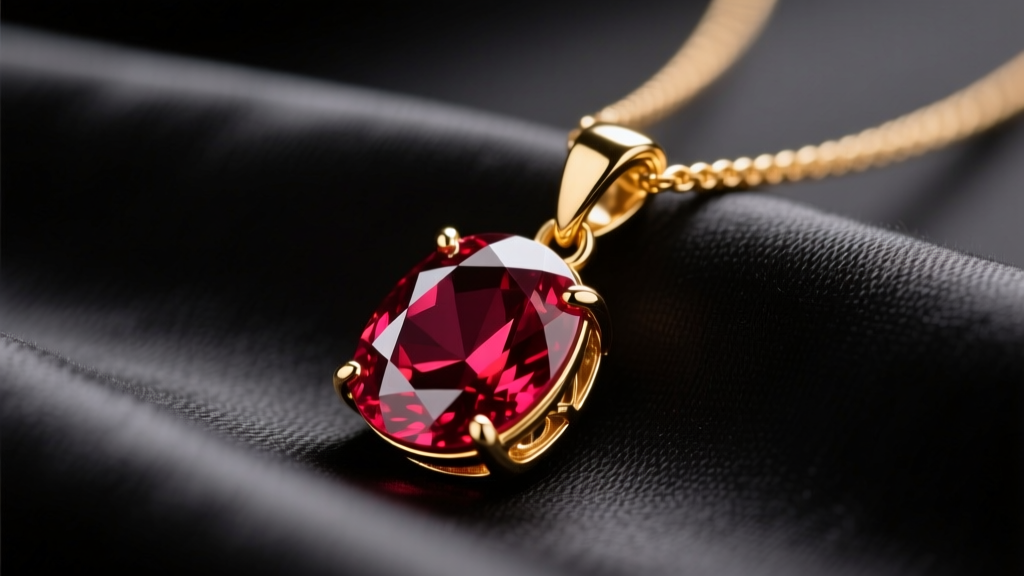
Owning a ruby necklace from a major retailer like Kay Jewelers is a timeless investment in classic elegance. Whether you purchased a vintage-inspired 10k gold pendant or a modern 14k white gold piece featuring a lab-created ruby, proper maintenance is non-negotiable. Commercial rubies often undergo specific treatments to enhance their color and clarity, meaning they require a highly tailored approach to cleaning and daily wear. In this comprehensive guide, we will walk you through the exact steps to clean, authenticate, troubleshoot, and style your Kay ruby necklace to ensure it remains a staple in your jewelry box for decades.
Understanding Your Kay Ruby: Natural vs. Lab-Created
Before applying any cleaning solution to your necklace, you must identify the exact nature of your gemstone. According to the Gemological Institute of America (GIA), rubies are a variety of the mineral corundum, ranking a 9 on the Mohs hardness scale. However, hardness does not equal toughness, and the treatments applied to commercial rubies drastically alter their care requirements.
1. Lab-Created (Flame Fusion) Rubies
Kay Jewelers frequently offers 'Created Rubies.' These are chemically and optically identical to natural rubies but are grown in a lab using the flame fusion process. While they are highly durable and lack the natural inclusions that cause structural weakness, they can sometimes contain microscopic gas bubbles. They are generally safe for standard ultrasonic cleaning, but gentle hand-washing is always the safest route to protect the metal setting.
2. Heat-Treated Natural Rubies
If your Kay necklace features a natural ruby, it has almost certainly been heat-treated to improve its red saturation. This is a permanent, stable treatment accepted by the Federal Trade Commission (FTC). Heat-treated rubies are durable and can withstand mild soapy water and gentle brushing without issue.
3. Fracture-Filled (Glass-Filled) Rubies
Some lower-priced natural rubies are fracture-filled with lead-glass to mask heavy internal inclusions. This is the most critical category for care. Lead-glass fillers have a Mohs hardness of only 5 to 6 and are highly reactive to acids. Even mild household acids like lemon juice, vinegar, or harsh commercial jewelry cleaners can dissolve the filler, leaving your ruby cloudy, pitted, and structurally compromised.
Step-by-Step Cleaning Guide for Kay Ruby Necklaces
Follow this exact protocol to safely remove oils, lotions, and environmental grime from your ruby pendant and its gold or sterling silver chain.
Step 1: The Pre-Clean Prong Inspection
Never submerge a necklace without checking the setting first. Use a 10x jeweler's loupe to inspect the prongs holding your ruby. Kay pendants often feature delicate 4-prong or 6-prong settings in 10k or 14k gold. If you see a prong lifting away from the gemstone's girdle, or if the metal looks visibly thinned, do not clean it. Take it to a jeweler for retipping immediately to prevent stone loss.
Step 2: Prepare a pH-Neutral Bath
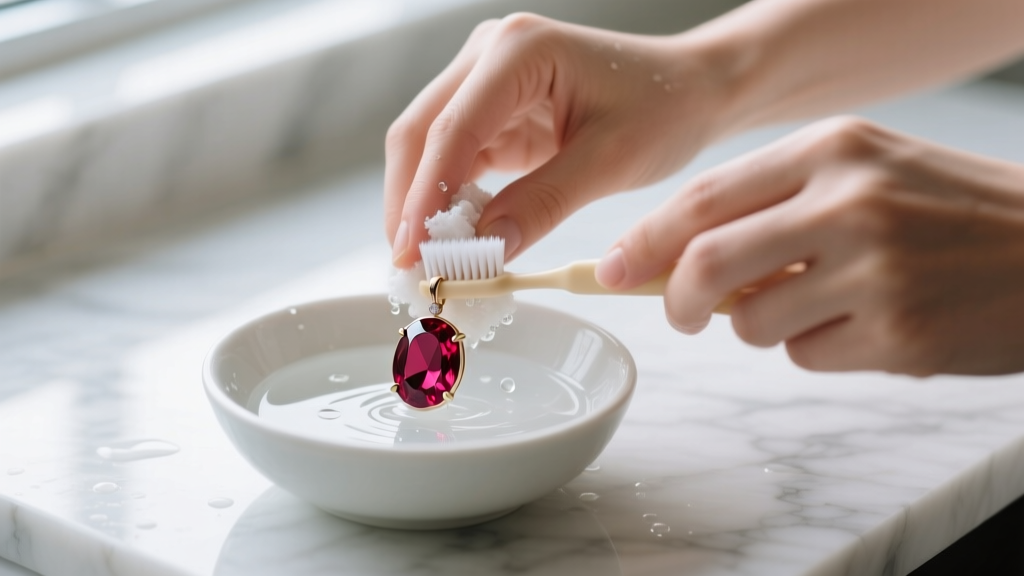
Fill a small glass bowl with lukewarm distilled water. Add exactly two drops of a mild, pH-neutral dish soap (like original blue Dawn). Avoid hot water, as extreme temperature changes can cause thermal shock to included natural stones. Never use ammonia-based cleaners, toothpaste, or baking soda, as these are abrasive and can strip the polish from your gold setting.
Step 3: Soak and Agitate
Place your Kay ruby necklace in the solution. Let it soak for no more than 3 to 5 minutes. This brief window is enough to loosen sebum and cosmetic buildup without risking damage to any potential fracture-fillers or porous metal alloys.
Step 4: Targeted Brushing
Using an extra-soft baby toothbrush, gently brush the back of the ruby (the pavilion). Dirt accumulates heavily under the stone, blocking light return and making the ruby look dark and lifeless. Brush in small, circular motions, avoiding aggressive scrubbing directly on the metal prongs.
Step 5: Rinsing and Drying
Rinse the necklace under a gentle stream of lukewarm distilled water. Do not use tap water, as the chlorine and hard minerals can leave a filmy residue on 10k and 14k gold. Pat the piece dry with a lint-free microfiber cloth. Allow it to air-dry completely on a towel before storing it to prevent moisture from degrading the chain links.
Ruby Treatment Durability Matrix
Use this quick-reference table to understand what your specific ruby type can handle during maintenance.
| Ruby Type | Mild Soap & Water | Ultrasonic Cleaner | Steam Cleaner | Acid Sensitivity |
|---|---|---|---|---|
| Lab-Created (Flame Fusion) | Safe | Generally Safe | Safe | Low |
| Natural (Heat-Treated Only) | Safe | Use Caution | Use Caution | Low |
| Natural (Fracture/Glass-Filled) | Safe (Brief Soak) | NEVER | NEVER | Extreme |
Troubleshooting: Why is My Ruby Looking Cloudy?
A common complaint among owners of commercial ruby jewelry is that the stone suddenly appears cloudy, milky, or lacks its original fiery brilliance. If you are following the cleaning steps above and the ruby still looks dull, consider the following culprits:
- Soap Scum Buildup: Hard water and body washes leave a microscopic film on the pavilion (bottom) of the stone. Try wiping the back of the stone with a Q-tip dipped in a tiny amount of isopropyl alcohol (only if you are 100% certain the stone is not fracture-filled).
- Acid Damage to Fillers: If your ruby is glass-filled and you have worn it in a chlorinated pool, a hot tub, or while applying acidic skincare serums (like Vitamin C or glycolic acid), the filler may have etched. This requires professional lapidary intervention to re-polish or replace the stone.
- Loose Foil Backing: Some vintage-style or lower-tier commercial rubies are foil-backed to enhance color. If water gets trapped behind the stone due to a loose bezel, the foil will tarnish or peel, causing a cloudy appearance. A jeweler must open the setting to replace the foil.
How to Style a Kay Ruby Necklace for Different Necklines
A ruby pendant is a versatile anchor piece, but its impact depends heavily on how you pair it with your wardrobe. Kay ruby necklaces typically come on 16-inch to 18-inch chains, which sit at the collarbone or upper chest. Here is a step-by-step styling framework for 2026.

1. The Classic V-Neck Pairing
A V-neck blouse or dress creates a natural geometric frame that draws the eye downward. An 18-inch Kay ruby pendant sitting perfectly in the center of the 'V' elongates the neck. If your pendant is set in yellow gold, pair it with warm-toned fabrics like cream, navy, or forest green to make the red hue pop through color theory contrast.
2. Layering with Mixed Metals
The modern approach to pendant styling involves intentional layering. If your Kay ruby is set in 14k white gold or sterling silver, layer it with a 16-inch delicate cable chain and a 20-inch textured rope chain. Keep the accompanying chains minimal—avoid adding other gemstone pendants, as the ruby should remain the undisputed focal point of the stack.
3. High Necklines and Boatnecks
Wearing a pendant over a high neckline (like a turtleneck or boatneck) requires a longer chain. If your Kay necklace is a standard 16 inches, it will look choked and cramped against a high collar. Use a necklace extender to drop the ruby to at least 20 inches, allowing it to rest on the fabric of the sweater or blouse, acting as a brooch-like statement piece.
When to Seek Professional Kay Jewelers Maintenance
While at-home cleaning handles daily grime, professional maintenance is required to preserve the structural integrity of your necklace. According to the Kay Jewelers Official Care Guide, you should bring your piece in for a professional inspection every six months.
Specific scenarios requiring professional help include:
- Rhodium Replating: If your ruby is set in 14k or 18k white gold, the rhodium plating will eventually wear off, revealing the slightly yellowish natural gold alloy underneath. A jeweler can re-dip the setting to restore its bright, silvery-white luster.
- Chain Soldering: Sterling silver and 10k gold chains are prone to micro-fractures at the solder points of the links. If you feel a 'catch' or see a link sitting at an odd angle, stop wearing it immediately to prevent snapping.
- Deep Ultrasonic Scaling: If you have a lab-created ruby in a heavy, intricate pavé diamond halo setting, dirt will become impacted in the tiny crevices. A jeweler can safely use an ultrasonic machine to vibrate the debris loose without damaging the lab-grown corundum.
By understanding the specific material science behind your gemstone and adhering to a strict, gentle cleaning regimen, your Kay ruby necklace will maintain its captivating red brilliance and structural security for a lifetime of wear.


