Expert Care Guide: Cleaning Your Blue Chain Necklace
Learn how to safely clean, store, and maintain your blue chain necklace. Expert tips for anodized titanium, enamel, and PVD coated jewelry.

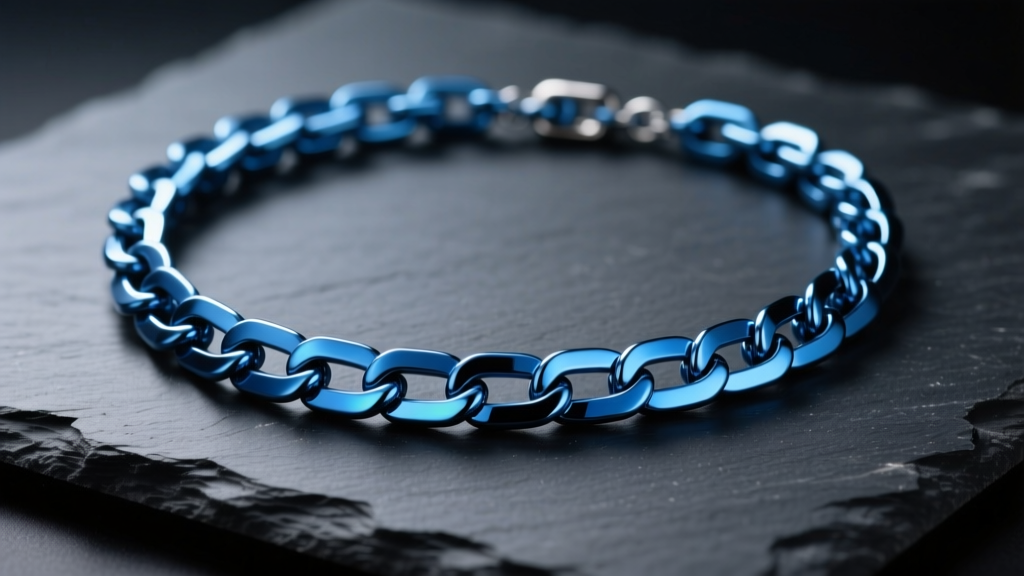
A blue chain necklace is a striking statement piece, but its vibrant color requires specialized maintenance. Unlike standard yellow gold or sterling silver chains, the blue hue in modern jewelry is rarely a natural metal color. It is typically achieved through anodization, vitreous enamel, or Physical Vapor Deposition (PVD). Each of these finishes interacts differently with water, oils, and cleaning agents. Using the wrong method can strip the color, cause micro-fractures, or permanently dull the finish.
In this comprehensive guide, we break down the material science behind blue jewelry finishes and provide exact, step-by-step cleaning protocols to ensure your necklace retains its brilliant color for decades.
The Science of Blue Jewelry Finishes
Before applying any cleaning solution, you must identify how your blue chain necklace achieves its color. The three most common methods in contemporary jewelry making are:
1. Anodized Titanium and Niobium
Anodization is an electrolytic process that thickens the natural oxide layer on the metal's surface. The blue color is not a dye or pigment; it is an optical interference effect caused by light refracting through this oxide layer. A bright blue hue typically requires an oxide layer thickness of about 110 to 120 nanometers, achieved at roughly 45 to 55 volts. Because the color is structural, it can be altered by harsh alkaline chemicals that degrade the oxide layer.
2. Vitreous and Cold Enamel
Vitreous enamel is essentially glass fused to a metal base at temperatures exceeding 1400°F. It is highly durable but susceptible to thermal shock and blunt force. Cold enamel (epoxy resin) is cured at room temperature and is much softer, making it prone to scratching and chemical degradation from solvents like alcohol or acetone.
3. PVD (Physical Vapor Deposition) Coating
PVD involves vaporizing a material (like titanium nitride or zirconium) in a vacuum chamber and bonding it to a stainless steel or silver base at the atomic level. PVD coatings measure between 2000 and 3000 HV on the Vickers hardness scale, making them incredibly scratch-resistant, but they can still be worn away by abrasive polishing compounds.
Step-by-Step Cleaning Guide by Material
According to the Jewelers of America, the safest baseline for cleaning most jewelry is a mild, pH-neutral solution. However, blue finishes demand stricter parameters.
Cleaning Anodized Titanium & Niobium Chains
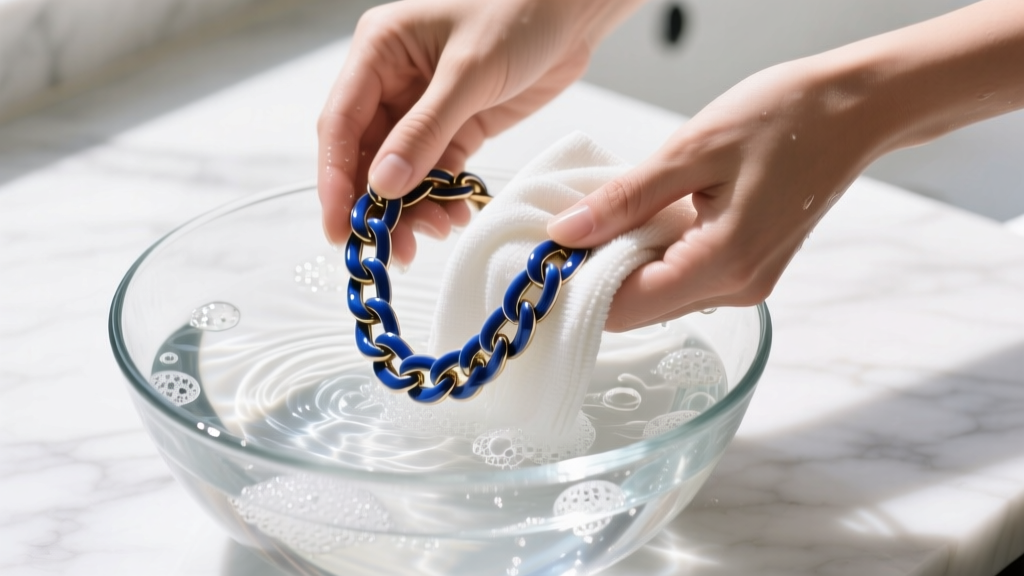
- The Solution: Mix 3 drops of pH-neutral dish soap (like Dawn Free & Clear) into 8 ounces of distilled water. Tap water contains chlorine and minerals that can leave hard water spots on the oxide layer.
- The Technique: Submerge the necklace for no more than 3 minutes. Gently agitate the water. Use a clean, lint-free microfiber cloth to wipe the links.
- Drying: Pat dry immediately with a second microfiber cloth. Air-drying can leave water marks that obscure the light refraction, making the blue look dull.
- CRITICAL WARNING: Never use an ultrasonic cleaner on anodized metals. The high-frequency cavitation can cause micro-fractures in the oxide layer, leading to uneven color shifting or 'bronzing'.
Cleaning Enamel Blue Chains
- The Solution: Lukewarm water (strictly between 85°F and 95°F) with a drop of mild baby shampoo.
- The Technique: Do not submerge vitreous enamel for long periods, especially if the underlying metal is copper or silver, which can oxidize at the enamel's edge. Dip a soft-bristled baby toothbrush into the solution and gently sweep the links.
- Thermal Shock Risk: Never rinse a warm enamel necklace in cold water. The rapid temperature change can cause 'crazing' (a network of microscopic cracks in the glass finish).
Cleaning PVD-Coated Chains
- The Solution: Warm water and mild liquid soap.
- The Technique: PVD is highly resistant to tarnish and sweat. You can safely use a soft nylon brush to clean the crevices of the chain links.
- What to Avoid: Never use silver polishing cloths (like Sunshine cloths) or liquid dips (like Tarn-X). These contain micro-abrasives and thiourea, which will permanently strip the nanolayer of the PVD coating, exposing the base metal beneath.
Chemical Compatibility Chart for Blue Finishes
Understanding how common household chemicals interact with your blue chain necklace is vital for preventing irreversible damage. Reference this table before exposing your jewelry to any substance.
| Chemical / Agent | Anodized Titanium | Vitreous Enamel | PVD Coating |
|---|---|---|---|
| Chlorine (Pools/Bleach) | Severe Risk (Strips color) | Moderate Risk (Dulls finish) | High Risk (Pitting/Corrosion) |
| Ultrasonic Cleaners | High Risk (Color shifting) | High Risk (Chipping/Cracking) | Safe (If no loose stones) |
| Isopropyl Alcohol | Safe | Safe (Vitreous) / Destroys (Cold) | Safe |
| Jeweler's Rouge / Polish | High Risk (Removes oxide) | High Risk (Scratches glass) | Severe Risk (Strips coating) |
| Skin Oils & Sweat | Safe (Wipe after wear) | Safe | Safe |
Proper Storage Techniques to Prevent Color Fading
How you store your blue chain necklace is just as important as how you clean it. Environmental factors like UV exposure, humidity, and off-gassing from improper packaging can degrade the finish over time.
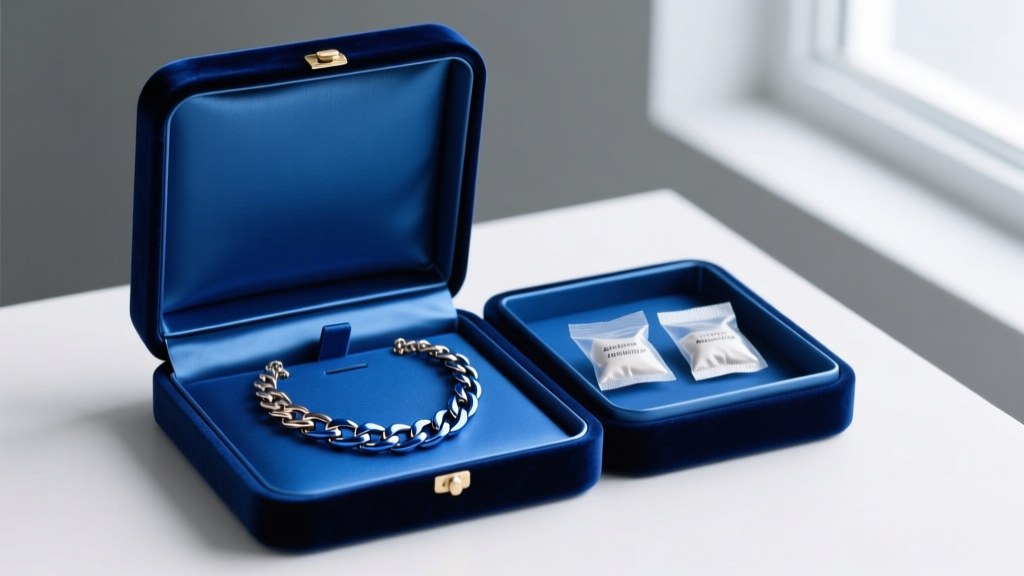
- Use Polyethylene, Not PVC: Store your necklace in ziplock bags made of polyethylene. Avoid PVC (polyvinyl chloride) plastics, which off-gas sulfur and chlorides that can react with the base metals and cause the edges of enamel or PVD coatings to lift.
- Anti-Tarnish Strips: While anodized titanium does not tarnish, the sterling silver or brass jump rings and clasps attached to your blue chain do. Place a 3M anti-tarnish strip inside the storage bag to absorb airborne sulfides.
- Prevent Link Friction: PVD and enamel can chip if the chain tangles and is pulled forcefully. Always fasten the clasp before storing, and lay the necklace flat in a lined jewelry box rather than tossing it into a communal drawer.
- UV Protection: Prolonged exposure to direct sunlight can cause cold enamel (epoxy) to yellow or fade over several years. Store the piece in a dark, climate-controlled environment.
Troubleshooting: Fading, Scratching, and Tarnish
Even with meticulous care, accidents happen. Here is how to troubleshoot common issues specific to blue chain necklaces, drawing on guidelines from the Assay Office regarding metal integrity and hallmarking.
My Anodized Titanium Necklace Turned Bronze/Grey
This occurs when the oxide layer is compromised by acidic sweat, alkaline soaps, or friction. The Fix: Unlike rhodium plating, anodized titanium can be re-anodized. A professional jeweler with a rectifier and an electrolytic bath can strip the remaining oxide layer and re-anodize the chain to its original bright blue voltage specification for a fraction of the cost of a new piece.
Micro-Scratches on PVD Coating
While PVD is incredibly hard, it is not diamond-hard. If fine scratches appear, do not attempt to buff them out. Buffing will remove the 0.5 to 2-micron PVD layer entirely. The Fix: Clean the chain thoroughly and apply a microscopic layer of jewelry-safe Renaissance Wax to fill the micro-scratches, restoring the optical smoothness and light reflection.
Chipped Vitreous Enamel
If a link chips, the exposed base metal will rapidly oxidize. The Fix: Stop wearing the necklace immediately to prevent moisture from getting under the adjacent enamel, which will cause further flaking. Take it to a specialist enamelist for a kiln-fired patch repair.
Conclusion
Maintaining a blue chain necklace requires moving beyond generic jewelry cleaning advice. By identifying whether your piece relies on the light refraction of anodized titanium, the glass-like fusion of vitreous enamel, or the atomic bonding of PVD, you can tailor your care routine to protect the specific structural integrity of the color. Stick to pH-neutral cleaners, avoid ultrasonic cavitation, and store your pieces in polyethylene with anti-tarnish strips to ensure your necklace remains a vibrant, head-turning accessory for years to come.


