The Necklace of Africa: Anatomy, Materials and Craft
Explore the technical anatomy of the necklace of Africa, from Maasai beadwork tension to Tuareg silver casting. Expert material and styling guide.

Decoding the Necklace of Africa: Beyond Ornamentation
When historians, anthropologists, and master jewelers refer to the necklace of Africa, they are rarely pointing to a single monolithic design. Instead, the term encompasses a vast, highly technical spectrum of structural body adornment. From the tension-based wire frameworks of East African pastoralists to the lost-wax metallurgy of Saharan nomads, traditional African neckwear represents some of the most sophisticated indigenous engineering in global jewelry history. In this deep dive, we strip away the superficial aesthetic commentary and examine the exact material grades, structural mechanics, and crafting techniques that define these iconic pieces.
The Maasai Beaded Collar: Tension and Wire Gauge
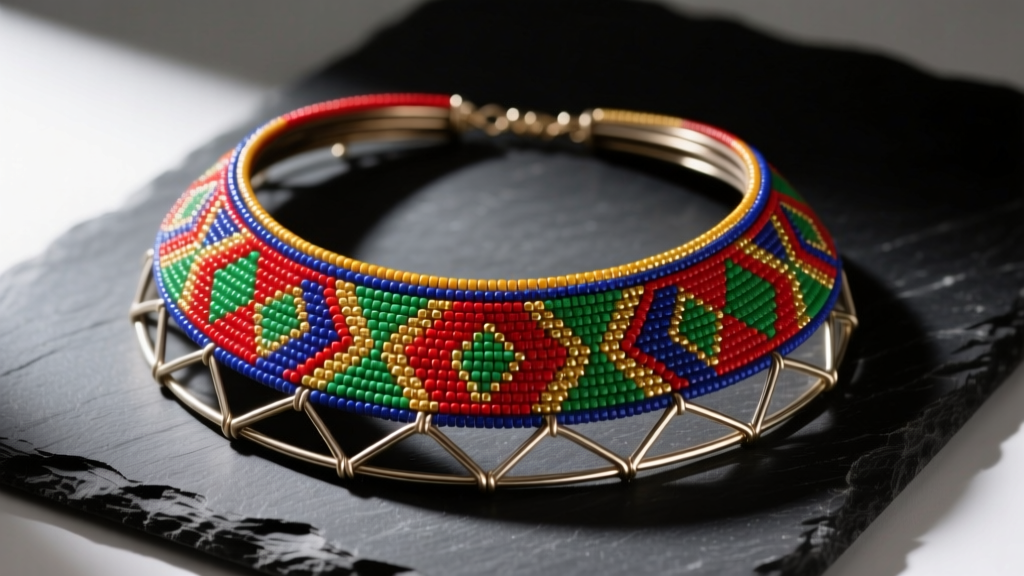
The Maasai beaded collar (often referred to as an enkarewa or broad collar) is a masterclass in load distribution and tensile strength. Unlike strung necklaces that rely entirely on the tensile strength of a single thread, the Maasai collar is built on a rigid, concentric wire armature.
Wire Selection and Structural Integrity
To support the immense weight of the glass seed beads—which can easily exceed 250 grams for a full ceremonial collar—artisans utilize galvanized steel wire. The outer structural rings are typically formed from 18-gauge (1.02mm) steel wire, providing the necessary rigidity to keep the collar flat against the clavicle without buckling. The inner concentric rings, which require slightly more flexibility for comfort, are often stepped down to 20-gauge (0.81mm) wire. Copper wire is occasionally used in contemporary tourist-trade pieces, but it lacks the yield strength of steel and will warp under the 150+ gram load of dense beadwork over time.
Bead Sizing and Threading Mechanics
Authentic collars rely on 10/0 or 11/0 Czech Preciosa glass seed beads (approximately 2.1mm to 2.3mm in diameter). The beads are not merely strung; they are woven directly onto the wire framework using a secondary, thinner binding wire or heavy-duty nylon thread (such as 8lb test braided line). The weaving creates a rigid, textile-like matrix. The colorways are not random; red (bravery), white (peace/milk), blue (energy), and green (land) are strictly codified, and the opacity of the glass is crucial for maintaining visual contrast under harsh equatorial sunlight.
Tuareg Silver Pendants: Lost-Wax Casting and Alloys
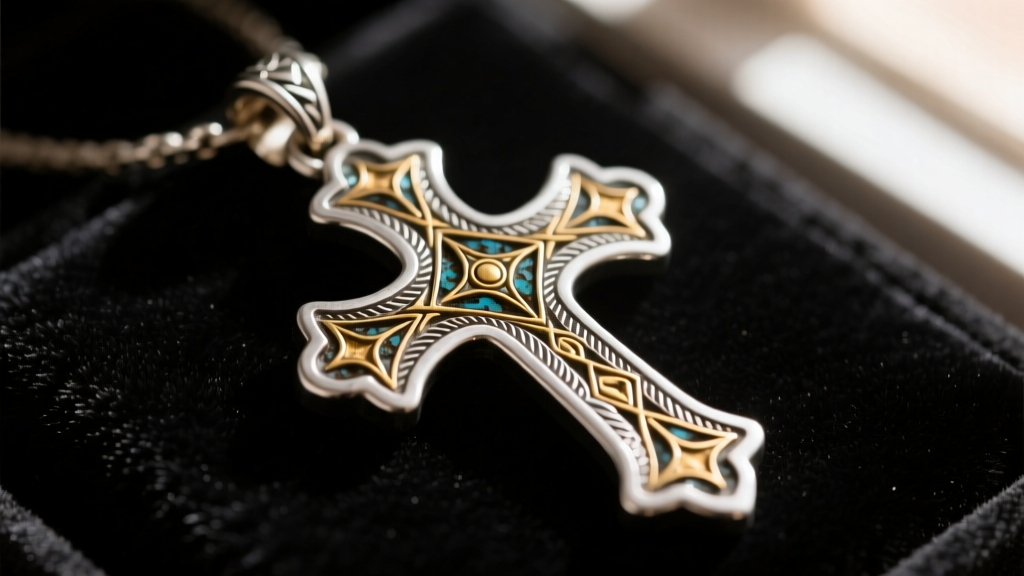
Moving west to the Sahara, the Tuareg Takaza necklace and the iconic Agadez cross represent a completely different technical discipline: metallurgy. The Tuareg are historically renowned silversmiths, and their necklaces are modular systems of heavy cast pendants, ebony wood spacers, and leather cording.
Silver Purity and Patina Chemistry
While Western jewelry often prioritizes high-polish sterling, Tuareg silver is deliberately alloyed and treated for durability and contrast. The silver used is typically 92.5% (Sterling) or 90.0% (Coin Silver), alloyed with copper to increase the Vickers hardness, ensuring the intricate geometric engravings do not wear smooth during daily wear in abrasive desert environments.
The signature black patina is not merely dirt; it is a controlled chemical oxidation. Artisans traditionally use sulfur-rich organic compounds or modern liver of sulfur to oxidize the recessed areas of the casting. The raised surfaces are then burnished with agate stones, creating a high-contrast topographical map of hammered textures and brass inlays. According to the Smithsonian National Museum of African Art, this oxidized finish also serves a practical purpose, reducing the reflective glare of the sun while protecting the silver from further environmental tarnishing.
Expert Note on Lost-Wax Casting: Tuareg pendants are traditionally cast using the cire perdue (lost-wax) method. An artisan carves the exact pendant in beeswax, encases it in a clay mold, and bakes it. The wax melts out, leaving a negative cavity into which molten silver is poured. This means every vintage Tuareg cross is a singular, unrepeatable casting with microscopic variations in wall thickness.
Material Comparison Matrix
Understanding the structural differences between regional styles is critical for collectors, curators, and stylists working with heavy statement pieces.
| Style / Region | Primary Materials | Average Weight | Structural Base | Fastening Mechanism |
|---|---|---|---|---|
| Maasai Collar (Kenya/Tanzania) | 10/0 Glass Seed Beads, 18ga Steel Wire | 150g - 300g | Concentric Wire Armature | Leather Tie or Brass Hook |
| Tuareg Takaza (Mali/Niger) | 925 Silver, Brass, Ebony Wood, Leather | 120g - 250g | Modular Leather Cording | Slip-Knot Leather Toggle |
| Zulu Ibheqe (South Africa) | 11/0 Seed Beads, Braided Nylon/Sinew | 40g - 90g | Flat Brick-Stitch Weave | Integrated Beaded Loop & Button |
| Ndebele Collar (South Africa) | Large Opaque Beads, Copper Wire, Canvas | 200g - 400g | Stiffened Canvas/Wire Core | Heavy-duty Metal Clasp |

Zulu Beadwork: The Geometry of the Ibheqe
The Zulu Ibheqe is a flat, flexible beaded necklace that relies on advanced weaving techniques rather than rigid wire frames. The structural integrity of an Ibheqe comes from the tension of the stitch and the quality of the thread.
Thread Tension and Weave Patterns
Historically, cured animal sinew was used for its elasticity and strength. Today, master weavers utilize 6lb to 8lb test braided nylon lines (like Fireline) because they resist UV degradation and do not stretch out of shape when supporting the dense, flat brick-stitch or peyote-stitch matrices. The geometric patterns serve as a complex linguistic code—communicating marital status, age, and emotional states—but from a technical standpoint, the interlocking bead weave creates a fabric-like drape that conforms perfectly to the sternum without the need for a metal armature.
Clasp Mechanics and Load-Bearing
One of the most common failure points in contemporary adaptations of the necklace of Africa is the clasp. When dealing with collars weighing over 150 grams, standard jewelry findings will fail.
- Magnetic Clasps: Highly discouraged for heavy collars. The sheer weight of a Maasai or Ndebele collar will overcome the neodymium magnet's shear force, causing the piece to snap open and drop.
- Lobster Clasps: If a metal clasp must be used, it should be a minimum 15mm solid brass or stainless steel lobster clasp, soldered at the jump ring to prevent the wire from pulling apart under load.
- Traditional Ties: The most structurally sound method remains the traditional leather tie or integrated beaded loop-and-toggle, which distributes the sheer force across a wider surface area of the neck rather than concentrating it on a single metal hinge.
Styling Heavy Collars: Neckline and Weight Distribution
Styling a 250-gram structural collar requires an understanding of garment architecture. Because these pieces sit wide on the clavicle and sternum, they clash with high necklines, turtlenecks, or complex ruffled collars. The ideal canvas is a structured, V-neck or scoop-neck garment made from medium-weight fabrics (like linen, raw silk, or mid-weight cotton). The fabric must have enough tensile strength to support the friction and weight of the wire armature without warping the garment's drape. For the Tuareg silver pendants, the dark, oxidized metal provides a striking contrast against crisp white or deep indigo textiles, allowing the brass inlays and ebony spacers to visually pop.
Authentication and Sourcing
When sourcing an authentic necklace of Africa, provenance and material testing are paramount. For Tuareg silver, a standard XRF (X-ray Fluorescence) test can verify the 92.5% silver content and detect the presence of lead or excessive nickel, which are sometimes found in cheap, mass-produced tourist market knockoffs. For Maasai beadwork, examine the wire ends: authentic pieces will have the steel wire tightly crimped and woven back into the bead matrix, whereas mass-produced imitations often use soft aluminum wire secured with visible, sloppy glue or simple plastic crimp beads. Institutions like the Metropolitan Museum of Art African Art Collection provide excellent visual baselines for studying the precise stitching and wire-wrapping techniques of verified historical pieces.
Conclusion
The necklace of Africa is not merely a decorative afterthought; it is a triumph of indigenous material science. Whether it is the rigid, load-bearing steel armature of a Maasai collar, the lost-wax metallurgical mastery of a Tuareg cross, or the high-tension nylon weaving of a Zulu Ibheqe, these pieces demand respect for their engineering. By understanding the exact wire gauges, alloy purities, and structural mechanics at play, collectors and stylists can properly preserve, authenticate, and wear these monumental artifacts of global jewelry history.


