Necklace Lengths Men Choose: A Material & Drape Guide
Discover how metal, leather, and bead properties affect the necklace lengths men choose. Expert guide on drape, weight, and gauge by material.

The Physics of Drape: Why Material Dictates Length
When evaluating necklace lengths men typically prefer, most style guides stop at the measuring tape. They suggest 18 inches for a choker, 20 inches for the collarbone, and 24 inches for a chest drop. However, as a jewelry metallurgist and style consultant, I can tell you that measuring length without considering material mass, specific gravity, and link articulation is a fundamental error. The exact same 22-inch measurement will hang, drape, and wear entirely differently depending on whether it is forged from 14k gold, Grade 5 titanium, or braided leather.
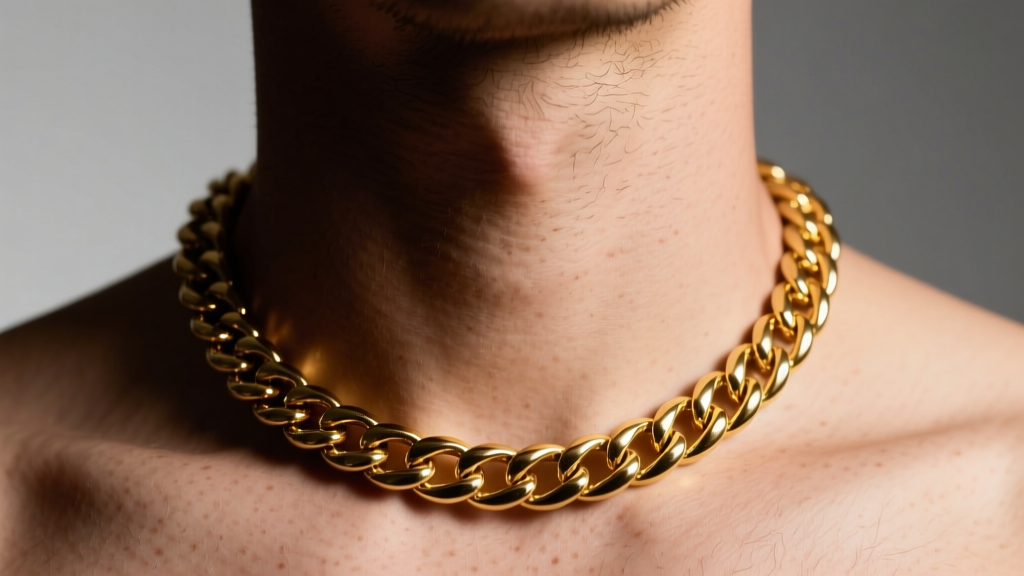
The 'drape' of a necklace refers to how it conforms to the body's contours versus how it pulls downward due to gravity. A heavy, dense metal chain will create a sharp, pronounced V-shape on the chest, while a lightweight or rigid material will hug the clavicle. Understanding the intersection of material properties and chain length is the key to mastering men's jewelry in 2026 and beyond. Let us break down how different materials behave across standard men's lengths.
Precious Metals: Gold, Silver, and Platinum
Precious metals are dense, malleable, and highly articulated. According to manufacturing standards outlined by Rio Grande, the specific gravity of 14k yellow gold is approximately 13.0, while pure platinum sits at a massive 21.45. This density means that precious metal chains carry significant kinetic weight.
18 to 20 Inches: The Collarbone Standard
At 18 to 20 inches, a precious metal chain sits at or just below the collarbone. For men, a 20-inch chain in a 3mm to 4mm gauge (such as a Figaro or Box chain) is the gold standard. Because gold and silver are highly malleable, the links articulate smoothly, preventing the chain from kinking against the skin. However, if you opt for a thick 6mm Cuban link at 20 inches, the sheer weight (often exceeding 80 grams) can cause the chain to pull uncomfortably against the back of the neck, leading to clasp migration.
22 to 24 Inches: The Chest Drop
When dropping to 22 or 24 inches, the weight of precious metals becomes a major factor. A 24-inch, 5mm sterling silver rope chain can weigh over 110 grams. This weight creates a deep, flattering V-drape that anchors the piece to the center of the chest, making it the ideal length for suspending heavy pendants like solid gold crucifixes or signet medallions. The Jewelers of America notes that when wearing heavy precious metals at these lengths, upgrading the clasp to a soldered spring ring or a heavy-duty lobster claw is mandatory to prevent shear failures.
Alternative Alloys: Titanium, Tungsten, and Steel
Alternative metals have dominated the men's market due to their durability and hypoallergenic properties, but their structural limitations drastically alter optimal necklace lengths.
Titanium (Grade 5 / Ti-6Al-4V)
Titanium boasts an incredibly high strength-to-weight ratio. Its specific gravity is just 4.43—roughly a third of gold. Because it is so light, a 24-inch titanium chain will not pull downward into a V-shape; instead, it will tend to rest in a wider, more circular U-shape around the neck and upper chest. To achieve a deeper drape with titanium, men often need to size up to 26 or 28 inches, or choose a thicker gauge (5mm+) to add enough physical mass to pull the chain downward.
Tungsten Carbide and Stainless Steel (316L)
Tungsten is exceptionally hard but highly brittle. It cannot be drawn into fine, articulated wire links. Therefore, tungsten necklaces are almost exclusively bead chains or rigid, interlocking geometric segments. Because of this lack of articulation, a tungsten necklace must be sized 1 to 2 inches longer than a standard gold chain to allow for neck movement and to prevent it from feeling like a rigid collar. Conversely, 316L surgical stainless steel behaves much like silver but is much stiffer. A 22-inch steel chain will feel noticeably more rigid than a 22-inch silver chain, requiring a break-in period for the links to articulate smoothly.
Organic Materials: Leather, Paracord, and Wood
Non-metallic materials introduce variables like stretch, moisture degradation, and knotting, which completely rewrite the rules of men's necklace lengths.
Leather Cords and Braids
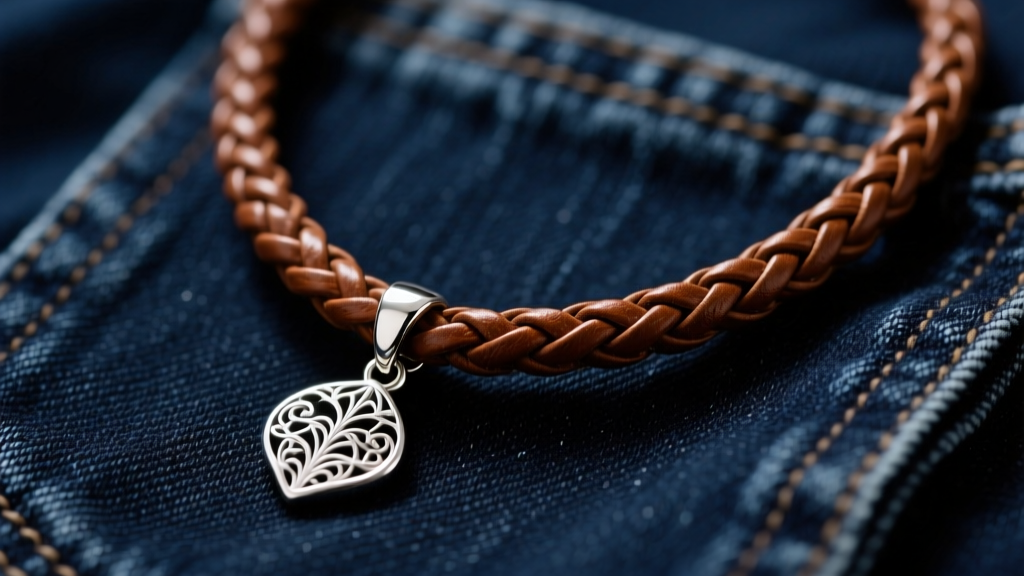
Leather is an organic, porous material that stretches. A flat 3mm leather cord can stretch up to 8% over the first month of wear due to the weight of the pendant and the oils from the skin. If you desire a 22-inch drape, you should initially purchase a 20.5-inch leather cord. Furthermore, leather is highly susceptible to moisture degradation. Wearing a leather cord at a longer 26-inch length increases the surface area exposed to sweat and friction, drastically reducing its lifespan. For daily wear, keep leather cords at 20 to 22 inches and remove them before showering.
Paracord and Wood Beads
Type III paracord (550 cord) has zero stretch and immense tensile strength. It holds its exact measured length indefinitely. However, paracord is thick (usually 4mm to 5mm) and stiff. Wood bead necklaces, often strung on elastic or thick cotton, are rigid and bulky. Both materials should be worn at longer lengths (24 to 30 inches). Attempting to wear a thick wood bead necklace at 18 or 20 inches will result in an uncomfortable, choking sensation and a highly unnatural, rigid silhouette that clashes with most menswear necklines.
Quick-Reference Matrix: Material vs. Optimal Length
Use the following data table to determine the ideal length based on your chosen material and desired drape profile.
| Material | Specific Gravity | Optimal Length Range | Max Recommended Gauge | Drape Profile |
|---|---|---|---|---|
| 14k / 18k Gold | 13.0 - 15.6 | 20 - 24 inches | 6mm (Cuban/Curb) | Deep V, heavy pull |
| Sterling Silver | 10.4 | 20 - 22 inches | 5mm (Rope/Figaro) | Soft V, highly articulated |
| Grade 5 Titanium | 4.43 | 22 - 26 inches | 4mm (Box/Rope) | Wide U, lightweight |
| 316L Steel | 8.0 | 20 - 24 inches | 5mm (Cuban) | Structured V, stiff |
| Braided Leather | N/A (Organic) | 20 - 22 inches | 4mm (Round Braid) | Conforming, stretches 5% |
| Wood / Stone Beads | Varies | 24 - 30 inches | 8mm - 10mm beads | Rigid loop, bulky |
Expert Troubleshooting: Clasp Failures and Link Stretch
The most common point of failure in men's jewelry is the clasp assembly, and this is directly tied to the material weight at longer lengths. When a man wears a 24-inch, 5mm stainless steel Cuban chain, the dynamic shear force exerted on the clasp during sudden movements (like turning the head quickly or bending over) can exceed 15 pounds of pressure.
'A standard 12mm lobster clasp is rated for roughly 10 to 12 pounds of shear force. Putting a heavy, 24-inch steel or gold chain on a standard lobster clasp is a guaranteed recipe for a lost necklace.'
The Fix: For any precious or alternative metal chain exceeding 22 inches in length and 4mm in thickness, demand a heavy-duty, soldered spring ring clasp, or upgrade to a neodymium magnetic clasp with a secondary safety catch. Additionally, ensure the jump ring connecting the clasp to the chain is soldered shut. An unsoldered jump ring will slowly pry open under the constant, low-grade tension of a heavy, long chain, eventually leading to a silent failure and a lost piece of jewelry.
By matching the physical properties of your chosen material to the correct anatomical length, you ensure that your necklace not only looks intentional and stylish but also performs flawlessly for decades.