How to Clean and Maintain Your Beaded Collar Necklace
Expert techniques to clean, restring, and store your beaded collar necklace. Protect porous gems and prevent wire kinking with our detailed care guide.

The Unique Anatomy and Vulnerabilities of Collar Necklaces
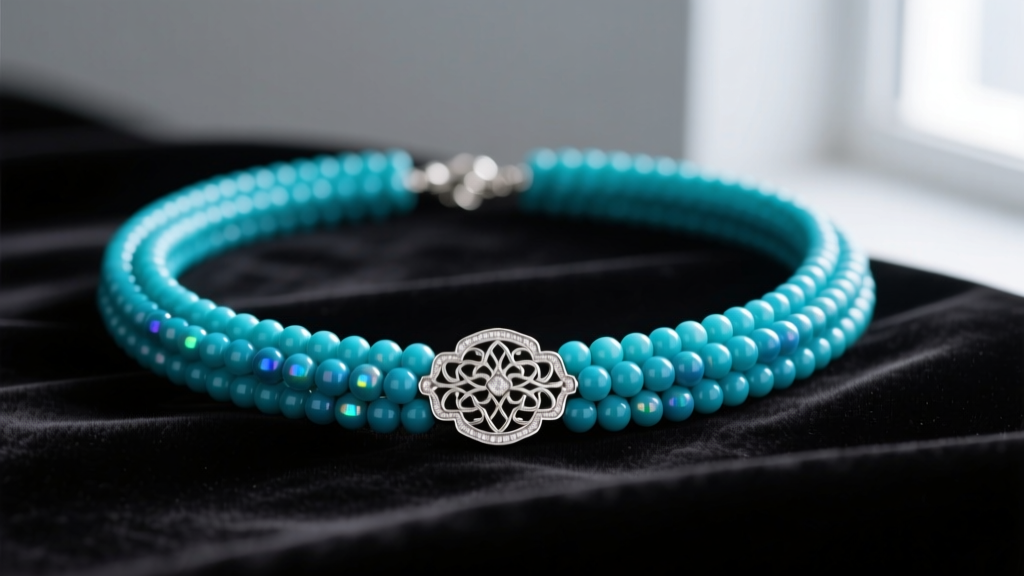
A beaded collar necklace is a striking, structured piece of jewelry that sits snugly at the base of the neck, typically measuring between 12 and 14 inches in length. Unlike longer pendants or matinee strands that drape freely, collars are subjected to unique physical and chemical stressors. Because of their tight circumference, they experience constant friction against the skin and are continuously exposed to sebum, urea, and lactic acid present in human sweat. Furthermore, the rigid curvature required to make a collar necklace sit flat against the collarbone places immense mechanical tension on the stringing material and the clasp hardware. Understanding these specific vulnerabilities is the first step in preserving the structural integrity and visual brilliance of your jewelry.
In 2026, modern jewelry conservation emphasizes preventative care over reactive restoration. The tight fit of a collar means that body oils accumulate rapidly between the beads, particularly in organic or porous gemstones. If left untreated, this acidic buildup can permanently etch the surface of soft stones and degrade the stringing thread from the inside out. Proper maintenance requires a departure from generic jewelry cleaning routines and a tailored approach that respects both the gemological properties of the beads and the metallurgical limits of the stringing wire.
Material-Specific Cleaning Protocols
The most critical mistake collectors make is applying a universal cleaning solution to all gemstones. The GIA's Turquoise Care Guide explicitly warns against using ultrasonic cleaners or harsh chemical dips on porous materials, a rule that applies to many stones commonly used in collar necklaces. Below is a structured framework for cleaning your beads based on their Mohs hardness and porosity.
| Bead Material | Mohs Hardness | Safe Cleaning Method | Strictly Avoid |
|---|---|---|---|
| Turquoise | 5.0 - 6.0 | Dry microfiber cloth; occasional damp wipe | Ultrasonic, steam, soap, perfumes |
| Lapis Lazuli | 5.0 - 6.0 | Mild pH-neutral soap, quick rinse, pat dry | Prolonged water soaking, acids |
| Freshwater Pearl | 2.5 - 4.5 | Damp cloth only; wipe after every wear | All acids, ammonia, ultrasonic |
| Czech Glass | 5.5 - 7.0 | Isopropyl alcohol or mild glass cleaner | Hard impacts, hydrofluoric acid |
| Agate / Jasper | 6.5 - 7.0 | Warm soapy water, soft brush | Extreme thermal shock |
Handling Porous Organics and Soft Stones
When cleaning a beaded collar necklace featuring turquoise, coral, or pearls, you must avoid saturating the stringing hole. Water trapped inside the drill hole will slowly rot silk thread and cause the steel wire to oxidize.  Always use a barely damp, lint-free microfiber cloth to wipe the surface of each bead individually. For pearls, the calcium carbonate structure is highly reactive to the lactic acid in sweat; failing to wipe them down after wearing can result in a permanent loss of luster and a chalky surface texture over time.
Hard Gemstones and Glass Beads
For collars made of agate, jasper, or high-quality Czech glass, you can use a slightly more aggressive approach. A soft-bristled baby toothbrush dipped in a solution of distilled water and a single drop of pH-neutral dish soap can safely dislodge dirt trapped in the crevices between tightly packed beads. Rinse quickly under a gentle stream of lukewarm distilled water—never hot, as thermal shock can fracture even hard stones if they have internal inclusions. Dry immediately with a microfiber towel and allow the necklace to lay flat on a dry cloth for 24 hours to ensure all moisture evaporates from the drill holes.
Stringing Material Maintenance: Wire vs. Thread
The backbone of any beaded collar necklace is its stringing material, and the choice of material dictates the care regimen. Historically, collars were strung on Size F or G silk thread. While silk offers a beautiful, fluid drape, it is highly susceptible to degradation from the urea and salts in human sweat. If your vintage or artisan collar is strung on silk, it must never be submerged in water. Instead, clean only the beads and have the necklace professionally restrung every 12 to 18 months if worn frequently.
Modern collars are predominantly strung on nylon-coated stainless steel wire, such as the industry-standard 49-strand wire recommended by Rio Grande jewelry supply experts. For a rigid collar necklace, a 0.018-inch or 0.024-inch gauge 49-strand wire is ideal. The 49-strand construction provides superior flexibility and resists 'metal memory'—the tendency of cheaper 7-strand or 19-strand wires to permanently kink when bent into the tight radius of a collar. To maintain wire-strung collars, inspect the nylon coating near the clasp. If you see the steel core exposed, the wire is compromised and must be replaced immediately to prevent a catastrophic snap.
Proper Storage to Prevent Kinking and Stretching
Storage is where most beaded collar necklaces meet their demise. The instinct to hang necklaces on a jewelry tree or wall hook is disastrous for collars. 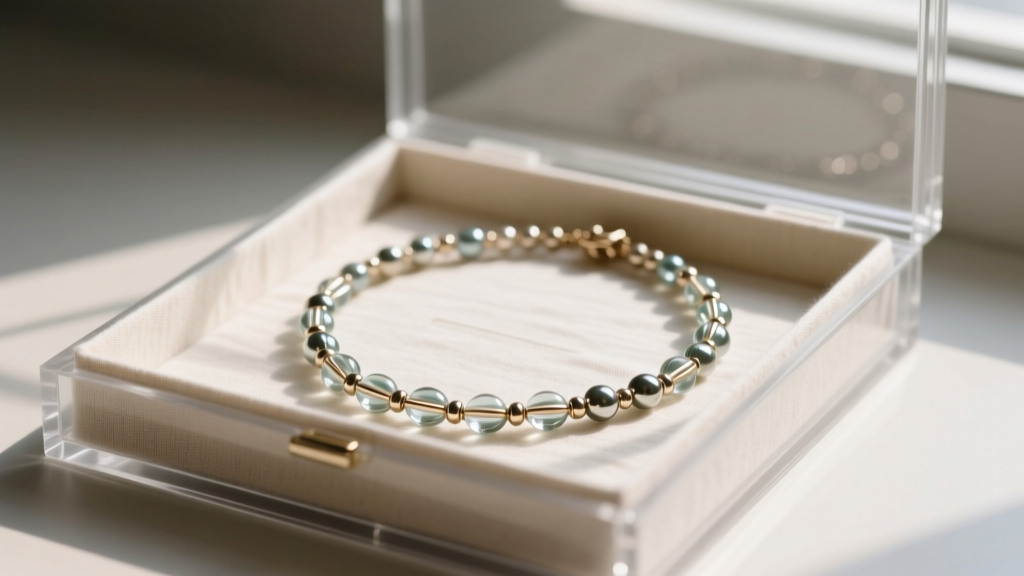 Hanging a heavy, tightly strung collar places continuous gravitational stress on the bottom curve, which will permanently stretch silk thread and warp steel wire, creating an unnatural, asymmetrical drape. Furthermore, hanging encourages the beads to slide and grind against one another, potentially scratching softer stones.
The only correct way to store a beaded collar necklace is perfectly flat. Use a shallow, acid-free archival jewelry box lined with unbleached cotton or anti-tarnish flannel. Do not fold or coil the necklace; it must rest in its natural circular or oval shape. If you must travel with the piece, utilize a rigid, flat jewelry roll that prevents the necklace from being crushed or bent in your luggage. Always fasten the clasp before storing to prevent the chain or wire ends from tangling and pulling on the stringing material.
Clasp and Hardware Maintenance
Because collar necklaces sit tightly against the neck, the clasp endures constant lateral tension and rotational friction. Lobster claws are the most common choice, but their internal spring mechanisms can become clogged with skin cells and lotion residue, causing them to stick or fail to close completely. Once a month, use a wooden toothpick to gently clear debris from the clasp hinge, and apply a microscopic drop of synthetic watch oil to the spring mechanism. Avoid using WD-40 or standard household oils, which will attract dust and gum up the delicate internal parts.
Inspect the jump ring that connects the clasp to the beadwork. In many mass-produced collars, the jump ring is not soldered closed. Over time, the tension of the collar can pull the jump ring apart, creating a gap where the stringing wire can slip out. If you notice even a slight gap, take the necklace to a jeweler to have the jump ring soldered shut or replaced with a heavier-gauge split ring. For high-end collars, upgrading to a neodymium magnetic clasp with a safety latch can distribute the tension more evenly and make the necklace significantly easier to put on and take off without pulling on the delicate beadwork.
When to Restring: Warning Signs and Gauge Upgrades
Even with meticulous care, the stringing material of a beaded collar necklace will eventually fatigue. Knowing when to restring is crucial to preventing the loss of valuable gemstones. Look for these critical warning signs:
- Visible Thread: If you can see the stringing material between the beads when the necklace is laid flat, the thread has stretched beyond its recovery point.
- Stiff Spots: Run your fingers along the wire. Any rigid, kinked sections indicate metal fatigue and an imminent break.
- Clasp Sag: If the beads near the clasp hang loosely or gap when the necklace is clasped, the stringing material has compressed or stretched unevenly.
When commissioning a restringing, always request a gauge upgrade if the original wire was 7-strand or 19-strand. Upgrading to a 0.018-inch 49-strand wire will cost only marginally more (typically $65 to $120 for professional restringing, depending on bead count and clasp complexity) but will exponentially increase the lifespan and drape of your collar. Ensure the jeweler uses French wire (bullion) or wire protectors at the clasp connection points to prevent the metal clasp from sawing through the nylon coating of the stringing wire over time.


