How to Clean and Care for Your Favorite Emoji Necklace
Learn expert techniques to clean and maintain your emoji necklace. Discover safe washing methods for enamel and resin to keep colors vibrant.

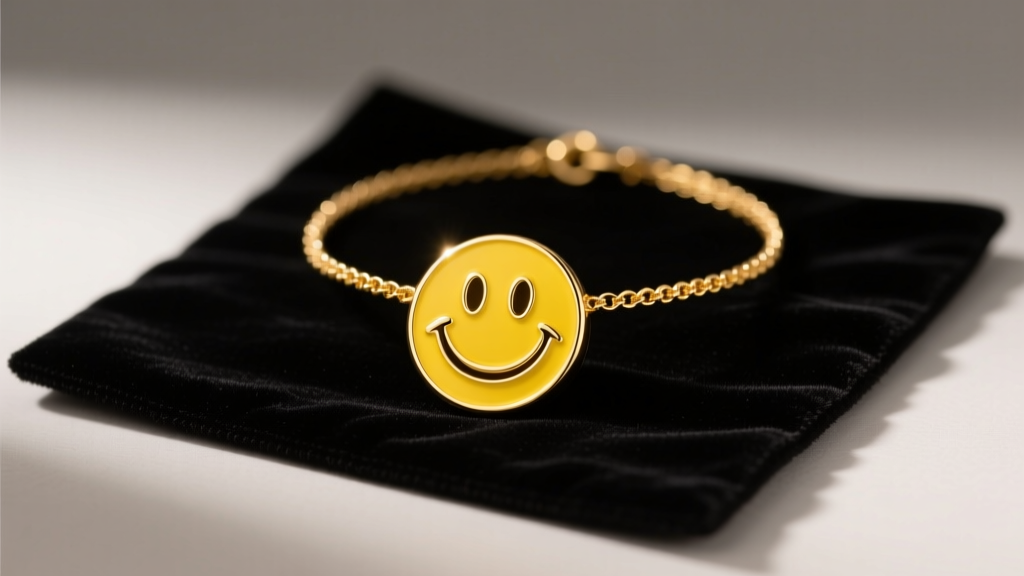
The emoji necklace has transcended fleeting trends to become a permanent staple in modern jewelry wardrobes. Whether you are wearing a classic 14k gold smiley face pendant, a winking face charm from Jennifer Fisher, or a minimalist heart-eyes piece from Mejuri, these playful accessories require highly specific maintenance. Unlike solid metal chains or diamond solitaires, the vibrant colors of an emoji necklace rely on delicate enamel or resin work. Treating your emoji pendant like standard gold jewelry is the fastest way to ruin it. In this comprehensive guide, we break down the exact material science, cleaning protocols, and storage frameworks necessary to keep your emoji necklace looking factory-fresh in 2026 and beyond.
The Anatomy of an Emoji Necklace: Why Standard Cleaning Fails
The most common mistake jewelry owners make is tossing their emoji pendants into an ultrasonic cleaner or a chemical dip. According to the Jewelers Mutual Insurance Group, ultrasonic cleaners operate using high-frequency sound waves (typically 40-45 kHz) to create microscopic cavitation bubbles in a liquid solution. While this effectively blasts dirt out of diamond settings, the intense localized pressure and vibrations will cause micro-fractures in vitreous enamel and can literally pop cold enamel right out of its metal bezel.
Furthermore, chemical dips containing ammonia or thiourea (found in heavy tarnish removers like Tarn-X) will strip the protective UV topcoat off cold enamel, leaving the bright yellow smiley face looking dull, cloudy, and eventually brown. To maintain the structural integrity of the color fills, we must abandon aggressive cleaning methods and adopt a gentle, chemistry-conscious approach.
Material Breakdown: Vitreous Enamel vs. Cold Enamel
Before applying any water or soap to your emoji necklace, you must identify the type of color fill used by the manufacturer. The cleaning protocol shifts slightly depending on the material.
- Vitreous Enamel (Kiln-Fired Glass): Created by fusing powdered glass to metal at temperatures exceeding 1,400°F. It is highly durable, scratch-resistant, and will not fade from UV exposure. However, it is essentially glass, meaning it is brittle and susceptible to thermal shock and impact chipping.
- Cold Enamel (Epoxy Resin): A pigmented resin that is poured into the metal recesses and cured, often using UV light. It is highly impact-resistant (it will bounce if dropped) but is incredibly vulnerable to heat, harsh chemicals, alcohol-based perfumes, and prolonged UV exposure, which causes the yellow pigment to oxidize and turn green or brown.
Cleaning Agents & Material Compatibility Chart
| Cleaning Agent | Vitreous Enamel | Cold Enamel / Resin | 14k Gold / Silver Chain |
|---|---|---|---|
| Ultrasonic Cleaner | NEVER (Causes shattering) | NEVER (Pops resin out) | Safe (for solid metal only) |
| Ammonia / Chemical Dips | Avoid (Dulls finish) | NEVER (Strips topcoat) | Safe (Use sparingly) |
| Mild Dish Soap (Dawn) | SAFE | SAFE | SAFE |
| Isopropyl Alcohol | Safe | NEVER (Dissolves resin) | Safe |
| Baking Soda Paste | NEVER (Scratches glass) | NEVER (Scratches resin) | Safe (for heavy tarnish) |
Step-by-Step Cleaning Guide for Enamel Emoji Pendants
Follow this exact protocol to safely remove body oils, lotion buildup, and environmental dust from your emoji necklace without compromising the color fill or the metal casing.
Step 1: The Dry Wipe
Before introducing moisture, use an untreated, lint-free microfiber cloth to gently wipe the surface of the pendant. This removes loose abrasive dust particles that could cause micro-scratches when wet. Do not use treated jewelry polishing cloths (like Sunshine cloths) directly on the enamel, as the embedded jeweler's rouge will stain the porous edges of cold enamel.
Step 2: The Lukewarm Bath
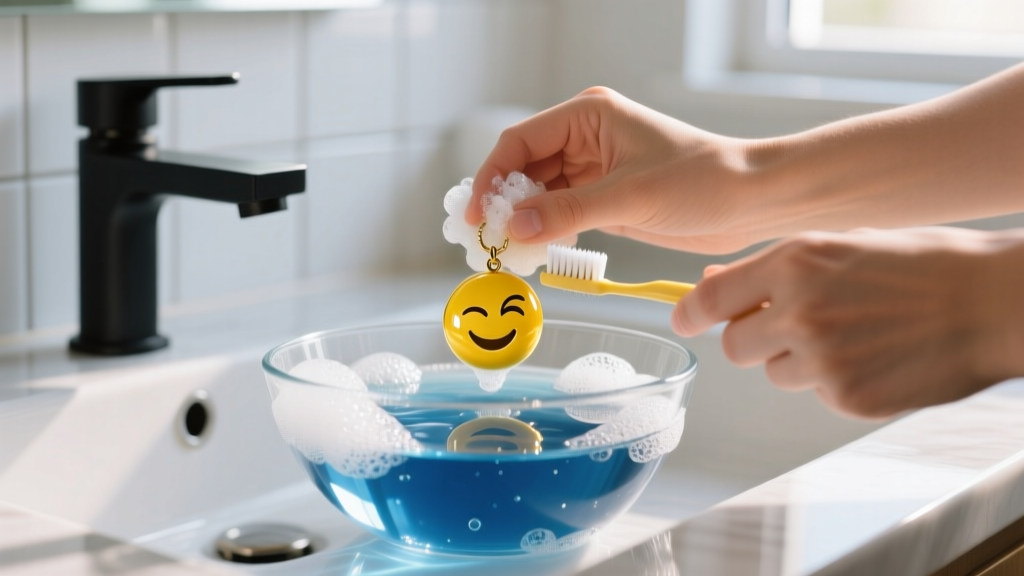
Fill a small glass bowl with distilled water. Tap water contains chlorine and hard minerals that can leave a white, chalky film on dark-colored enamel details (like the eyes and mouth of a smiley face). The water should be lukewarm, strictly between 85°F and 95°F. Extreme heat can cause thermal shock in vitreous enamel, while cold water won't effectively break down sebum and skin oils.
Step 3: The Soft Agitation
Add exactly one drop of mild, lotion-free dish soap (Dawn Original is the industry standard recommended by the Tiffany & Co. Jewelry Care guidelines for safe gemstone and enamel washing). Submerge the emoji necklace for 3 to 5 minutes. Using an infant toothbrush with ultra-soft 0.1mm nylon bristles, gently agitate the crevices where the metal bezel meets the enamel. Never use standard adult toothbrushes, as the stiff bristles will leave permanent swirl marks on cold enamel.
Step 4: The Rinse and Dry
Rinse the pendant under a gentle stream of lukewarm distilled water. Pat dry with a fresh microfiber cloth, then lay the necklace flat on a dry towel in a well-ventilated area to allow any trapped moisture in the chain links to evaporate completely before storage.
The Chain: Don't Forget the Hardware
While the emoji pendant requires delicate care, the chain (often a 14k gold cable or sterling silver box chain) can accumulate heavy tarnish and grime. If your chain is heavily soiled, detach the pendant if the clasp allows. You can safely use a treated silver or gold polishing cloth on the chain links, being meticulously careful to stop a half-inch short of the pendant bail to avoid transferring polishing compounds onto the enamel face.
Storage & Maintenance: Preventing Micro-Scratches and Fading
Proper storage is just as critical as proper cleaning. The Gemological Institute of America (GIA) emphasizes the importance of understanding the Mohs scale of mineral hardness when storing mixed-material jewelry. Vitreous enamel sits at roughly 5 to 6 on the Mohs scale. While 14k gold (2.5 to 3) and sterling silver (2.5) are softer and won't scratch the enamel, any diamond (10), sapphire (9), or even quartz dust (7) in your jewelry box will severely scratch the face of your emoji pendant.
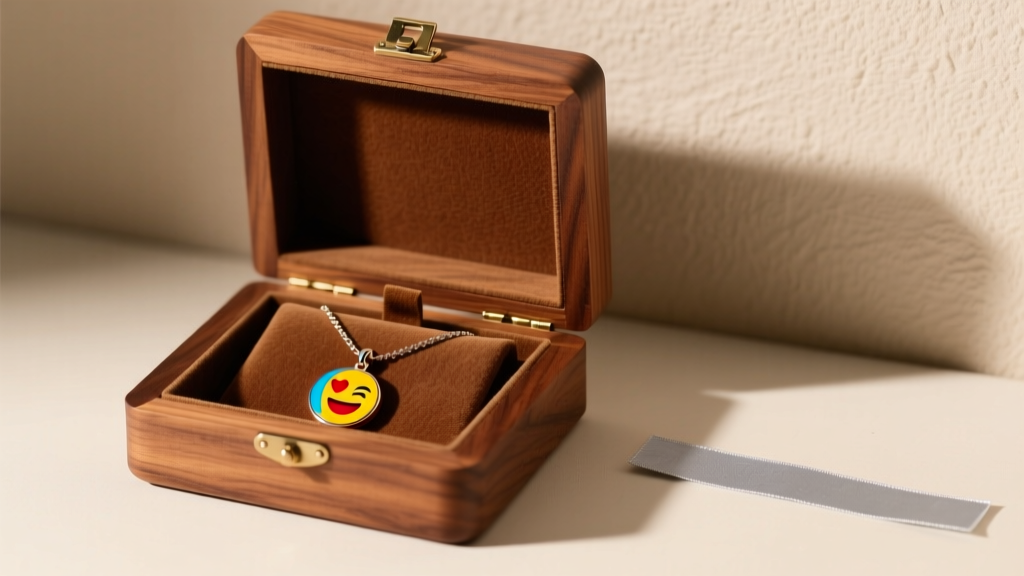
- Isolate the Pendant: Always store your emoji necklace in its own individual suede pouch or a dedicated compartment in a lined jewelry box. Never toss it into a communal jewelry dish with diamond tennis bracelets or gemstone rings.
- UV Protection: If your necklace features cold enamel (resin), prolonged exposure to direct sunlight will cause the yellow and white pigments to oxidize and yellow. Store the necklace in a dark, opaque drawer or box.
- Tarnish Prevention: Place an anti-tarnish strip (like 3M Pacific Silvercloth) and a small silica gel packet in the storage compartment to absorb ambient moisture and sulfur compounds that cause the metal bezel to tarnish.
- Chemical Avoidance: Always apply your perfumes, hairsprays, and alcohol-based skincare products before putting on your emoji necklace. Alcohol is a primary solvent for epoxy resins and will degrade the surface of cold enamel over time.
Troubleshooting Common Emoji Necklace Issues
Even with meticulous care, issues can arise. Here is how to troubleshoot the most common problems associated with emoji pendants.
Issue 1: Cloudy or Hazy Enamel Surface
The Cause: Micro-scratches from improper cleaning or a buildup of hard water minerals.
The Fix: For vitreous enamel, apply a tiny drop of food-grade mineral oil to a microfiber cloth and buff the surface in tight circular motions. The oil will temporarily fill the micro-scratches, restoring optical clarity and deep color saturation. Wipe away any excess oil before wearing.
Issue 2: Chipped Vitreous Enamel
The Cause: Dropping the pendant on a hard surface like tile or marble, causing the glass enamel to fracture.
The Fix: Do not attempt a DIY repair with superglue or nail polish, as these will yellow and ruin the aesthetic. Take the piece to a professional bench jeweler who specializes in kiln-fired enamel work. They can carefully chip out the damaged area, clean the metal recess, and fire a new layer of matched glass enamel.
Issue 3: Yellowing or Fading Cold Enamel
The Cause: UV degradation and oxidation of the epoxy resin due to sun exposure or chemical contact.
The Fix: Unfortunately, once cold enamel has chemically yellowed, the process is irreversible. The pigment itself has altered at a molecular level. The only solution is prevention (storing in the dark, avoiding UV) or having the pendant professionally stripped and re-poured with fresh resin by the original manufacturer.
Final Thoughts on Emoji Necklace Longevity
An emoji necklace is more than just a whimsical accessory; it is a carefully crafted piece of mixed-media jewelry that demands respect. By understanding the distinct differences between vitreous glass and cold epoxy resin, avoiding the destructive forces of ultrasonic cleaners, and adhering to a strict, gentle cleaning protocol, you can ensure your favorite smiley, winking, or heart-eyes pendant remains as vibrant and expressive as the day you bought it.