How to Store Necklaces Without Tangling: Expert Step-by-Step
Learn how to store necklaces without tangling using expert-approved methods, from velvet rolls to acrylic organizers, protecting fine jewelry.

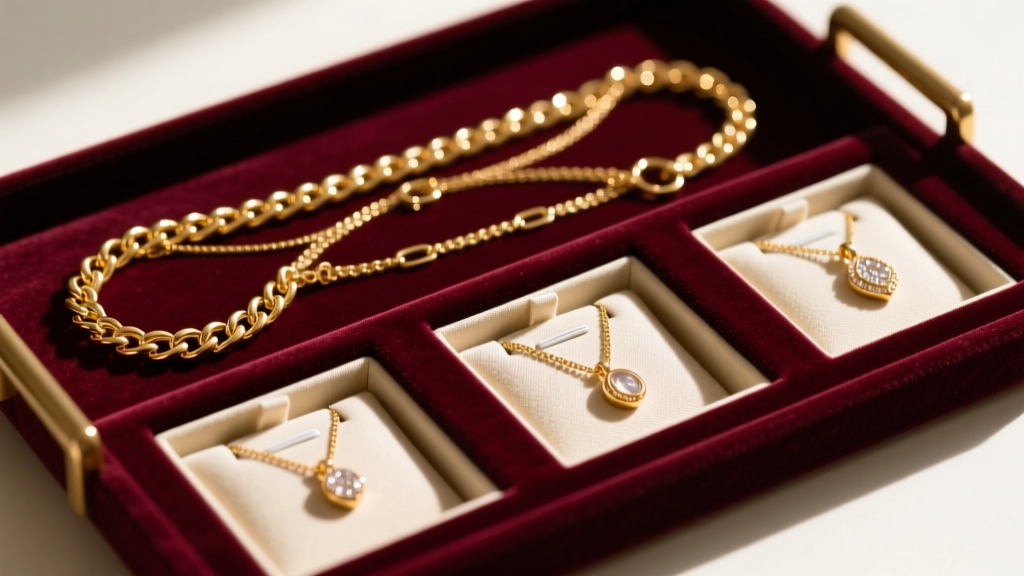
There are few things more frustrating in a jewelry lover’s daily routine than opening a drawer to find a delicate gold chain twisted into an impenetrable bird's nest. Understanding how to store necklaces without tangling is not just about maintaining your sanity; it is a critical preservation technique that prevents micro-abrasions, metal fatigue, and permanent kinking in high-value pieces. Whether you are managing a collection of heavy Cuban links or fragile 1mm herringbone chains, implementing a systematic storage protocol will extend the lifespan of your jewelry and keep it ready to wear at a moment's notice.
The Physics of Chain Entanglement: Why Necklaces Knot
To solve the tangling problem, we must first understand the physics behind it. In 2007, physicists Dorian Raymer and Douglas Smith published a landmark study in the Proceedings of the National Academy of Sciences regarding the spontaneous knotting of agitated strings. Their research proved that a flexible string shorter than 18 inches rarely tangles. However, once the length exceeds 18 inches, the probability of complex knot formation approaches 100% when subjected to minor agitation—such as the vibrations of a car ride or the shifting of a jewelry drawer.
This explains why your 16-inch chokers remain pristine, while your 24-inch opera chains and 22-inch rope chains emerge hopelessly tangled. Furthermore, chains with high friction coefficients (like oxidized sterling silver or textured box chains) catch on one another far more easily than smooth, polished surfaces. By neutralizing both length and friction, we can mathematically eliminate tangles.
Step-by-Step Guide: How to Store Necklaces Without Tangling
Follow this exact protocol before putting your necklaces away for the season or the night.
Step 1: Cleanse and Dry (The Anti-Tarnish Prep)
Never store a necklace that has been worn directly against the skin without a quick wipe. Sebum, sweat, and cosmetic residues act as adhesives that cause chain links to stick together, increasing the friction that leads to knotting. Use a microfiber cloth to wipe down the chain. For .925 sterling silver, ensure the piece is completely dry before sealing it in an airtight environment, as trapped moisture accelerates hydrogen sulfide tarnishing.
Step 2: The Clasp Protocol
The state of the clasp dictates the storage method. If you are laying a necklace flat in a compartmentalized box, fasten the clasp. This prevents the jump ring or lobster claw from acting as a microscopic hook that snags on adjacent links. If you are hanging the necklace on a jewelry tree or wall hook, leave the clasp unfastened to allow gravity to pull the chain perfectly straight, eliminating torsion stress on the links.
Step 3: Isolate and Immobilize
The key to preventing tangles is immobilization. A chain cannot knot if it cannot move. Use individual soft pouches, dedicated acrylic slots, or the travel-friendly straw method (detailed below) to restrict the kinetic energy of the chain.
Comparing Storage Solutions: What Works and What Fails
Not all jewelry organizers are created equal. Many popular retail solutions actually exacerbate tangling or fail to protect the metal's finish. Below is an expert evaluation of common storage mediums.
| Storage Medium | Ideal Chain Types | Tangling Risk | Material Preservation |
|---|---|---|---|
| Individual Velvet Pouches | Herringbone, Snake, Delicate Cables | Zero (if laid flat inside) | High (if treated with anti-tarnish agents) |
| Acrylic Compartment Trays | Box, Curb, Rope, Cuban Links | Low (if sized correctly) | Moderate (requires added anti-tarnish strips) |
| Hanging Jewelry Trees | Long Pendants, Mariner Chains | Moderate (if bumped or swaying) | Low (exposes metal to airborne sulfur) |
| The Straw Method (Travel) | All types, especially fine 1mm chains | Zero | Low (purely mechanical protection) |
| Open Valet Trays | Thick, heavy chains only | High (for chains under 3mm) | Low (dust and humidity exposure) |
Specialized Storage for High-Value & Delicate Chains
Certain chain weaves possess structural vulnerabilities that require highly specific storage conditions. Treating a herringbone chain like a standard cable chain will result in irreversible damage.
- Herringbone Chains: These fluid, flat chains are notoriously prone to kinking. Once a kink forms, the structural integrity of the weave is compromised, and it will permanently reflect light at a distorted angle. Rule: Never hang a herringbone chain. Always store it completely flat in a wide velvet roll or a dedicated lined drawer.
- Omega Chains: Omega chains are not true link chains; they are metal plates assembled over a structural mesh core. They possess a rigid "memory" and will snap or permanently bend if forced out of their natural circular shape. Rule: Store them in their original circular presentation boxes or lay them flat in a wide, circular coil.
- Snake Chains: The tightly interlocking bands of a snake chain create microscopic grooves that trap skin oils and lotion, making the chain stiff and more prone to tangling. Rule: Clean with a soft baby toothbrush and mild dish soap monthly, and store in a soft cloth pouch to prevent friction against harder gemstones.
Travel Hacks: Keeping Chains Tangle-Free on the Go
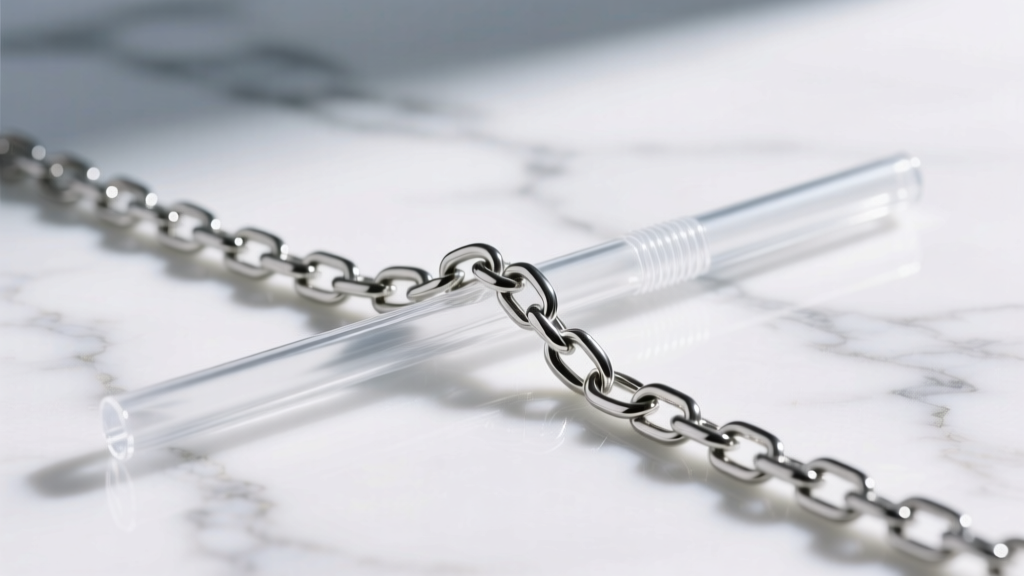
Travel introduces constant kinetic agitation, making it the ultimate enemy of untangled jewelry. The most effective, jeweler-approved travel hack is the Plastic Straw Method.
Simply unclasp your necklace and thread one end of the chain through a standard plastic drinking straw. Once the chain has passed through, re-clasp it. The rigid cylinder of the straw makes it physically impossible for the chain to cross over itself and form a knot. For thicker chains that won't fit through a standard straw, use the Press-and-Seal Wrap Method: lay the necklace flat on a sheet of plastic cling wrap, fold the top half over the chain, and press down to seal the plastic around the links, leaving only the clasp exposed. Roll the plastic up and secure it with a rubber band.
Untangling Knots: A Jeweler’s Emergency Protocol
If your prevention methods fail and you are faced with a severe knot, do not pull at the ends of the chain. Pulling tightens the apex of the knot, causing metal-on-metal abrasion that can snap delicate 14k or 18k gold links. Instead, follow this professional bench protocol:
- Prepare the Workspace: Lay the knotted chain on a dark, non-slip rubber mat. The dark background provides high contrast, allowing you to see the overlapping links clearly.
- Lubricate the Knot: Apply a single drop of mineral oil or baby oil directly to the center of the knot. Avoid olive oil or vegetable oils, as they can oxidize and turn rancid over time, leaving a sticky residue on your jewelry.
- Deploy the Tools: Use two fine-point sewing needles, titanium dental picks, or straight pins. Insert the tips of both needles into the exact center of the tightest part of the knot.
- Work Outward: Gently wiggle the needles in opposite directions to create micro-movements. Do not pry aggressively. Once the center link loosens, use the needles to push the links outward toward the edges of the knot until it unravels.
"Patience and lubrication are your best tools. A severe knot in a 1mm gold chain can take a professional jeweler up to twenty minutes to resolve under a loupe. Never rush the process, or you risk stretching the links beyond repair." — Jewelers of America Care Guidelines
Final Thoughts on Necklace Preservation
Mastering how to store necklaces without tangling is a blend of applied physics, material science, and disciplined daily habits. By respecting the structural limitations of specific chain weaves, isolating your pieces from kinetic agitation, and utilizing anti-tarnish environments, you ensure that your collection remains as pristine as the day it was purchased. Invest in proper compartmentalized storage, keep your chains clean before putting them away, and reserve the straw trick for your next trip. Your jewelry—and your patience—will thank you.


