Expert Care and Cleaning for a Long Purple Necklace
Learn expert cleaning, storage, and maintenance tips to protect the gemstones and chains of your favorite long purple necklace from damage.

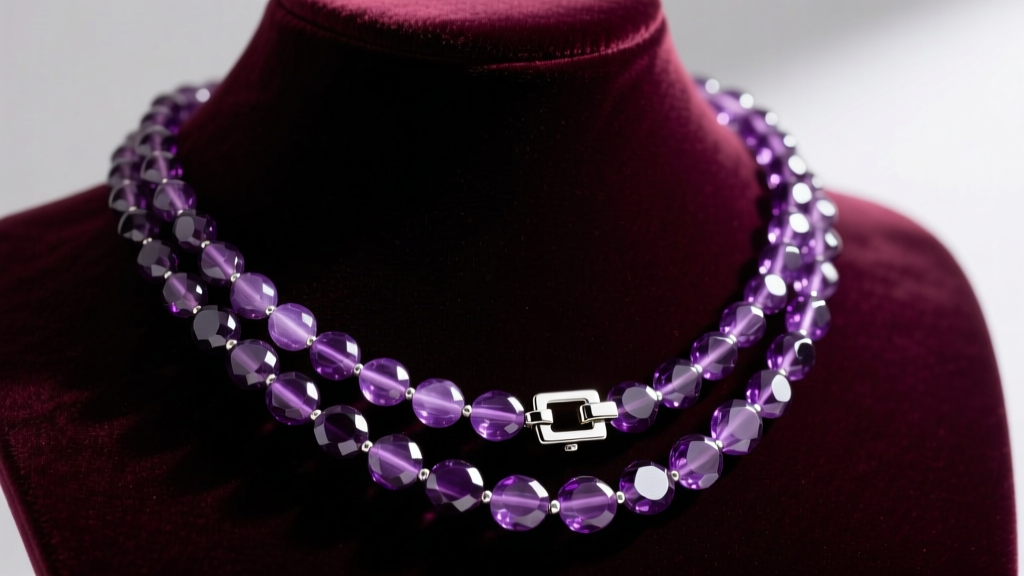
The Unique Challenges of Long Purple Necklaces
Owning a long purple necklace—whether it features deep violet amethyst, rare tanzanite, or vibrant purple sugilite—requires a specialized approach to jewelry maintenance. Unlike standard 16-inch chokers or 18-inch princess chains, opera-length (28 to 32 inches) and rope-length (33+ inches) necklaces face distinct mechanical stresses. The sheer weight of a long pendant or beaded strand creates continuous torque on the clasp, while the extended chain is highly susceptible to tangling, knotting, and environmental exposure.
Furthermore, the "purple" element introduces specific gemological vulnerabilities. Purple gemstones range from relatively durable quartz varieties to highly sensitive, porous stones that can be destroyed by standard commercial jewelry cleaners. According to the Gemological Institute of America (GIA), understanding the exact mineral composition of your purple stones is the mandatory first step in establishing a safe care routine.
Identifying Your Purple Gemstone and Chain Mechanics
Before applying any cleaning solution, you must identify both the stone and the metalwork. The Mohs hardness scale and the stone's internal structure (cleavage and porosity) dictate what the jewelry can withstand.
Common Purple Gemstones and Their Vulnerabilities
- Amethyst (Mohs 7): Durable but sensitive to extreme heat, which can cause the purple color to fade or shift to yellowish-brown.
- Tanzanite (Mohs 6-7): Features perfect cleavage, meaning a single hard knock against a table edge while wearing a long, swinging necklace can split the stone.
- Sugilite & Charoite (Mohs 5-6.5): Highly porous and often treated with resins or waxes. Submerging these stones in water can degrade the polish and cause cloudiness.
- Purple Sapphire (Mohs 9): Extremely durable, safe for most cleaning methods, though fracture-filled specimens require gentle care.
The Mechanics of Long Chains
Long necklaces swing freely against the body, acting as a pendulum. This motion forces dirt, sebum, and lotion deep into the crevices of rope and box chains. Additionally, a heavy long purple necklace puts immense strain on standard 5mm spring-ring clasps. If your necklace uses a small spring ring, the internal spring will eventually fatigue, leading to spontaneous unclasping and potential loss.
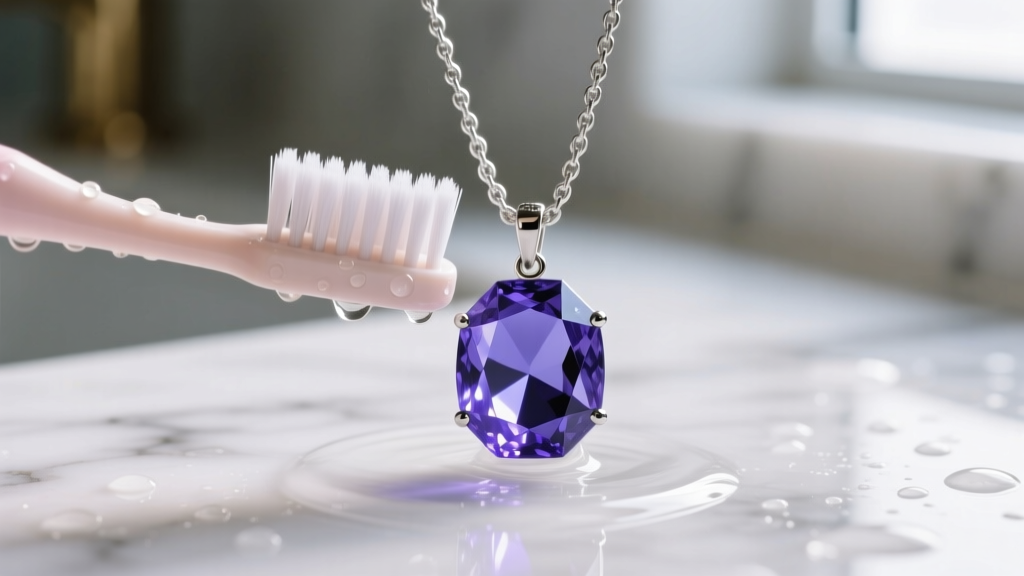
Step-by-Step Cleaning Protocols by Material
Never use ultrasonic cleaners or steamers on a long purple necklace unless you have absolute confirmation from a certified gemologist that the stones are untreated and non-porous. The high-frequency cavitation of an ultrasonic bath can shatter tanzanite and strip the protective wax coatings off charoite.
| Gemstone Type | Mohs Hardness | Ultrasonic Safe? | Steam Safe? | Recommended Cleaning Method |
|---|---|---|---|---|
| Amethyst | 7 | Yes (with caution) | No | Warm distilled water, mild dish soap, baby-bristle brush |
| Tanzanite | 6 - 7 | No | No | Lukewarm soapy water, soft microfiber cloth only |
| Sugilite / Charoite | 5 - 6.5 | No | No | Dry polishing cloth; avoid all liquids and chemicals |
| Dyed Purple Quartz | 7 | No | No | Damp cloth wipe-down; soaking will leach the dye |
| Purple Enamel | N/A (Glass-based) | No | No | Soft dry cloth; thermal shock from water can crack enamel |
The Safest At-Home Cleaning Solution
For durable stones like amethyst and purple sapphire, the gold standard for at-home cleaning is a mixture of lukewarm distilled water and a few drops of pH-neutral dish soap (such as original Dawn). Avoid tap water, as the chlorine and hard water minerals can leave a filmy residue on the gemstones and accelerate the tarnishing of silver chain links.
- Lay a soft towel in the bottom of a glass bowl to prevent the stones from cracking against the hard glass if dropped.
- Submerge the chain and stones for no more than 3 to 5 minutes.
- Use a clean, ultra-soft baby toothbrush to gently agitate the dirt from the chain links and the back of the gemstone settings (the culet area, which traps the most skin oils).
- Rinse briefly under a gentle stream of distilled water.
- Pat dry with a lint-free microfiber cloth. Never air-dry, as water spots will form on the metal.
"The most common failure point on an opera-length necklace isn't the chain snapping; it's the jump ring connecting the clasp pulling apart due to the pendulum effect of the heavy beads. Always check the gap in your jump rings with a magnifying loupe every six months." — Master Bench Jeweler
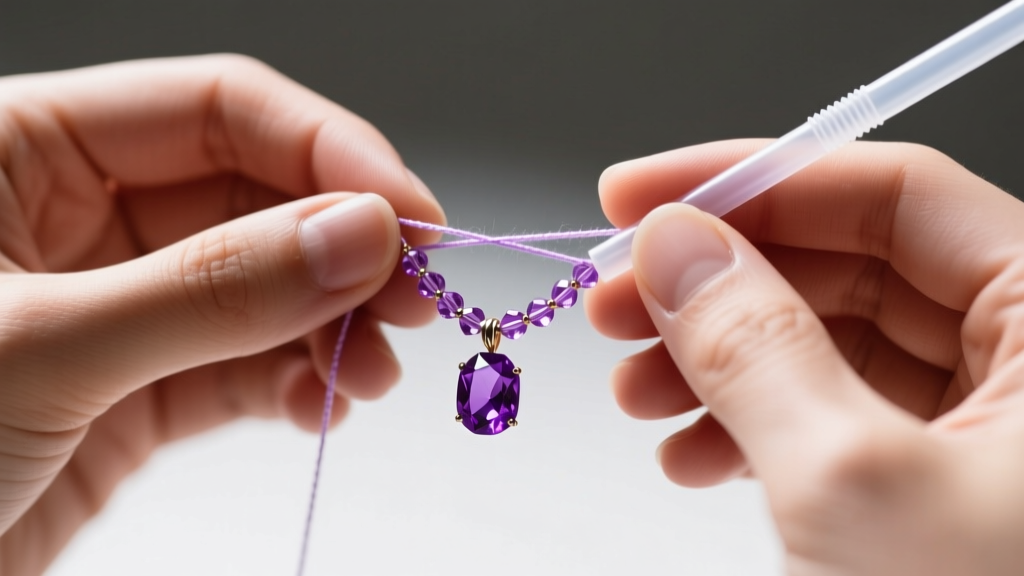
Advanced Storage Solutions to Prevent Tangling
Storing a long purple necklace requires more than simply tossing it into a velvet pouch. Rope chains and multi-strand beaded lariat necklaces are notorious for forming complex knots that can weaken the metal links and fray silk stringing threads.
The Straw Threading Method
For long chain necklaces, the most effective anti-tangle technique is the straw method. Unclasp the necklace, thread one end of the chain through a standard plastic drinking straw, and re-clasp it. The rigid plastic straw prevents the chain from curling back on itself, making it physically impossible for the chain to knot while in your jewelry box.
Climate and Chemical Control
If your long purple necklace features sterling silver links or copper wire-wrapping, oxidation is a constant threat. Store the piece in a sealed polyethylene zip-lock bag along with an anti-tarnish tab (such as 3M Silver Shield). These tabs absorb hydrogen sulfide and sulfur dioxide from the trapped air, preventing the silver from turning black. Never store jewelry in cardboard boxes or standard paper envelopes, as the wood pulp and acidic sizing agents in paper release gases that actively promote metal tarnishing and can degrade porous gemstones over time.
When to Seek Professional Jeweler Maintenance
While at-home cleaning handles surface dirt, structural maintenance requires professional intervention. The Jewelers of America recommends an annual inspection for any fine jewelry worn regularly. For long, heavy necklaces, you should seek a professional bench jeweler for the following services:
- Clasp Upgrades: If your heavy beaded necklace uses a standard spring-ring clasp, have a jeweler solder a 12mm lobster clasp or a high-grade neodymium magnetic clasp to distribute the weight and prevent accidental unfastening.
- Prong Re-tipping: If your long necklace features a large central purple sapphire or tanzanite pendant, the prongs will wear down from friction against your clothing. A jeweler can add fresh metal to the prong tips to secure the stone.
- Re-stringing: If your long purple necklace is strung on silk thread, it must be professionally re-strung every 1 to 2 years. Silk stretches and degrades from skin acidity. If it is strung on nylon or Beadalon wire, the interval extends to 3 to 5 years. Look for "gapping" between the beads as a sign that the stringing material has stretched and requires immediate replacement.
By understanding the specific gemological properties of your stones and the mechanical realities of long-form jewelry, you can ensure your long purple necklace remains a vibrant, untangled, and structurally sound statement piece for decades.


