How to Design a Custom Horse Necklace: Step-by-Step Guide
Learn how to design a custom horse necklace with our step-by-step guide. Discover metal grades, chain gauges, and CAD tips for equestrian jewelry.

The Art of Equestrian Jewelry: Why Go Custom?
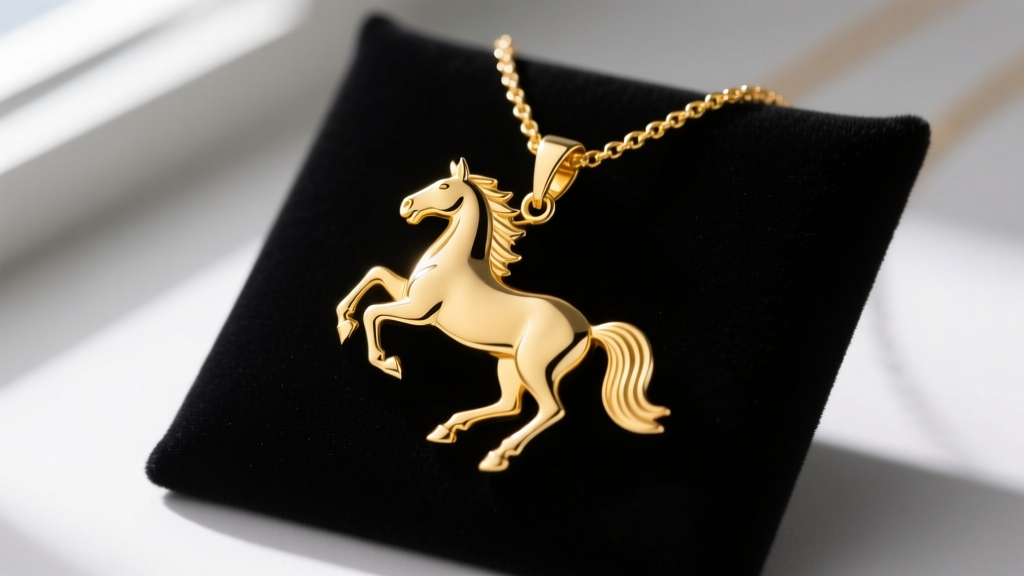
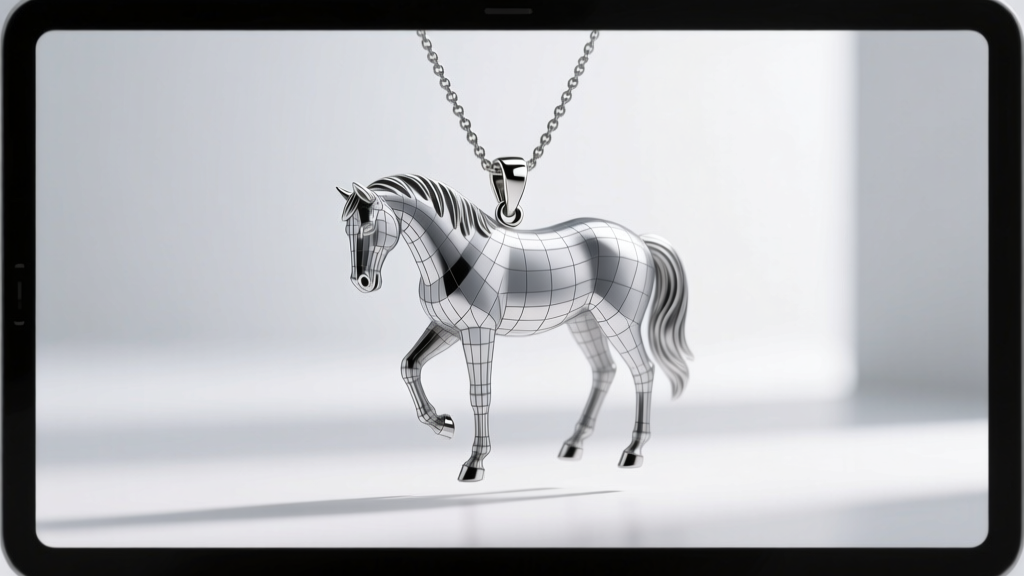
For equestrians and horse lovers, jewelry is more than a mere accessory; it is a tangible connection to the animals we cherish. While mass-produced pendants flood the market, they often lack anatomical accuracy, structural integrity, and personal meaning. Designing a custom horse necklace allows you to capture the exact breed, posture, and spirit of your equine companion. In 2026, advancements in CAD (Computer-Aided Design) and high-resolution resin 3D printing have democratized bespoke jewelry, allowing for micro-details like individual strands of a horse's mane or the specific drape of a dressage saddle to be cast perfectly in precious metals. This step-by-step guide will walk you through the technical and aesthetic decisions required to create an heirloom-quality custom horse necklace.
Step 1: Defining the Equine Silhouette and Pose
The foundation of any successful animal pendant is anatomical correctness. When working with a jewelry designer, you must decide on the pose and the level of dimensionality. Flat, 2D silhouettes are classic and lightweight, but 3D sculpted pendants offer a premium, lifelike presence. Consider the following pose dynamics:
- The Rearing Stallion: Highly dramatic but requires a reinforced bail at the top of the mane to balance the heavy lower body.
- The Grazing Mare: A softer, horizontal profile that rests beautifully against the collarbone. Ideal for wider, shorter pendants (approx. 1.2 inches wide).
- The Jumping Showjumper: Captures motion and requires precise articulation of the tucked front knees and extended hindquarters.
Provide your CAD designer with high-resolution reference photos of your actual horse, specifically noting unique markings like a star on the forehead, a snip, or a specific tail carriage. These details can later be highlighted using enamel or contrasting metal finishes.
Step 2: Choosing the Metal Alloy for Longevity
The metal you choose dictates the necklace's weight, durability, and how well it holds microscopic details like the texture of a horse's coat. According to the Jewelers of America, understanding metal purity and alloy composition is critical for everyday wear, especially for active equestrians who may be exposed to sweat, dust, and outdoor elements.
| Metal Grade | Purity | Durability & Weight | Estimated Base Price | Best Application |
|---|---|---|---|---|
| 925 Sterling Silver | 92.5% Silver | Prone to tarnish; requires rhodium plating | $80 - $150 | Budget-friendly, highly detailed designs |
| 14K Yellow Gold | 58.5% Gold | Excellent durability; ideal for daily wear | $350 - $600 | Everyday equestrian lifestyle jewelry |
| 18K Rose Gold | 75.0% Gold | Softer alloy; rich copper hue highlights muscle tone | $500 - $850 | High-end show pieces, warm skin tones |
| 950 Platinum | 95.0% Platinum | Extremely dense, heavy, and hypoallergenic | $900 - $1,500+ | Lifetime heirlooms, diamond-set pieces |
For a piece that will be worn daily at the barn, 14K gold is the optimal choice. It resists scratching far better than 18K gold or pure silver, ensuring the delicate facial features of the horse do not wear flat over a decade of use.
Step 3: Sizing the Pendant and Selecting the Chain
A common failure point in custom pendants is a chain that cannot support the metal weight. A solid 1.5-inch horse pendant cast in 14K gold can easily weigh between 12 and 18 grams. To prevent the chain from snapping or the bail from wearing through, you must match the chain gauge to the pendant's mass.
Matching the Chain Gauge to the Pendant Weight
- Lightweight Pendants (Under 8g): A 1.5mm to 1.8mm cable or box chain is sufficient. These are delicate and sit high on the neck.
- Medium Pendants (8g - 15g): Opt for a 2.0mm to 2.5mm rope or Figaro chain. The twisted links of a rope chain provide superior tensile strength and resist kinking.
- Heavy Statement Pieces (15g+): Require a minimum 3.0mm curb or wheat chain, secured with a robust lobster clasp rather than a fragile spring-ring clasp.
Furthermore, pay close attention to the bail—the loop that connects the pendant to the chain. A hidden bail (soldered behind the horse's silhouette) creates a seamless look, but a standard top bail is necessary for elongated, vertical designs like a rearing horse to ensure it hangs plumb against the chest.
Step 4: Integrating Gemstones and Enamel Details
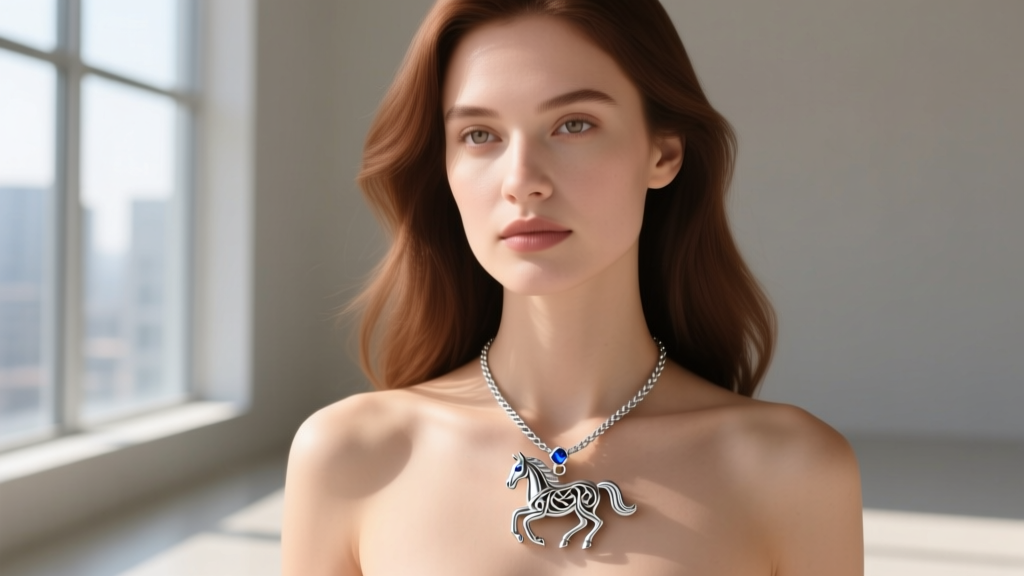
Personalization elevates a custom horse necklace from a beautiful accessory to a deeply sentimental artifact. Consider incorporating gemstones that represent your horse's personality, your barn colors, or significant milestones. When incorporating melee diamonds into the mane or a saddle pad, consult the grading standards established by the Gemological Institute of America (GIA) to ensure you are receiving ethically sourced, well-cut stones that maximize light return even in micro-sizes (0.01 to 0.02 carats).
For colorful accents, guilloché enamel is a masterful technique where translucent enamel is fired over an engine-turned or hand-engraved metal background. This can be used to create a shimmering, multi-dimensional saddle blanket or to replicate the exact bay, chestnut, or palomino coat color of your horse using layered opaque enamels. Sapphires or tsavorite garnets make exceptional, durable choices for the horse's eye, providing a lifelike sparkle that won't scratch easily during wear.
Step 5: The Lost-Wax Casting and Finishing Process
Understanding how your necklace is actually manufactured will help you communicate better with your jeweler. The lost-wax casting process, detailed extensively by bench jewelers at Ganoksin, remains the gold standard for bespoke equestrian jewelry in 2026.
The Casting Sequence: Your approved CAD file is sent to a high-resolution 3D printer that uses castable jeweler's wax resin. This wax model is encased in a plaster-like investment material and placed in a kiln. The wax melts away (hence "lost-wax"), leaving a perfect negative cavity. Molten gold or platinum is then forced into the cavity via centrifugal or vacuum casting.
Once the raw casting is removed, the real artistry begins. The jeweler will use microscopic burrs and polishing wheels to bring out the texture of the horse's hooves, the braiding in the mane, and the hardware on the bridle. Request a mix of finishes: a high-polish shine on the horse's body to reflect light, contrasted with a matte or satin sandblasted finish on the background or saddle to create visual depth and emphasize the musculature.
Pricing and Timeline Expectations
A true custom horse necklace is an investment in craftsmanship. Expect the design and revision phase (CAD rendering) to take 1 to 2 weeks. Once approved, casting, stone setting, and finishing typically require an additional 3 to 4 weeks. Pricing varies wildly based on metal weight and gemstones, but a high-quality, solid 14K gold custom pendant without diamonds generally ranges from $450 to $800, excluding the chain. By prioritizing anatomical accuracy, selecting the correct chain gauge, and leveraging modern 3D casting technology, you will create a stunning, durable tribute to your equine partner that can be passed down through generations of riders.


