How to Clean and Care for a Sterling Silver Sugar Skull Necklace
Learn expert tips to clean, polish, and protect your sterling silver and enamel sugar skull necklace from tarnish, chipping, and daily wear damage.


A sugar skull necklace, often inspired by the vibrant Calavera art of Día de los Muertos, is more than just a striking fashion statement; it is a complex piece of jewelry engineering. These pendants typically combine 925 sterling silver, intentional oxidation (patina), cold enamel, and delicate gemstone inlays like turquoise or onyx. While the intricate filigree and colorful floral motifs make them visually captivating, these same design elements create microscopic crevices that trap oils, lotions, and environmental pollutants. Improper cleaning can strip the intentional darkening from the skull's eye sockets, shatter the enamel, or loosen the gemstone adhesives. This comprehensive guide provides professional-grade care, maintenance, and cleaning protocols to preserve the structural integrity and artistic contrast of your sugar skull necklace.
Understanding the Anatomy of Your Sugar Skull Pendant
Before applying any cleaning solution, you must identify the specific materials used in your pendant. The vast majority of high-quality sugar skull necklaces are cast in 925 sterling silver. To give the skull its signature three-dimensional depth, jewelers apply a chemical oxidizing agent (usually liver of sulfur) to darken the recessed areas, then polish the high-relief surfaces to a bright shine. This contrast is what makes the intricate teeth, eye sockets, and floral engravings pop.
Additionally, the vibrant colors on the skull's forehead and cheeks are typically achieved using cold enamel (an epoxy-based resin) rather than vitreous enamel (fired glass). Cold enamel is cured at room temperature and is highly susceptible to heat, harsh chemicals, and thermal shock. Finally, many designs incorporate cabochon gemstones or cubic zirconia accents, which are often secured with specialized jeweler's epoxy rather than traditional metal prongs to maintain the smooth, uninterrupted surface of the skull design.
The Dangers of Ultrasonic and Chemical Cleaners
The most common mistake owners make is treating a sugar skull pendant like a standard diamond solitaire. Submerging your necklace in an ultrasonic cleaner or a commercial silver dip will cause catastrophic, irreversible damage.
- Ultrasonic Cleaners: These machines use high-frequency sound waves (typically 40kHz) to create microscopic cavitation bubbles in a liquid bath. While excellent for removing dirt from diamond settings, the intense vibrations will shatter cold enamel, fracture porous gemstones like turquoise, and vibrate the adhesive bonds loose, causing your inlaid stones to fall out.
- Chemical Silver Dips: Commercial liquid silver cleaners rely on thiourea-based acids to instantly strip tarnish. However, these chemicals do not differentiate between unwanted surface tarnish and the intentional oxidation (patina) applied by the jeweler. A quick dip will strip the dark contrast from the skull's crevices, leaving the pendant looking flat, chalky, and entirely devoid of its original artistic depth.
Step-by-Step Cleaning Guide for Intricate Silver Skulls
To safely remove sebum, cosmetic residue, and environmental dirt without compromising the patina or enamel, follow this meticulous, jeweler-approved cleaning protocol.
Step 1: The Dry Dusting
Before introducing moisture, use a clean, dry microfiber cloth to gently wipe the surface of the pendant and chain. This removes loose abrasive particles that could scratch the silver or enamel during the wet cleaning phase. For the chain (especially rope or box chains), use a soft-bristled makeup brush to sweep out dry debris from the links.
Step 2: The Mild Bath Preparation
Fill a small glass bowl with lukewarm distilled water. Tap water contains chlorine and dissolved minerals that can leave hard water spots on the silver and degrade the enamel over time. Add two drops of a pH-neutral, phosphate-free dish soap (such as Dawn or Seventh Generation). Avoid soaps with added moisturizers or citrus extracts, as the oils and acids can leave a filmy residue or react with the copper alloys in the sterling silver.
Step 3: The Soft Agitation
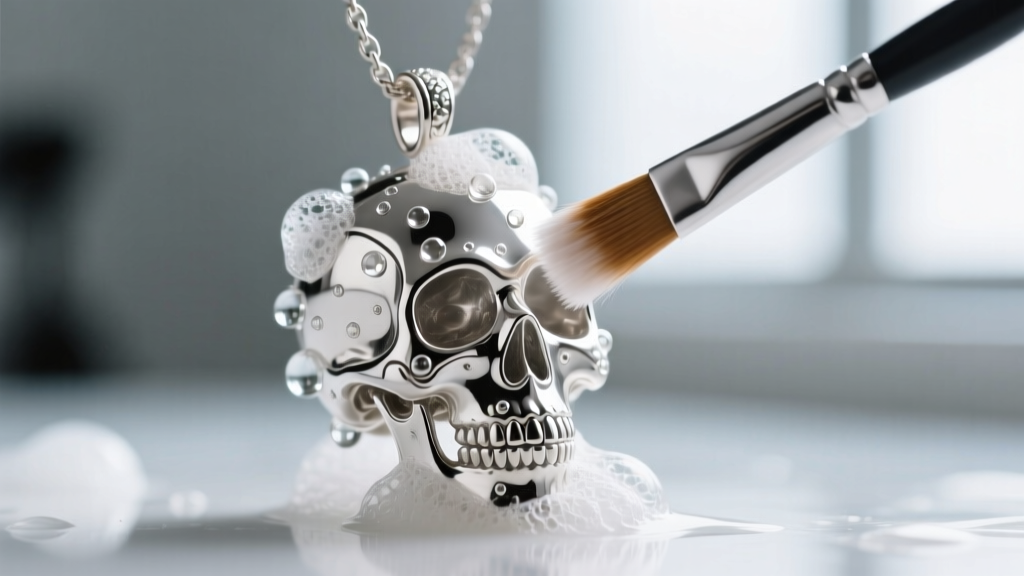
Submerge the necklace for no more than three minutes. Using an extra-soft baby toothbrush (never a medium or hard bristle brush), gently agitate the soapy water over the surface of the skull. Brush in small, circular motions, paying special attention to the back of the pendant and the bail where skin oils accumulate. Do not scrub aggressively over the enamel or gemstone inlays; simply let the soapy water lift the oils.
Step 4: The Rinse and Dry
Rinse the necklace thoroughly under a gentle stream of lukewarm distilled water. To dry, pat the piece gently with a lint-free microfiber cloth. The critical step is removing moisture from the deep crevices of the skull and the chain links. Use a can of compressed air (held at least six inches away) or a hair dryer on the 'cool' setting to blow out trapped water. Leaving water in the crevices can lead to localized, aggressive tarnishing.
Material-Specific Care Matrix
Because a sugar skull necklace is a composite piece, you must tailor your maintenance to its most vulnerable components. Refer to the matrix below when addressing specific areas of your pendant.
| Material Component | Recommended Cleaning Method | Critical Warnings & What to Avoid |
|---|---|---|
| 925 Sterling Silver (High Polish) | Sunshine polishing cloth on raised areas only. | Avoid rubbing the recessed, oxidized areas to preserve contrast. |
| Cold Enamel (Floral Accents) | Mild soap, distilled water, and microfiber pat-down. | Never use ultrasonic cleaners, steam, or alcohol-based cleaners. |
| Turquoise or Onyx Inlays | Dry microfiber cloth or slightly damp cotton swab. | Avoid prolonged water exposure; turquoise is highly porous and will absorb chemicals. |
| Cubic Zirconia Accents | Soft brush with mild dish soap and distilled water. | Avoid harsh abrasives that can scratch the metal surrounding the bezel setting. |
Polishing Without Ruining the Patina
Over time, the high-relief areas of the sterling silver skull (the cheekbones, the bridge of the nose, and the edges of the floral engravings) will develop a natural, dulling tarnish from exposure to sulfur in the air and human skin. To restore the shine without ruining the intentional dark patina in the crevices, use a treated jeweler's polishing cloth, such as a Sunshine Cloth.
Wrap the cloth tightly around your index finger and gently rub only the raised, polished surfaces of the silver. The mild polishing compound embedded in the cloth will remove the tarnish and leave a protective anti-tarnish barrier. According to the Jewelers of America, regular use of a treated polishing cloth is the safest way to maintain sterling silver jewelry at home without resorting to harsh liquid chemicals. Never use liquid silver polish or pastes, as they will inevitably seep into the engraved lines and dry into a chalky white residue that is nearly impossible to remove.
Protecting Enamel and Gemstone Inlays
Cold enamel, while visually stunning, is essentially a hardened epoxy resin. It is highly sensitive to thermal shock and chemical solvents. Exposure to extreme heat (like leaving your necklace on the dashboard of a car in summer) can cause the enamel to yellow, crack, or lift away from the silver backing. Similarly, spraying perfume, hairspray, or sunscreen directly onto the necklace can degrade the resin's surface, leaving it cloudy and dull.
If your sugar skull features turquoise inlays, you must be exceptionally careful. The Gemological Institute of America (GIA) notes that turquoise is a porous, relatively soft gemstone that can easily be discolored by cosmetics, skin oils, and even prolonged exposure to bright sunlight. Always put your necklace on *after* applying all cosmetics and perfumes, and wipe the turquoise gently with a dry cloth immediately upon taking it off.
Proper Storage to Prevent Tarnish and Scratches
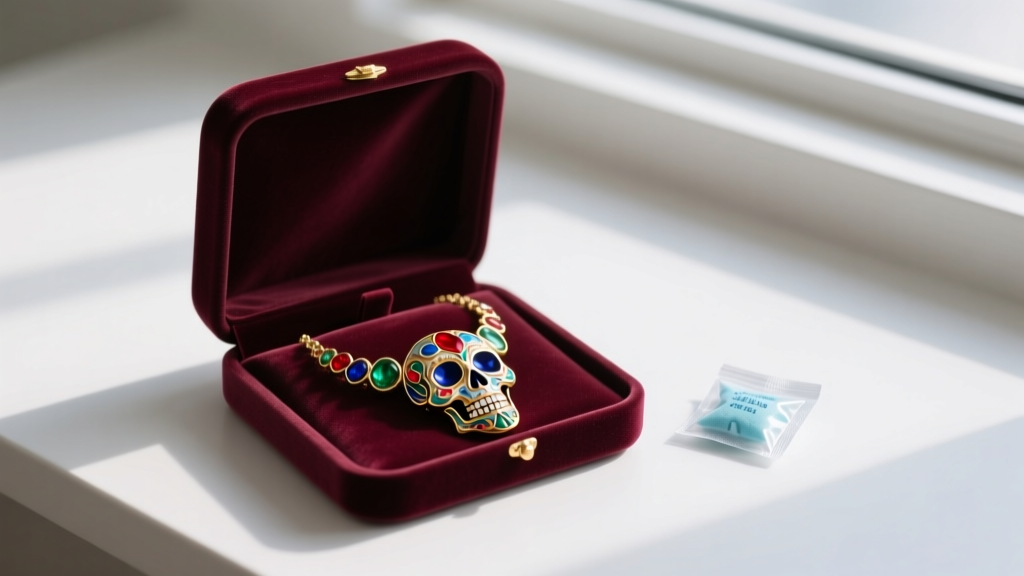
How you store your sugar skull necklace when it is not being worn is just as critical as how you clean it. Sterling silver tarnishes when it reacts with hydrogen sulfide in the ambient air, a process accelerated by high humidity. Furthermore, the intricate silver details and enamel surfaces can easily be scratched if the necklace is tossed into a communal jewelry box alongside harder gemstones or metal chains.
Store your necklace individually in a soft, anti-tarnish flannel pouch or a ziplock bag made specifically for jewelry storage. Place a 3M anti-tarnish strip inside the pouch or bag; these strips absorb airborne sulfur compounds and can protect the silver for up to six months. Additionally, include a small silica gel desiccant packet to control moisture. Always lay the chain out flat or hang it to prevent the links from tangling and kinking, which can weaken the metal over time.
When to Seek Professional Jeweler Maintenance
While routine home cleaning will keep your necklace looking pristine, certain types of damage require the intervention of a professional bench jeweler. If you notice the cold enamel beginning to chip, flake, or lift away from the silver, do not attempt to glue it back yourself. A jeweler can carefully remove the degraded resin and re-pour a custom-matched cold enamel to restore the design.
Similarly, if the bail (the loop that connects the pendant to the chain) shows signs of thinning or friction wear, or if the chain links begin to stretch and pull apart, take the piece to a professional for laser soldering. Attempting to wear a pendant with a compromised bail or chain risks losing the piece entirely. With mindful care, proper storage, and gentle cleaning techniques, your sterling silver sugar skull necklace will retain its striking contrast and vibrant colors for decades to come.


