Turquoise Statement Necklace Care and Cleaning Guide
Learn expert care, cleaning, and storage tips to protect your turquoise statement necklace from damage, discoloration, and chemical exposure.

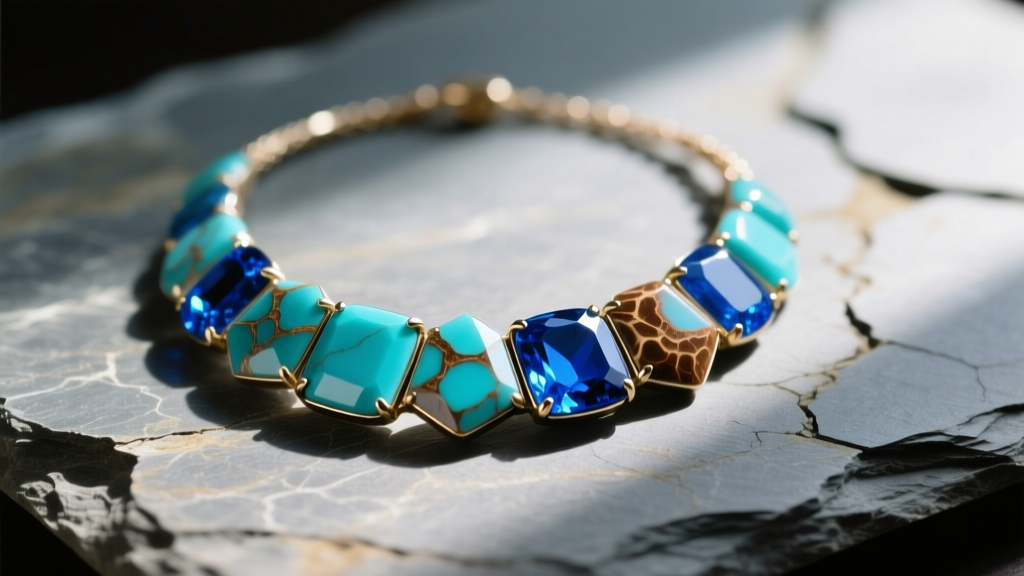
A turquoise statement necklace is more than just a bold accessory; it is a wearable piece of geological history. Whether you are wearing a vintage Navajo squash blossom, a multi-strand Southwestern bead necklace, or a modern geometric cabochon pendant, turquoise demands specialized care. Unlike diamonds or sapphires, turquoise is a relatively soft, porous hydrous phosphate of copper and aluminum. With a Mohs hardness rating of just 5 to 6, it is highly susceptible to scratching, chemical alteration, and structural degradation if maintained improperly.
Because statement necklaces feature larger, heavier stones and more complex metalwork, the stakes for damage are higher. A single drop of perfume or an afternoon in a chlorinated pool can permanently alter the stone's vibrant matrix. This comprehensive guide will walk you through the exact protocols for cleaning, maintaining, and storing your turquoise statement necklace to ensure it remains a pristine heirloom for decades.
Understanding Your Turquoise Treatment
Before applying any cleaning method, you must identify how your turquoise has been treated. According to the Gemological Institute of America (GIA), the vast majority of turquoise on the market today undergoes some form of enhancement to improve its durability and color stability. The treatment dictates your cleaning boundaries.
| Treatment Type | Porosity Level | Cleaning Safety | Maintenance Notes |
|---|---|---|---|
| Natural (Untreated) | High | Extremely Delicate | Absorbs oils rapidly; color will shift to green over time. Dry wipe only. |
| Stabilized (Epoxy/Resin) | Low | Moderate | Can withstand mild soap and water. Avoid harsh solvents that melt resin. |
| Zachery Method | Very Low | High | Treated with potassium quartz solution. Safe for gentle wet cleaning. |
| Dyed / Reconstituted | Variable | Delicate | Water and friction can cause dye bleeding. Use dry microfiber only. |
The Chemistry of Damage: What to Avoid
Turquoise is famously reactive. Its porous nature means it acts like a microscopic sponge, absorbing substances it comes into contact with. When wearing your turquoise statement necklace, you must adhere strictly to the 'last on, first off' rule. Put your necklace on only after your makeup, hairspray, perfume, and sunscreen have fully dried.
Furthermore, avoid exposing the stones to acids and harsh chemicals. Citrus juices, vinegar, and chlorine can etch the surface of the stone, leaving a dull, chalky finish that cannot be reversed at home. Even the natural oils and acidity in your own sweat can cause untreated turquoise to shift from a bright, robin's-egg blue to a muddy, dark green over years of continuous wear. While some collectors appreciate this 'patina,' those wishing to maintain the original vibrant hue must wipe the stones down after every wear.
Step-by-Step Cleaning Protocol
Forget everything you know about cleaning diamond or quartz jewelry. Never use ultrasonic cleaners, steam cleaners, or boiling water on turquoise. The high-frequency vibrations in an ultrasonic bath can shatter the stone along its natural matrix lines, while heat can dehydrate the mineral, causing irreversible 'spiderweb' cracking.
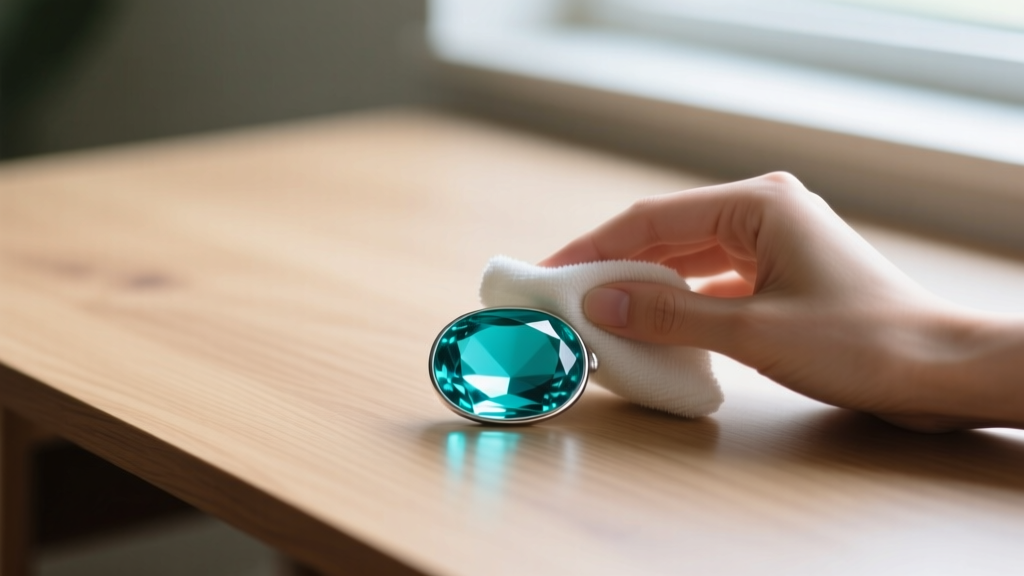
The Safe Wet-Clean Method (For Stabilized Stones Only)
- Step 1: Mix a few drops of pH-neutral, phosphate-free dish soap into a bowl of lukewarm distilled water. (Tap water contains minerals and chlorine that can leave spots).
- Step 2: Dip a clean, lint-free microfiber cloth or a baby-soft toothbrush into the solution and wring it out until it is merely damp, not dripping.
- Step 3: Gently wipe the surface of the turquoise cabochons or beads. Do not scrub aggressively, as dust particles trapped on the stone can act like sandpaper and scratch the 5-Mohs surface.
- Step 4: Immediately dry the stones with a separate, soft cotton towel. Do not let air-dry, as water spots can form on the polish.
Cleaning Sterling Silver Settings Safely
Turquoise statement necklaces are traditionally set in sterling silver (.925). Silver tarnishes when exposed to sulfur in the air, creating a black layer of silver sulfide. The challenge lies in removing this tarnish without letting chemical silver polishes touch the turquoise.
According to The Silver Institute, liquid silver dips (which often contain thiourea) are highly toxic to porous gems. If a silver dip seeps into the matrix of your turquoise, it will permanently stain the stone yellow or brown. Instead, use a targeted approach:
- Take a cotton swab (Q-tip) and lightly moisten it with a non-abrasive silver polish cream.
- Carefully trace the silver bezel or wirework, ensuring the swab does not bleed over onto the turquoise.
- Use a clean, dry cotton swab to buff the silver to a shine and remove any residual polish.
- For intricate silverwork where a swab cannot reach, use a specialized treated silver polishing cloth, folding it to a fine point to reach into the crevices.
Structural Maintenance for Heavy Statement Pieces
The sheer weight of a turquoise statement necklace introduces structural vulnerabilities that lighter pendants do not face. The stringing material is the hidden weak point of your jewelry.
- Silk Thread: Traditional multi-strand necklaces are often knotted on silk. Silk is a protein fiber that degrades when exposed to moisture, perfume, and skin acids. If your necklace feels stiff, or if you see fraying near the clasp, it needs to be professionally re-strung. As a general rule, heavy silk-strung necklaces should be re-strung every 3 to 5 years.
- Tiger Tail / Beading Wire: Modern statement pieces often use nylon-coated stainless steel wire. While impervious to water, this wire can 'kink' if stored improperly or if the heavy turquoise beads are allowed to swing wildly and hit a hard surface. Once beading wire kinks, its structural integrity is compromised and it must be replaced.
- Clasp Hardware: The weight of large turquoise stones puts immense tension on the jump rings and clasps. Periodically check that the jump rings are fully closed and that the solder points have not cracked under the weight.
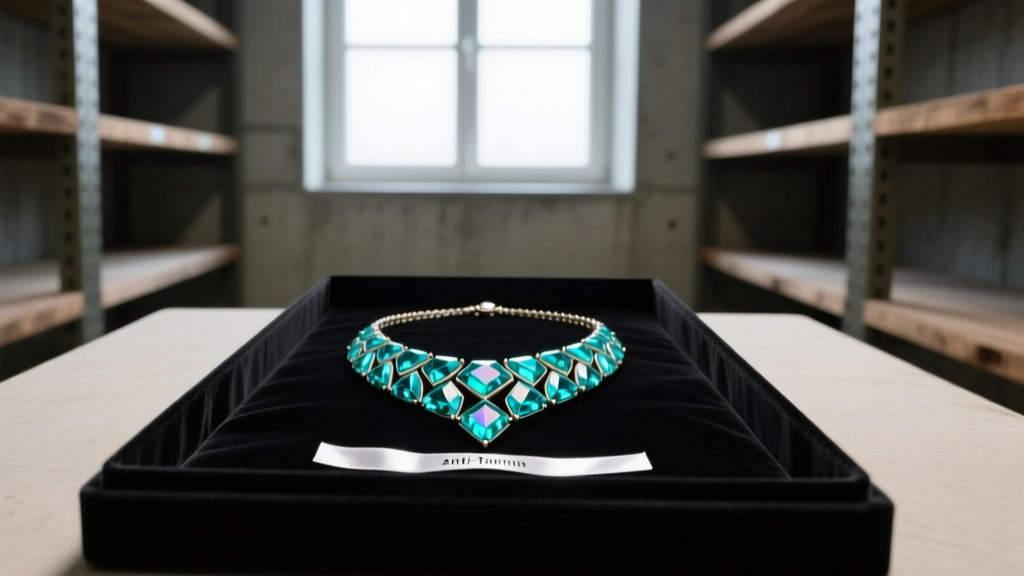
Proper Storage to Prevent Dehydration and Tarnish
How you store your turquoise statement necklace is just as critical as how you clean it. Turquoise contains water molecules within its crystal structure. If stored in an excessively dry environment—such as a safety deposit box or near a heating vent—the stone can dehydrate, leading to a network of fine cracks known as 'crazing.'
Conversely, storing it in a humid bathroom will accelerate the tarnishing of the silver settings and potentially degrade silk stringing. The ideal storage environment is a climate-controlled room with moderate humidity (around 40-50%).
The Flat Storage Rule
Never hang a heavy turquoise statement necklace on a jewelry tree or wall hook. The constant downward pull of gravity will stretch silk threads and warp wire over time, causing the necklace to lose its intended drape and putting stress on the clasp. Always lay the necklace flat in a fabric-lined drawer or a shallow jewelry box.
To protect the silver from tarnishing while in storage, place a 3M anti-tarnish strip or a piece of activated charcoal inside the jewelry box. Ensure the necklace is kept away from direct sunlight, as prolonged UV exposure can fade the vibrancy of certain dyed or lightly stabilized stones.
Troubleshooting Common Turquoise Issues
Even with meticulous care, issues can arise. Here is how to handle them without causing further damage:
- Loose Stones in Bezels: Temperature fluctuations cause metal to expand and contract, which can loosen the silver bezel gripping the turquoise. If you notice a stone rattling or shifting, stop wearing the necklace immediately. Do not attempt to push the silver back down yourself with a metal tool, as a slip will easily gouge the soft stone. Take it to a bench jeweler who specializes in lapidary work.
- Color Shifting (Natural Stones): If your untreated turquoise has turned green from oil absorption, this is a permanent chemical change. No amount of cleaning will reverse it. Embrace the patina as a record of the necklace's history, or consult a professional lapidary about whether the stone can be carefully re-polished to remove the superficial oil-stained layer (though this risks altering the stone's shape).
- White Residue on Matrix: If you see a chalky white buildup in the natural brown or black matrix veins of the stone, it is likely dried soap or hard water mineral deposit. Gently pick it out using a wooden toothpick or a soft horsehair detailing brush. Never use a metal needle, as it will scratch the matrix.
By understanding the unique geological properties of turquoise and respecting its vulnerabilities, your statement necklace will continue to command attention and retain its structural and aesthetic integrity for a lifetime.


