Military Tag Necklace Buying Guide: What to Look For
Discover what to look for in a military tag necklace. Our buying guide covers metal grades, chain gauges, silencers, and custom engraving tips.

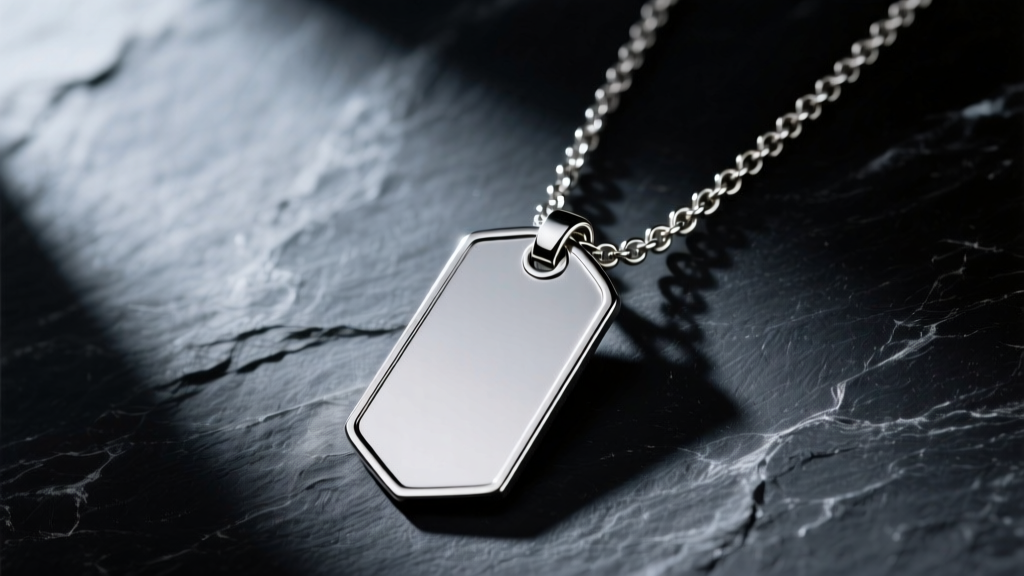
The Evolution of the Dog Tag in Modern Jewelry
Originally designed for battlefield identification, the dog tag has transcended its utilitarian roots to become a staple of streetwear, minimalist fashion, and personalized jewelry. According to historical archives documented by Britannica, the military tag necklace first saw standardized use in the late 19th century before evolving into the dual-tag system used in the mid-20th century. Today, jewelers and metallurgists have adapted this iconic silhouette, offering variations that range from rugged, authentic reproductions to high-end luxury pendants. However, the market is flooded with subpar imitations that tarnish, snap, or feature illegible engravings within months. This comprehensive buying guide dissects the metallurgical, mechanical, and aesthetic specifications you must evaluate before purchasing a military tag necklace in 2026.
Decoding Metal Grades: Beyond Basic Stainless Steel
The longevity and skin-compatibility of your necklace depend entirely on the base metal. While many retailers advertise "stainless steel," they often fail to specify the alloy grade, which is the difference between a lifelong accessory and a rusted disappointment.
304 vs. 316L Stainless Steel
Standard 304 stainless steel is an iron alloy containing 18% chromium and 8% nickel. While adequate for indoor hardware, it is highly susceptible to pitting corrosion when exposed to the chlorides found in human sweat and swimming pools. For a military tag necklace worn daily against the skin, 316L stainless steel (often called marine-grade or surgical steel) is the absolute minimum standard. The addition of 2-3% molybdenum in 316L dramatically increases resistance to localized corrosion. Furthermore, the "L" denotes low carbon, which prevents carbide precipitation during the laser engraving process, ensuring the etched text doesn't become a weak point for rust.
Grade 5 Titanium (Ti-6Al-4V)
For those seeking ultra-lightweight durability or suffering from severe nickel allergies, titanium is the premium choice. However, avoid "commercially pure" Grade 2 titanium, which is too soft and prone to bending under stress. Grade 5 titanium, an alloy containing 6% aluminum and 4% vanadium, offers a Vickers hardness nearly four times that of pure titanium. It yields a crisp, high-contrast surface when anodized or laser-engraved, though it commands a 40-60% price premium over 316L steel.
925 Sterling Silver
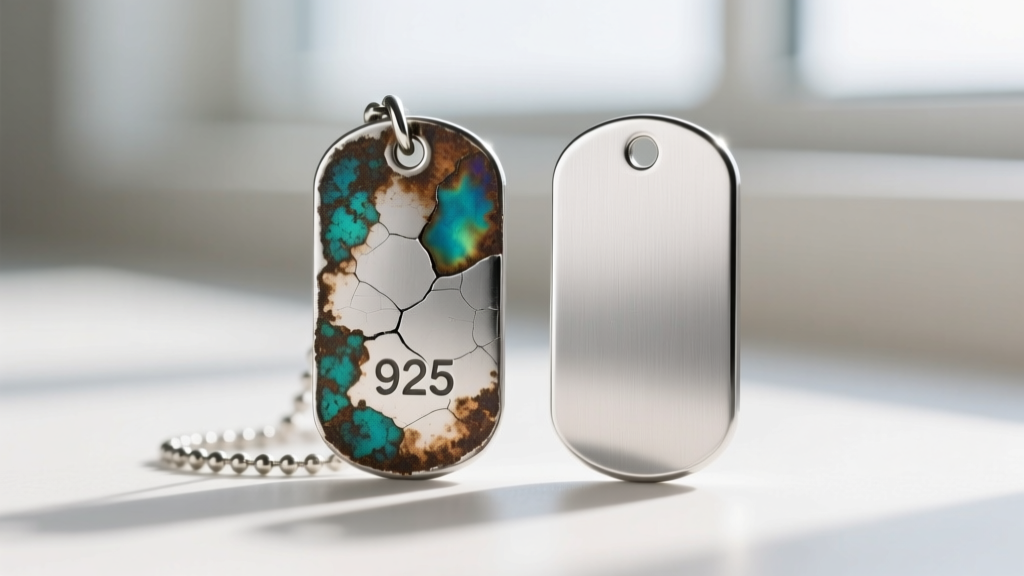
While sterling silver offers unmatched luster, it is a high-maintenance metal for dog tags. The 7.5% copper content in 925 silver reacts with sulfur in the air and skin oils, causing rapid tarnishing. If you opt for silver, ensure the tag is plated with a thick layer of rhodium to delay oxidation, or be prepared to polish it weekly.
| Metal Grade | Alloy Composition | Vickers Hardness (HV) | Avg Price Range | Best Use Case |
|---|---|---|---|---|
| 316L Stainless Steel | Fe, 16-18% Cr, 10-14% Ni, 2-3% Mo | 150 - 190 HV | $25 - $65 | Daily wear, aquatic environments |
| Grade 5 Titanium | Ti, 6% Al, 4% V | 340 - 360 HV | $80 - $150 | Hypoallergenic needs, lightweight |
| 925 Sterling Silver | 92.5% Ag, 7.5% Cu | 60 - 70 HV | $90 - $250+ | Occasional wear, luxury layering |
Chain Mechanics and Gauge Specifications
The pendant is only as secure as the chain holding it. The classic military tag necklace utilizes a ball chain, but modern adaptations often incorporate cable or rolo chains for added tensile strength.
The Ball Chain: Sizing and Failure Modes
Standard military-issue ball chains measure 2.4mm in diameter. When shopping, verify this gauge; cheaper fashion brands often use 1.5mm micro-ball chains that look disproportionate to a standard 2x1.1-inch tag and possess a breaking strength of less than 4 lbs. The primary failure point of any ball chain is the connector clasp. Avoid chains that use a simple "C" clip connector, as these easily pop open when snagged on clothing. Instead, look for chains featuring a screw-thread barrel connector or a reinforced soldered jump ring integrated into the clasp mechanism.
Cable and Rolo Chains
If you prefer a heavier, more contemporary look, a 3.0mm to 4.0mm rolo chain provides excellent structural integrity. According to jewelry manufacturing standards outlined by Rio Grande, a 3.5mm solid rolo chain can withstand over 40 lbs of tensile force before link deformation occurs. Ensure the chain is finished with a heavy-duty lobster clasp rather than a spring-ring clasp, which is prone to internal spring failure over time.
The Silencer: Material Science of Edge Protectors
The rubber edge protector, or "silencer," prevents the two metal tags from clinking together and dulling the engraved text. However, not all silencers are created equal.
- PVC (Polyvinyl Chloride): Cheap and rigid. PVC silencers degrade rapidly when exposed to UV light and the acidic pH of human sweat, often turning yellow, brittle, and cracking within three months.
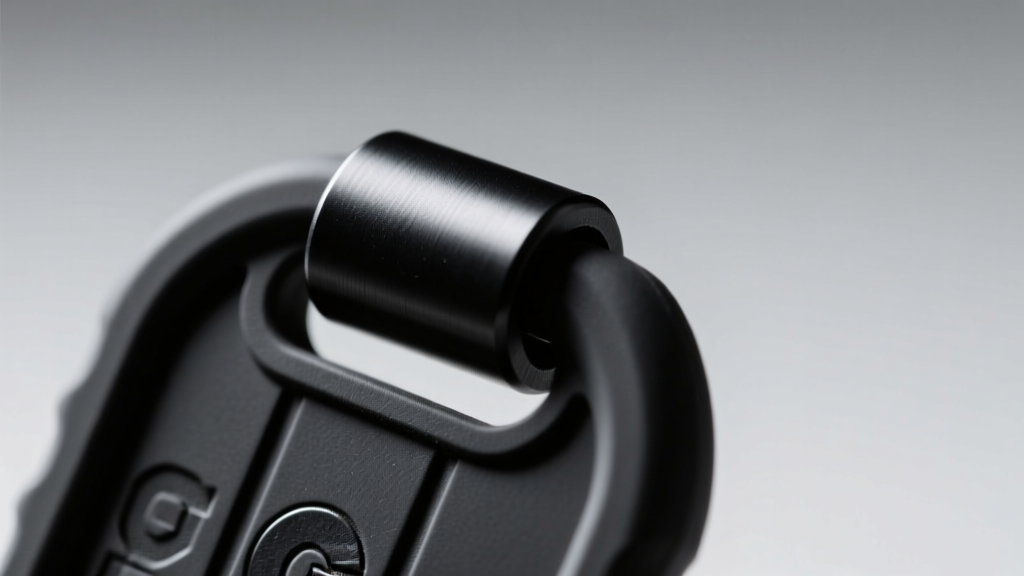
- Medical-Grade Silicone: The superior choice. Silicone is highly resistant to UV degradation, temperature fluctuations, and body oils. It maintains its elasticity indefinitely and provides a much tighter, rattle-free fit around the 2.4mm tag edge.
When buying a military tag necklace, always check the product specifications for "100% silicone" rather than generic "rubber" or "PVC."
Engraving and Customization Best Practices
The method used to etch your personal data, coordinates, or medical alerts dictates the legibility and permanence of the text.
Rotary vs. Fiber Laser Engraving
Traditional rotary (diamond drag) engraving physically cuts into the metal. While deep, it can warp thinner tags (under 1.5mm) and leaves microscopic burrs that trap dirt and skin oils. Fiber laser engraving (specifically MOPA lasers operating at 1064nm) is the modern gold standard. It uses localized heat to anneal the surface, creating a stark black contrast on 316L steel without removing material or compromising the tag's structural integrity. For titanium, a fiber laser can even produce vibrant, permanent anodized colors without the need for chemical baths.
Expert Tip: If you are engraving a QR code for emergency medical data on your military tag necklace, the tag must be at least 1.2mm thick and finished with a matte or brushed surface. Highly polished mirror finishes cause light scatter, rendering the QR code unreadable by smartphone cameras in direct sunlight.
Sizing, Layering, and Neckline Framework
Authentic military tags are typically worn on a 24-inch or 30-inch chain, allowing them to rest below the collarbone or at the sternum. However, integrating a dog tag into a modern wardrobe requires strategic layering.
The Layering Protocol
To avoid a tangled, chaotic look, adhere to the 4-inch rule: each subsequent chain in your layering stack should be exactly 4 inches longer than the last.
- Base Layer (18"): A delicate 1.5mm box chain or a simple black cord resting at the collarbone.
- Mid Layer (22"): A 2.0mm curb chain featuring a small, minimalist geometric pendant.
- Statement Layer (26"): Your primary military tag necklace on a 2.4mm ball chain or 3.5mm rolo chain, resting securely on the upper chest.
Care and Maintenance
Even 316L stainless steel requires basic maintenance. Once a month, soak your military tag necklace in a solution of warm water and a few drops of mild dish soap. Use a soft-bristled toothbrush to gently agitate the engraved grooves, removing sebum and dead skin cells that can cause localized corrosion. Never use bleach or chlorine-based cleaners, as these will instantly pit the molybdenum bonds in the steel.
Final Verdict
A high-quality military tag necklace is an investment in both personal expression and enduring craftsmanship. By prioritizing 316L stainless steel or Grade 5 titanium, demanding a 2.4mm gauge ball chain with a secure connector, insisting on medical-grade silicone silencers, and opting for fiber laser engraving, you ensure your piece will survive the elements and remain a permanent fixture in your jewelry rotation for decades to come.


