2026 Style Trends: Necklaces Made From Beads and Gemstones
Explore 2026 trends for necklaces made from beads. Discover expert layering techniques, material grades, stringing hardware, and high-fashion styling tips.

The 2026 Shift: From Craft Fair to Couture
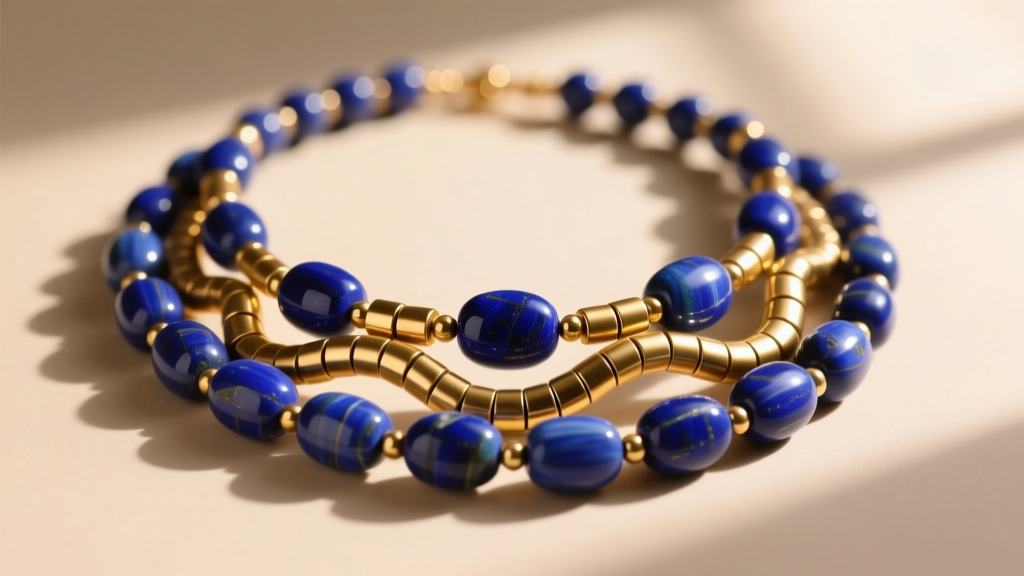
The landscape of fine jewelry has undergone a radical transformation as we move through 2026. Once relegated to bohemian festival wear or casual summer styling, necklaces made from beads have been reclaimed by high-fashion houses and independent fine jewelers alike. The defining trend of the year is architectural precision mixed with organic irregularity. We are seeing a massive departure from uniform, mass-produced glass beads toward highly curated, asymmetrical arrangements featuring grade-A gemstones, baroque pearls, and precision-cut crystal.
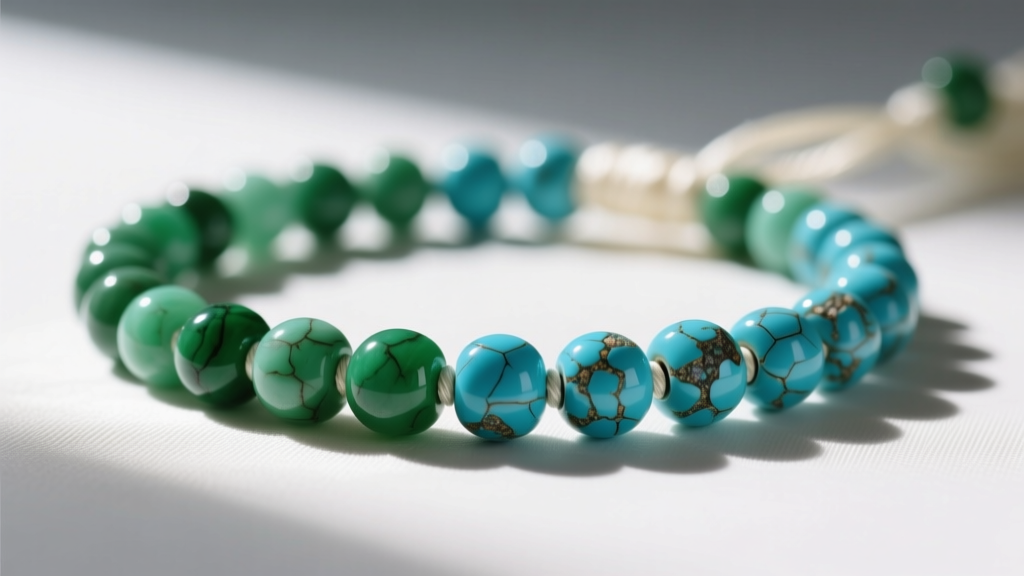
According to runway analyses from Paris and Milan, the modern beaded necklace is no longer a simple continuous loop. Instead, designers are employing gradient colorways—such as ombré transitions from deep Afghan lapis lazuli to bright Arizona turquoise—and integrating mixed-media hardware. The integration of 14k and 18k solid gold spacer beads, combined with matte-finish stone heishi, creates a textured, multi-dimensional drape that catches the light in ways traditional polished beads cannot. This evolution demands a deeper understanding of material grades, stringing mechanics, and proportional layering.
Material Grades: What Separates Fine Beads from Fast Fashion
When investing in or designing necklaces made from beads, understanding the Mohs hardness scale and material sourcing is non-negotiable. The market is currently saturated with dyed howlite masquerading as turquoise, and heat-treated quartz sold as high-grade jade. True luxury beaded jewelry relies on verifiable, untreated, or minimally treated stones.
For example, the Gemological Institute of America (GIA) notes that authentic Grade-A jadeite is entirely untreated, retaining its natural structural integrity and vibrant color, making it highly prized for premium beaded strands. Conversely, Grade-B and Grade-C jade are acid-bleached and polymer-impregnated or dyed, which severely compromises their long-term durability and value.
| Material Type | Mohs Hardness | Avg. Price (16" Strand) | 2026 Trend Application |
|---|---|---|---|
| Grade-A Jadeite (Rondelle) | 6.5 - 7.0 | $400 - $2,500+ | Minimalist, single-strand chokers with gold clasps |
| Sleeping Beauty Turquoise (Heishi) | 5.0 - 6.0 | $150 - $600 | Gradient layering and mixed-metal asymmetrical designs |
| Miyuki Delica (Glass Seed) | 5.5 | $8 - $25 | Intricate bead-weaving, fringe details, and color-blocking |
| Baroque Freshwater Pearl | 2.5 - 4.5 | $40 - $120 | Organic contrast against rigid, precision-cut gemstone beads |
Sizing and Proportions: The Mathematics of Bead Diameters
The visual weight of beaded necklaces is dictated entirely by the millimeter diameter of the beads and the overall length of the strand. A 2mm heishi bead strand will drape like a fluid chain, conforming tightly to the clavicle, while an 8mm rondelle strand will sit rigidly, creating a bold, collar-like structure.
- 2mm - 3mm (Micro Beads): Ideal for 16-inch chokers and 30-inch opera-length strands that can be doubled. They offer a delicate, metallic-like fluidity when cut from high-refractive-index stones like garnet or spinel.
- 4mm - 5mm (Standard): The most versatile size. Perfect for 18-inch princess lengths, offering enough visual presence to stand alone but remaining lightweight enough for all-day wear.
- 6mm - 8mm (Statement): Best reserved for 20-inch matinee lengths or shorter 15-inch collars. The structural rigidity of larger beads requires careful stringing tension to prevent awkward gaps between the stones.
- 10mm+ (Chunky): A major trend for 2026, often used in asymmetrical designs where one half of the necklace features oversized amber or jade beads, tapering down to a fine chain on the other side.
Hardware and Stringing: The Hidden Failure Points
The most common failure in necklaces made from beads is not the stone itself, but the stringing material and the crimp hardware. Gemstone beads, particularly those with high silica content like quartz or agate, possess sharp internal drill holes that can act like microscopic saws against inferior stringing threads.
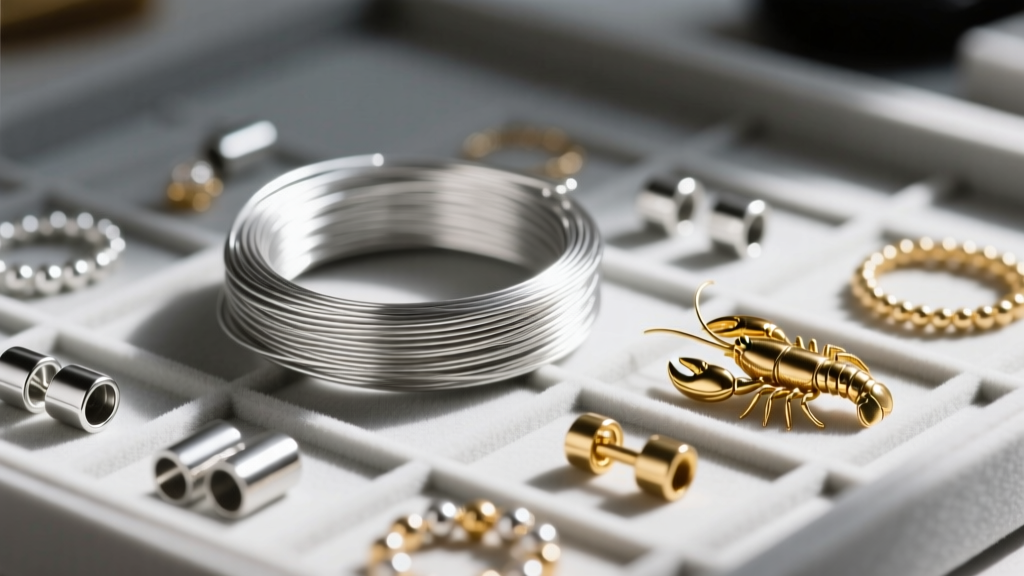
For heavy gemstone strands (over 40 grams), professionals rely on 49-strand stainless steel beading wire, typically in a 0.018" or 0.019" diameter. Brands like Beadalon or Soft Flex provide a nylon coating that protects the steel core while maintaining exceptional drape. However, steel wire should never be knotted. For traditional pearl or soft-stone (like turquoise and lapis) necklaces, size F or G pure silk thread remains the gold standard, allowing for French wire (bullion) protection at the clasp and hand-knotting between every bead to prevent total loss in the event of a break.
Crimp tubes must be matched to the wire gauge. A 2x2mm sterling silver or 14k gold-filled crimp tube, compressed using a micro-crimping tool to create a rounded, bead-like finish, ensures the wire cannot slip through the clasp ring. Fire Mountain Gems' Jewelry-Making Encyclopedia emphasizes that using flat-nose pliers to simply crush a crimp bead creates sharp edges that will eventually fray and cut the beading wire from the inside out.
Layering Frameworks: The Rule of Thirds for Beads
Layering necklaces made from beads requires a strict adherence to spatial mathematics to avoid tangling and visual clutter. The most effective framework utilized by editorial stylists in 2026 is the Rule of Thirds, which dictates a minimum 2-inch to 4-inch drop between each successive layer.
"When layering beaded strands, you must alternate the bead diameter and the material weight. If your base layer is a 2mm turquoise choker at 15 inches, your second layer should be a 6mm baroque pearl at 18 inches, and your third a heavy gold chain with a single gemstone pendant at 22 inches. Mixing the medium prevents the necklaces from competing for the same focal space."
Furthermore, clasp placement is critical in layered beaded designs. Utilizing front-facing toggle clasps or decorative macramé sliders not only adds an intentional design element but allows the wearer to micro-adjust the length of each strand by half an inch, ensuring perfect spacing across different neckline depths.


