How to Clean and Care for Your Opal Crystal Necklace
Learn expert cleaning and maintenance tips for your opal crystal necklace. Prevent crazing, protect the play-of-color, and safely store your jewelry.

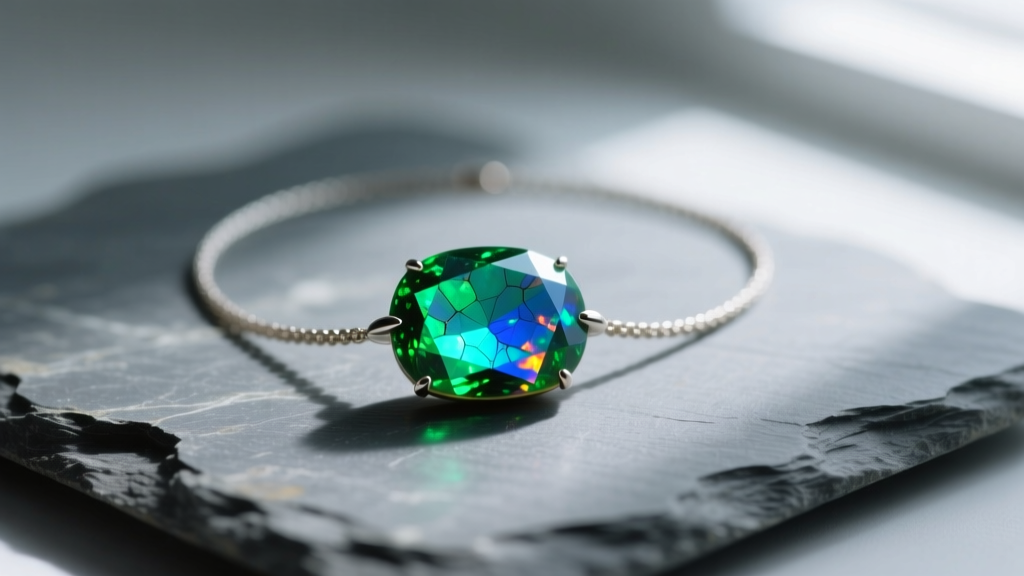
The Science of Opal: Why Your Necklace Needs Special Care
An opal crystal necklace is a mesmerizing piece of jewelry, but its unique chemical composition demands specialized care. Unlike crystalline gemstones such as diamonds or sapphires, opals are composed of amorphous silica (SiO2·nH2O) and contain anywhere from 3% to 21% water within their microscopic structure. This water content is responsible for the stone's famous play-of-color, but it also makes the gem highly susceptible to environmental changes.
On the Mohs scale of mineral hardness, opals rank between 5.5 and 6.5. To put this in perspective, ordinary household dust contains microscopic quartz particles that rank at 7.0. This means that simply wiping your opal crystal necklace with a dry, rough cloth can cause micro-scratches that will eventually dull its polished surface and diminish its optical brilliance. Furthermore, rapid changes in temperature or humidity can cause 'crazing'—a network of fine, irreversible cracks that form when the stone loses moisture too quickly.
Identifying Your Opal Type: Solid vs. Doublet vs. Triplet
Before you attempt to clean your necklace, you must identify the exact type of opal you own. The cleaning protocol for a solid opal will completely ruin a doublet or triplet. According to the Gemological Institute of America (GIA), assembled opals require entirely different maintenance routines due to the chemical adhesives used in their construction.
| Opal Type | Composition | Water Sensitivity | Safe Cleaning Method |
|---|---|---|---|
| Solid Opal | 100% natural opal material | Low (except Ethiopian hydrophane) | Mild soap, lukewarm water, soft brush |
| Doublet | Opal slice glued to a dark backing | High (water dissolves glue) | Damp microfiber cloth only |
| Triplet | Opal slice + backing + clear quartz cap | High (water causes delamination) | Damp microfiber cloth only |
| Ethiopian (Hydrophane) | Highly porous solid opal | Extreme (absorbs water, loses color) | Dry or barely damp cloth only |
Step-by-Step Cleaning Guide for Opal Crystal Necklaces
If you have confirmed that your necklace features a solid Australian or Mexican opal (non-hydrophane), you can safely perform a deep clean to remove body oils, lotions, and environmental grime that may be blocking the light from entering the stone.
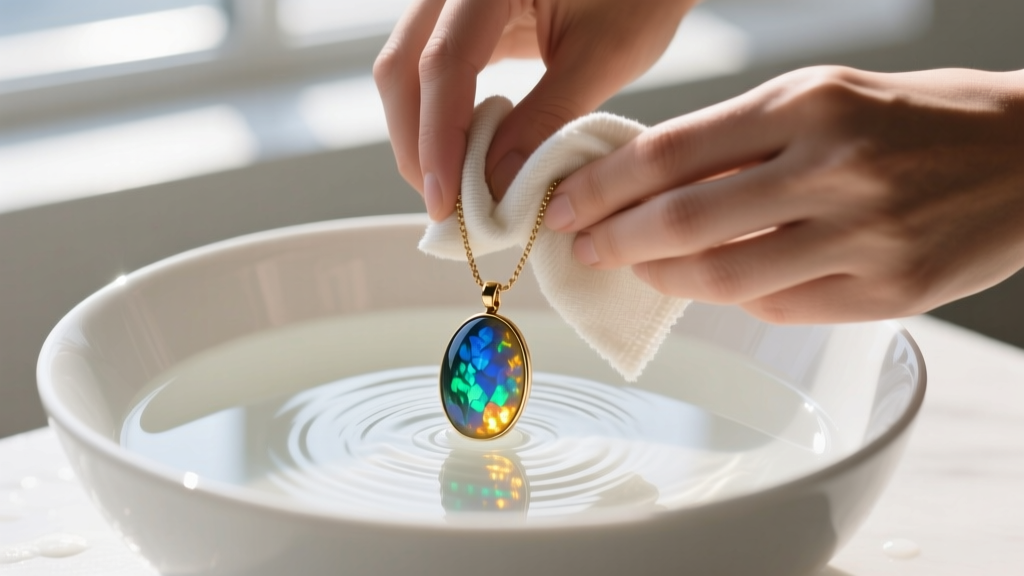
What You Need
- pH-neutral, non-moisturizing dish soap (e.g., original blue Dawn)
- Lukewarm distilled water (avoid tap water if it has high mineral content)
- A brand-new baby toothbrush with ultra-soft bristles
- A clean, lint-free microfiber cloth
The Safe Washing Technique
Begin by mixing a few drops of the pH-neutral soap into a bowl of lukewarm distilled water. Ensure the water is room temperature; thermal shock from hot or cold water can instantly cause crazing. Submerge the opal pendant for no more than 3 to 5 minutes to loosen debris. Using the baby toothbrush, gently flick the bristles over the surface and the gallery (the underside of the setting) to dislodge trapped oils. Do not scrub in circles, as this can create directional micro-scratches. Rinse briefly under a gentle stream of lukewarm distilled water, and immediately pat dry with the microfiber cloth. Allow it to air dry completely in a shaded area before storing.
Critical Mistakes That Destroy Opals
Many jewelry owners inadvertently destroy their opal crystal necklaces by treating them like diamonds or quartz. The GIA's official care guidelines explicitly warn against several common cleaning methods that are catastrophic for opals.
- Ultrasonic Cleaners: The high-frequency vibrations in an ultrasonic bath will shatter an opal. The internal structure of the stone cannot withstand the acoustic cavitation process.
- Steam Cleaners: The intense, localized heat from a steam jet will flash-boil the water trapped inside the opal, leading to immediate structural failure and cracking.
- Harsh Chemicals: Bleach, ammonia, and commercial silver dips will eat away at the opal's polished surface, leaving a permanent, chalky white etch mark.
- Acidic Solutions: Using vinegar or lemon juice to clean the metal chain while the opal is attached will result in severe chemical burns to the gemstone.
Long-Term Storage: Preventing Crazing and Dehydration
Proper storage is just as critical as cleaning. Opals need a stable environment to maintain their internal moisture equilibrium. If you live in a dry climate or keep your home's humidity below 30% during the winter, your opal crystal necklace is at a high risk of dehydration.
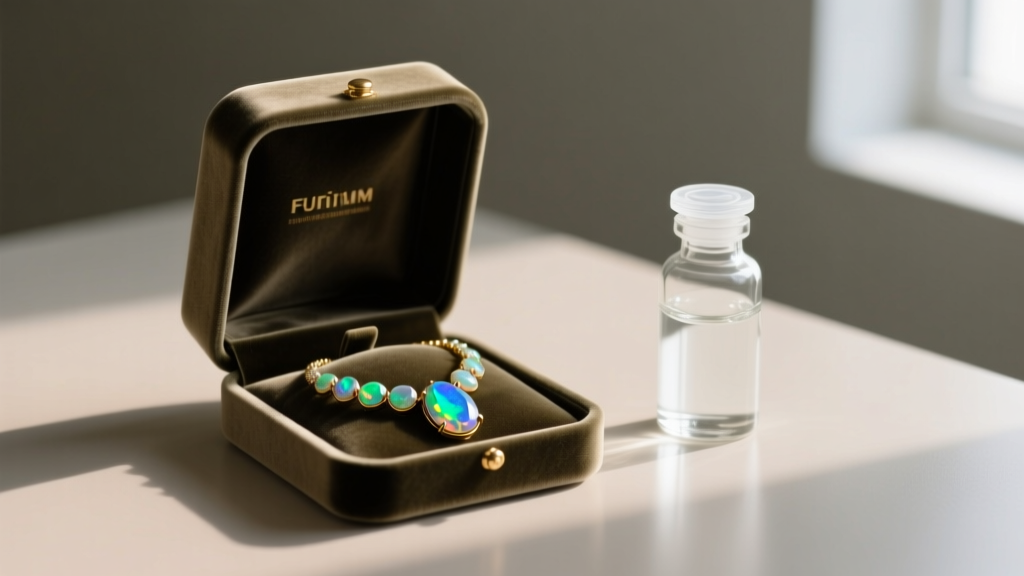
To prevent crazing, store your necklace in a soft fabric pouch or a velvet-lined jewelry box. Avoid airtight plastic bags, as they can trap heat if exposed to sunlight, creating a greenhouse effect that bakes the stone. For extremely dry environments, place a small, sealed glass vial of distilled water or a slightly damp cotton ball inside the jewelry box (ensuring the damp cotton does not physically touch the metal or the stone). This creates a localized micro-climate with stable humidity, keeping the opal's silica spheres perfectly hydrated and the play-of-color vibrant.
Chain and Setting Maintenance
The metal setting and chain of your opal crystal necklace require their own maintenance routine. Because opals are often set in sterling silver or 14k/18k gold, tarnish and oxidation can accumulate around the bezel or prongs. If your opal is a solid stone, you can carefully apply a silver polishing cloth to the chain and the back of the setting, strictly avoiding the gemstone itself.
If your opal is set in a bezel, check the metal rim periodically with a jeweler's loupe. A bezel relies on the metal being tightly pressed against the opal's girdle. If the metal lifts even a fraction of a millimeter, dust and moisture will enter the gap, which is nearly impossible to clean at home and can degrade the stone's polish from the side. Have a professional jeweler gently burnish the bezel down every two years to ensure a secure, debris-free seal.
When to Seek Professional Help
While routine maintenance can be done at home, there are specific scenarios where you must consult a professional lapidary or jeweler. If your opal crystal necklace develops a hazy, white film that does not wash off with mild soap, the stone may have suffered chemical etching or severe micro-scratching. A professional can perform a delicate re-polishing using specialized cerium oxide compounds on a soft felt wheel, restoring the optical clarity and the fire of the play-of-color without removing excessive material. Never attempt to buff an opal with a Dremel or standard jewelry polishing compounds, as the heat generated will destroy the stone.


