Ultimate Care Guide for Your Gold V Initial Necklace
Learn expert cleaning and maintenance tips for your v initial necklace. Discover material-specific care, chain cleaning, and how to prevent tarnish.

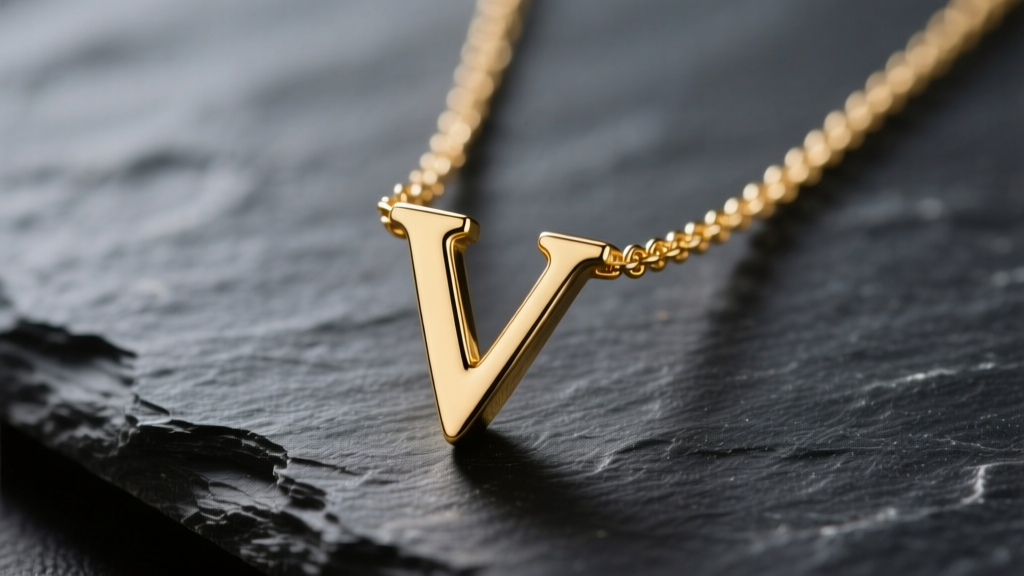
The v initial necklace is a timeless staple in modern jewelry layering, offering a personalized touch that transitions seamlessly from casual daytime wear to elegant evening ensembles. However, the unique geometry of the letter 'V' presents specific maintenance challenges that generic jewelry care guides often overlook. The acute angle at the bottom vertex acts as a natural trap for sebum, cosmetic residues, and environmental dust. When combined with the delicate nature of initial pendant bails and fine chains, improper cleaning can lead to premature wear, tarnish, or even structural failure.
This comprehensive guide dives deep into the material science and structural vulnerabilities of initial pendants, providing actionable, expert-level protocols to keep your jewelry pristine in 2026 and beyond.
Material Science: Understanding Your Pendant's Composition
Before applying any cleaning solution, you must identify the exact metallurgical composition of your necklace. The Federal Trade Commission (FTC) Jewelry Guides strictly regulate metal stamping, so checking the hallmark on the back of your 'V' pendant or the chain's clasp is your first step.
Solid Gold (14k and 18k)
Pure 24k gold is too soft for daily wear, which is why initial necklaces are typically crafted in 14k (58.5% pure gold) or 18k (75% pure gold). 14k gold is alloyed with metals like copper, silver, and zinc, giving it a higher Mohs hardness and making it highly resistant to scratching. However, these alloy metals can react with chlorine and harsh chemicals, leading to microscopic pitting. According to the Gemological Institute of America (GIA), solid gold should only be cleaned with pH-neutral solutions to preserve the integrity of the alloy matrix.
Sterling Silver (925) and the Tarnish Cycle
Sterling silver contains 92.5% silver and 7.5% copper. The copper is essential for structural durability but is highly reactive to sulfur compounds in the air and human sweat. This reaction forms silver sulfide, the blackish film we recognize as tarnish. Tarnish aggressively accumulates in the deep, laser-engraved grooves or cast crevices of a 'V' pendant, requiring targeted mechanical removal rather than just surface wiping.
Gold Vermeil and Plated Metals
Vermeil (pronounced ver-may) is a high-quality plating consisting of a minimum of 2.5 microns of 10k+ gold over a sterling silver base. The primary failure mode for vermeil initial necklaces is friction wear at the bail—the loop where the 'V' connects to the chain. Aggressive polishing or ultrasonic cleaning will strip the gold layer, exposing the silver beneath.
The 'Vertex Trap': Deep Cleaning the Letter V
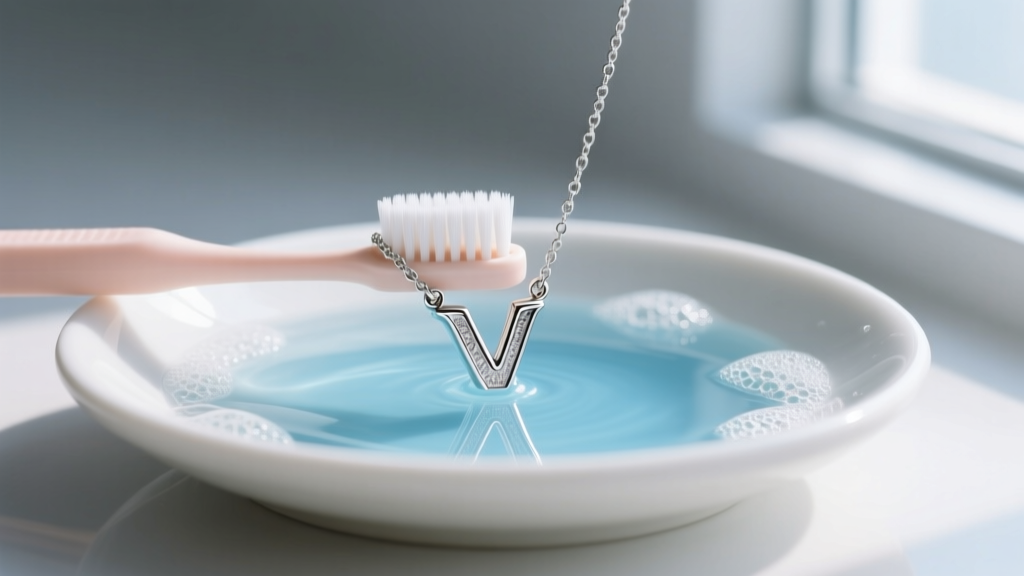
The sharp bottom corner of the 'V' shape is a magnet for dead skin cells and heavy body lotions. Standard polishing cloths cannot reach into this acute angle, leaving a dull, grayish buildup over time.
- Prepare a Degreasing Bath: Mix three drops of pH-neutral liquid dish soap (like original Dawn) into a bowl of lukewarm distilled water. Avoid tap water, as trace minerals and chlorine can leave water spots or react with silver alloys.
- Soak and Soften: Submerge the pendant (and chain, if solid gold or silver) for 10 to 15 minutes. This softens the sebum trapped in the vertex.
- Targeted Mechanical Agitation: Use an extra-soft baby toothbrush. Do not use standard toothbrushes, as their stiffer bristles can inflict micro-scratches on high-polish gold surfaces. Gently brush the inside of the 'V' using circular motions.
- The Wooden Toothpick Technique: For impacted debris in the sharpest corner of the vertex, use a wooden toothpick. Never use metal needles or safety pins; gold has a Mohs hardness of roughly 2.5 to 3, meaning steel tools will easily gouge the metal.
- Rinse and Dry: Rinse thoroughly under distilled water and pat dry with a lint-free microfiber cloth. Ensure the bail area is completely dry to prevent moisture-induced corrosion.
Chain Maintenance: Matching the Link Style
The chain supporting your v initial necklace requires just as much attention as the pendant. Different link structures harbor dirt in unique ways and dictate the cleaning method you should use.
| Chain Type | Structural Vulnerability | Recommended Cleaning Protocol |
|---|---|---|
| Cable Chain | Open links can catch on fabrics and stretch if pulled. | Soak in soapy water; use a soft brush to clean inside each oval link. Lay flat to dry to prevent kinking. |
| Box Chain | Square, interlocking links trap oils in the inner corners. | Requires extended soaking (20 mins). Agitate gently in the water bath rather than brushing to avoid bending the square links. |
| Snake Chain | Tightly wound, smooth surface hides debris between microscopic bands. | Wipe down with a damp microfiber cloth after every wear. Never use a brush, as bristles can snag and separate the bands. |
| Rolo Chain | Thick, round links are durable but collect heavy lotions at the joints. | Highly resilient. Can withstand gentle brushing and commercial liquid jewelry dips (for solid gold/silver only). |
What to Avoid: The Ultrasonic Cleaner Danger
Many jewelry owners mistakenly believe that ultrasonic cleaners are a universal solution. These machines use high-frequency sound waves (typically around 40 kHz) to create microscopic cavitation bubbles in a liquid solvent. When these bubbles implode, they generate intense localized shockwaves.
Expert Warning: If your v initial necklace features pavé-set diamonds, gemstone inlays, or enamel detailing, never place it in an ultrasonic cleaner. The cavitation shockwaves can easily shake the microscopic prongs loose, causing stones to fall out, or shatter brittle enamel accents.
Furthermore, ultrasonic waves can accelerate the degradation of gold plating and vermeil, causing the gold layer to peel or flake away from the base metal. Stick to manual, chemical-assisted cleaning for all initial pendants.
Strategic Storage and Daily Wear Rules
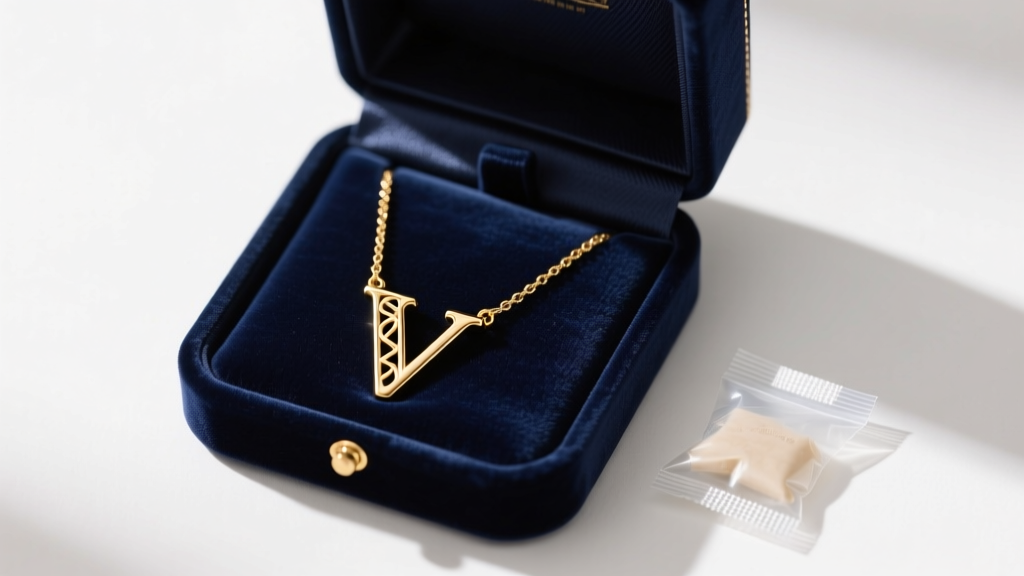
Proactive maintenance drastically reduces the need for deep cleaning. How you store your v initial necklace when it is not around your neck dictates its long-term luster.
- Isolate the Pendant: Initial pendants often have sharp edges (the tips of the 'V'). If tossed into a communal jewelry box, these edges can scratch softer pearls or opals, while harder diamonds from other pieces can scratch your gold 'V'. Store the necklace in an individual soft cotton pouch.
- Combat Atmospheric Tarnish: For sterling silver pieces, place a 3M anti-tarnish strip or a piece of Pacific Silvercloth inside the storage pouch. These materials absorb airborne sulfur compounds before they can react with the copper in the silver alloy.
- Control Humidity: Moisture accelerates both tarnishing and the breakdown of plating. Include a small silica gel desiccant packet in your jewelry drawer or safe to maintain a low-humidity environment.
- The 'Last On, First Off' Rule: Always put your necklace on after applying perfumes, hairsprays, and lotions, and remove it before showering or swimming. The alcohol and aerosol propellants in cosmetics can leave a dull, cloudy film on the gold that is notoriously difficult to remove from the deep vertex of the letter.
Final Thoughts on Longevity
A v initial necklace is more than just an accessory; it is a personalized emblem. By understanding the specific geometric traps of the letter 'V' and respecting the metallurgical limits of your chosen material, you can ensure your piece remains brilliant and structurally sound for decades. Regular, gentle maintenance will always outperform aggressive, reactive cleaning methods.


