Is a 24k Gold Necklace Cross Worth It? 2026 Value Guide
Evaluating the true cost, durability, and investment value of a 24k gold necklace cross in 2026. Expert tips on purity, pricing, and structural limits.

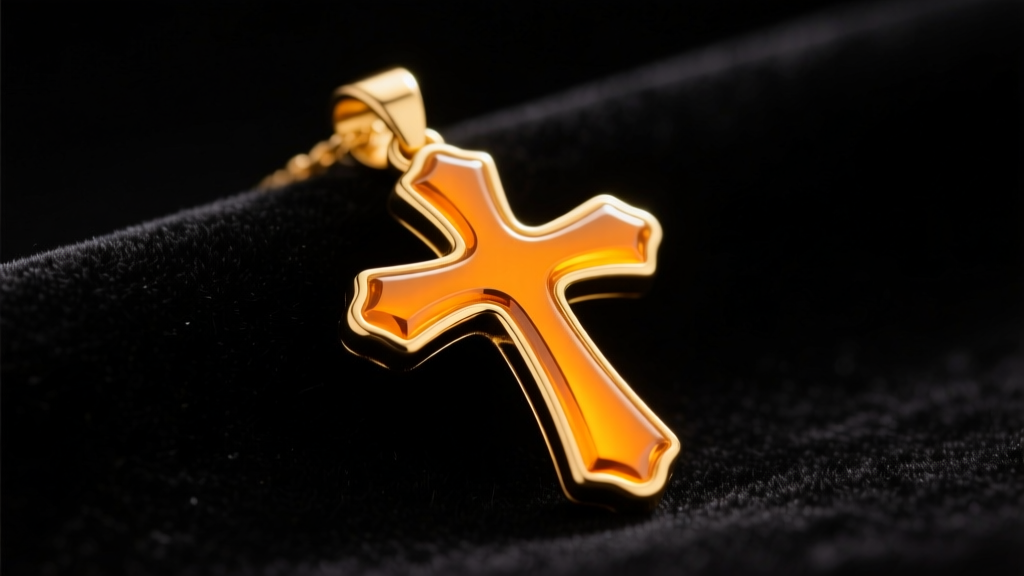
The pursuit of absolute purity in jewelry often leads buyers to the ultimate benchmark: 99.9% pure gold. When shopping for a religious or symbolic keepsake, a 24k gold necklace cross represents the pinnacle of material wealth and spiritual devotion. However, from a strict budget and value assessment perspective, purchasing pure gold jewelry requires navigating a complex intersection of commodities trading, metallurgical limitations, and retail markups. In 2026, with gold prices continuing their historic volatility, understanding the true cost-to-value ratio of a 24k cross pendant is more critical than ever.
This guide strips away the marketing fluff to examine the real economics, structural vulnerabilities, and long-term value retention of 24k gold crosses. Whether you are buying for investment, daily wear, or generational gifting, you need to know exactly what you are paying for.
The Economics of 24k Gold: Spot Price vs. Retail Premium
Unlike 14k or 18k gold, which are alloys mixed with copper, silver, or zinc to increase durability, 24k gold is virtually pure. Because its intrinsic material value is so high, jewelers price 24k gold necklace crosses differently than standard karat jewelry. The pricing model shifts from a "craftsmanship premium" to a "weight-plus-premium" model, similar to how bullion coins are sold.
To assess value, you must first check the daily spot price. According to Kitco Gold Spot Data, the raw material cost per gram is the baseline. Any retail price significantly above this baseline is the "maker's premium."
| Cost Component | Estimated Value (USD) | Notes |
|---|---|---|
| Raw Melt Value (Spot) | $325 - $360 | Based on ~$65-$72/gram spot price |
| Fabrication & Casting | $40 - $80 | Higher for stamped vs. cast pieces |
| Retail Markup & Brand Premium | $100 - $300+ | Varies wildly by jeweler reputation |
| Total Retail Price | $465 - $740+ | Target < 20% premium over melt for best value |
Value Assessment Rule: If the retail premium exceeds 30% of the melt value, you are overpaying for the "brand" rather than the gold itself. For pure gold items, the design premium should be minimal because the material is too soft to hold intricate, high-labor designs.
Metallurgical Reality: Hardness, Wear, and the Vickers Scale
The most critical factor in assessing the long-term value of a 24k gold necklace cross is its physical vulnerability. The Gemological Institute of America (GIA) notes that pure gold is exceptionally malleable. On the Vickers Hardness (HV) scale, which measures a metal's resistance to indentation and scratching, the differences are stark:
- 24k Gold (99.9%): ~25 to 30 HV (Comparable to a human fingernail)
- 18k Gold (75%): ~120 to 135 HV
- 14k Gold (58.3%): ~140 to 160 HV

Because a 24k gold cross sits at a mere 25 HV, it will inevitably scratch, dent, and warp if worn daily. The bail (the loop that connects the pendant to the chain) is the primary failure point. The constant friction of a chain rubbing against a 24k bail will slowly saw through the pure gold, eventually causing the pendant to detach and be lost. From a value retention standpoint, a heavily scratched 24k cross loses its numismatic or aesthetic premium, reverting strictly to its melt value upon resale.
"Bench jewelers rarely recommend 24k gold for any pendant that features moving parts, thin prongs, or delicate bails. The metal simply lacks the crystalline rigidity to survive the micro-impacts of daily human movement." — Master Bench Jeweler Assessment
Design Limitations: Why Your 24k Cross Lacks Detail
When evaluating the aesthetic value of a 24k gold necklace cross, buyers are often disappointed by the lack of intricate detailing. You will rarely find complex filigree, deep undercuts, or micro-pave gemstone settings in pure gold.
This is not a lack of artisan skill; it is a limitation of physics. Deep undercuts in a 24k casting will bend out of shape with minimal pressure. Gemstone prongs made of 24k gold will pull back and drop stones within weeks. Therefore, 24k crosses are typically manufactured using heavy die-stamping or simple, thick sand-casting. The designs are usually bold, flat, and feature smooth, domed surfaces (like the classic Latin or Maltese crosses) to minimize edges that could catch on clothing and warp. If a seller offers a highly intricate, lace-like 24k gold cross, be highly suspicious—it is likely heavily alloyed or gold-plated over a base metal.
The Chain Dilemma: Structural Compromises for Daily Wear
A common and costly mistake buyers make is purchasing a 24k gold chain to match their 24k gold cross pendant. This is a catastrophic error for both budget and structural integrity. A 24k gold chain, particularly in popular styles like the rope or Franco, will stretch, kink, and snap under the weight of a pendant and the tension of the neck.
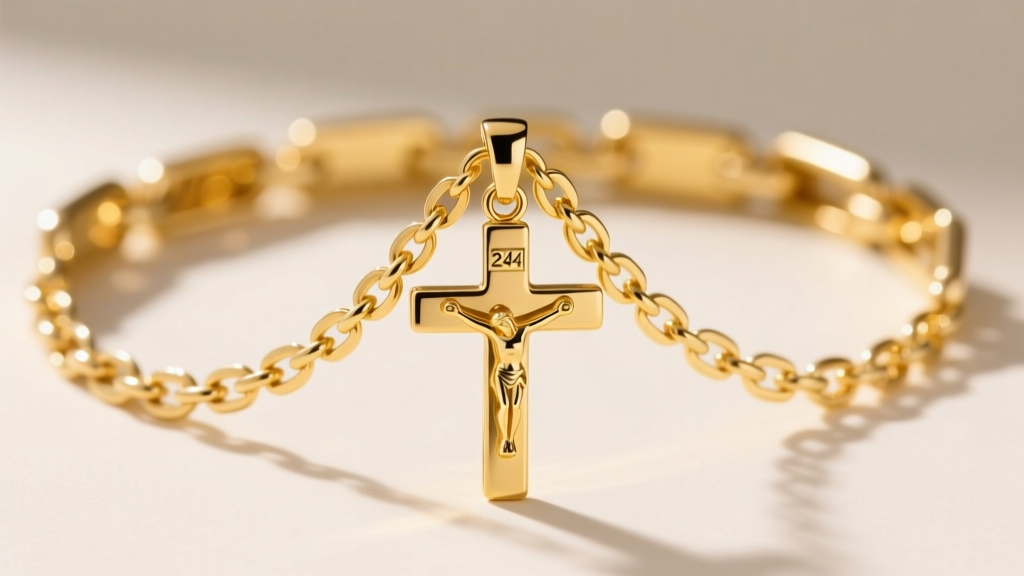
The Optimal Value Pairing: To protect your investment, pair your 24k gold cross pendant with an 18k or 14k gold chain. An 18k yellow gold box chain or rope chain provides the necessary tensile strength (boasting a hardness of over 120 HV) to support the pendant and resist the friction at the bail. Visually, the color difference between high-quality 18k yellow gold and 24k gold is negligible to the naked eye, but the structural upgrade ensures your necklace survives daily wear.
Authentication and Purity Verification
Because 24k gold commands such a high premium, it is a primary target for counterfeiters. Tungsten, which has a specific gravity nearly identical to gold, is sometimes used as a core inside thick, hollow 24k crosses to fake the weight. When assessing the value of a prospective purchase, demand verification:
- Hallmarks: Look for "999", "999.9", or "24k" stamped on the back or the bail. Note that stamps can be faked.
- XRF Scanning: A reputable jeweler should be willing to test the piece with an X-Ray Fluorescence (XRF) spectrometer, which reads the exact elemental composition without damaging the soft gold.
- Specific Gravity Test: If buying from a private seller or bullion dealer, a water displacement test can verify the density matches pure gold (19.32 g/cm³).
The 2026 Value Assessment Framework: Should You Buy?
To determine if a 24k gold necklace cross aligns with your budget and value goals, run it through this decision matrix:
Buy a 24k Gold Cross If:
- Investment is the priority: You want wearable wealth that tracks closely with the commodities market and can be easily liquidated at melt value globally.
- Cultural or Spiritual Significance: In many Asian and Middle Eastern cultures, 24k gold is the only acceptable standard for religious artifacts and generational wealth transfer.
- Occasional Wear: You plan to wear the pendant only for special events, minimizing the risk of friction and physical deformation.
Avoid 24k Gold (Opt for 18k or 14k) If:
- Daily Wear is intended: You work with your hands, exercise in your jewelry, or want a piece that maintains its pristine, polished finish for decades.
- Intricate Design is desired: You want a crucifix with detailed facial features, Celtic knotwork, or diamond accents.
- Budget is constrained: You are paying a 40% retail premium over spot price just for a brand name stamp on a soft metal.
Final Verdict
A 24k gold necklace cross is less of a traditional jewelry purchase and more of an emotional bullion acquisition. Its value lies in its absolute purity and its universal recognition as a store of wealth. However, as a functional piece of daily apparel, it is inherently flawed by the very purity that makes it valuable. By understanding the Vickers hardness limitations, avoiding the trap of 24k chains, and strictly negotiating the retail premium over the daily spot price, you can confidently acquire a piece that honors both your faith and your financial acumen.


