Cat Eye Necklace Guide: Natural Chrysoberyl vs Glass
Compare natural chrysoberyl, fiber optic glass, and quartz for your next cat eye necklace. Learn hardness, pricing, and chatoyancy.

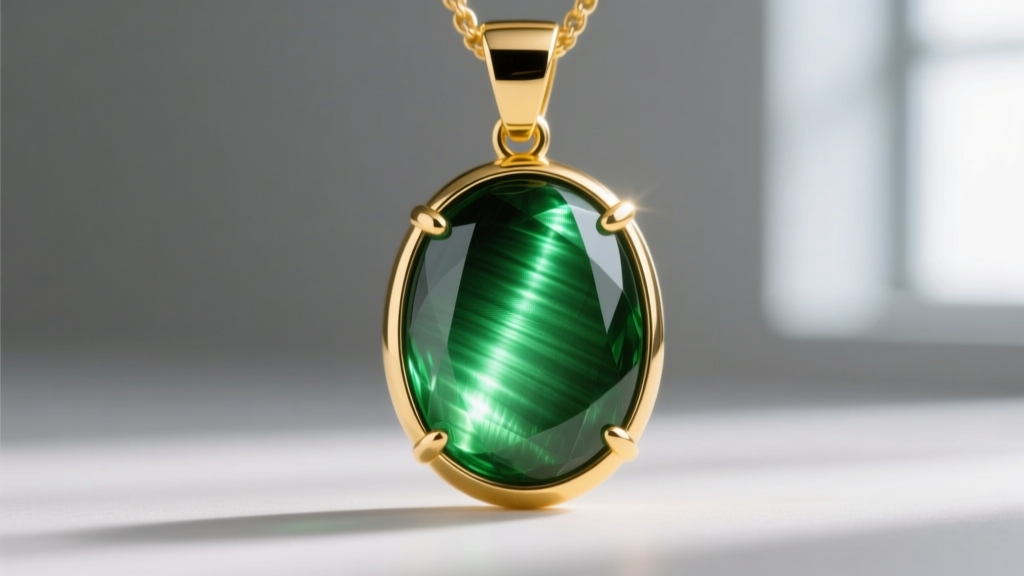
The Allure and Illusion of the Cat Eye Necklace
When shopping for a cat eye necklace, buyers are immediately confronted with a massive price discrepancy. You might find a pendant labeled as a cat eye gemstone for $40, while another seemingly identical piece commands $4,000. This vast divide is not merely a matter of brand markup; it is rooted in fundamental material science. The term "cat eye" does not refer to a single gemstone, but rather to an optical phenomenon known as chatoyancy. While natural chrysoberyl is the only gemstone that legitimately claims the unqualified title of "Cat's Eye," the market is heavily saturated with fiber optic glass, synthetic resins, and lower-grade chatoyant quartz.
As a jewelry material specialist, I frequently see collectors invest in imitation pieces under the assumption they are buying natural gems. This comprehensive material comparison will break down the physical properties, optical behaviors, and structural vulnerabilities of the most common materials used in cat eye necklaces, ensuring your next purchase is backed by gemological facts rather than marketing illusions.
The Science of Chatoyancy: What Creates the Eye?
Chatoyancy (from the French chatoyer, meaning "to shine like a cat's eye") is an optical reflectance effect caused by the reflection of light off parallel, microscopic fibrous inclusions or hollow tubes within a gemstone. For a cabochon to display a sharp, centered "eye," the lapidary must cut the stone with its base perfectly parallel to these fibrous structures. If the cutting angle is off by even a few degrees, the eye will appear off-center, blurry, or entirely absent.
According to the Gemological Institute of America (GIA), true chrysoberyl cat's eyes contain microscopic, parallel needle-like inclusions of rutile (titanium dioxide) or tube-like cavities. When a single, focused light source hits the dome of the cabochon, these inclusions reflect the light back in a concentrated, luminous band that appears to glide across the surface of the stone as the angle of observation changes.
Material Breakdown: Natural vs. Synthetic vs. Alternatives
1. Natural Chrysoberyl (The Premium Standard)
Chrysoberyl (BeAl2O4) is an exceptionally hard and durable mineral, ranking at 8.5 on the Mohs scale. This makes it highly resistant to scratching, an essential property for a necklace pendant that is prone to swinging and impacting surfaces. Natural chrysoberyl exhibits a refractive index (RI) of 1.74 to 1.76 and a specific gravity (SG) of 3.73. Top-tier specimens display a sharp, piercing eye with a translucent, honey-colored or apple-green body color. Pricing for fine natural chrysoberyl ranges from $1,500 to over $10,000 per carat, depending on the sharpness of the eye and the translucency of the body.
2. Fiber Optic Glass (The Commercial Imitation)
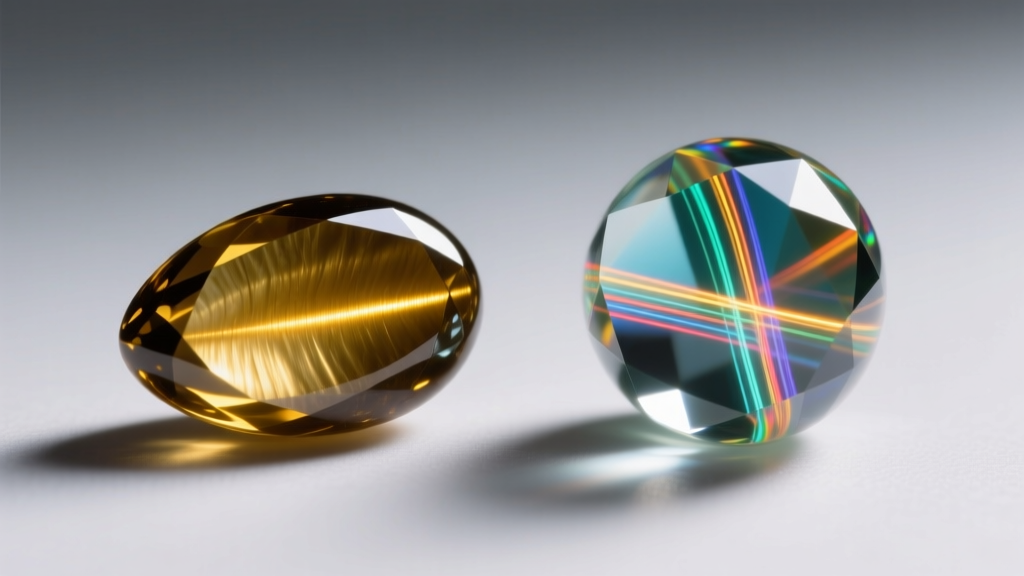
The vast majority of affordable cat eye necklaces on the market are crafted from fiber optic glass. This material is manufactured by fusing thousands of microscopic glass fibers together, mimicking the parallel inclusions found in nature. While the visual effect can be striking and highly uniform, glass lacks the structural integrity of chrysoberyl. It ranks at a mere 5.5 to 6.5 on the Mohs scale, making it highly susceptible to scratching from everyday dust (which contains quartz particles at a hardness of 7). Furthermore, glass lacks the "milk and honey" effect unique to natural stones. Pricing is negligible, typically ranging from $5 to $50 for a finished necklace.
3. Chatoyant Apatite and Tiger's Eye (The Middle Ground)
For buyers seeking natural stones without the chrysoberyl price tag, cat eye apatite and tiger's eye (a pseudomorphic quartz) are common alternatives. Apatite offers a stunning neon-blue or green chatoyancy but is extremely fragile, ranking at 5 on the Mohs scale with poor toughness due to distinct cleavage planes. Tiger's eye, ranking at 7, is much more durable but exhibits a broader, less defined band of light due to the macroscopic fibrous crocidolite inclusions it replaces. Tiger's eye necklaces generally cost between $20 and $150.
Comparative Data: Hardness, Optics, and Market Value
| Material | Mohs Hardness | Refractive Index | Specific Gravity | Price Range (Per Carat) | Necklace Durability |
|---|---|---|---|---|---|
| Natural Chrysoberyl | 8.5 | 1.74 - 1.76 | 3.73 | $1,500 - $10,000+ | Excellent (Daily Wear) |
| Fiber Optic Glass | 5.5 - 6.5 | 1.50 - 1.70 | 2.50 - 3.00 | N/A (Sold by piece) | Poor (Scratches Easily) |
| Cat Eye Apatite | 5.0 | 1.63 - 1.64 | 3.16 - 3.23 | $20 - $100 | Very Poor (Impact Risk) |
| Tiger's Eye (Quartz) | 7.0 | 1.54 - 1.55 | 2.64 - 2.71 | $2 - $15 | Good (Occasional Wear) |
Authentication: The "Milk and Honey" Effect
If you are investing in a natural chrysoberyl cat eye necklace, you must know how to authenticate it beyond basic visual inspection. The most definitive optical test for high-quality chrysoberyl is the milk and honey effect. When a penlight is shone directly on the side of the cabochon (perpendicular to the eye band), the side closest to the light will turn a milky, opaque white, while the opposite side retains its deep honey or green body color.
"The milk and honey effect is caused by the scattering of light within the microscopic tube-like cavities of the chrysoberyl. Fiber optic glass and synthetic corundum cannot replicate this specific light-scattering behavior, making it a reliable field test for gemologists." - Mindat Mineralogical Database
Additionally, natural chrysoberyl will feel noticeably heavier than glass or quartz of the exact same dimensions due to its high specific gravity (3.73). If a large, impressive cat eye pendant feels suspiciously light in your hand, it is almost certainly glass or resin.
Metal Settings and Structural Considerations
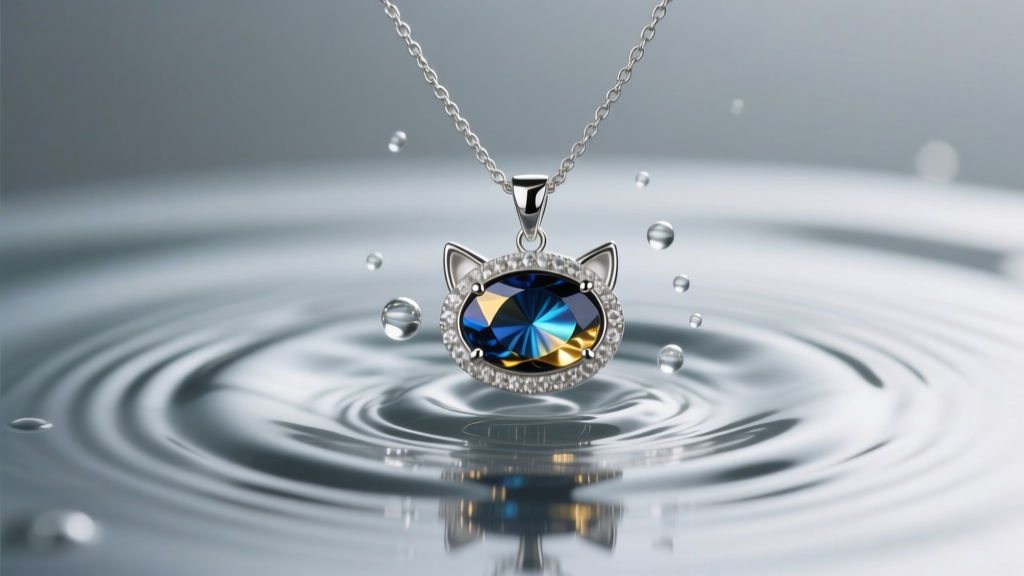
The material of the gemstone dictates the necessary metal setting for a cat eye necklace. Because chatoyant gems must be cut as cabochons (smooth, unfaceted domes) to display the eye, they lack the geometric girdles and culets of faceted stones. This makes them prone to popping out of standard prong settings if the necklace snags on clothing.
- Bezel Settings: The gold standard for cat eye cabochons. A full bezel wraps the metal entirely around the perimeter of the stone, protecting the vulnerable girdle edge from chipping. This is mandatory for softer stones like apatite.
- 14k vs. 18k Gold: For a heavy chrysoberyl pendant, 14k gold (58.5% pure gold) is highly recommended over 18k gold. The higher copper and zinc alloy content in 14k gold provides superior tensile strength, ensuring the bail and bezel do not warp under the weight of a dense 3.73 SG gemstone.
- Sterling Silver (925): While affordable, silver tarnishes and requires frequent polishing. Polishing a bezel-set cabochon necklace carries a high risk of abrasive compounds getting trapped between the metal lip and the stone, permanently dulling the dome and obscuring the chatoyant band.
Care, Maintenance, and Failure Modes
The maintenance protocol for your cat eye necklace depends entirely on its material composition. Natural chrysoberyl is robust; it can safely withstand ultrasonic cleaners and mild steam cleaning. However, you must never place a fiber optic glass or resin cat eye necklace in an ultrasonic bath. The high-frequency vibrations will cause the microscopic glass fibers to separate, leading to internal fracturing, clouding, and the complete destruction of the optical effect.
Furthermore, never allow a jeweler to "re-polish" the surface of a natural cat eye cabochon to remove scratches. The chatoyant eye is entirely dependent on the precise geometric alignment of the dome relative to the internal inclusions. Removing even a millimeter of material from the surface will shift the focal point, causing the eye to become wide, blurry, or entirely misaligned. If the surface is scratched, it is generally safer to leave it than to risk ruining the optical geometry.
Final Verdict: Choosing Your Material
When selecting a cat eye necklace, align your material choice with your wearing habits and budget. If you require a generational heirloom piece capable of daily wear without degradation, natural chrysoberyl set in a 14k gold bezel is the only scientifically sound choice. For fashion jewelry intended for occasional evening wear, fiber optic glass offers unparalleled color variety and a striking, albeit uniform, optical band at a fraction of the cost. Avoid cat eye apatite for necklaces entirely; its beauty is vastly outweighed by its structural vulnerability to everyday impact.


