How to Authenticate an Expensive Pearl Necklace: Expert Guide
Learn how to authenticate an expensive pearl necklace with our step-by-step expert guide covering nacre thickness, luster grades, and lab certifications.

The High-Stakes World of Fine Pearls
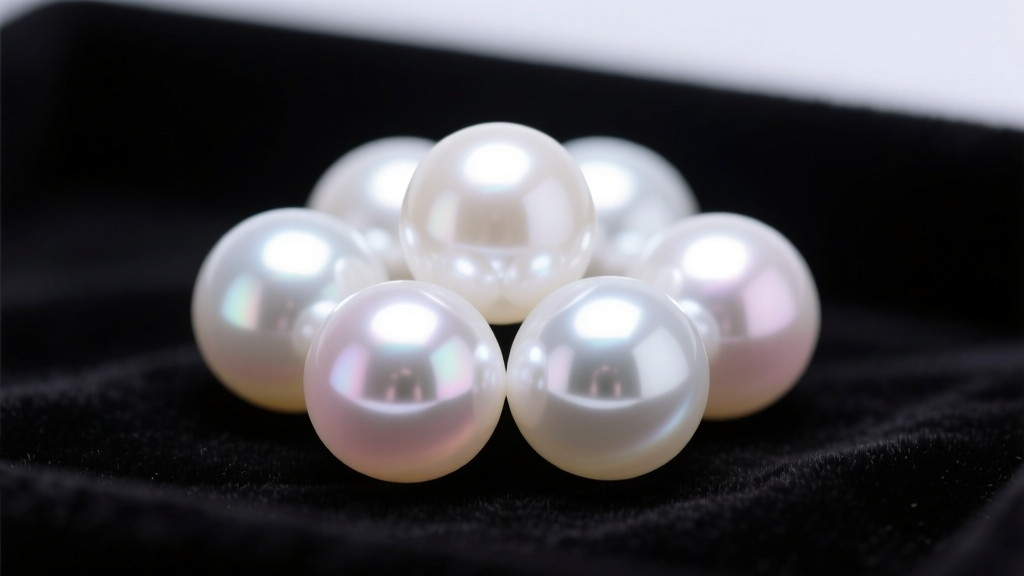
Investing in an expensive pearl necklace is a significant financial and emotional commitment. Whether you are eyeing a strand of gem-grade White South Sea pearls priced upwards of $40,000 or a flawless Hanadama Akoya strand commanding $15,000, the luxury pearl market is fraught with sophisticated imitations, heavy chemical treatments, and misleading grading scales. Unlike diamonds, which have a universally standardized grading system, pearls rely on a complex interplay of organic formation, human intervention, and subjective beauty standards.
According to the Gemological Institute of America (GIA), the value of a cultured pearl is dictated by seven primary factors: size, shape, color, luster, surface quality, nacre quality, and matching. When you purchase an expensive pearl necklace, you are paying a premium for the top 1% of the harvest. This step-by-step guide will equip you with the gemological knowledge required to authenticate fine pearls, verify their structural integrity, and ensure your investment is genuinely worthy of its price tag.
Step 1: Examine the Luster and Orient
Luster is the single most critical value factor for any expensive pearl necklace. It refers to the sharpness and intensity of light reflecting off the pearl's surface. High-quality pearls possess a mirror-like luster, allowing you to see a crisp, distinct reflection of your own eye or a nearby light source. Conversely, pearls with thin nacre or heavy factory polishing will appear chalky, milky, or dull.
Beyond surface luster,顶级 (top-tier) pearls exhibit 'orient'—an iridescent play of colors that shimmers just beneath the surface. This optical phenomenon is caused by light diffracting through the microscopic layers of aragonite platelets and conchiolin. To test for orient, slowly roll the necklace under a diffuse, broad-spectrum light source. A genuine high-end Akoya or Tahitian pearl will reveal subtle flashes of rose, green, or peacock overtones that shift as the angle changes. If the color appears flat, painted, or uniformly dyed without depth, the pearls have likely been subjected to aggressive chemical treatments or are outright glass imitations coated with bismuth oxychloride.
Step 2: Measure Nacre Thickness via the Drill Hole
Nacre thickness dictates both the durability and the optical performance of a bead-nucleated pearl. An expensive pearl necklace should never feature 'blinker' pearls—pearls with nacre so thin that the mother-of-pearl bead nucleus is visible beneath the surface, often appearing as a dull, flat stripe when rotated.
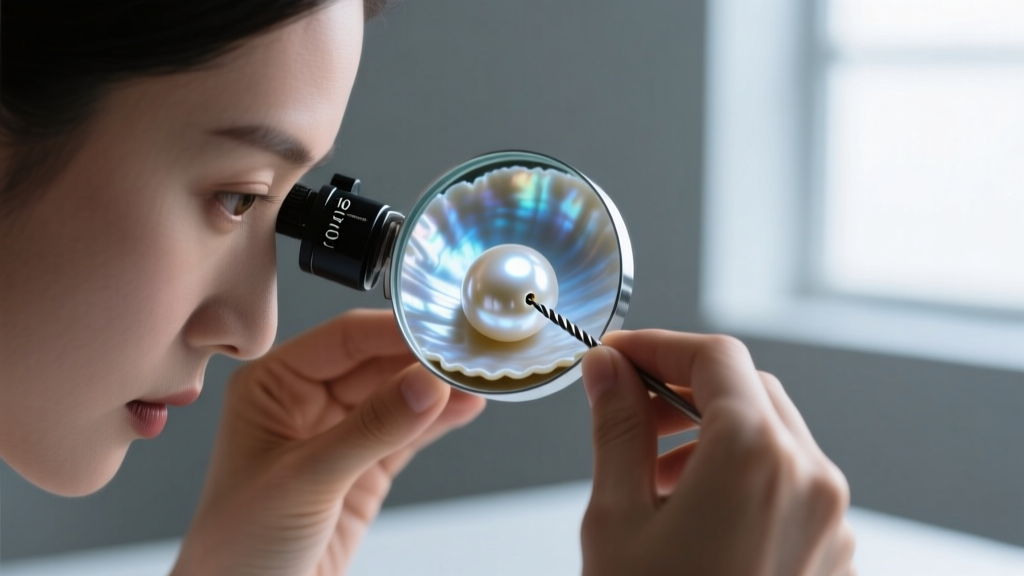
Using a 10x triplet jeweler's loupe, carefully examine the drill hole of several pearls along the strand. You are looking for the distinct boundary line between the outer nacre layers and the inner shell bead. For a luxury Akoya necklace, the nacre must be at least 0.6mm thick, though the absolute minimum for export is often 0.4mm. For White or Golden South Sea pearls, expect a nacre thickness ranging from 2.0mm to over 4.0mm. If the nacre layer looks paper-thin (less than 0.3mm) or if you see chipping around the drill hole revealing a glassy or plastic core, walk away immediately.
Step 3: Inspect the Knotting, Clasp, and Drill Quality
The construction of the necklace itself is a massive indicator of authenticity and value. A true expensive pearl necklace is always hand-knotted. Knotting serves two purposes: it prevents the pearls from rubbing against each other (which would degrade the nacre over time), and it ensures that if the strand breaks, you only lose one pearl rather than the entire investment.
- The Knots: They should be small, tight, and flush against the pearls. There should be no visible gaps or stretching in the silk or synthetic high-tensile thread.
- The Drill Holes: High-end pearls are drilled with precision. The entry and exit points of the drill hole should be clean and sharp. Ragged, asymmetrical, or overly large drill holes indicate mass-market, lower-tier manufacturing.
- The Clasp and French Wire: Luxury strands utilize 14k or 18k gold or platinum clasps, often stamped with a maker's mark. Furthermore, the thread near the clasp should be protected by 'French wire' (a tiny coiled metal spring) to prevent the metal clasp from sawing through the silk thread over time.
Step 4: Verify Lab Certifications and Grading Reports
Never purchase an expensive pearl necklace without a verifiable, independent gemological report. Retailer-generated certificates are often inflated and lack standardized rigor. You must look for reports from globally recognized laboratories.
For Japanese Akoya pearls, the gold standard is the Hanadama certificate issued by the Pearl Science Laboratory (PSL) in Tokyo. To earn the Hanadama designation, the pearls must pass strict thresholds for nacre thickness, surface blemishes, and luster intensity, often verified using an Aurora viewer to measure the 'teri' (luster) score. For South Sea and Tahitian pearls, reports from the GIA or the Cultured Pearl Association of America (CPAA) recognized labs are essential.

| Grading Term | Applicable Pearl Type | Minimum Nacre Requirement | Surface Quality | Market Price Range (18-inch Strand) |
|---|---|---|---|---|
| Hanadama (PSL) | Japanese Akoya | 0.4mm (Usually >0.6mm) | 95% Clean to Flawless | $8,000 - $25,000 |
| Gem Grade (AAA+) | White South Sea | 2.0mm+ | 99% Clean, High Luster | $30,000 - $100,000+ |
| Top Gem (A-Grade) | Tahitian Black | 0.8mm+ | Flawless, Peacock Orient | $15,000 - $60,000 |
Step 5: Conduct Advanced Gemological Testing (XRF and Radiography)
While visual inspection and loupe work will catch 90% of fakes and low-tier goods, the modern luxury market requires advanced scientific testing to detect sophisticated treatments. Two primary tests are utilized by gemologists to authenticate an expensive pearl necklace:
Real-Time X-Ray Microradiography (RTX)
RTX allows gemologists to look inside the pearl without damaging it. This imaging reveals the exact structure of the bead nucleus, the concentric growth rings of the nacre, and any voids or organic inclusions. It is the only 100% accurate way to measure nacre thickness across the entire pearl, rather than just at the drill hole. RTX also definitively separates natural, non-nucleated pearls from bead-nucleated cultured pearls.
X-Ray Fluorescence (XRF) Spectrometry
XRF is critical for detecting chemical alterations. For example, genuine Tahitian pearls derive their dark colors from trace elements naturally present in the black-lipped oyster's environment. However, unscrupulous vendors will take cheap, pale freshwater pearls and treat them with silver nitrate and gamma irradiation to mimic Tahitian colors. XRF testing will immediately flag the presence of anomalous silver or manganese spikes, exposing the treatment and saving you from a catastrophic financial mistake.
Conclusion: Protecting Your Investment
An expensive pearl necklace is a wearable heirloom that can last for generations if properly authenticated and cared for. By systematically evaluating the luster, measuring the nacre, inspecting the hand-knotting, and demanding rigorous third-party lab reports, you strip away the marketing hype and focus on the gemological reality of the piece. Always buy from reputable dealers who offer a no-questions-asked return policy contingent upon independent gemological verification. When you hold a strand of truly gem-grade pearls, the mirror-like luster and deep, shifting orient will speak for themselves.


