Pick Holder Necklace Value Guide: Budget vs Premium 2026
Discover the true value of a pick holder necklace in 2026. We compare budget brass to premium titanium, analyzing thread durability and chain gauges.

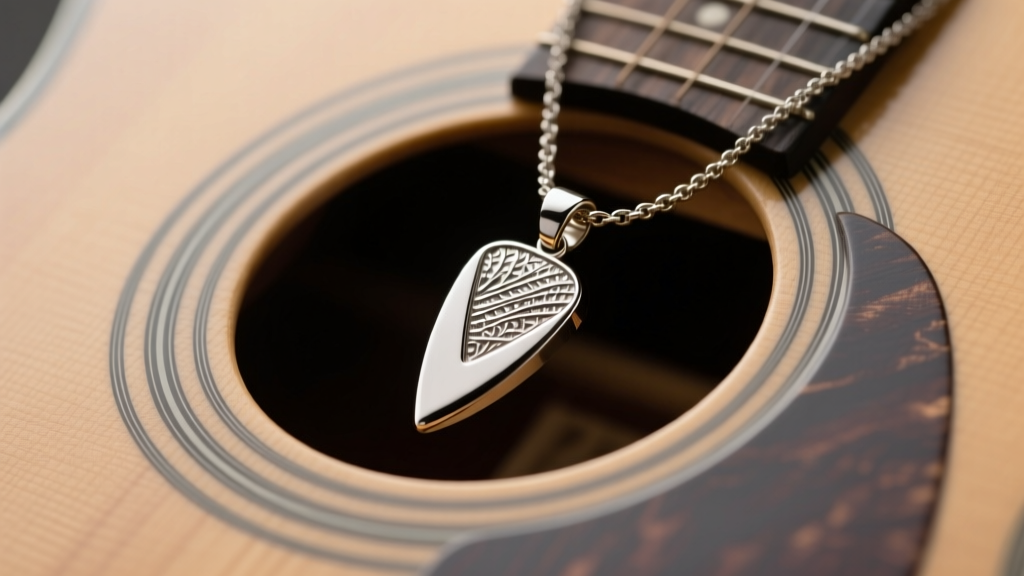
The Anatomy of a Pick Holder Necklace
For gigging musicians and studio session players, dropping a guitar pick mid-solo is a nightmare scenario. The pick holder necklace was engineered to solve this exact problem, keeping a spare plectrum securely suspended against your chest. However, as the accessory has surged in popularity, the market has become saturated with everything from $12 dropshipped trinkets to $300 bespoke machined pendants. Assessing the true budget and value of a pick holder necklace requires looking past the aesthetic and examining the metallurgy, mechanical tolerances, and chain tensile strength.
A functional pick holder pendant consists of five critical components: the main reservoir tube, the threaded or friction-fit cap, the internal moisture seal (typically an O-ring), the bail (the loop connecting the pendant to the chain), and the chain itself. The bail is frequently a separate component soldered onto the main tube. In budget pieces, this solder joint is a primary failure point, often snapping under the dynamic force generated when a musician moves aggressively on stage. In this 2026 value assessment, we break down the market into three distinct tiers to help you determine where your money is best spent.
Budget Tier ($15–$30): The Hidden Costs of Brass and Zinc
The entry-level market is dominated by zinc alloy die-casts and thin brass tubes plated with silver or gold-toned finishes. While these pick holder necklaces are visually appealing on day one, their mechanical longevity is severely compromised. The primary failure point in budget models is the threading. Most inexpensive pendants utilize shallow, poorly machined M3 threads. When subjected to the repetitive twisting of daily use, these soft metal threads strip within three to six months, leaving the cap permanently cross-threaded or unable to secure the pick.
Furthermore, budget chains are typically hollow-cable designs measuring a fragile 1.0mm to 1.2mm in gauge. They are paired with low-tension spring ring clasps that easily snap under the kinetic movement of playing an instrument. There is also a significant dermatological risk. According to the Mayo Clinic, nickel is a common alloying agent in cheap brass and zinc jewelry to increase hardness. When the thin electroplating wears off from friction against the chest, the exposed nickel can trigger severe contact dermatitis, especially when combined with stage sweat.
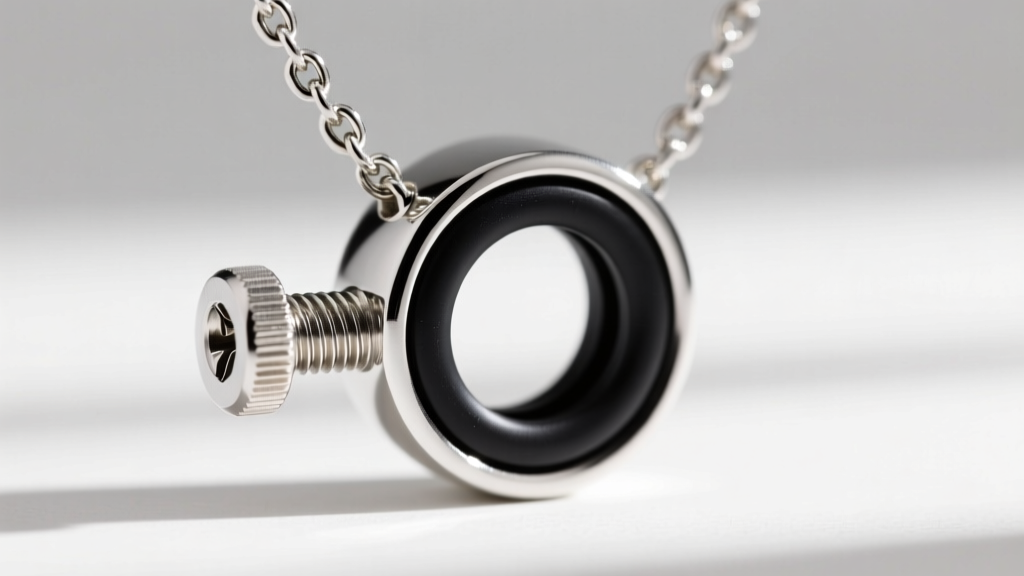
Mid-Tier ($45–$85): Sterling Silver and Surgical Steel
The mid-tier represents the sweet spot for value, offering genuine metallurgical integrity without the bespoke markup. Here, you will find pendants crafted from solid 925 sterling silver and 316L surgical-grade stainless steel. These materials offer excellent corrosion resistance and the structural hardness required to maintain deep, precision-cut threads over years of use.
Thread Pitch and O-Ring Mechanics
Value in this tier is defined by the sealing mechanism. High-quality mid-tier pick holder necklaces upgrade from standard Buna-N rubber O-rings to Viton or EPDM O-rings. Viton is highly resistant to the oils, sweat, and stage chemicals that degrade standard rubber, ensuring the cap remains snug and water-resistant. Additionally, these pendants usually feature M4 or coarser threading with a wider pitch, which is far less prone to cross-threading and debris accumulation. When evaluating a sterling silver piece, remember that silver naturally oxidizes. As noted by the Gemological Institute of America (GIA), regular polishing and proper storage are required to prevent sulfur-induced tarnish, a minor maintenance trade-off for the material's inherent value and weight.
Premium Tier ($120–$250+): Titanium, Gold, and Custom Machining
At the top of the market, pick holder necklaces transition from cast jewelry to precision CNC-machined instruments. The premier material in this space is Grade 5 Titanium (Ti-6Al-4V). Titanium offers an unparalleled strength-to-weight ratio, meaning a thick-walled, highly durable pendant will weigh less than a hollow brass equivalent, reducing neck fatigue during long sets.
Premium models feature internal chamfering to prevent the guitar pick from catching on sharp interior edges when sliding it out. The bails are often integrated directly into the main body via a seamless weld or milled from a single billet of metal, entirely eliminating the weak point where a soldered loop might snap. For those seeking precious metals, 14k and 18k solid gold options are available, though buyers must pay a premium for the raw material cost and the artisan labor required to machine gold without galling the threads.

Value Comparison Matrix
To visualize the return on investment across the market, refer to the structural breakdown below:
| Feature | Budget ($15-$30) | Mid-Tier ($45-$85) | Premium ($120+) |
|---|---|---|---|
| Primary Material | Zinc Alloy / Plated Brass | 925 Silver / 316L Steel | Grade 5 Titanium / Solid Gold |
| Threading Standard | Shallow M3 (Prone to stripping) | Precision M4 (Deep cut) | CNC Multi-start Threads |
| Seal Mechanism | Friction fit / Cheap Rubber | Viton O-Ring | Integrated Teflon / Viton Seal |
| Chain Gauge | 1.0mm - 1.2mm (Hollow) | 1.5mm - 2.0mm (Solid Cable) | 2.5mm+ (Curb / Rope) |
| Estimated Lifespan | 3 - 8 Months | 5 - 10 Years | Lifetime / Heirloom |
Chain Selection: Where Budget Necklaces Fail
A pick holder pendant is only as secure as the chain suspending it. When assessing value, never overlook the chain gauge and clasp type. Budget necklaces almost exclusively use 1.2mm hollow cable chains with spring-ring clasps. These clasps rely on a microscopic internal spring that routinely fails when exposed to sweat and repetitive tension.
For genuine value, insist on a minimum chain gauge of 1.8mm to 2.0mm. Curb chains and box chains offer superior tensile strength and resist kinking better than standard cable chains. Furthermore, the clasp must be a lobster claw or a magnetic locking clasp. Jump rings, the small loops connecting the chain to the clasp and pendant, must be soldered shut or feature a heavy-gauge split design. Open jump rings will inevitably pull apart under the pendulum effect of a heavy metal pendant swinging against the chest during an energetic performance.
Final Verdict: Which Pick Holder Necklace Offers the Best ROI?
If you are a casual player who only needs a pick holder for occasional acoustic sets, a $25 budget brass pendant may suffice, provided you are not sensitive to nickel alloys. However, for working musicians, session players, and touring artists, the mid-tier ($45–$85) offers the undisputed best value. Investing in a 316L stainless steel or 925 sterling silver pendant with Viton O-ring seals and M4 threading guarantees mechanical reliability. Pairing this with a 2.0mm solid curb chain and a lobster clasp transforms the pick holder necklace from a novelty trinket into a dependable piece of performance gear that will easily survive a decade of touring.


