Kingman Turquoise Necklace: Stone Properties & Matrix Guide
Discover the unique properties of a Kingman turquoise necklace. Compare matrix patterns, stabilization methods, and hardness for informed buying.

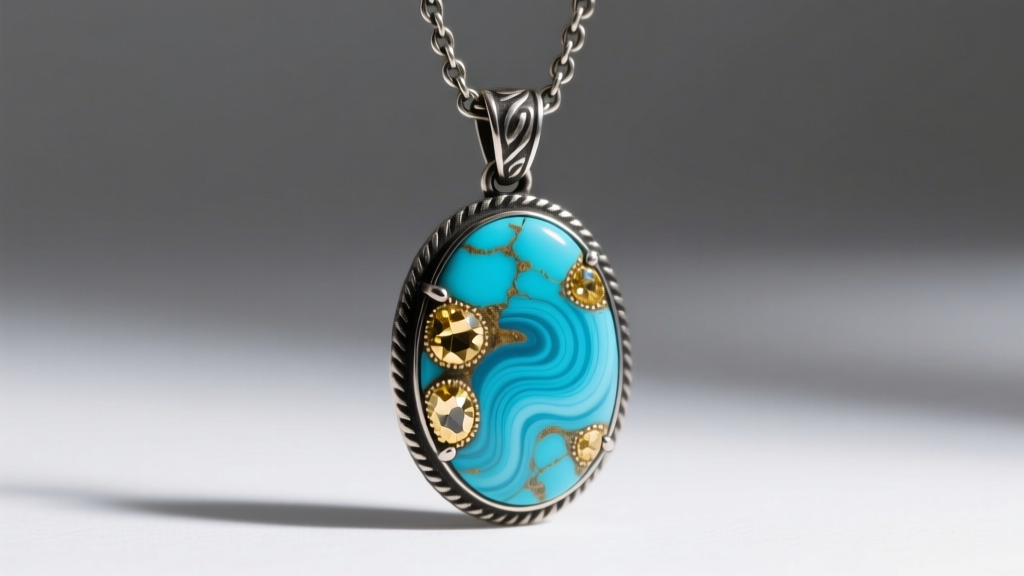
The Geological Profile of Kingman Turquoise
When evaluating a kingman turquoise necklace, understanding the stone's geological origins is critical for assessing its long-term value and structural integrity. Sourced from the Cerbat Mountains in northwestern Arizona, the Kingman mine is one of the oldest and most prolific turquoise deposits in North America. Unlike many modern mines that extract turquoise as a byproduct of large-scale copper mining, the Kingman operation (managed by the Coloma family) is dedicated primarily to gemstone extraction. This focused approach preserves the delicate structural integrity of the rough material.
Chemically, turquoise is a hydrous phosphate of copper and aluminum. The vivid blue-to-green spectrum of Kingman stones is dictated by the ratio of copper (which yields blue) to iron and aluminum (which push the hue toward green). What truly sets Kingman turquoise apart from global alternatives, however, is its frequent association with pyrite (iron sulfide) and limonite inclusions. These mineral deposits create the highly sought-after 'spiderweb' matrix patterns that serve as a natural fingerprint of the stone's origin.
Material Hardness and Stabilization Realities
In its natural, untreated state, turquoise is a relatively soft and porous material, registering between 3.0 and 5.5 on the Mohs hardness scale. Because a necklace pendant rests against the collarbone and is exposed to skin oils, cosmetics, and environmental moisture, wearing raw, low-grade Kingman turquoise is a significant risk. The stone's porosity allows it to absorb lipids and chemicals, which can permanently alter its color to a dull, muddy green over time.
To make Kingman turquoise viable for daily-wear jewelry, the industry relies on stabilization. However, not all stabilization methods are created equal. As a buyer, you must distinguish between the following treatments:
- The Zachery Method: Developed by electrical engineer James E. Zachery, this proprietary, non-polymer chemical bath deposits potassium and silica into the stone's microscopic pores. It increases the Mohs hardness to a durable 5.5+ without using plastics or epoxies. Zachery-treated Kingman retains its natural 'breathability' and will not yellow under UV exposure. According to the Gemological Institute of America (GIA), this is considered a premium enhancement that preserves the stone's intrinsic value.
- Epoxy/Polymer Impregnation (e.g., Opticon): A common, lower-cost method where liquid plastics are forced into the stone under a vacuum. While it hardens the material, polymers are prone to UV degradation. A polymer-stabilized Kingman necklace worn daily in sunlight may develop a yellowish, artificial sheen within 5 to 10 years.
- Block/Reconstituted Turquoise: This is not solid stone. It consists of turquoise dust and chalk bound together with heavy resins and dyes. It holds virtually no gemological value and should be avoided by serious collectors.
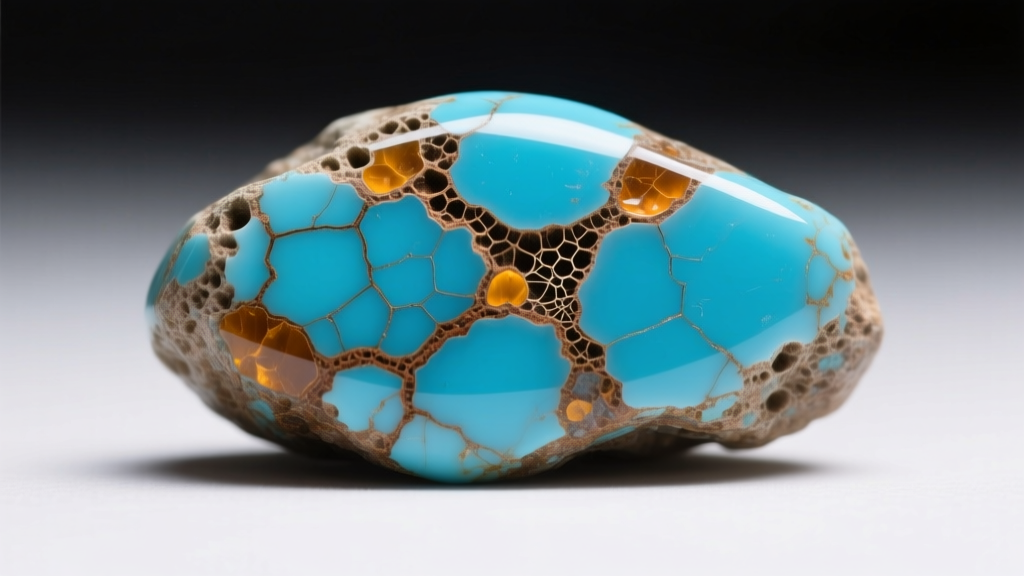
Matrix Anatomy: Pyrite, Limonite, and Clear Skies
The 'matrix' refers to the host rock or mineral inclusions trapped within the turquoise cabochon. In a Kingman turquoise necklace, the matrix dramatically dictates both the aesthetic profile and the market price. Below is a breakdown of the primary matrix variations found in Kingman material:
| Matrix Type | Visual Characteristics | Durability Impact | Market Value Tier |
|---|---|---|---|
| Golden Pyrite Web | Brass or gold-colored metallic flecks and intricate webbing. | Pyrite is harder than turquoise (Mohs 6-6.5), adding structural reinforcement to the cabochon. | Premium (Highly collectible) |
| Brown/Black Limonite | Earthy brown to jet-black organic-looking webbing. | Softer than pyrite; requires high-quality stabilization to prevent crumbling along the web lines. | Mid to High (Classic Southwestern look) |
| Clear / No Matrix | Uniform, unbroken fields of vivid blue or green. | Homogeneous structure, but lacks the natural reinforcement of mineral inclusions. | Premium (Rare for Kingman, highest per-carat price) |
Material Comparison: Kingman vs. Global Alternatives
To truly appreciate the material properties of a Kingman turquoise necklace, it must be compared against other prominent global sources. Each mine produces stones with distinct chemical signatures and structural behaviors.
Sleeping Beauty (Arizona, USA)
Sleeping Beauty turquoise is famous for its uniform, 'clear sky' blue color and almost complete lack of matrix. However, the Sleeping Beauty mine closed in 2012, causing natural, unstabilized prices to skyrocket. Unlike Kingman, Sleeping Beauty rarely features pyrite. If a seller claims a stone is Sleeping Beauty but it features heavy metallic inclusions, it is likely misidentified Kingman or dyed Howlite.
Persian / Neyshabur (Iran)
Persian turquoise is historically revered for its intense, robin's-egg blue and fine black spiderweb matrix. The critical material difference is the absence of pyrite; Persian spiderweb is formed by black limonite or manganese oxides. Furthermore, Persian stones tend to be slightly denser and less porous than mid-grade American turquoise, making them naturally more resistant to environmental staining.
Hubei Province (China)
Chinese turquoise dominates the commercial market. While high-grade Hubei material (like the 'Yungai' or 'Lan' grades) can rival American stones, the vast majority of Chinese turquoise on the market is heavily stabilized with epoxy and dyed to mimic the Kingman or Sleeping Beauty color profiles. Under a 10x jeweler's loupe, dyed Hubei stones often reveal dye concentration pooling in the micro-fractures, a dead giveaway of artificial enhancement.
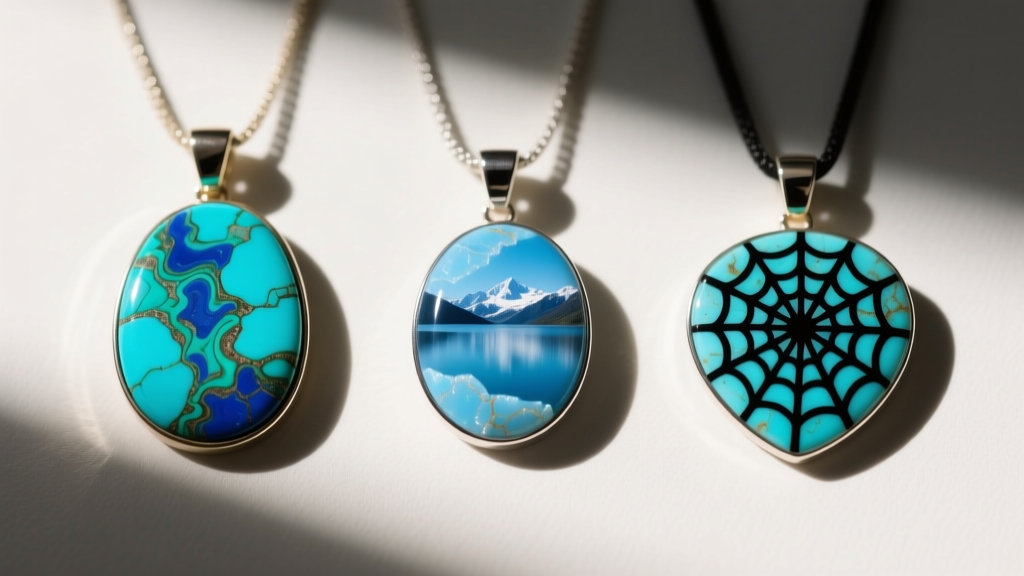
Metallurgical Pairings for Necklace Chains
The metal you choose for your necklace chain and pendant bezel interacts directly with the visual and chemical properties of Kingman turquoise. Because turquoise is sensitive to chemical reactions, metal selection is both an aesthetic and a preservative decision.
- Oxidized Sterling Silver (925): The traditional choice for Southwestern jewelry. The darkened crevices of oxidized silver perfectly mirror and enhance the brown and black limonite spiderweb matrix of the Kingman stone. Silver is relatively inert and will not chemically damage the turquoise.
- 14k or 18k Yellow Gold: Yellow gold creates a striking, high-contrast backdrop that pulls out the subtle green undertones and brass-colored pyrite flecks unique to Kingman. Gold is entirely non-reactive, making it the safest choice for heirloom-quality, unstabilized natural stones.
- Copper and Brass (Use with Caution): While copper bezels offer a rustic, artisanal aesthetic, raw copper oxidizes rapidly when exposed to skin moisture, forming verdigris (copper carbonate). If your Kingman pendant is porous or poorly stabilized, this green oxidation can permanently stain the edges of the cabochon. Always ensure a physical barrier (like a sealed backing) exists between raw copper and the stone.
Pricing Tiers and Authentication Protocols
Navigating the pricing of a Kingman turquoise necklace requires an understanding of carat weight, treatment disclosure, and matrix rarity. As of current market valuations, commercial-grade, epoxy-stabilized Kingman with heavy, muddy matrix typically retails between $2 and $6 per carat. Conversely, high-grade, natural (unstabilized) Kingman featuring tight, golden pyrite spiderweb and a vivid blue base color can command $25 to $60+ per carat, rivaling premium gemstones.
When authenticating a potential purchase, employ these actionable protocols:
- The UV Blacklight Test: Shine a 365nm UV flashlight on the stone. Polymer-based epoxies and certain synthetic resins will often fluoresce a milky blue or green, whereas natural turquoise and Zachery-treated stones will remain inert or show only faint, natural mineral fluorescence.
- Loupe the Matrix: Use a 10x triplet loupe to examine where the matrix meets the blue turquoise. In natural stones, the boundary is sharp and distinct. In dyed or reconstituted stones, you will often see color bleeding or a 'halo' effect where dye has migrated into the porous host rock.
- Request FTC-Compliant Disclosure: According to the Federal Trade Commission (FTC) Jewelry Guides, sellers are legally required to disclose any treatments that significantly affect the stone's value, durability, or appearance. Always demand written confirmation of whether the stone is natural, Zachery-stabilized, or polymer-impregnated.
By prioritizing material transparency, understanding the geological signatures of the Cerbat Mountains, and pairing your stone with the correct metallurgy, you can secure a Kingman turquoise necklace that is not only visually breathtaking but structurally engineered to last generations.


