Anatomy of an Episcopal Cross Necklace: A Technical Guide
Explore the technical anatomy of an episcopal cross necklace. Discover material grades, sizing metrics, cord specifications, and pricing tiers.

The Liturgical and Historical Anatomy
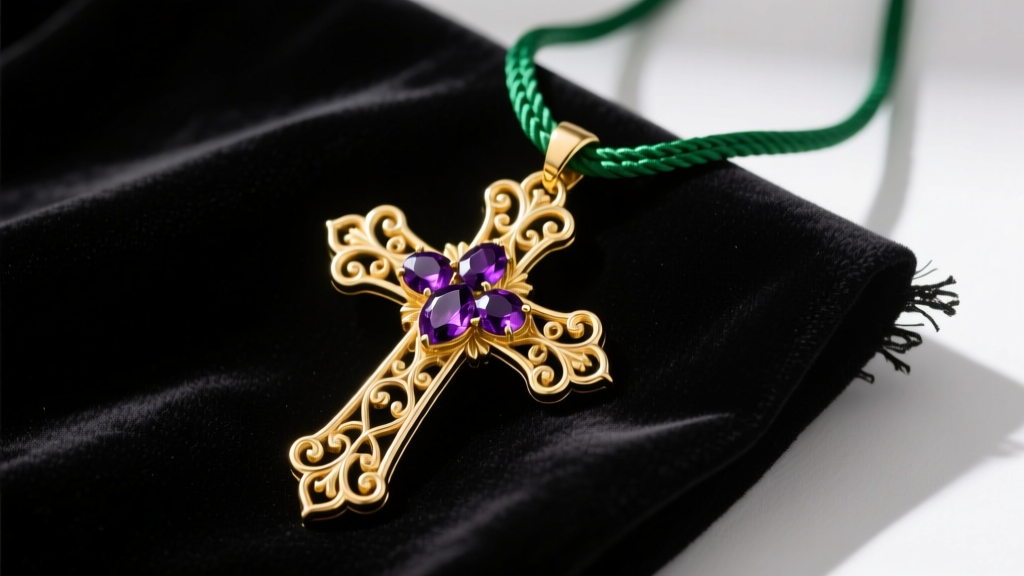
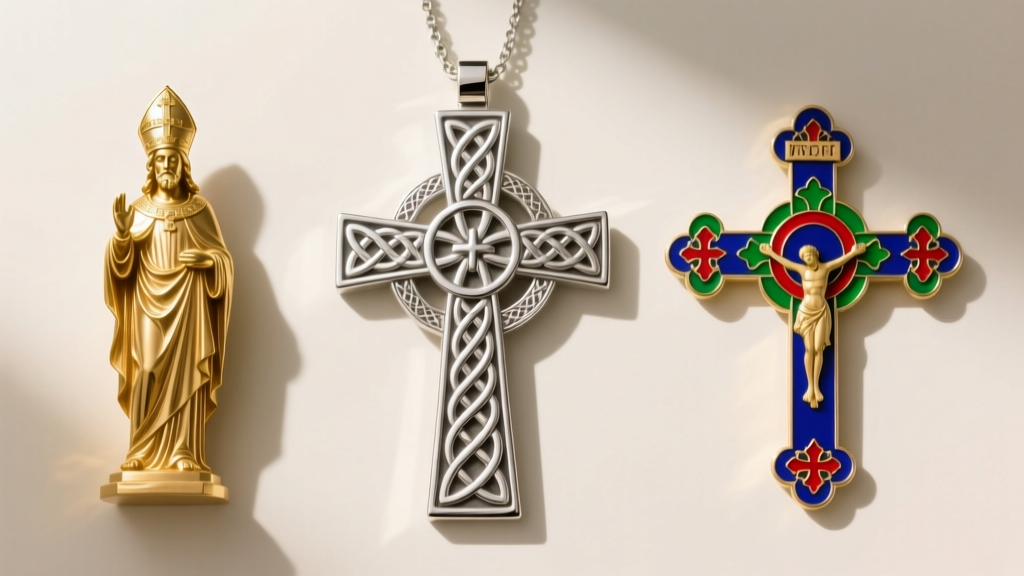
An episcopal cross necklace, historically referred to as a pectoral cross, is far more than a standard religious pendant. Worn primarily by bishops and high-ranking clergy within the Anglican, Episcopal, and Catholic traditions, it serves as a definitive marker of ecclesiastical authority. Unlike the standard crucifix, which emphasizes the suffering of Christ, many traditional Episcopal crosses feature the Christus Rex motif—depicting Christ robed, crowned, and reigning in majesty. Alternatively, they may feature intricate Celtic knotwork, reflecting the deep Anglo-Celtic roots of the Anglican communion, or remain entirely unadorned to emphasize the geometry of the sacrifice.
According to historical liturgical guidelines cataloged by institutions like the Metropolitan Museum of Art, the pectoral cross evolved from a simple reliquary worn by early monks into a highly codified vestment by the late Middle Ages. Today, the modern episcopal cross necklace balances this rich historical weight with contemporary metallurgical standards, requiring precise engineering to ensure it rests correctly over liturgical garments like the chasuble or rochet.
Material Specifications and Metallurgy
Because an episcopal cross necklace is worn daily and often over heavy vestments, the choice of metal dictates both its longevity and its drape. Mass-produced fashion jewelry techniques are insufficient for a piece that must endure decades of continuous wear.
Precious Metals vs. Plated Alternatives
- Sterling Silver (925): The most common baseline. However, bare silver tarnishes rapidly when exposed to skin oils and humidity. High-grade Episcopal crosses utilize a thick rhodium flash (at least 0.75 microns) over the 925 base to provide a brilliant, tarnish-resistant white finish.
- 14k vs. 18k Gold: While 18k gold (75% pure gold) offers a richer, deeper yellow hue highly prized in liturgical settings, it is softer (Vickers hardness of ~140 HV). For a heavy pectoral cross subject to snagging on vestments, 14k gold (Vickers hardness of ~160 HV) provides superior structural integrity, particularly around the bail and prong settings.
- Heavy Vermeil: For budget-conscious dioceses, vermeil is acceptable only if it meets the strict 2.5-micron minimum thickness of 14k or 18k gold over a sterling silver core. Anything thinner will wear through to the silver base within months of daily friction.
Gemstone Inlays and Enameling
The traditional gemstone of the episcopacy is the amethyst, symbolizing sobriety and spiritual wisdom. When setting amethyst cabochons into a heavy cross, bezel settings are mandatory. Prong settings frequently fail under the dynamic load of a swinging pendant. For enameled crosses, champlevé (where enamel is packed into carved troughs in the metal) is vastly superior to cloisonné for pectoral crosses, as it withstands the minor impacts of daily wear without cracking or flaking.
Suspension Mechanics: Cords vs. Chains
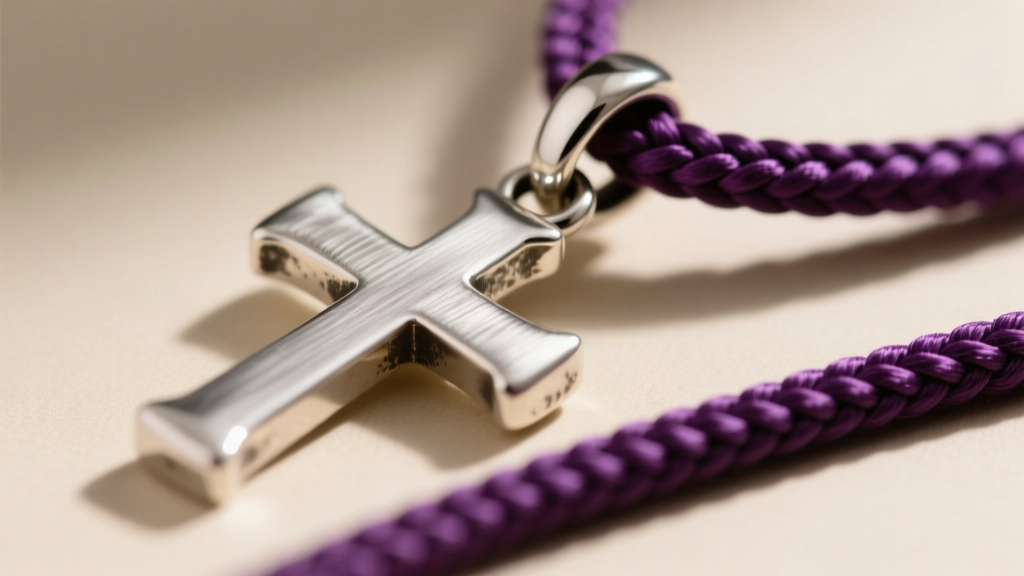
The suspension system of an episcopal cross necklace is a critical point of failure. A standard 5-inch solid silver cross can easily weigh between 40 and 80 grams. Standard jewelry chains will snap under this dynamic load. Furthermore, liturgical tradition dictates specific suspension styles based on rank and season.
| Suspension Type | Material & Spec | Weight Capacity | Liturgical Use Case |
|---|---|---|---|
| Braided Silk Cord | 100% Mulberry Silk, 4mm diameter | Up to 120g | Green/Gold for Bishops; Purple for other clergy; Black for Good Friday. |
| Curb Chain | Solid 925 Silver or 14k Gold, 3.5mm width | Up to 90g | Everyday wear, non-liturgical administrative duties, or worn over a cassock. |
| Rope Chain | Hollow or Semi-Solid, 2.5mm width | Under 35g | Not recommended for heavy traditional crosses; suitable only for minimalist modern designs. |
Clasp Engineering: If using a metal chain, the spring-ring clasp is entirely inadequate for a 50g+ pendant. The internal spring mechanism will fatigue and fail. A heavy-duty lobster clasp with a reinforced soldered jump ring is the only secure option. For silk cords, the traditional sliding macramé knot or a custom-turned wooden toggle ensures the necklace can be adjusted to hang precisely at the sternum, regardless of the thickness of the underlying vestments.
Dimensional Standards and Ergonomics
The physical dimensions of an episcopal cross necklace must strike a balance between visibility and ergonomics. According to historical vestment guidelines referenced by the Encyclopedia Britannica, the pectoral cross must be large enough to be seen over the chasuble but not so large that it becomes a physical hazard or damages delicate liturgical silks.
- Standard Height: 4.0 to 5.5 inches (10 to 14 cm). Crosses exceeding 6 inches are generally reserved for ceremonial processional use rather than personal wear.
- Standard Width: 3.0 to 4.5 inches (7.5 to 11.5 cm) across the transom.
- Optimal Weight: 35 to 65 grams. Crosses exceeding 80 grams require a wider cord (5mm+) to distribute the pressure across the cervical spine; otherwise, the wearer will experience significant neck fatigue during long services.
- Bail Proportions: The bail (the loop connecting the cross to the chain) must have an internal diameter of at least 6mm to accommodate thick silk cords without causing abrasive fraying.
Pricing Tiers and Artisan Sourcing (2026 Market)
Sourcing a high-quality episcopal cross necklace requires navigating a market divided between mass-market religious supply houses and specialized liturgical artisans. Here is a technical breakdown of what to expect at various price points in the current market:
Entry-Level ($150 - $400)
At this tier, expect cast 925 sterling silver with minimal hand-finishing. Gemstones are typically synthetic amethyst or glass. The crosses are often lightweight (under 30g) and may feature thin gold plating rather than true vermeil. Suspension cords are usually synthetic blends rather than pure silk.
Mid-Tier Artisan ($500 - $1,800)
This is the sweet spot for most active clergy. Crosses are solid cast or die-struck 925 silver or 14k gold, weighing between 40g and 60g. You will find genuine, bezel-set amethyst cabochons, hand-applied champlevé enamel, and high-quality braided silk cords with sterling silver end-caps and toggles. Brands specializing in Anglican and Catholic liturgical arts dominate this space.
Heirloom & Bespoke ($2,500 - $8,000+)
Commissioned pieces crafted in solid 18k gold or platinum. These feature complex repoussé work, intricate filigree, and ethically sourced precious gemstones (sapphires, rubies, and high-grade amethyst). The engineering includes hidden hinges for reliquary compartments and custom-forged chains.
Care, Maintenance, and Failure Modes
Proper maintenance of an episcopal cross necklace requires understanding the material vulnerabilities of liturgical jewelry.
- Ultrasonic Cleaner Warnings: Never place an enameled or gemstone-set pectoral cross in an ultrasonic cleaner. The high-frequency vibrations will shatter champlevé enamel and loosen the adhesive backing of bezel-set cabochons.
- Silk Cord Degradation: Pure silk is a protein fiber that degrades when exposed to acidic sweat and UV light. Inspect the cord at the bail friction point every six months. If fraying is visible, replace the cord immediately to prevent catastrophic dropping.
- Polishing Protocols: For oxidized silver crosses (where the recessed areas are intentionally blackened to highlight the relief), use a microfiber cloth rather than liquid silver dip. Liquid dips will strip the intentional oxidation, leaving the piece looking flat and overly bright.
By understanding the metallurgy, suspension mechanics, and ergonomic requirements of the episcopal cross necklace, clergy and collectors can invest in a piece that is not only liturgically appropriate but engineered to last a lifetime of active ministry.


