Expert Care for Your Custom Charm Necklace Name Pendant
Expert cleaning and maintenance tips to keep your custom charm necklace name pendant tarnish-free, including safe solutions for gold, silver, and enamel.

The Anatomy of a Name Charm: Why Specialized Care Matters
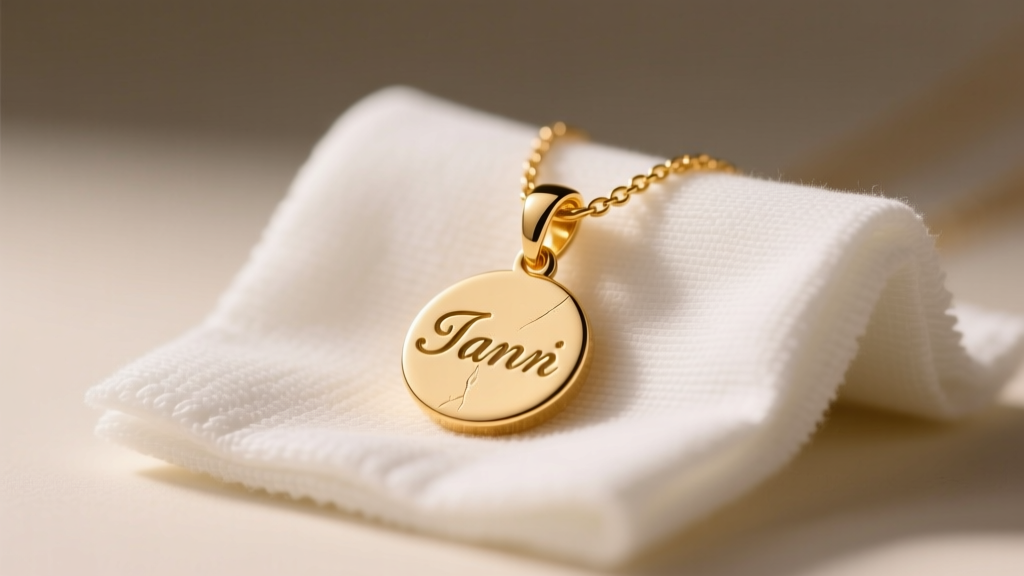
When you invest in a personalized piece, understanding its physical structure is the first step toward proper maintenance. A custom charm necklace name pendant is uniquely susceptible to dirt accumulation due to its typography. Script fonts, which are highly popular for nameplate jewelry, feature tight interior loops (such as the negative space inside an 'e', 'a', or 'o') and deep undercuts where sebum, cosmetic residue, and environmental dust become trapped. Unlike a simple geometric pendant, the intricate laser-cut or die-struck edges of a name charm create microscopic crevices that standard wiping cannot reach.
The chain you pair with your name charm also plays a role in maintenance. Rope chains, while beautiful, are notorious for trapping skin cells and lotions within their twisted links, which then transfer to the charm's bail. Box chains and flat cable chains are significantly easier to clean and create less friction against the nameplate's jump ring, reducing the accumulation of abrasive metal dust over time.
Furthermore, the connection point—typically a small soldered jump ring or a hidden bail attached to the top of the nameplate—experiences high friction against the chain. Over time, this friction generates microscopic metal dust that mixes with skin oils, creating a stubborn, dark paste that requires targeted intervention. According to the Jewelers of America, regular maintenance of these high-friction zones is critical to preventing premature wear and structural failure of the solder joints.
Material-Specific Cleaning Protocols
The metallurgical composition of your jewelry dictates the chemical cleaners you can safely use. Applying a universal cleaning approach is the fastest way to ruin a bespoke piece.
Sterling Silver & Oxidation Management
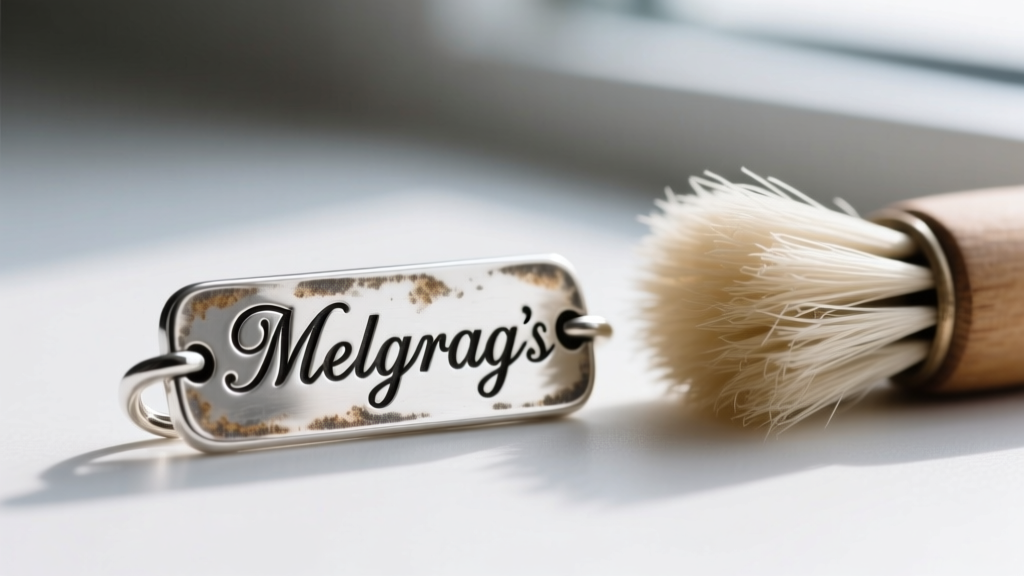
Sterling silver (92.5% silver, 7.5% copper) is highly reactive to sulfur compounds in the air, leading to silver sulfide tarnish. For a sterling silver charm necklace name design, avoid harsh chemical dips containing thiourea. While these dips instantly remove tarnish, they strip the copper alloy's natural patina and can cause micro-pitting on the surface. Instead, use a phosphate-free mild dish soap mixed with warm distilled water. Agitate gently with a baby toothbrush (which has ultra-soft bristles that won't scratch the silver) to dislodge debris from the script lettering.
14k/18k Gold & Gold Vermeil Precautions
Solid gold alloys (14k or 18k) are relatively inert and can withstand gentle surfactant cleaning. However, gold vermeil—which by US FTC standards must feature at least 2.5 microns of gold over a sterling silver base—requires extreme caution. Using abrasive polishing cloths or ultrasonic cleaners on vermeil will rapidly degrade the gold layer, exposing the silver core to rapid oxidation. Clean vermeil name charms using only a damp microfiber cloth and a drop of mild soap, patting dry immediately.
Enamel & Gemstone Inlays
Many modern nameplate charms incorporate cold enamel or vitreous enamel for color blocking. Vitreous enamel is essentially fused glass; it is highly susceptible to thermal shock. Never run an enamel-inlaid name charm under hot water and then immediately rinse it with cold water, as the rapid temperature shift will cause the enamel to craze or fracture. For gemstone-inlaid initials (such as turquoise or opal), avoid all liquid soaps, as these porous stones will absorb the chemicals and alter their optical properties. The Tiffany & Co. Care Guide specifically recommends dry, soft-bristle brushing for porous gemstone settings.
The Dangers of Ultrasonic Cleaners for Nameplate Charms
Ultrasonic jewelry cleaners operate by generating high-frequency sound waves (typically 40kHz to 45kHz) that create microscopic cavitation bubbles in a liquid solvent. When these bubbles collapse, they produce localized shockwaves that blast dirt away from metal surfaces. While excellent for solid diamond solitaires, ultrasonic cleaners are notoriously destructive for nameplate jewelry.
The intense vibrations can easily fracture cold enamel fills, shatter tension-set gemstones, and most importantly, vibrate the delicate soldered jump rings loose from the nameplate. Because a charm necklace name pendant relies on a single, often tiny, soldered connection point to bear the weight of the entire plate, subjecting it to ultrasonic cavitation drastically increases the risk of the charm snapping off the chain and being lost down a drain.
Daily Wear & Environmental Failure Modes
Preventative care is vastly superior to corrective cleaning. Understanding the specific environmental hazards your necklace faces daily will help you establish a safe wearing routine.
| Hazard Source | Chemical Compound | Effect on Name Charm | Prevention Strategy |
|---|---|---|---|
| Swimming Pools | Sodium Hypochlorite (Chlorine) | Causes stress corrosion cracking in gold alloys; permanently whitens solder joints. | Always remove before swimming; rinse immediately if exposed. |
| Perfumes & Body Sprays | Alcohol & Essential Oils | Degrades adhesive bonds in gemstone settings; leaves a sticky film that traps dust in letter grooves. | Apply fragrance first; wait 5 minutes before putting on the necklace. |
| Perspiration | Lactic Acid & Urea | Accelerates copper oxidation in sterling silver and lower-karat gold alloys. | Wipe the pendant with a dry cloth immediately after heavy exertion. |
| Skincare Products | Zinc Oxide & Titanium Dioxide | Leaves a stubborn, chalky white residue deep inside the cursive loops of the nameplate. | Apply lotions and sunscreens at least 10 minutes before dressing. |
Step-by-Step Deep Cleaning Routine
For a thorough, safe cleaning of your personalized jewelry, follow this professional-grade protocol:
- Preparation: Line a small glass bowl with a soft silicone mat or folded cloth to prevent the charm from scratching against the hard glass bottom.
- Soaking: Fill the bowl with warm (not hot) distilled water and three drops of phosphate-free, non-moisturizing dish soap. Let the charm necklace name piece soak for exactly 5 to 7 minutes to soften sebum and cosmetic buildup.
- Agitation: Using an extra-soft baby toothbrush, gently brush the pendant. Focus on the negative space inside the letters and the jump ring connection. Brush in a single direction to avoid pushing dirt deeper into micro-scratches.
- Rinsing: Rinse thoroughly under a gentle stream of distilled water. Avoid tap water, as the dissolved minerals (calcium and magnesium) will leave hard water spots that are difficult to remove from polished metal.
- Drying: Pat the chain and charm dry with a lint-free microfiber cloth. To remove trapped moisture from the tight loops of the script font, use a can of compressed air (held at least 6 inches away) or a hairdryer on the 'cool' setting.
Storage Solutions to Prevent Micro-Scratches and Tarnish
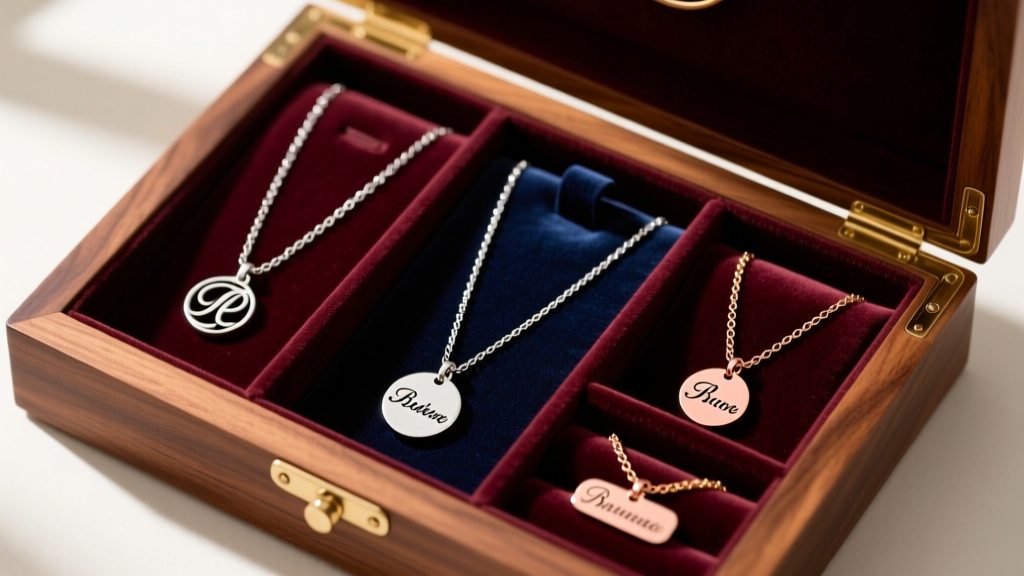
How you store your jewelry when it is not being worn is just as critical as how you clean it. Tossing a delicate nameplate necklace into a communal jewelry box guarantees micro-scratches from harder gemstones and accelerates tarnishing due to trapped ambient humidity.
Store your charm necklace name pendant in an individual, airtight polyethylene zip bag. Squeeze out as much air as possible before sealing. For silver pieces, include a 3M anti-tarnish strip or a small packet of silica gel to absorb moisture and neutralize sulfur gases. For long-term storage, consider investing in Pacific Silvercloth or similar chemically treated flannel bags. These fabrics are embedded with microscopic silver particles that act as a sacrificial anode, intercepting and neutralizing hydrogen sulfide and other corrosive gases before they can reach your sterling silver nameplate.
Never use polyvinyl chloride (PVC) plastic wraps or standard rubber bands to secure your jewelry, as PVC off-gasses corrosive chemicals and rubber contains high levels of sulfur, which will cause severe, localized black tarnishing on contact. Always lay the necklace flat or hang it; coiling a fine box chain or cable chain tightly can cause permanent kinking, which weakens the structural integrity of the links and distracts from the beauty of the nameplate charm.


