Troubleshooting Your Gold Necklace Feather: Fixes & Care Guide
Learn how to troubleshoot, repair, and maintain your gold necklace feather. Expert fixes for bent barbs, tangled chains, and clasp failures.

The Unique Vulnerabilities of Feather Pendants
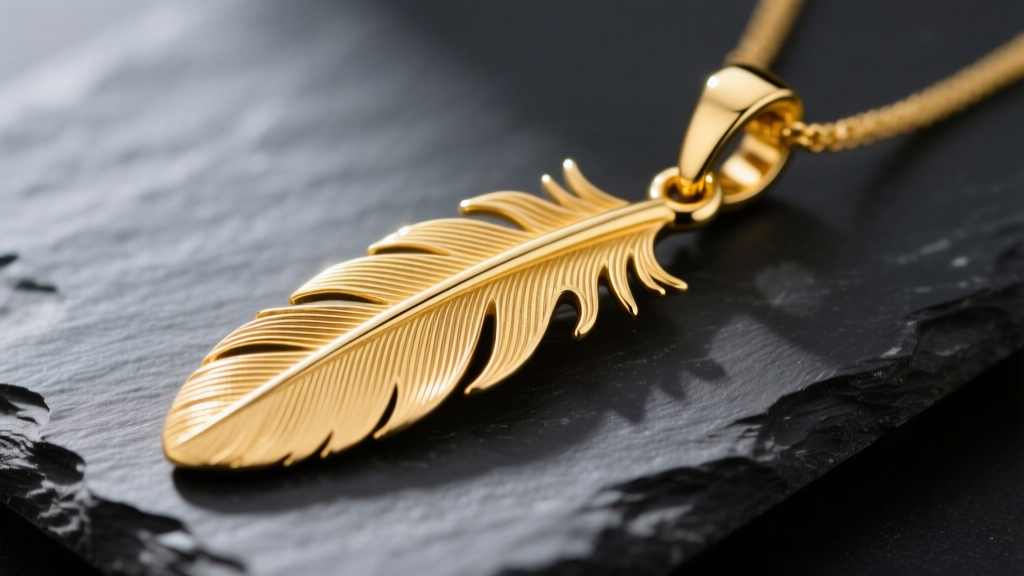
A gold necklace feather is a timeless, nature-inspired motif that carries deep symbolism, representing freedom, travel, and spiritual connection. However, from a structural engineering perspective, the feather design is inherently fragile. The intricate barbs, the delicate central quill, and the often-weightless profile make these pendants highly susceptible to bending, snagging, and bail wear. Unlike solid geometric pendants, a feather's expansive surface area and thin profile mean that even minor pressure—like sleeping in the necklace or hugging someone tightly—can permanently distort the gold.
In this comprehensive troubleshooting guide, we will dissect the most common failure points of gold feather pendants, explore the metallurgy that dictates their durability, and provide actionable, expert-level repair and maintenance protocols to keep your jewelry in pristine condition.
Understanding Gold Alloys and Tensile Strength
Before attempting any repairs, you must identify the karat of your gold necklace feather. The purity of the gold directly dictates its malleability and tensile strength. According to the Gemological Institute of America (GIA), pure 24k gold is far too soft for intricate jewelry and is rarely used for detailed pendants. Most feather pendants are cast in either 14k or 18k gold.
- 18k Gold (75% Pure): Offers a rich, luxurious color but is highly malleable. 18k feather barbs will bend easily under pressure and are prone to work-hardening and snapping if repeatedly bent back and forth.
- 14k Gold (58.3% Pure): Alloyed with metals like copper, silver, and zinc, 14k gold provides superior tensile strength. It is the ideal choice for delicate feather designs, as the barbs can withstand minor impacts without permanently deforming.
- 10k Gold (41.7% Pure): Extremely durable and stiff, but lacks the warm luster of higher karats. Bending 10k gold back into shape requires significant force and carries a high risk of snapping the metal.
Diagnosing Common Feather Pendant Issues
When your pendant loses its original shape or luster, accurate diagnosis is the first step toward restoration. Below is a diagnostic matrix for the most frequent problems encountered with gold feather necklaces.
| Issue | Primary Cause | DIY Fix Viability | Recommended Action |
|---|---|---|---|
| Bent Outer Barbs | Snagging on clothing, sleeping in the necklace | High | Gently reshape with nylon-jaw pliers |
| Warped Central Quill | Heavy impact, dropping, or sitting on the pendant | Low | Professional bench jeweler intervention |
| Bail Thinning / Grooving | Friction from a sharp-edged chain (e.g., box chain) | None | Solder a new jump ring or replace the bail |
| Loss of Antiquing / Oxidation | Ultrasonic cleaning, harsh chemicals, polishing cloths | None | Professional re-oxidation or liver of sulfur application |
Chain Selection and Bail Friction Troubleshooting
A frequent, overlooked issue with a gold necklace feather is premature wear at the bail (the loop that connects the pendant to the chain). The bail acts as a fulcrum, enduring constant friction. If you pair a soft 18k gold feather pendant with a sharp-edged chain, such as a box chain or a square-link chain, the chain will act like a microscopic saw. Over 12 to 24 months of daily wear, the chain will cut a deep groove into the bail, eventually causing the pendant to snap off and be lost.
The Ideal Chain Pairings
To troubleshoot and prevent bail wear, switch to a chain with a smooth, rounded profile. A 1.0mm to 1.2mm wheat chain or a round cable chain provides excellent drape, complements the organic lines of the feather, and minimizes abrasive friction. Avoid snake chains entirely; while they look sleek, they kink easily, and a kinked snake chain will pull awkwardly on the feather's bail, causing the pendant to sit crookedly on the chest.
Step-by-Step Repair: Straightening Bent Gold Barbs
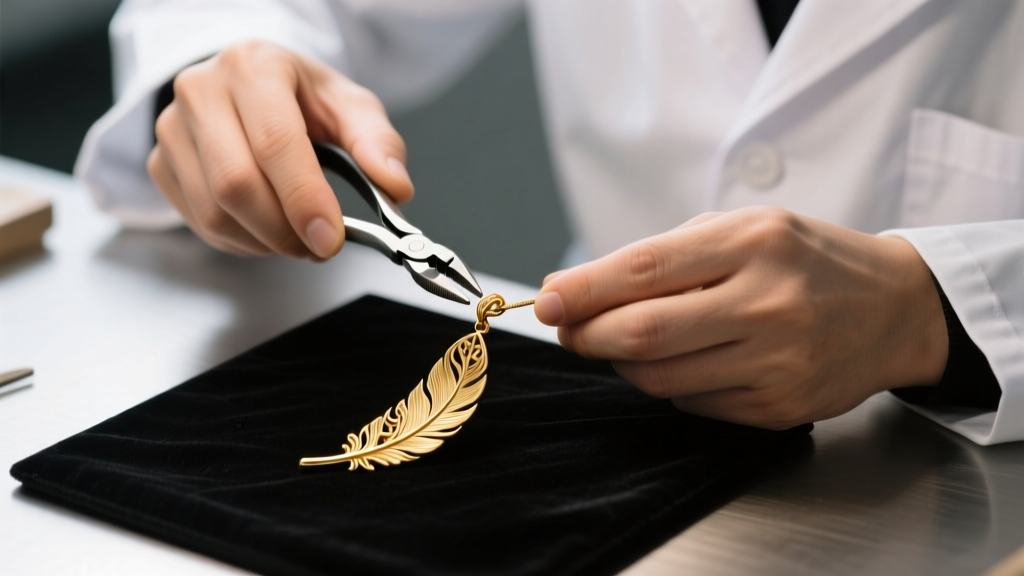
If the outer barbs of your feather have become bent or splayed, you can perform minor corrections at home. Warning: Never use standard steel jewelry pliers directly on gold. Steel is harder than gold and will leave permanent, deep gouges in the polished surface of your pendant.
- Prepare Your Tools: Acquire a pair of nylon-jaw pliers (brands like Eurotool or Swanstrom are industry standards) and a soft microfiber cloth.
- Assess the Bend: Lay the pendant flat on a clean, soft surface. Identify the exact point where the barb deviates from the central quill.
- Apply Gentle Pressure: Wrap the nylon jaws around the bent barb. Apply slow, steady pressure to coax the gold back into alignment. Do not yank or over-bend.
- Beware of Work-Hardening: Gold work-hardens when bent. If you bend a barb back and forth multiple times, the molecular structure tightens, and the gold will snap. Make your adjustment in one or two smooth motions.
- Burnishing (Optional): If minor surface scratches occurred during the bending, a jeweler can use an agate burnisher to compress the gold molecules back together, restoring a high-polish finish without removing any metal.
Cleaning Protocols: Protecting Enamel and Oxidation
Many gold necklace feather designs utilize black rhodium plating, oxidation, or vitreous enamel in the recessed grooves to create contrast and make the individual barbs visually pop. Cleaning these enhanced feathers requires strict avoidance of standard automated jewelry cleaners.
Expert Warning: Never place an oxidized or enameled gold feather pendant in an ultrasonic cleaner. The high-frequency cavitation bubbles will strip the black oxidation from the grooves and can cause microscopic fractures in fired enamel, leading to catastrophic chipping.
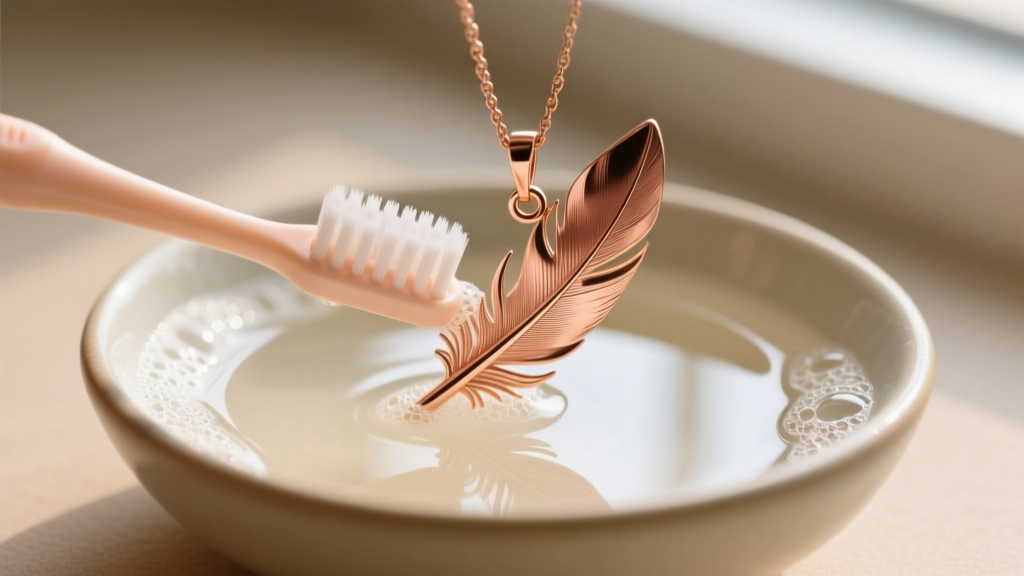
According to Jewelers of America, the safest cleaning method for textured or treated gold jewelry is a manual, gentle wash. Mix a few drops of phosphate-free dish soap (like Dawn) into a bowl of lukewarm water. Let the pendant soak for three minutes to loosen skin oils and lotions. Then, use a soft-bristled baby toothbrush to gently agitate the grooves. Rinse under a gentle stream of tepid water, ensuring the drain is securely plugged, and pat dry with a lint-free cloth. Do not use silver polishing cloths, as they contain mild abrasives that will rub away the intentional antiquing.
When to Seek Professional Jeweler Intervention
While minor barb straightening and routine cleaning can be managed at home, certain structural failures require the heat and precision of a professional jeweler's bench. You must take your gold necklace feather to a certified bench jeweler if you encounter any of the following:
- A Fractured Central Quill: The quill is the spine of the pendant. If it cracks, it requires laser welding. Traditional torch soldering will melt the delicate surrounding barbs due to the rapid heat transfer across the thin gold sheet.
- Severe Warping: If the entire pendant has been crushed or twisted out of its 2D plane, a jeweler must use a rawhide mallet and a steel bench block to carefully planish the metal back to flat without stretching it.
- Bail Replacement: If the bail has worn paper-thin, a jeweler will saw it off, clean the joint, and solder a new, heavy-duty 14k gold jump ring or custom-cast bail in its place.
By understanding the metallurgical properties of your gold necklace feather and adopting mindful wearing and cleaning habits, you can preserve the intricate artistry of the piece for decades. Treat the pendant as a delicate textile rather than a solid block of metal, and it will continue to drape beautifully and retain its symbolic elegance.


