How to Authenticate and Restore a Vintage Red Coral Necklace
Learn how to authenticate, clean, and restring a vintage red coral necklace. Expert troubleshooting for dyed fakes, chalking, and silk cord failure.

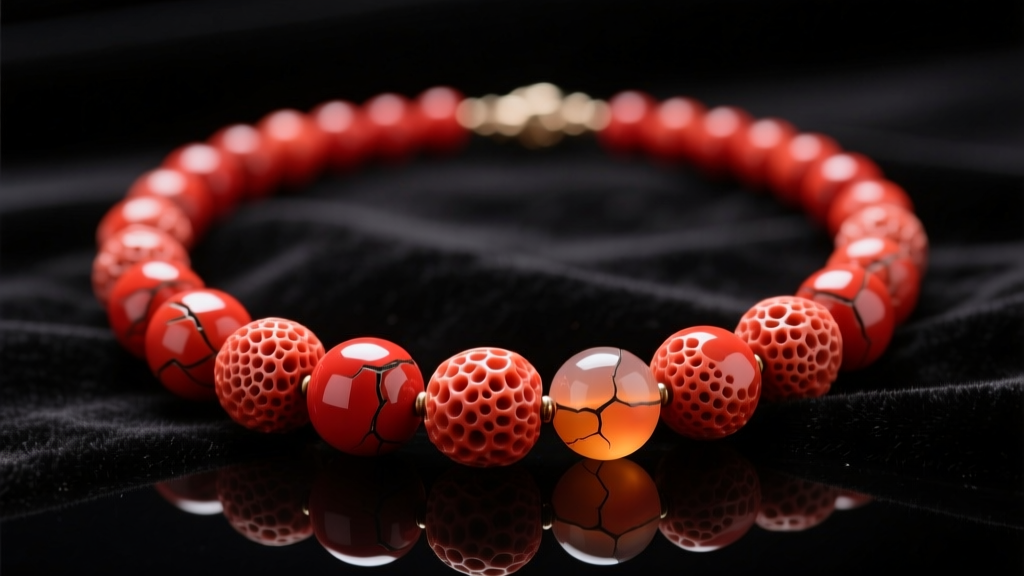
Owning a vintage red coral necklace is a privilege. These organic gems, harvested primarily from the Mediterranean and Asian seas, carry a rich history and a distinct, warm hue that synthetic stones simply cannot replicate. However, because coral is a porous, organic material composed primarily of calcium carbonate (CaCO3), it is highly susceptible to environmental damage, improper cleaning, and structural failure over time. Furthermore, the market is flooded with convincing imitations. Whether you have inherited a family heirloom or sourced a piece from an estate sale, troubleshooting its authenticity and physical condition is critical before wearing or investing in repairs.
The Authentication Dilemma: Real vs. Dyed vs. Synthetic
The most common issue collectors face is determining whether a vintage red coral necklace is genuine, dyed, or entirely synthetic. Unscrupulous sellers frequently pass off dyed howlite, dyed calcite, or even red-tinted resin as high-value Mediterranean coral (Corallium rubrum). To troubleshoot this, you must rely on gemological observation rather than guesswork.
Under a 10x jeweler's loupe, genuine red coral will exhibit distinct longitudinal striations and a subtle, wood-grain-like texture. These are the natural growth rings of the coral polyps. In contrast, dyed howlite will show a web-like matrix that absorbs dye unevenly, often resulting in concentrated dark spots in the micro-crevices. Glass imitations will reveal spherical gas bubbles and swirl marks, while plastic will exhibit mold lines and a completely uniform, lifeless color distribution.
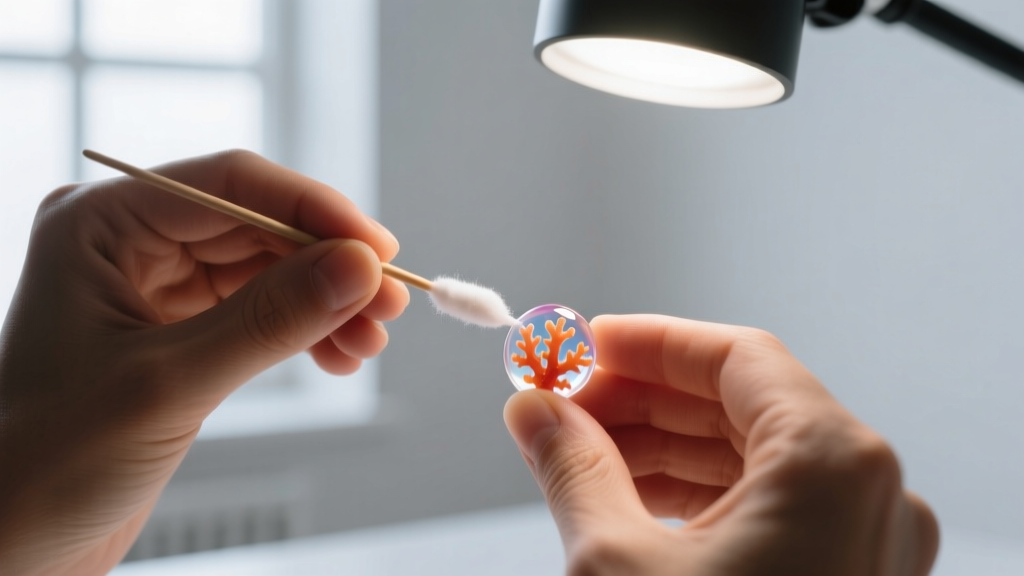
For a definitive test on suspected dyed stones, perform an acetone swab test. Dip a cotton swab in pure, unadulterated acetone (standard nail polish remover often contains oils and conditioners that will ruin the test) and rub it gently on an inconspicuous area of the bead, such as near the drill hole. If the swab picks up a red or pink tint, the stone has been artificially dyed. Genuine, untreated red coral will not bleed color. For a more advanced, albeit slightly destructive, test, a hot point applied to a hidden flake will emit a smell akin to burning hair or seashell (calcium) if genuine, whereas plastic or resin will smell acrid and chemical. For comprehensive gemological data, the GIA Gem Encyclopedia remains the gold standard for identifying organic gemstones.
Troubleshooting Common Damage: Chalking and Cracking
Coral ranks a mere 3.5 to 4.0 on the Mohs hardness scale, making it exceptionally soft compared to quartz or diamonds. Over decades of wear, vintage red coral necklaces frequently suffer from two specific failure modes: chalking and micro-fracturing.
Chalking occurs when the coral loses its natural moisture and oils due to prolonged exposure to dry environments, harsh soaps, or prolonged sunlight. The surface turns dull, opaque, and chalky white. Unlike metals that can be polished, you cannot simply buff away chalking without removing significant layers of the gem. Mild rehydration using a microscopic application of mineral oil on a microfiber cloth can temporarily restore luster, but severe chalking is often irreversible.
Micro-fracturing is usually the result of bead-on-bead friction. If the original stringing lacked knots between the beads, the soft coral will grind against itself, enlarging the drill holes and creating internal stress fractures. If you notice the drill holes looking 'chewed' or asymmetrical, the necklace requires immediate restringing to prevent the beads from snapping under their own weight.
The Restringing Protocol: Preventing Future Breakage
Never wear a vintage coral necklace that has not been professionally restrung within the last decade. Silk degrades over time, losing its tensile strength and becoming brittle. When restringing heavy organic beads, the choice of cord and knotting technique is paramount. Standard nylon is too abrasive and will act like a saw against the soft calcium carbonate drill holes over time.
| Material | Best For | Pros & Cons |
|---|---|---|
| Griffin 100% Silk (Size #2 or #3) | Traditional vintage restoration, beads with 0.6mm holes | Authentic period-correct look; gentle on drill holes. Stretches over time and requires annual checking. |
| Silk-Nylon Blend (Size #4) | Heavier, large-carved coral beads (12mm+) | Higher tensile strength than pure silk; resists stretching. Slightly stiffer drape. |
| Wire (Beading Wire) | NEVER use on vintage coral | Will act as a saw and destroy the soft drill holes from the inside out. |
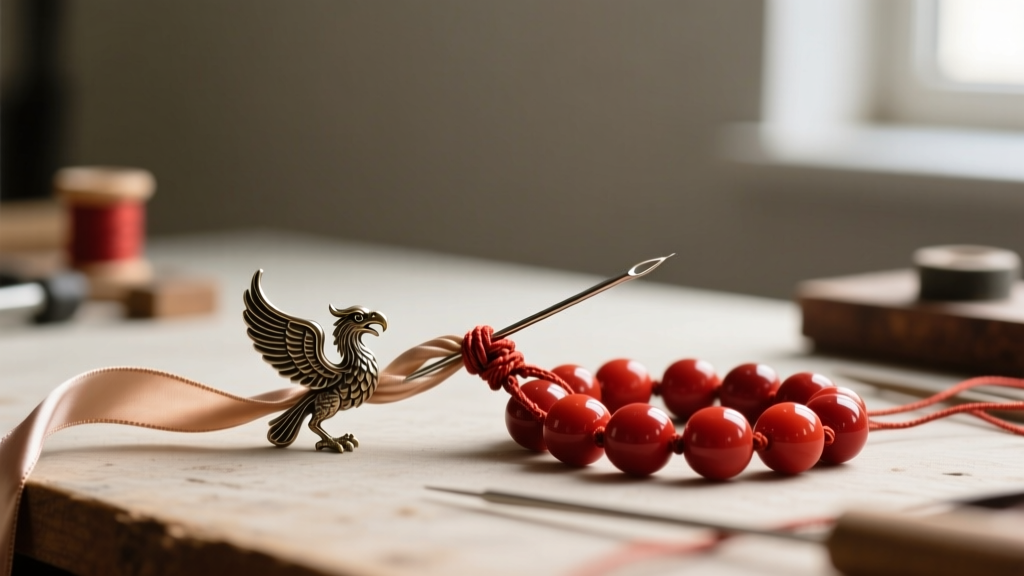
Always insist on French knots between every single bead. This not only prevents the abrasive bead-on-bead friction but also ensures that if the silk snaps, you only lose one bead rather than the entire necklace scattering across the floor. Ensure the jeweler uses a twisted wire beading needle to avoid forcing a thick metal eye through the fragile drill holes, which can cause the bead to split.
Safe Cleaning Methods for Porous Organics
The most catastrophic mistake a new collector can make is placing a vintage red coral necklace in an ultrasonic cleaner or using commercial jewelry dips. Coral is highly reactive to acids and harsh chemicals. Ammonia, bleach, and even the mild acids found in some commercial silver cleaners will instantly etch the surface of the coral, leaving it pitted and permanently ruined.
To safely clean your necklace, use a barely damp, lint-free microfiber cloth with distilled water. Gently wipe each bead individually, avoiding the silk knots to prevent water stains and rot. Never submerge the necklace in water. After wiping, allow the piece to air dry completely flat on a towel before storing it in a soft pouch. Keep it away from direct heat sources, which will accelerate dehydration and cracking.
Navigating CITES and Market Valuation
When evaluating or attempting to sell a vintage red coral necklace, you must be aware of international trade laws. Due to overharvesting and ocean acidification, many coral species are protected under CITES regulations. Mediterranean red coral (Corallium rubrum) is listed in CITES Appendix III, meaning international export requires specific permits.
However, genuine antique pieces (typically defined as pre-1947) often qualify for the 'antique exemption,' allowing them to be traded more freely provided you have documented provenance or an appraisal verifying the age. When valuing your piece, note that deep, uniform 'oxblood' red commands the highest premium, while pale pink 'angel skin' is a close second. Pieces featuring intricate, hand-carved cameos or rose-cut beads from the Victorian or Art Deco eras will carry a significant historical premium over simple, round-bead strands. Always seek an appraisal from a certified gemologist who specializes in organic and antique materials to ensure you understand both the legal and financial worth of your treasure.


