How to Clean a Chunky Necklace Sterling Silver Piece Safely
Learn how to safely clean, polish, and store your chunky necklace sterling silver. Expert tips to remove tarnish and prevent heavy chain damage.

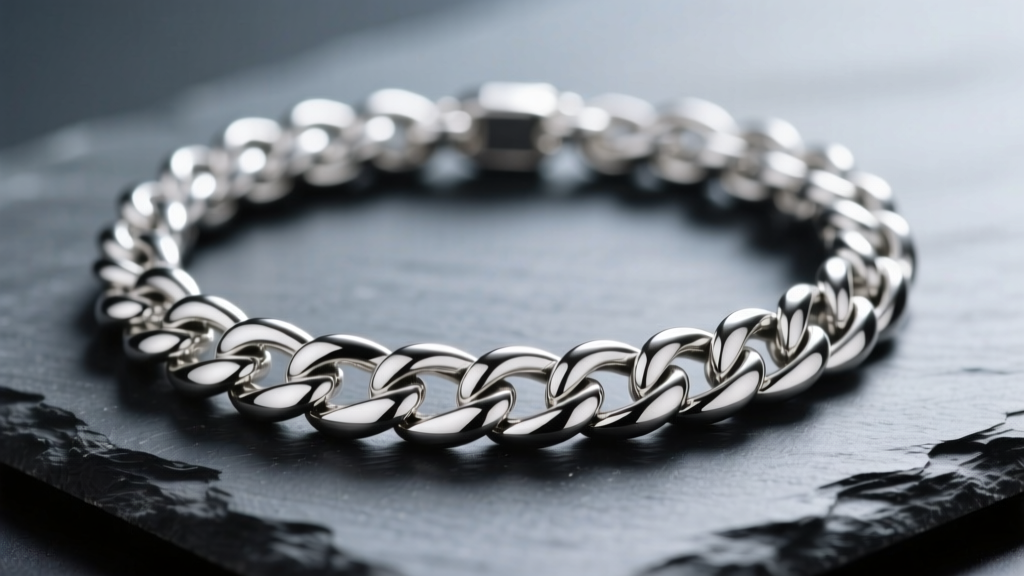
The Chemistry of Tarnish on Heavy Silver Chains
Owning a substantial piece of jewelry requires more than occasional wiping. When you invest in a chunky necklace sterling silver design, you are dealing with a high-surface-area accessory that interacts constantly with your skin and environment. Pure silver is relatively inert, but sterling silver is an alloy comprising 92.5% silver and 7.5% copper. According to The London Assay Office, this copper addition is what provides the tensile strength needed for heavy chains, but it is also the culprit behind tarnish.
Copper reacts with hydrogen sulfide and moisture in the air to form copper sulfide, the blackish film we recognize as tarnish. Chunky chains—like thick Cuban links, heavy Figaros, or oversized rope chains—have intricate inner crevices that trap sebum (skin oils), dead skin cells, and environmental pollutants. This organic buildup creates a micro-environment that accelerates oxidation. Furthermore, the sheer weight of a chunky chain causes the links to grind against one another, embedding this tarnished grime deep into the friction points of the metal.
Essential Tools for Cleaning Thick Silver Links
Not all cleaning methods are safe for heavy silver. As of 2026, many modern chunky chains feature intentional oxidized (antiqued) finishes or micro-thin rhodium plating. Using the wrong cleaner can strip these finishes or cause irreversible micro-scratching. Below is a decision matrix for selecting your cleaning approach.
| Cleaning Method | Best For | Risk Level | Estimated Cost |
|---|---|---|---|
| Microfiber + Mild Dish Soap | Routine sebum removal, rhodium-plated chains | Very Low | $ |
| Specialized Silver Foam (e.g., Goddard's) | Heavy tarnish on solid, non-oxidized links | Low | $$ |
| Aluminum Foil + Baking Soda Bath | Severe, uniform tarnish on bare 925 silver | Medium | $ |
| Ultrasonic Jewelry Cleaner | Solid links without porous gemstones | High (Strips patina) | $$$ |
| Chemical Silver Dips | Emergency cleaning only | Very High (Causes pitting) | $$ |
For routine maintenance of a chunky necklace sterling silver piece, a high-quality impregnated polishing cloth (like those from Town Talk Polish) combined with a soft-bristled baby toothbrush is the gold standard recommended by the Jewelers of America.
Step-by-Step Deep Cleaning Process
When your heavy chain loses its luster and feels stiff due to grime buildup in the links, follow this professional-grade cleaning protocol.
Step 1: The Degreasing Pre-Wash
Never apply silver polish directly to a chain caked in skin oils; you will simply create an abrasive paste that scratches the metal. Mix a few drops of phosphate-free dish soap (like Dawn) into a bowl of lukewarm water. Submerge the necklace for 10 minutes to loosen sebum. Gently agitate the water to force the suds through the inner links.
Step 2: Targeted Agitation
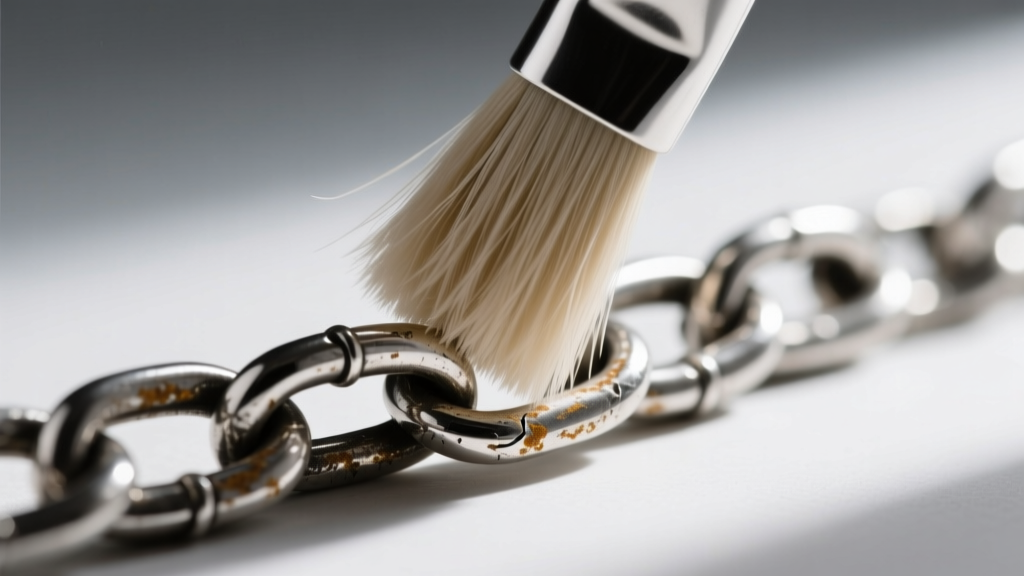
Remove the chain and lay it flat on a microfiber towel. Using a clean, soft-bristled baby toothbrush, gently scrub the crevices of the links. Do not use medium or hard bristles, as they will leave microscopic scratches that actually increase the surface area for future tarnish to grip. Focus heavily on the clasp area and the links immediately adjacent to it, where hair products and perfumes accumulate.
Step 3: Polishing and Rinsing
If tarnish remains after the degreasing wash, apply a pea-sized amount of silver polishing foam to your cloth and work it into the links. Avoid getting foam into the spring mechanism of the clasp. Rinse the necklace thoroughly under lukewarm running water to ensure no chemical residue remains.
Step 4: The Crucial Drying Phase
Moisture trapped inside the tight tolerances of a chunky chain will cause rapid flash-tarnishing. Pat the chain dry with a lint-free cloth, then use a hair dryer on the 'cool' setting to blow air through the links, ensuring the interior of every connection point is bone dry.
Hardware Maintenance: Caring for Heavy Clasps
The structural integrity of a chunky necklace sterling silver piece relies entirely on its clasp. Heavy chains exert significant torque and lateral stress on lobster claw clasps and toggle rings. Over time, the tiny spring inside a lobster clasp can become sluggish or stick due to tarnish and dust ingress.
Expert Tip: Never use liquid oils (like WD-40 or sewing machine oil) to lubricate a sticky silver clasp. Oil attracts dust and creates a sludge that will eventually lock the mechanism permanently. Instead, use a mechanical pencil to apply a microscopic dab of dry graphite powder directly into the clasp hinge. Graphite is a dry lubricant that will not attract grime or degrade the silver alloy.
Additionally, inspect the jump ring connecting the clasp to the chain. The weight of a chunky chain can slowly pull a standard split jump ring open. If your necklace weighs over 50 grams, consider having a jeweler solder the jump ring shut or upgrade it to a heavy-duty locking jump ring.
Proper Storage to Prevent Tangling and Oxidation
How you store your heavy silver chains is just as critical as how you clean them. Tossing a chunky chain into a standard jewelry box guarantees tangling, which can bend individual links and stress the soldering points.
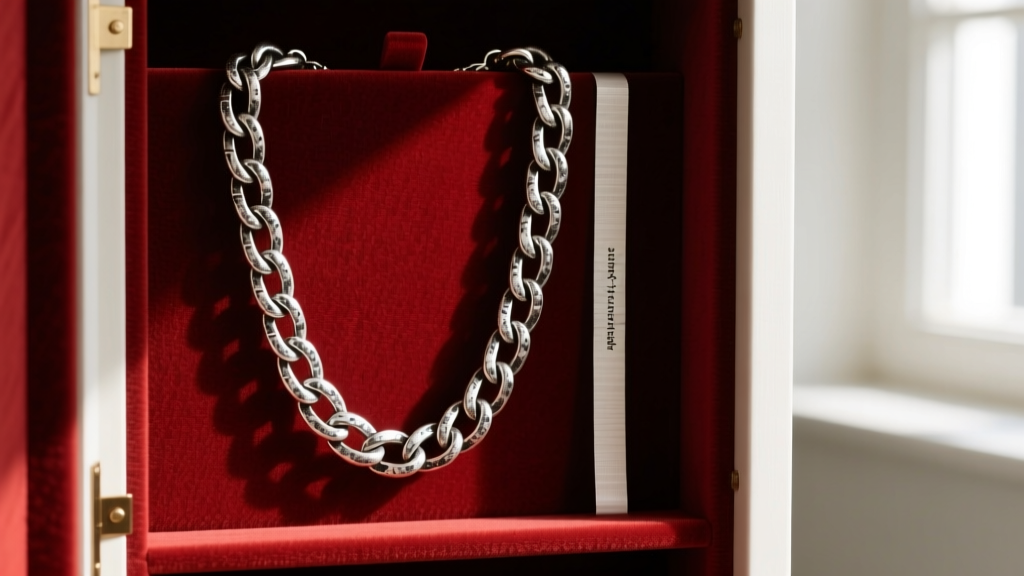
- Hang Heavy Chains: Use a padded jewelry armoire with sturdy hooks. Hanging allows gravity to keep the links aligned and prevents the chain from knotting upon itself.
- Utilize Anti-Tarnish Strips: Place 3M Anti-Tarnish strips inside your storage drawers or hanging bags. These strips absorb ambient hydrogen sulfide and moisture, effectively neutralizing the tarnish-causing environment for up to 12 months.
- Avoid Humid Zones: Never store sterling silver in a bathroom. The fluctuating humidity and aerosolized bath products will rapidly degrade the metal's finish.
- Pacific Cloth Bags: If you must store the necklace in a drawer, wrap it in a treated Pacific cloth bag. These fabrics are impregnated with silver-nitrate particles that intercept corrosive gases before they reach your jewelry.
By understanding the specific vulnerabilities of heavy silver alloys and implementing these targeted maintenance routines, your statement pieces will retain their structural integrity and brilliant luster for decades.


