The Ultimate Care Guide for Your Coffee Cup Necklace
Learn how to safely clean and maintain your coffee cup necklace. Expert tips on protecting enamel, gold vermeil, and delicate chains from daily wear.


The Unique Material Challenges of Coffee Cup Charms
Coffee cup necklaces have become a beloved staple for baristas, caffeine aficionados, and charm collectors alike. However, their intricate, mixed-media construction makes them uniquely challenging to clean and maintain. Unlike a simple solid gold band or a diamond solitaire, a typical coffee cup pendant combines multiple delicate materials—most commonly gold vermeil, sterling silver, and cold enamel—into a single, tiny canvas.
To properly care for your jewelry, you must first understand what it is made of. According to the Gemological Institute of America (GIA), mixed-material jewelry requires highly specific cleaning protocols to prevent irreversible damage. The 'coffee' liquid inside the cup and the decorative accents are usually crafted from cold enamel (a two-part epoxy resin), while the cup's body is often gold vermeil. As of 2026, many artisans have shifted to UV-resistant epoxy resins, but the fundamental vulnerabilities to heat and abrasion remain.
Step-by-Step Cleaning Routine for Enamel and Vermeil
Gold vermeil is strictly regulated by the Federal Trade Commission (FTC) to be a minimum of 2.5 microns of gold plated over a sterling silver base. Because this gold layer is relatively thin, aggressive scrubbing will wear it away. Meanwhile, cold enamel can soften, warp, or yellow if exposed to temperatures above 140°F (60°C) or harsh chemicals like bleach and ammonia.
Follow this gentle, expert-approved cleaning routine to restore your necklace's shine without compromising its structural integrity:
- Prep Your Workspace: Always plug your sink or work over a shallow bowl to prevent accidental drops down the drain.
- Mix a pH-Neutral Solution: Combine a few drops of mild, phosphate-free dish soap (like Dawn) with lukewarm—not hot—distilled water. Distilled water prevents hard water mineral spots from forming on the metal.
- Soak Briefly: Submerge the coffee cup necklace for no more than 3 to 5 minutes. This loosens body oils, lotion residue, and dust.
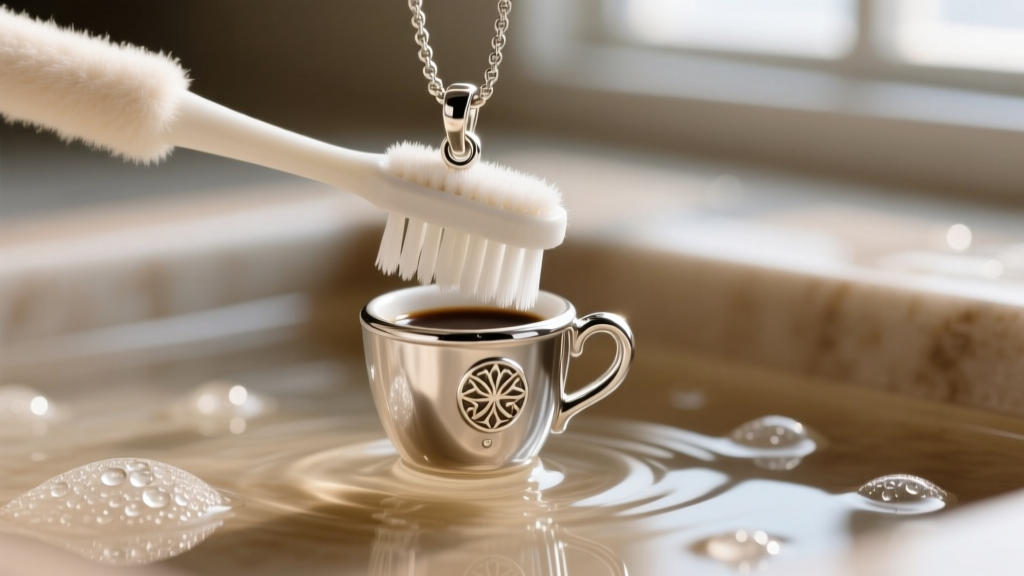
- Agitate Gently: Use an extra-soft baby toothbrush to lightly sweep the bristles over the metal rims and the chain. Avoid pressing hard on the enamel sections.
- Rinse and Dry: Rinse under a gentle stream of lukewarm distilled water. Pat dry immediately with a lint-free microfiber cloth. Never use paper towels, as their wood pulp fibers can cause micro-scratches on the gold vermeil.
What to Avoid: The Ultrasonic Trap
Never place a coffee cup necklace in an ultrasonic jewelry cleaner. Ultrasonic machines use high-frequency sound waves to create microscopic cavitation bubbles in a cleaning solution. While excellent for diamonds, these violent microscopic implosions will shatter cold enamel, cause resin inclusions to pop out, and strip gold vermeil plating right off the sterling silver base. Similarly, avoid steam cleaners, as the intense heat will melt the epoxy resin used for the coffee liquid detail.
Chain Maintenance and Clasp Lubrication
The chain of your necklace accumulates dead skin cells, sebum, and environmental pollutants faster than the pendant itself. Cable chains and rolo chains, which are common for charm necklaces, have tiny crevices that trap grime. If your chain feels stiff or looks dull, it requires targeted degreasing.
For the lobster clasp, a common failure point is a stiff spring mechanism caused by dried soap or lotion buildup. To fix this, clean the clasp with a cotton swab dipped in isopropyl alcohol. Once fully dry, apply a microscopic drop of sewing machine oil or mineral oil to the clasp hinge. Open and close it a few times to work the lubricant in, then wipe away any excess with a microfiber cloth to prevent attracting more dirt.
Material-Specific Cleaning Cheat Sheet
Use this quick-reference table to ensure you are using the correct tools and agents for each component of your necklace.
| Component | Recommended Cleaner | Tool | Drying Method |
|---|---|---|---|
| Gold Vermeil Cup | pH-neutral dish soap & distilled water | Extra-soft baby toothbrush | Microfiber cloth |
| Cold Enamel 'Coffee' | Damp microfiber cloth only | Fingertip or cloth | Air dry or pat gently |
| Sterling Silver Chain | Silver dip (briefly) or soapy water | Soft bristle brush | Microfiber cloth |
| Lobster Clasp | Isopropyl alcohol (90%+) | Cotton swab | Air dry, then lubricate |
Proper Storage to Prevent Tarnish and Enamel Chipping
How you store your coffee cup necklace is just as critical as how you clean it. Sterling silver, which forms the core of gold vermeil, is highly reactive to sulfur and humidity in the air, leading to black tarnish. When tarnish forms in the tiny crevices around the enamel, it is incredibly difficult to remove without damaging the resin.
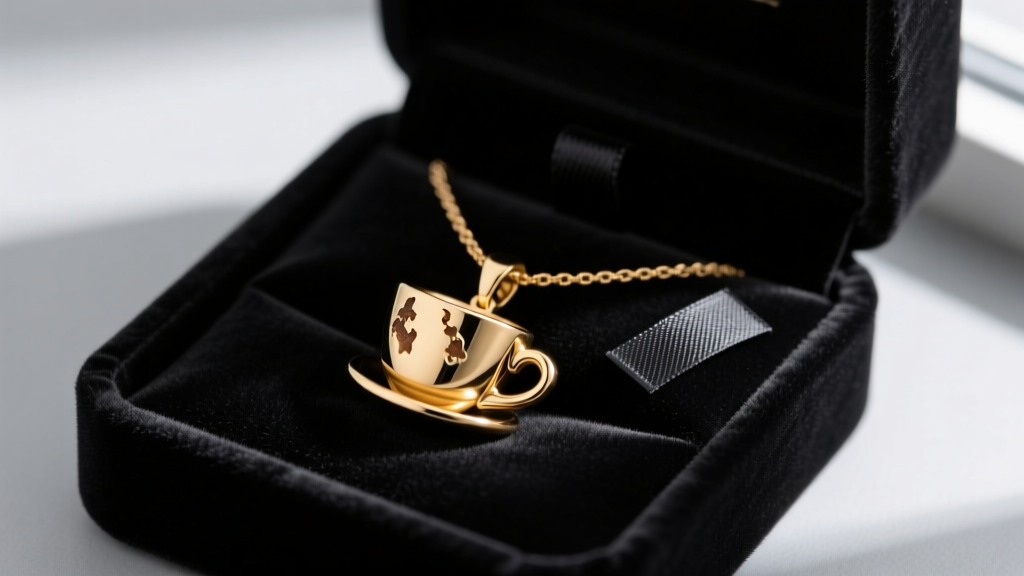
To preserve your piece, store it in an airtight polyethylene bag alongside a 3M anti-tarnish strip. These strips absorb airborne sulfur compounds and typically last for six months before needing replacement. Never store your necklace in a cardboard box or wrapped in tissue paper, as these materials contain sulfur compounds that actively accelerate tarnishing. Furthermore, always store the necklace flat or hung up; tossing it into a crowded jewelry box risks the metal clasp scratching the delicate enamel surface of the coffee cup.
Troubleshooting Common Coffee Cup Necklace Issues
Even with meticulous care, wear and tear can occur. Here is how to handle the most frequent issues owners face:
- Yellowing Enamel: If the white 'cream' or light brown 'coffee' enamel has turned yellow, it is likely suffering from UV degradation or exposure to nicotine. Unfortunately, cold epoxy resin cannot be polished or bleached back to its original color. Prevention via UV-protectant storage is the only cure.
- Worn Gold on the Cup Rim: The rim of the coffee cup experiences the most friction. If the gold vermeil has worn away to reveal the silver beneath, do not attempt to polish it with silver cream, as this will damage the adjacent enamel. Take the pendant to a professional jeweler for a localized electroplating touch-up.
- Tarnish in Crevices: If black tarnish builds up where the metal meets the enamel, use a specialized silver polishing cloth (impregnated with mild abrasives) folded to a fine point. Gently run the edge along the metal seam, being incredibly careful not to let the cloth drag across the enamel, which could cause micro-scratches.
Expert Insight: 'The biggest mistake I see with novelty charm jewelry is the use of baking soda paste. While baking soda is a popular DIY hack for solid silver, its Mohs hardness is high enough to permanently scratch both gold vermeil and the glossy finish of cold enamel, leaving your coffee cup looking cloudy and dull.' — Master Bench Jeweler
By understanding the specific material science behind your jewelry and adopting a gentle, targeted cleaning routine, your coffee cup necklace will remain a brilliant, tarnish-free conversation starter for years to come.


