Expert Care and Cleaning Guide for a Copper Pearl Necklace
Discover expert cleaning and maintenance tips for your copper pearl necklace. Learn how to safely remove tarnish without damaging delicate nacre.

The Material Conflict: Why Copper and Pearls Clash
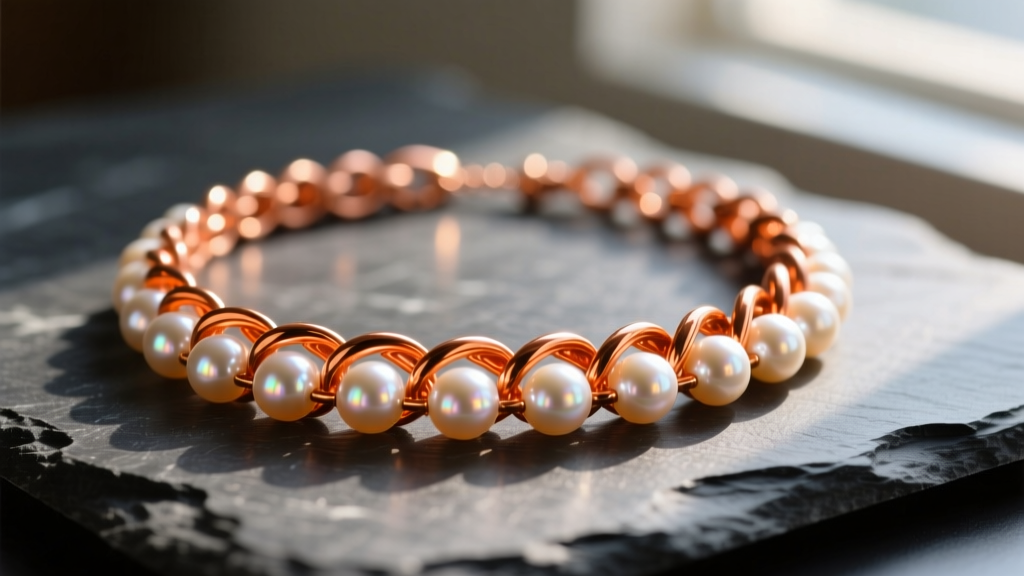
Mixed-media jewelry has dominated the bespoke market in 2026, with the copper pearl necklace emerging as a standout piece. The warm, earthy glow of oxidized or polished copper perfectly complements the iridescent, organic luster of freshwater or saltwater pearls. However, from a gemological and metallurgical perspective, these two materials are fundamentally incompatible when it comes to maintenance. To properly care for this specific jewelry type, you must understand the chemical warfare that occurs when standard cleaning methods are applied.
Pearls are organic gemstones primarily composed of calcium carbonate (aragonite) held together by a protein matrix called conchiolin. According to the Gemological Institute of America (GIA), pearls rank between 2.5 and 4.5 on the Mohs hardness scale, making them exceptionally soft and highly reactive to acids. Copper, a base metal with a Mohs hardness of 3.0, is prone to rapid oxidation. It reacts with sulfur, oxygen, and moisture in the air to form copper sulfide (dark tarnish) or copper oxide. The standard home remedies for cleaning copper—such as lemon juice, vinegar, or baking soda—are highly acidic or abrasive and will instantly dissolve, etch, or permanently dull the delicate nacre of a pearl.
Daily Wear and Preventative Maintenance
The most effective way to maintain a copper pearl necklace is to minimize the need for deep cleaning altogether. Preventative care revolves around managing the micro-environment against your skin and in your storage areas.
The "Last On, First Off" Rule
Human sweat has an average pH of 4.5 to 5.5, which is acidic enough to slowly degrade pearl nacre over time while simultaneously accelerating copper oxidation. Cosmetics, perfumes, and hairsprays contain alcohols and volatile organic compounds that can strip a pearl's natural moisture and cause copper to corrode rapidly. Always put your necklace on after applying all beauty products and allow them to dry completely. Upon returning home, remove the necklace immediately to limit prolonged exposure to skin oils and environmental pollutants.
Post-Wear Microfiber Wiping
After every wear, gently wipe the pearls with a dry, lint-free microfiber cloth. This removes the microscopic layer of sweat and sebum before it can bond to the nacre or the copper links. Do not use tissue paper or paper towels, as wood pulp fibers can leave micro-scratches on the pearl surface.
Step-by-Step Cleaning Protocol: The Two-Zone Technique
When your necklace inevitably requires a deeper clean, you must abandon the "dunk and swish" method used for homogenous metal chains. Instead, employ the Two-Zone Technique, treating the organic pearls and the metallic copper as entirely separate entities.
What You Need (and What to Avoid)
- Distilled Water: Tap water contains chlorine and heavy minerals that can spot pearls and accelerate copper corrosion.
- pH-Neutral Castile Soap: A mild, unscented liquid soap (like Dr. Bronner’s) free from harsh degreasers.
- Cotton Swabs and Lint-Free Cloths: For precision application.
- Treated Polishing Cloth: A dry jeweler's cloth impregnated with mild tarnish-removing compounds (safe for copper only).
Zone 1: Cleaning the Pearls
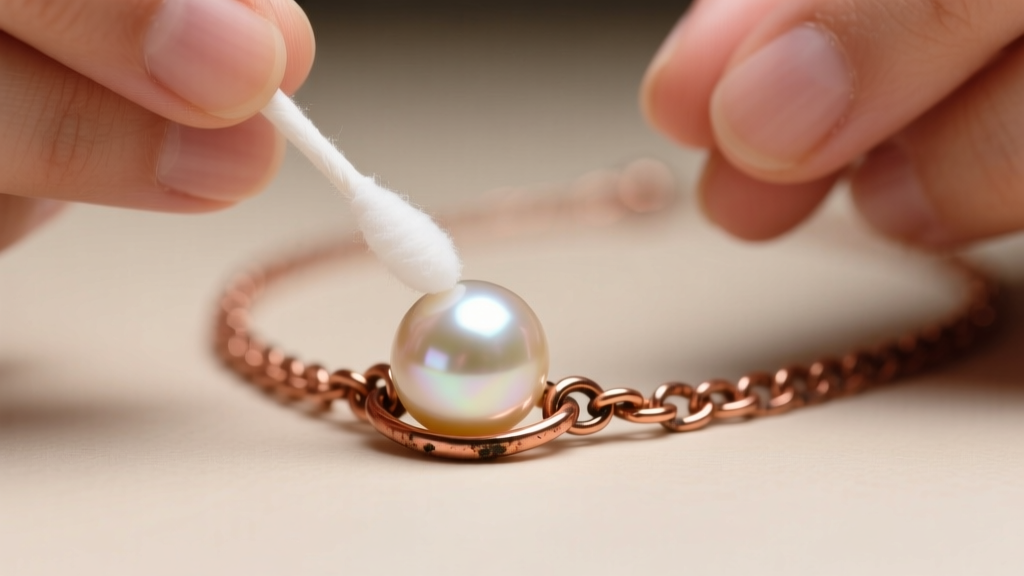
Mix a few drops of pH-neutral castile soap into a small bowl of distilled water. Dip a cotton swab or a very soft, damp microfiber cloth into the solution, wringing it out until it is barely damp. Gently wipe each pearl individually. Never submerge a copper pearl necklace in water. Submersion can trap moisture in the drill holes, leading to internal nacre degradation and causing the copper wire or links to develop hidden corrosion. Dry the pearls immediately with a separate, dry microfiber cloth.
Zone 2: Polishing the Copper
Once the pearls are completely dry, address the copper links. Fold a dry, treated jeweler's polishing cloth into a small point. Carefully thread the cloth between the copper links, buffing the metal to remove oxidation. You must exercise extreme precision; the mild abrasives and chemical tarnish removers embedded in the polishing cloth will permanently etch the pearl's surface if they come into contact with the nacre. If the copper is heavily textured or wire-wrapped around the pearl base, use a dry, soft-bristled makeup brush to gently sweep away loose tarnish dust from the crevices.
Handling Verdigris: The Copper Pearl Necklace Killer
If a copper pearl necklace is stored damp or exposed to high humidity, the copper can develop verdigris—a crusty, bright green or blue-green copper carbonate corrosion. Verdigris is not only unsightly, but it is also slightly toxic and can permanently stain the porous surface of adjacent pearls.
If you spot verdigris forming near a pearl, do not use chemical copper cleaners. Instead, use a dry, wooden toothpick or a soft brass brush to gently mechanically flake the green corrosion away from the metal. Work under a magnifying lamp to ensure you do not scratch the copper or the pearl. Once the bulk of the verdigris is removed, use a barely damp cotton swab with distilled water to lift the remaining dust, drying it instantly. To prevent recurrence, ensure the necklace is bone-dry before storage.
Cleaning Agents: Safe vs. Destructive Compatibility Chart
To visualize the danger of standard jewelry cleaners, refer to this compatibility matrix. The American Gem Society consistently warns against using ultrasonic and chemical dips on organic gems.
| Cleaning Agent | Effect on Copper | Effect on Pearl Nacre | Verdict |
|---|---|---|---|
| White Vinegar / Lemon Juice | Removes tarnish instantly via acid reaction | Dissolves calcium carbonate, destroys luster | STRICTLY AVOID |
| Baking Soda Paste | Mild abrasive, cleans oxidation well | Scratches nacre (Mohs 2.5), dulls surface | STRICTLY AVOID |
| Ultrasonic Cleaners | Safe for bare, solid metal | Vibrations shake nacre off the bead nucleus | STRICTLY AVOID |
| Distilled Water + Castile Soap | Mild surface cleaning, no tarnish removal | Safe, gentle removal of skin oils | SAFE FOR PEARLS |
| Treated Dry Polishing Cloth | Removes oxidation, buffs to high shine | Embedded chemicals etch and cloud nacre | SAFE FOR COPPER ONLY |
Long-Term Storage and Preservation
How you store your copper pearl necklace dictates how often you will need to clean it. Copper requires a low-humidity, low-sulfur environment to prevent tarnishing, while pearls require a slight amount of ambient moisture to prevent the conchiolin protein from drying out and cracking. Balancing these needs is the final step in expert jewelry care.
The Anti-Tarnish Micro-Environment
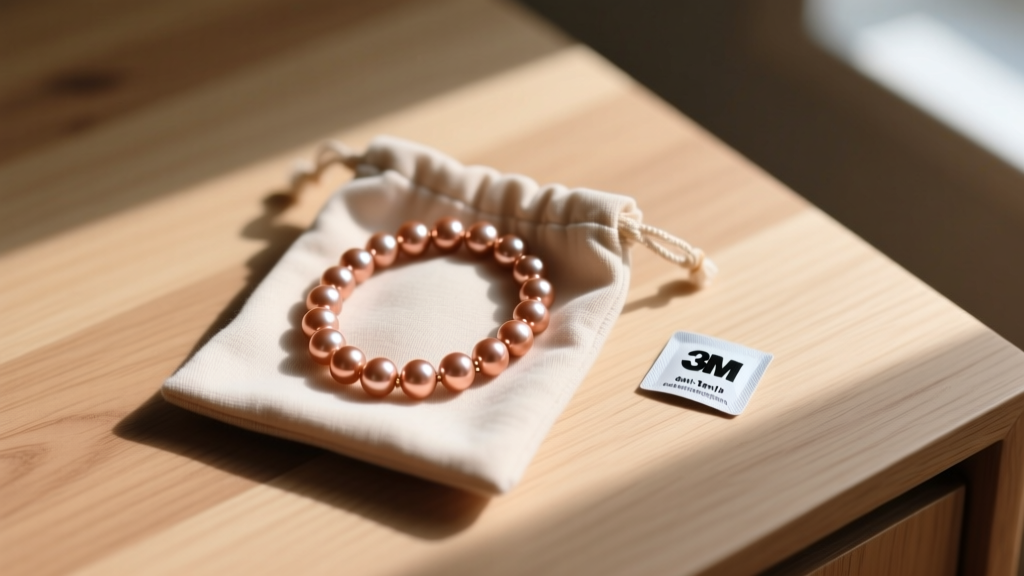
Store the necklace in a breathable, soft cotton pouch or an anti-tarnish cloth bag (such as Pacific Silvercloth). Place a small, activated 3M anti-tarnish strip inside the pouch. These strips absorb airborne sulfur compounds before they can react with the copper. Do not store the necklace in an airtight plastic ziplock bag. Trapping the pearls in unventilated plastic can cause them to dehydrate over time or, if any moisture is present, create a greenhouse effect that triggers rapid copper verdigris.
Avoid Hanging Storage
Never hang a heavy copper pearl necklace on a jewelry tree or hook. The weight of the copper links and the pearls will place continuous tension on the stringing material (whether silk, nylon, or copper wire), leading to premature stretching, fraying, and eventual breakage. Always lay the necklace flat in a lined jewelry box drawer, ensuring the clasp is fastened so the chain does not tangle.
By respecting the distinct chemical properties of both materials and employing the Two-Zone cleaning technique, your copper pearl necklace will retain its striking contrast and structural integrity for decades, remaining a staple of your mixed-media collection.


