How to Clean Crystal Necklaces for Men: Expert Care Guide
Learn how to properly clean, maintain, and protect crystal necklaces for men. Expert tips on washing, cord care, and avoiding damage.


The Rise of Men's Crystal Jewelry and the Care It Demands
The landscape of men's jewelry has evolved dramatically, moving far beyond simple metal chains and signet rings. Today, crystal necklaces for men—featuring grounding stones like black tourmaline, polished tiger's eye, and geometric onyx pendants—are staple accessories in modern menswear. However, caring for these pieces requires a fundamentally different approach than caring for solid gold or platinum. Unlike forged metals, crystals are organic or mineral structures with varying degrees of porosity, cleavage planes, and internal inclusions.
Many men unknowingly destroy their crystal pendants by applying standard jewelry cleaning methods to them. Tossing a rutilated quartz pendant into an ultrasonic cleaner or soaking a leather-bound obsidian necklace in commercial silver dip will result in irreversible damage. This comprehensive guide breaks down the exact material science, cleaning protocols, and maintenance routines required to keep your crystal necklaces looking sharp and structurally sound for years to come.
Understanding Your Crystal: Hardness, Porosity, and Inclusions
Before applying any moisture or friction to your necklace, you must identify the stone and understand its position on the Mohs scale of mineral hardness. The Mohs scale doesn't just dictate how easily a stone scratches; it indicates structural stability. Furthermore, natural crystals often contain internal fissures, mineral inclusions, or porous matrices that trap dirt, oils, and moisture.
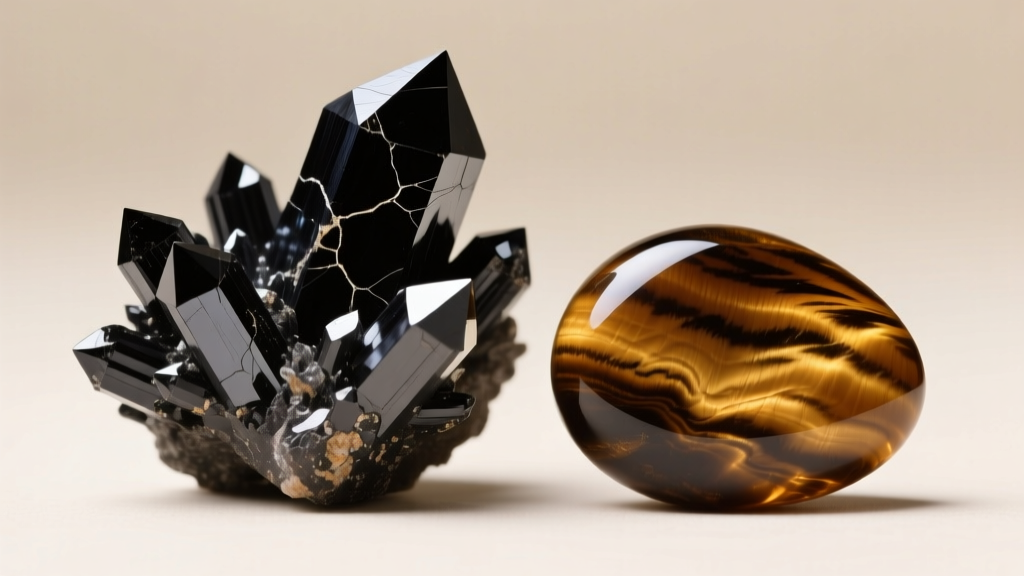
For instance, black tourmaline (Mohs 7-7.5) is notoriously brittle and heavily included with internal fractures. Submerging it in water can cause moisture to seep into these micro-fissures, leading to internal rusting of iron inclusions and eventual crumbling. Conversely, highly polished stones like carnelian or onyx are much more resilient to water but can be dulled by harsh chemicals.
| Crystal Type | Mohs Hardness | Water Safety | Primary Vulnerability | Recommended Cleaning |
|---|---|---|---|---|
| Black Onyx (Dyed Agate) | 6.5 - 7 | Safe | Chemical stripping of dye | Mild soap & water |
| Tiger's Eye | 6.5 - 7 | Safe | Asbestos fiber matrix (rare) | Damp microfiber wipe |
| Black Tourmaline | 7 - 7.5 | Caution | Internal fissures & brittleness | Soft dry brush only |
| Obsidian | 5 - 5.5 | Safe | Scratching from abrasive cloths | Mild soap & water |
| Selenite | 2 | Dangerous | Dissolves in water | Compressed air only |
For a deeper dive into mineral properties and structural vulnerabilities, the Mindat Mineral Database remains the most exhaustive resource for identifying specific crystal matrices and their chemical sensitivities.
The Daily Wear Protocol: Preventing Degradation
The most critical aspect of crystal necklace maintenance happens while you are wearing it. Men's body chemistry, grooming habits, and apparel choices introduce unique stressors to jewelry.
The Cologne and Cord Dilemma
Most crystal necklaces for men are strung on waxed cotton cords, braided leather, or macramé nylon rather than metal chains. Alcohol-based colognes and aftershaves are highly destructive to these materials. When sprayed near the neck, the alcohol strips the protective wax coating from cotton cords, causing them to dry out, fray, and eventually snap. Leather cords absorb the alcohol and skin oils, leading to a stiff, degraded texture that rots from the inside out. Rule of thumb: Always apply cologne at least 60 seconds before putting on your necklace, and avoid spraying directly onto the chest area.
Sweat and Sebum Buildup
Human sweat is mildly acidic (pH 4.5 to 7.0), and sebum (body oil) carries dead skin cells that create a stubborn, cloudy film over polished crystals. Over time, this bio-film settles into the drill holes of beads and the crevices of raw stone pendants. If you wear your crystal necklace during workouts or heavy labor, wipe it down with a dry, clean microfiber cloth immediately after taking it off. Never store a sweat-dampened necklace in a dark jewelry box, as this promotes bacterial growth and accelerates the tarnishing of metal bails and jump rings.
Step-by-Step Cleaning Methods by Crystal Type
When your crystal necklace loses its luster or feels gritty, it is time for a deep clean. Forget commercial jewelry dips and ultrasonic machines. According to the International Gem Society, ultrasonic vibrations can easily shatter stones with internal inclusions or liquid-filled cavities. Stick to these targeted, low-impact methods.
Method 1: The Distilled Water Bath (For Water-Safe Stones)
Best for: Onyx, Tiger's Eye, Obsidian, Agate, and Quartz.
- Mix the Solution: In a glass bowl, combine one cup of distilled water (tap water contains hard minerals that leave calcium spots) with a single drop of pH-neutral, unscented liquid Castile soap. Avoid harsh dish detergents, which contain degreasers that can strip natural stone polishes.
- Submerge Briefly: Place the crystal pendant into the solution for no more than 3 to 5 minutes. If the necklace has a leather or cotton cord, avoid submerging the cord; hold the chain/cord and dip only the stone.
- Agitate Gently: Use a brand-new, ultra-soft baby toothbrush to gently sweep the crevices around the metal bail and the drill holes. Do not scrub the face of the crystal.
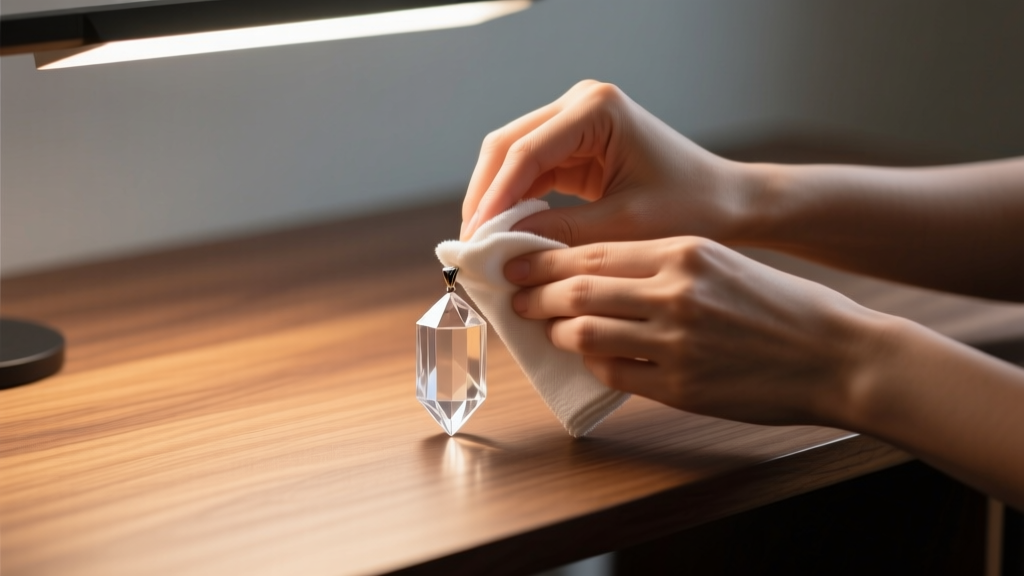
- Rinse and Dry: Rinse under a slow stream of distilled water. Pat dry with a lint-free microfiber cloth and let it air dry completely in a well-ventilated area before storing.
Method 2: The Dry Extraction Technique (For Porous/Fissured Stones)
Best for: Black Tourmaline, Selenite, Malachite, Lapis Lazuli, and Turquoise.
- Compressed Air: Use a manual camera lens blower (not canned air, which can spray freezing propellants onto the stone) to blast dust and dead skin out of the crevices and metal settings.
- Soft Brushing: Use a clean, soft-bristled makeup brush to sweep the surface of the stone. The dense, fine bristles lift sebum without scratching softer minerals.
- Microfiber Buffing: For polished stones like Lapis or Malachite, gently buff the surface with a dry microfiber cloth to restore the optical shine.
Recharging and Energetic Maintenance: Separating Fact from Fiction
Many men who wear crystal necklaces do so for their purported grounding or energetic properties. This has led to the popularization of "crystal cleansing" rituals on social media, many of which are physically disastrous for the jewelry.
The Danger of Salt Water Baths
Soaking crystals in Himalayan salt water is a common recommendation for energetic cleansing. From a material science perspective, this is a terrible idea. Salt water is highly corrosive. It will rapidly oxidize sterling silver bails, degrade gold-filled jump rings, and completely destroy leather and cotton cords. Furthermore, salt crystals can become lodged in the micro-fissures of raw stones, expanding as they dry and cracking the pendant from the inside.
UV Fading Risks
Leaving crystals on a sunny windowsill to "recharge in the sun" is another common mistake. Prolonged exposure to ultraviolet (UV) light will permanently bleach the color out of Amethyst, Rose Quartz, and Smoky Quartz. If you wish to use natural light for cleansing, opt for indirect moonlight, which carries zero UV radiation and poses no threat to the stone's color center or the necklace's hardware.
Troubleshooting Common Issues
Cloudy or Foggy Stones
If your water-safe crystal looks permanently foggy after washing, it likely has hard water mineral deposits or a buildup of lotion. Dampen a cotton swab with a tiny amount of rubbing alcohol (isopropyl 70%) and gently rub the affected area of the stone. Warning: Keep the alcohol strictly on the stone; do not let it touch dyed stones, porous matrices, or the necklace cord.
Tarnished Metal Hardware
The metal caps, bails, and chains on men's crystal necklaces often tarnish faster than the stones themselves. Use a dry, treated silver polishing cloth (like a Sunshine cloth) to wipe down the metal hardware. Never use liquid silver dips, as the chemicals can splash onto the crystal and cause irreversible etching or discoloration.
Frayed or Stiff Cords
If your waxed cotton or leather cord feels stiff, cracked, or is showing fuzzy fraying near the clasp, it has reached the end of its structural life. Do not attempt to condition it with oils, as this will attract more dirt. Take the pendant to a local jeweler or leatherworker to have it re-strung on a fresh cord. For daily wear, plan to replace organic cords every 12 to 18 months to prevent catastrophic breakage and loss of the pendant.
Final Thoughts on Longevity
Caring for crystal necklaces for men is less about aggressive polishing and more about mindful preservation. By respecting the Mohs hardness of your specific stone, protecting organic cords from grooming chemicals, and abandoning destructive internet cleansing trends, you ensure that your pendant remains a powerful, pristine fixture in your wardrobe. Treat your crystals with the same respect you would give a fine mechanical watch, and they will endure a lifetime of daily wear.


