How to Clean and Care for a Diamond Bezel Pendant Necklace
Learn expert techniques to clean, maintain, and protect your diamond bezel pendant necklace from daily wear, lotion buildup, and bail damage.

The Anatomy of a Bezel Setting: Why Cleaning is Different
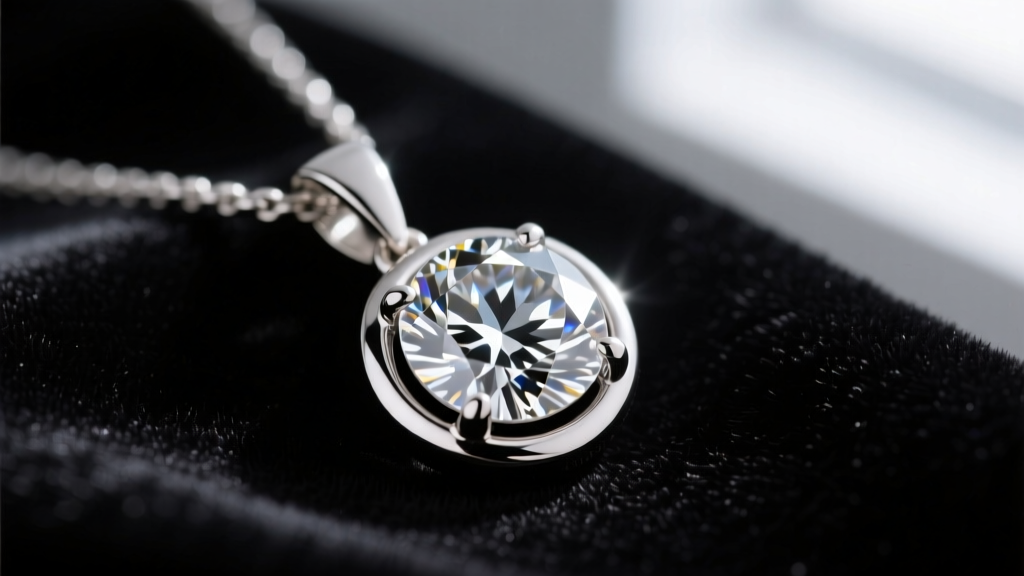
A diamond bezel pendant necklace is the epitome of modern, low-profile elegance. Unlike traditional prong settings that elevate the stone and catch on knitwear, a bezel setting features a continuous metal rim—known as a collet—that wraps securely around the diamond's girdle. While this architectural choice offers superior physical protection against impacts and snagging, it creates a unique set of maintenance challenges that many jewelers fail to explain to their clients.
The primary issue with a bezel setting is light return. A diamond's brilliance relies on light entering the crown, bouncing off the precisely angled pavilion facets at the bottom, and reflecting back to the viewer's eye. Because bezel settings often feature closed or semi-closed back galleries to protect the culet (the bottom point of the diamond), the pavilion is highly susceptible to trapping sebum, dead skin cells, and cosmetic residues. When a hydrophobic film of hand cream or body oil coats the underside of the diamond, light leaks out the bottom rather than reflecting upward, causing even a flawless, D-color stone to look flat, gray, and lifeless.
Daily Wear and Tear: Identifying Buildup and Failure Points
Before diving into the cleaning protocol, it is crucial to understand where your necklace accumulates the most debris and mechanical stress. A diamond bezel pendant necklace is not just the stone and the collet; the chain and the bail (the loop connecting the pendant to the chain) require equal attention.
- The Collet Gap: Even in a masterfully crafted bezel, a microscopic gap can exist between the metal lip and the diamond's crown. Dust and silica from makeup can wedge into this space, dulling the stone's perimeter.
- The Bail Friction Point: The bail experiences constant kinetic friction as the pendant slides back and forth along the chain. Over 5 to 10 years, this can wear down the metal, especially if you pair a heavy platinum pendant with a softer 14k gold chain.
- Chain Interstices: Box chains and wheat chains are incredibly popular for bezel pendants, but their interlocking geometric links act like tiny nets, capturing airborne pollutants, perfume oils, and sweat.
Step-by-Step Deep Cleaning Protocol for Bezel Pendants
To restore the optical performance of your diamond bezel pendant necklace, you must break down the lipid bonds of cosmetic buildup without damaging the metal alloy or the stone. According to the Gemological Institute of America (GIA), gentle, consistent cleaning is vastly superior to aggressive, infrequent scrubbing.
What You Need
- Distilled water (tap water contains calcium and magnesium that leave micro-deposits on the diamond's table)
- pH-neutral, dye-free dish soap (such as original Dawn)
- An extra-soft infant toothbrush (adult toothbrushes have bristles that are too stiff and can scratch high-polish gold bezels)
- A wooden toothpick (for stubborn debris in the collet gap)
- A lint-free microfiber cloth
The Cleaning Process
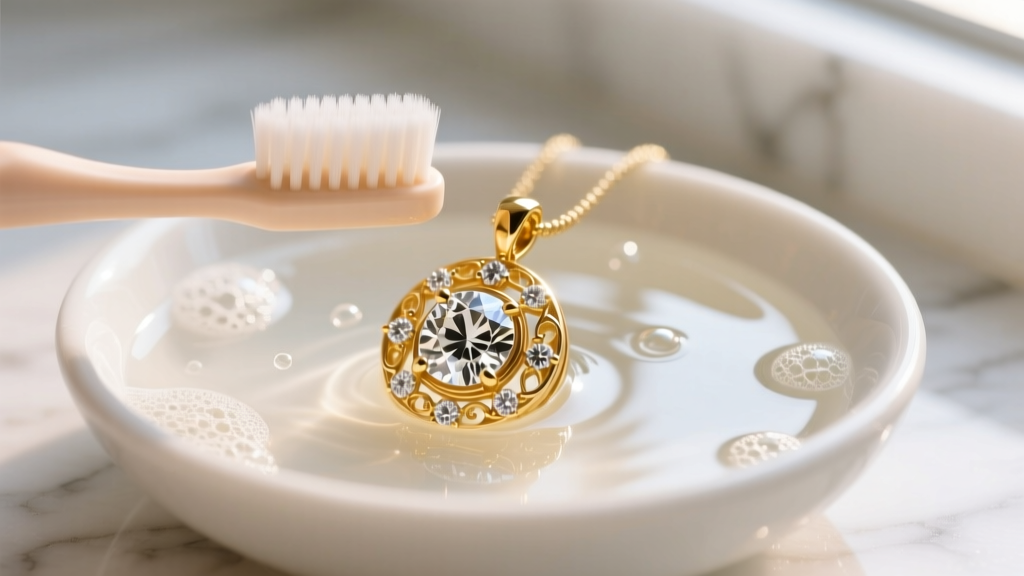
- Prepare the Solution: Fill a small ceramic bowl with warm distilled water and add exactly three drops of dish soap. Avoid using hot water, as extreme thermal shock can stress older jewelry solder points.
- Soak: Submerge your diamond bezel pendant necklace entirely. Let it soak for 15 to 20 minutes. This allows the surfactants in the soap to emulsify the oils trapped beneath the diamond's pavilion.
- Agitate Gently: Using the infant toothbrush, lightly brush the front of the bezel and the chain links. Turn the pendant over and brush the back gallery. The bristles will easily sweep through the small drainage holes often found in modern bezel settings.
- Target the Gap: If you notice a ring of dullness where the metal meets the diamond, gently run the wooden toothpick along the inner edge of the collet. Never use a metal needle or safety pin, as steel will permanently scratch platinum or gold.
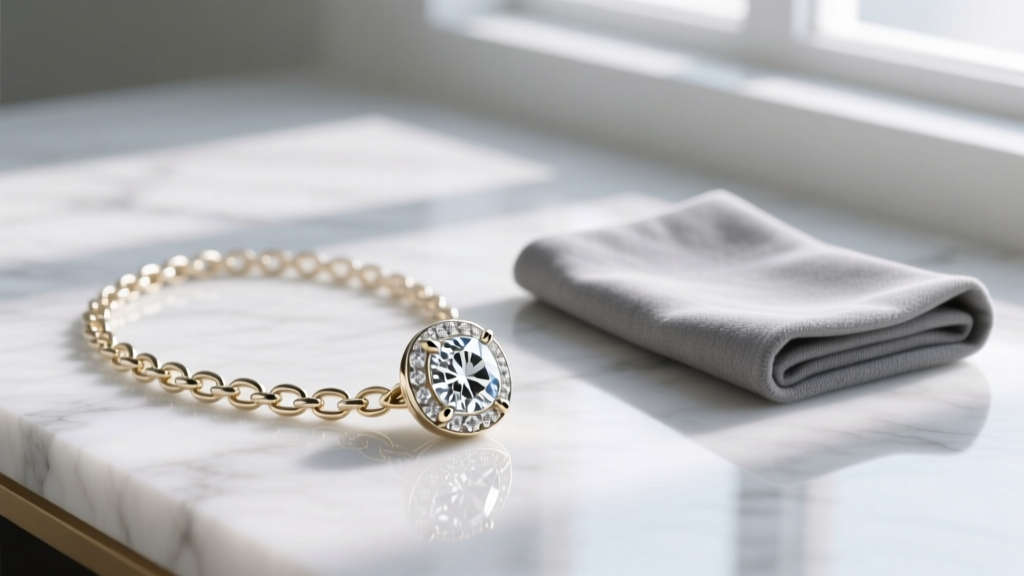
- Rinse and Dry: Rinse the necklace under a gentle stream of lukewarm distilled water. Pat dry with the microfiber cloth, ensuring no lint is caught in the bail.
The Ultrasonic Debate: When to Avoid It
Many consumers purchase at-home ultrasonic jewelry cleaners, assuming they are the ultimate solution for a diamond bezel pendant necklace. While ultrasonic waves (typically operating at 40-45 kHz) are excellent for shaking dirt out of tight chain links, they carry specific risks for bezel settings.
If your diamond has been fracture-filled (a clarity enhancement where a glass-like resin is injected into surface-reaching cracks), the high-frequency vibrations and heat of an ultrasonic cleaner can melt or cloud the filler, permanently ruining the stone. Furthermore, if the bezel collet has sustained a hard impact and slightly pulled away from the diamond's girdle, the ultrasonic vibrations can cause the stone to rattle loose entirely. Always have a jeweler verify that your stone is untreated and your bezel is flush before utilizing ultrasonic technology.
Metal-Specific Maintenance and Chain Care
The metal composition of your pendant and chain dictates how it reacts to environmental stressors. Below is a maintenance matrix based on common jewelry alloys.
| Metal Type | Ultrasonic Safety | Chemical Vulnerabilities | Maintenance Notes |
|---|---|---|---|
| Platinum (950) | Highly Safe | Resists almost all household chemicals | Develops a natural patina over time; requires professional polishing to restore a mirror finish. |
| 18k Yellow Gold | Safe (if stone is untreated) | Chlorine (weakens copper/zinc alloys) | Prone to micro-scratches; store separately from harder gemstones like sapphires. |
| 14k Rose Gold | Use with Caution | Harsh acids, abrasive pastes | High copper content can oxidize; requires frequent gentle washing to maintain the pink hue. |
| 18k White Gold | Safe | Chlorine, bromine (hot tubs) | Rhodium plating will wear off the high-friction bail area; expect to re-plate every 1-2 years. |
Chain maintenance is equally critical. If you wear a delicate snake chain with your bezel pendant, be aware that the flush, interlocking metal scales trap skin oils deep inside the core. Snake chains often require professional steam cleaning to fully remove internal buildup, as a toothbrush cannot reach the core.
Storage and Prevention Tactics
Proactive care will significantly extend the intervals between deep cleanings. The Jewelers of America strongly advocates for a 'last on, first off' approach to jewelry wear. Your diamond bezel pendant necklace should be the final accessory you put on after applying cosmetics, perfumes, and hairspray, and the very first item you remove upon returning home.
When storing the necklace, never toss it loosely into a jewelry box where the diamond can scratch adjacent pieces. Because diamonds are a 10 on the Mohs hardness scale, they will easily gouge gold, platinum, and softer gemstones. Store the necklace in a dedicated, anti-tarnish flannel pouch or a fabric-lined compartment. Leave the clasp unfastened and lay the chain in a gentle figure-eight pattern to prevent microscopic kinking in the links, ensuring your pendant remains pristine and ready to wear for decades to come.


