How to Clean and Care for Your Diamond Crescent Moon Necklace
Learn expert techniques to clean, maintain, and protect your diamond crescent moon necklace from daily wear, oils, and environmental damage.

The Science of Diamond Brilliance and Daily Wear
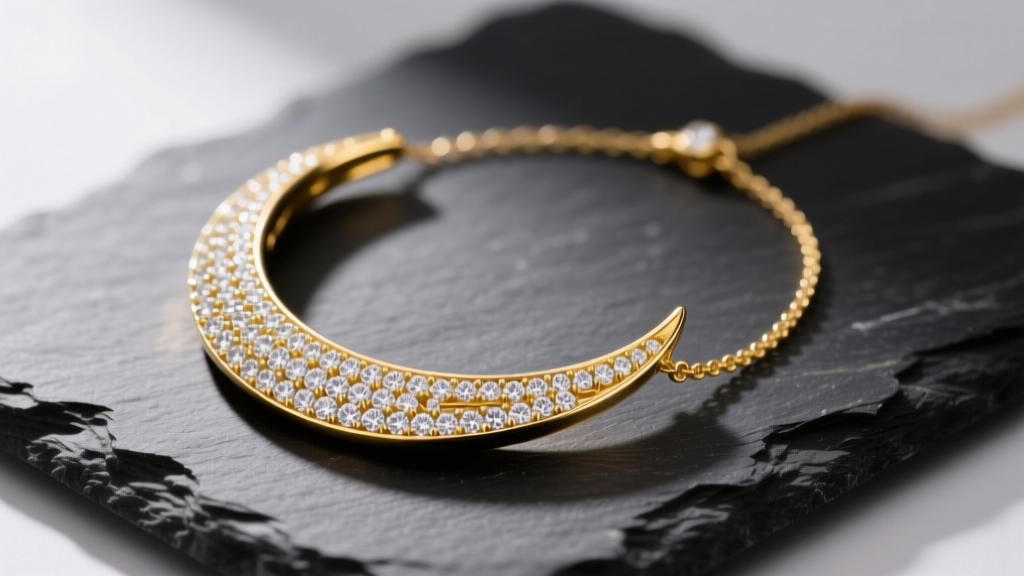
A diamond crescent moon necklace is more than just a celestial statement piece; it is an intricate assembly of precision-cut gemstones and precious metals that requires specialized maintenance. To properly care for this jewelry, you must first understand the chemical nature of diamonds. Diamonds are highly lipophilic, meaning they have a natural affinity for oils and grease. When you wear your necklace, microscopic layers of sebum from your skin, combined with lotions, perfumes, and environmental pollutants, quickly coat the pavilion (the bottom half) of the diamonds. This oily film disrupts the path of light entering and exiting the stone, causing your once-brilliant crescent moon to appear dull, cloudy, and lifeless within just a few days of continuous wear.
Furthermore, the unique geometry of a crescent moon pendant introduces structural vulnerabilities. The tapered tips of the moon are prone to snagging on fabrics, which can slowly bend the terminal prongs or weaken the micro-beads in a pavé setting. According to the Gemological Institute of America (GIA), regular, methodical cleaning is essential not just for aesthetics, but to allow you to inspect the structural integrity of the settings before a stone is lost.
Anatomy of the Crescent Moon Pendant: Identifying Vulnerabilities
Before submerging your jewelry in any cleaning solution, you must identify the specific setting style of your diamond crescent moon necklace, as this dictates the cleaning protocol.
- Micro-Pavé Settings: Many crescent moons utilize micro-pavé to maximize sparkle along the curved edge. These settings use tiny beads of metal to hold stones. They are highly susceptible to vibration damage and should never be placed in an at-home ultrasonic cleaner, as the high-frequency waves can shake the stones loose.
- Channel Settings: If your diamonds are set within a metal channel along the curve, dirt tends to accumulate in the narrow crevices between the stones and the metal walls. This requires targeted brushing rather than simple soaking.
- Prong Settings: Larger, individual diamonds set in prongs along the crescent are generally safer for ultrasonic cleaning, but the prongs themselves must be checked for snags. If a prong catches on a microfiber cloth, it is too loose and requires professional tightening.
Common Household Hazards and Their Effects
Environmental exposure is the silent killer of fine jewelry. Below is a breakdown of how everyday substances interact with the metals and diamonds in your necklace.
| Hazard | Impact on Diamonds | Impact on Precious Metals (Gold/Platinum) |
|---|---|---|
| Chlorine (Pools/Spas) | No direct damage, but traps chemical residue. | Severely weakens gold alloys, leading to prong failure and metal fatigue. |
| Hairspray & Perfumes | Creates a cloudy, opaque film that blocks light refraction. | Alcohol content can dry out and degrade certain porous gemstone accents if present. |
| Hard Water (Showers) | Leaves calcium and magnesium deposits in the setting crevices. | Causes hard water spotting that mimics tarnish on high-polish finishes. |
| Household Bleach | No structural damage to the diamond crystal. | Can permanently pit, discolor, or destroy 14k and 18k gold alloys. |
The Expert Deep-Cleaning Protocol
Forget harsh commercial jewelry dips. For a thorough, safe clean that restores the fiery brilliance of your diamond crescent moon necklace, follow this professional-grade protocol recommended by experts at Jewelers of America.
Step 1: Prepare the Solution
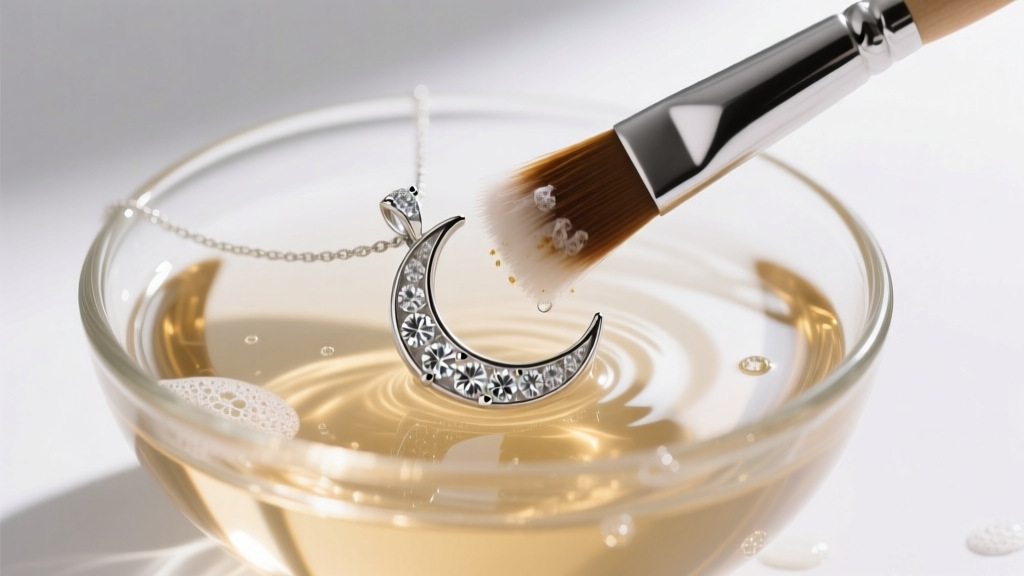
Do not use tap water, as the mineral content will leave microscopic calcium spots on your diamonds. Instead, mix one part mild, ammonia-free liquid dish soap (such as original blue Dawn) with six parts warm distilled water in a small glass bowl. The distilled water ensures a spot-free rinse, while the mild surfactants break down the lipophilic oils clinging to the diamonds.
Step 2: The Soak
Place your necklace in the solution and let it soak for exactly 15 to 20 minutes. This allows the surfactants to penetrate the tight spaces beneath the crescent curve and loosen hardened lotions and dead skin cells trapped in the pavilion galleries.
Step 3: Targeted Agitation
Remove the necklace and use an extra-soft baby toothbrush (bristle diameter under 0.1mm) or a specialized jewelry brush. Gently brush the diamonds, paying special attention to the back of the pendant where the setting baskets are located. Brush in a circular motion, moving from the center of the crescent outward toward the tapered tips. Caution: Do not apply heavy pressure on pavé beads, as aggressive brushing can wear down the soft metal over time.
Step 4: The Rinse and Dry
Rinse the necklace thoroughly under a gentle stream of lukewarm distilled water. Ensure the drain is securely plugged. Pat the piece dry with a clean, lint-free microfiber cloth. Avoid using paper towels or tissue paper, as the wood fibers can scratch high-polish gold or platinum and leave behind microscopic lint that clings to the diamond girdles.
Strategic Storage for Curved Pendants
The crescent moon shape is inherently prone to tangling and snagging. The inward curve can easily hook onto the links of neighboring chains, while the sharp, tapered tips can scratch softer jewelry pieces or bend if crushed in a crowded jewelry box.
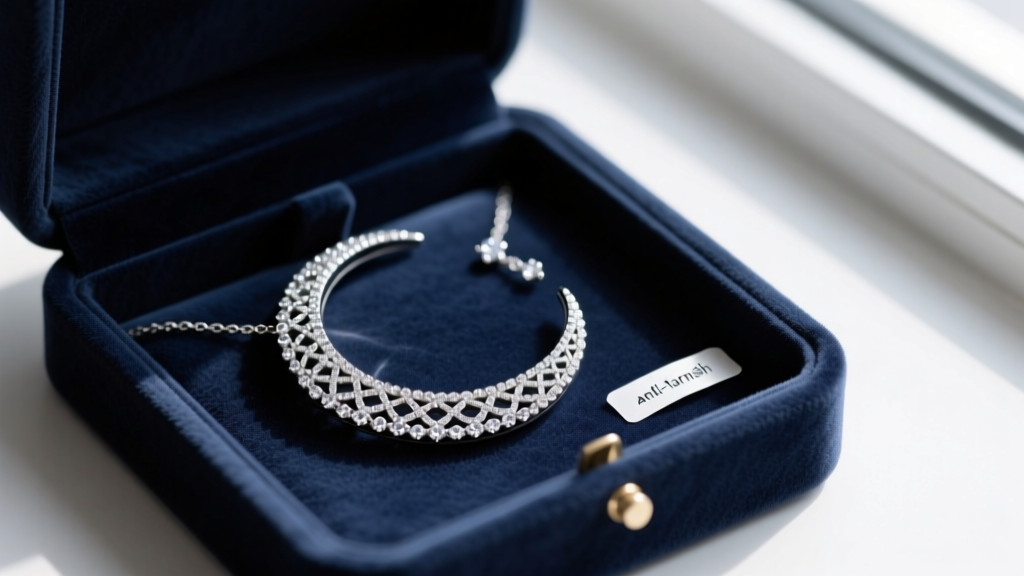
To preserve the structural integrity of your diamond crescent moon necklace, store it in an individual, soft-lined compartment. If you must travel with it, utilize the 'straw trick' to prevent chain knotting: thread one end of the chain through a clean plastic straw and clasp it. This keeps the chain rigid and prevents the pendant from swinging freely and catching on other items. Additionally, place a 3M anti-tarnish strip inside your jewelry box or travel pouch. While diamonds do not tarnish, the alloy metals in 14k and 18k gold (like copper and silver) react with sulfur in the air, leading to surface oxidation that dulls the metal's reflectivity.
When to Seek Professional Maintenance
Even with meticulous at-home care, a diamond crescent moon necklace requires professional oversight. Because the crescent shape experiences uneven tension—especially at the tips where the chain attaches to the bail or where the curve terminates—the prongs in these high-stress zones are more likely to loosen over time.
You should take your necklace to a certified bench jeweler every 6 to 12 months. They will use a 10x jeweler's loupe to inspect the prongs and pavé beads for micro-fractures or lifting. Furthermore, a professional can perform a controlled, low-frequency ultrasonic cleaning combined with a high-pressure steam blast, which safely removes calcified debris from the deepest recesses of the setting baskets that your at-home brush simply cannot reach. By combining this expert maintenance with your rigorous daily care routine, your celestial pendant will retain its brilliance and structural security for generations.


