How to Clean and Care for Your Dyrberg Kern Chain Necklace
Learn expert tips to clean, store, and maintain your Dyrberg Kern chain necklace. Prevent tarnish and protect plating with our detailed care guide.

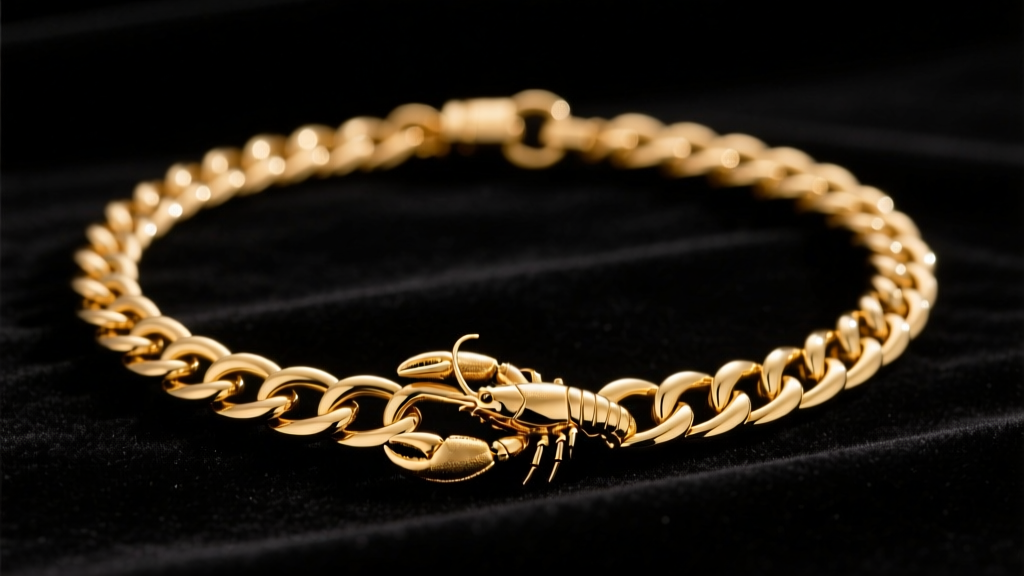
Understanding the Anatomy of Your Dyrberg Kern Chain Necklace
Dyrberg/Kern is celebrated globally for its fashion-forward, accessible luxury jewelry. However, to properly care for a dyrberg kern chain necklace, you must first understand its material composition. Unlike solid 14k or 18k gold chains, Dyrberg/Kern pieces typically utilize a high-quality brass or stainless steel base metal. This base is then electroplated with a microscopic layer of 18k gold, rose gold, or rhodium (for silver-tone pieces), often finished with hand-set cubic zirconia, Swarovski crystals, or cold enamel accents.
The plating thickness on premium fashion jewelry generally ranges between 0.5 to 1.5 microns. For context, the Jewelers of America notes that heavy gold electroplate must be at least 2.5 microns thick. Because your Dyrberg/Kern necklace features a thinner, more delicate micron layer, aggressive polishing or chemical dips will strip the finish entirely, exposing the raw brass beneath. Therefore, maintenance requires a gentle, chemistry-conscious approach.
The Science of Plating Wear and Tarnish
Tarnish is not a defect; it is a natural chemical reaction. When the brass base (an alloy of copper and zinc) is exposed to moisture, oxygen, and the sulfur compounds present in human sweat, it begins to oxidize. This creates cupric oxide, which manifests as a greenish-black film. If the gold or rhodium plating on your dyrberg kern chain necklace develops micro-scratches from daily friction, moisture can penetrate the barrier and trigger this oxidation process from the inside out.
Furthermore, galvanic corrosion can occur if you store your gold-plated Dyrberg/Kern necklace touching a silver-plated piece in a humid environment. The dissimilar metals create a tiny galvanic cell, accelerating the degradation of both finishes. Understanding this science is the first step in preserving your jewelry's brilliance.
Step-by-Step Cleaning Guide
The Gemological Institute of America (GIA) emphasizes that different materials require vastly different cleaning protocols. What works for a solid diamond tennis bracelet will destroy a plated fashion chain. Follow these specific methods for your necklace.
The Dry Polish Method (Routine Maintenance)
For weekly upkeep, avoid liquid cleaners entirely. Instead, use an untreated, unbleached microfiber jewelry cloth. Gently glide the cloth along the chain links, applying zero downward pressure. The goal is to remove surface oils and skin acids before they can etch into the plating. Never use a standard silver polishing cloth, as these are impregnated with harsh abrasives like calcium carbonate or aluminum oxide that will instantly scour away 1-micron gold plating.
The Mild Soap Bath (Deep Cleaning)
If your necklace has accumulated stubborn grime or lotion buildup in the link crevices, a wet clean is necessary.
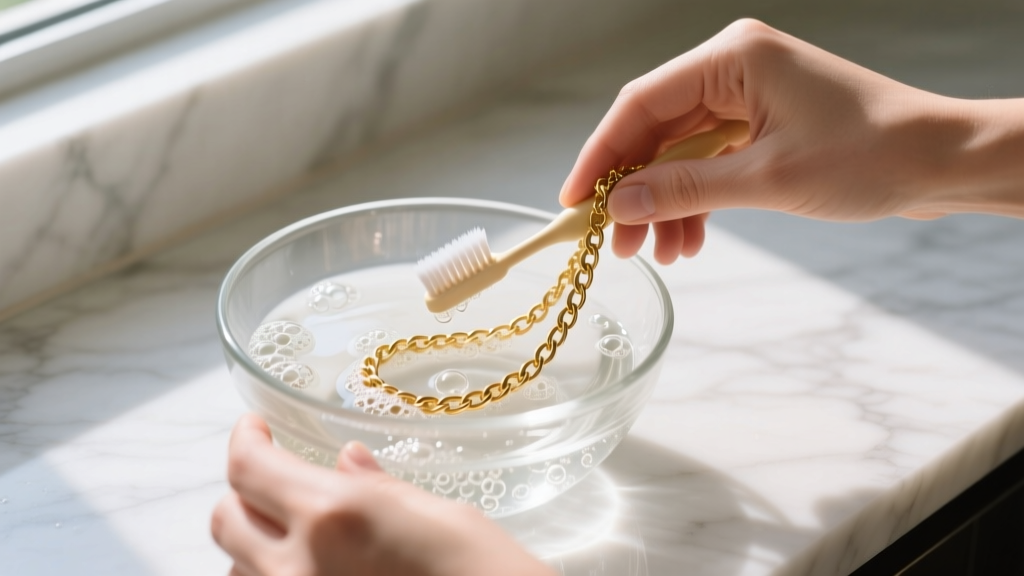
- Prepare the Solution: Fill a small glass bowl with lukewarm (never hot) water and add a single drop of pH-neutral, fragrance-free dish soap.
- Soak Briefly: Submerge the dyrberg kern chain necklace for a maximum of 3 minutes. Prolonged water exposure can weaken the adhesive used in crystal settings.
- Agitate Gently: Use an extra-soft baby toothbrush (with 0.1mm bristles) to lightly sweep the crevices of the chain links and the back of the clasp.
- Rinse and Dry: Rinse under a gentle stream of distilled water to prevent hard water spots. Pat dry immediately with a lint-free microfiber towel, then lay flat on a dry paper towel for 2 hours to ensure all moisture evaporates from the clasp spring.
Chemical and Physical Hazards to Avoid
To protect the structural integrity and visual appeal of your necklace, you must actively avoid specific environmental hazards. The table below outlines common substances and their exact effects on your jewelry.
| Common Hazard | Effect on Metal Plating | Effect on Crystals & Enamel |
|---|---|---|
| Chlorine (Pools/Spas) | Causes rapid oxidation and irreversible pitting on brass bases | Etches and permanently dulls crystal facets |
| Perfume & Hairspray | Creates a sticky film that accelerates plating wear from friction | Clouds enamel finishes and traps dirt on cubic zirconia |
| Human Sweat (pH 4.5-7.0) | Lactic acid breaks down rhodium and gold plating over time | Traps corrosive salts deep inside link crevices |
| Silver Dip Cleaners | Strips gold plating entirely, leaving raw, tarnished brass | Can fracture delicate crystal settings and strip foil backs |
Pro-Tip: Always follow the "Last On, First Off" rule. Put your dyrberg kern chain necklace on after your perfume, lotion, and hairspray have completely dried, and take it off immediately upon returning home to minimize chemical exposure.
Proper Storage Techniques to Prevent Tangling and Tarnish
How you store your necklace is just as critical as how you clean it. Tossing a delicate chain into a communal jewelry box guarantees two things: micro-scratches from harder gemstones and severe tangling.
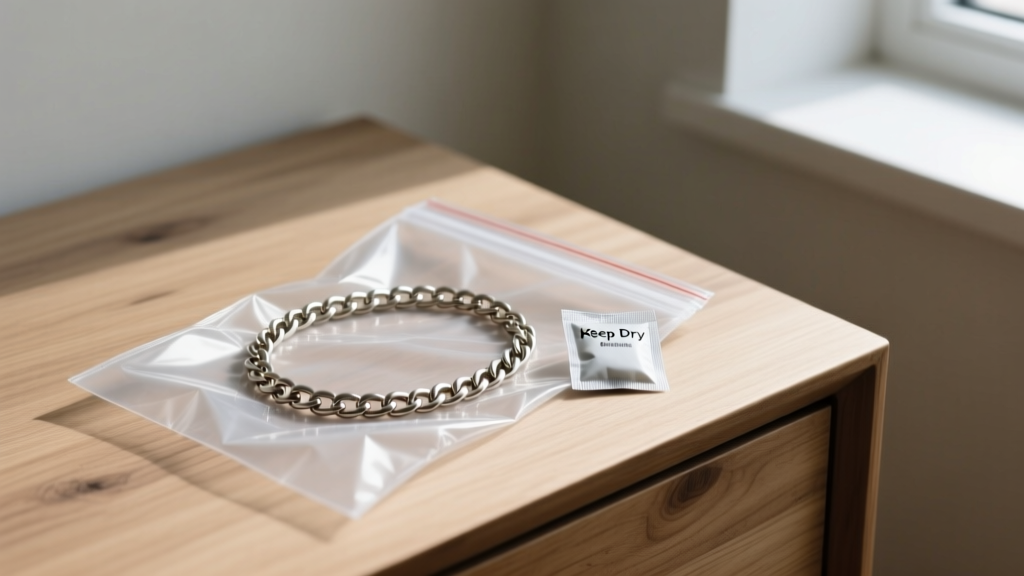
To prevent link stretching (creep deformation), never hang heavy pendant necklaces on thin chains. Instead, store them flat. Place your necklace inside an individual polyethylene zip-lock bag. Polyethylene is chemically inert and does not off-gas sulfur compounds like some PVC plastics do. For maximum protection, drop a 3M anti-tarnish strip and a small silica gel desiccant packet into the bag. The strip will absorb ambient sulfur, while the silica gel will eliminate the humidity required for cupric oxide to form.
Troubleshooting Common Maintenance Issues
Even with meticulous care, fashion jewelry can experience minor mechanical or aesthetic issues. Here is how to troubleshoot them like a professional bench jeweler:
- Stiff Lobster Clasp: If the clasp lever becomes difficult to pull back, do not use WD-40. The solvents in standard lubricants will dissolve cold enamel and degrade crystal adhesives. Instead, use a toothpick to apply a microscopic drop of pure mineral oil directly to the clasp spring mechanism. Work the lever back and forth until smooth, then wipe away excess oil.
- Cloudy Cubic Zirconia: CZ is highly refractive but prone to holding grease. If your crystals look dull, dip a cotton swab in 90% isopropyl alcohol and gently wipe the surface of the stones. The alcohol cuts through sebum and evaporates instantly without damaging the metal plating.
- Chain Kinks and Bends: If a link bends out of shape, do not pull it with your fingers, as the brass base is malleable and will snap if fatigued. Use two pairs of smooth-jawed nylon pliers to gently coax the link back into its original oval shape.
Final Thoughts on Longevity
A dyrberg kern chain necklace is a versatile, beautiful accessory that bridges the gap between high fashion and everyday wear. By respecting the delicate micron plating, avoiding harsh chemical exposures, and utilizing proper polyethylene storage, you can easily extend the lifespan of your piece from a single season to several years of reliable elegance. Treat your jewelry with the precision it deserves, and it will continue to elevate your wardrobe for years to come.


