Ultimate Care Guide for Your Enamel and Metal Necklace Badge
Learn expert techniques to clean, polish, and store your necklace badge. Protect enamel finishes and prevent metal tarnish with our detailed care guide.

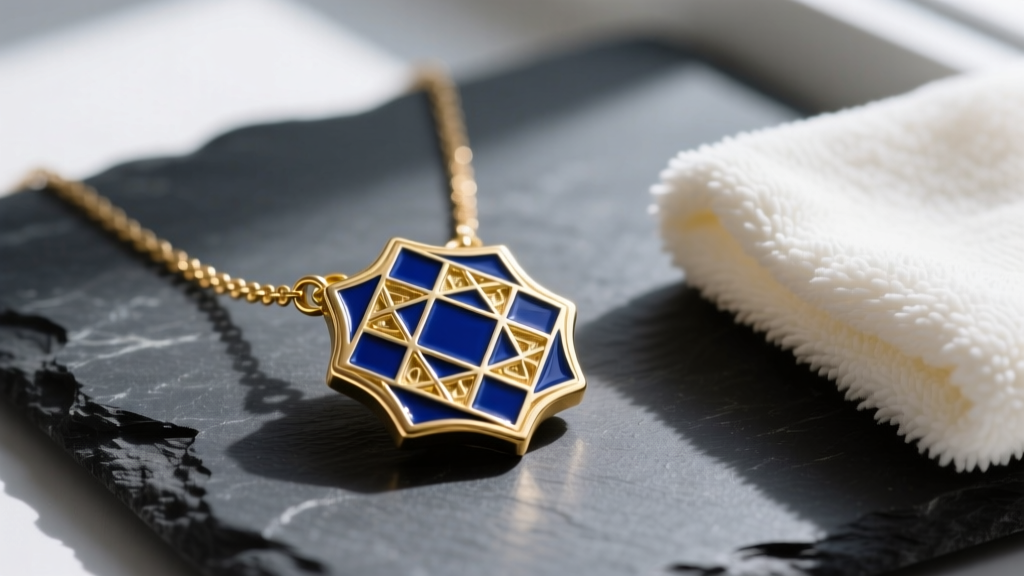
A necklace badge is more than just a piece of jewelry; it is often a symbol of achievement, affiliation, or personal expression. Whether you wear a vintage military dog tag, a custom hard-enamel lapel pin converted into a pendant, or a prestigious scout badge on a chain, these pieces require specialized care. Unlike standard gemstone pendants, a necklace badge typically combines base metals, precious metal plating, and delicate enamel or epoxy resin fills. This complex material matrix makes cleaning and maintenance a nuanced process. In this comprehensive guide, we will explore the metallurgy of badge pendants, outline a safe step-by-step cleaning routine, and provide long-term storage solutions to keep your necklace badge pristine for decades.
Understanding Your Necklace Badge Materials
Before applying any cleaning solution, you must identify the materials used in your necklace badge. The cleaning protocol for solid 925 sterling silver differs vastly from that of a zinc-alloy badge with gold flash plating and soft enamel fills.
- Hard Enamel (Cloisonné): The enamel is polished flush with the metal lines (cloisons). It is highly durable, scratch-resistant, and can withstand gentle polishing.
- Soft Enamel: The enamel sits recessed below the metal ridges. Dirt easily accumulates in these grooves, and the enamel itself is softer and more prone to chipping if scrubbed aggressively.
- Epoxy Resin Coatings: Many modern or mass-produced badge pendants use a clear epoxy resin dome over printed graphics. This resin yellows under UV exposure and can be permanently clouded by alcohol-based cleaners.
- Base Metals & Plating: Brass, copper, and zinc alloys are common bases. They are usually plated with gold, silver, or nickel. Once the thin plating wears off, the base metal oxidizes rapidly, turning your skin green and the badge dark.
According to the Gemological Institute of America (GIA), understanding the specific surface treatments and base metals of your jewelry is the critical first step in preventing irreversible chemical damage during home cleaning.
Step-by-Step Cleaning Routine for Metal and Enamel
To safely remove sebum, dead skin cells, and environmental grime from your necklace badge, follow this conservative, non-destructive cleaning method.
1. The Dry Dusting Phase
Never apply liquid to a dusty badge, as this creates an abrasive mud that can micro-scratch gold plating and dull epoxy resin. Use a clean, dry makeup brush or a specialized jewelry dusting brush to sweep out the recessed grooves of soft enamel badges.
2. The pH-Neutral Wash
Mix three drops of pH-neutral, lotion-free dish soap (such as original Dawn) into a bowl of lukewarm distilled water. Tap water contains chlorine and dissolved minerals that can leave hard water spots on high-polish metal ridges. Submerge the badge for no more than 3 to 5 minutes. Prolonged soaking can weaken the adhesive backing on glued-in rhinestones or compromise the epoxy seal.
3. Targeted Agitation
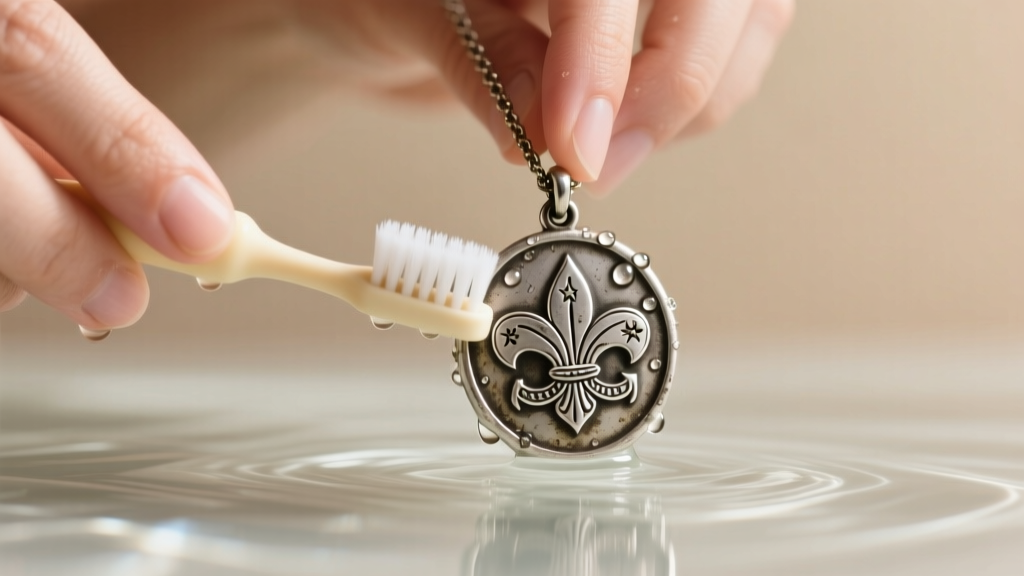 Using an extra-soft baby toothbrush, gently agitate the soapy water over the metal lines and inside the enamel grooves. Apply zero downward pressure; let the bristles do the work. For stubborn grime in deep recesses, use a wooden toothpick—never a metal needle or safety pin, which will permanently gouge soft enamel and scratch plating.
4. Rinsing and Drying
Rinse the badge under a gentle stream of lukewarm distilled water. Immediately pat it dry with a lint-free microfiber cloth. Do not air dry, as water spots will form on the metal. Use a hairdryer on the 'cool' setting to blow moisture out of the jump ring and bail connections, preventing hidden rust.
Cleaning Agents to Strictly Avoid
The internet is full of DIY jewelry cleaning hacks that will destroy a necklace badge. Avoid the following at all costs:
- Baking Soda and Aluminum Foil: While this electrochemical reaction works wonders for solid tarnished silver, it will strip the antique oxidized patina from the recessed grooves of a badge, ruining its contrast, and can cloud epoxy resin.
- Silver Dip Solutions: These contain harsh thiourea compounds that will instantly discolor soft enamel and degrade the adhesive holding the badge components together.
- Toothpaste: Toothpaste contains silica abrasives designed to strip plaque from teeth. On a gold-plated necklace badge, toothpaste will strip the plating right down to the base brass in seconds.
- Isopropyl Alcohol: Alcohol will dissolve the protective clear coat on painted badges and cause epoxy resin domes to craze and turn milky white.
Polishing and Restoring Shine Without Scratching
Over time, the raised metal ridges of your necklace badge will lose their luster due to friction against clothing and skin oils. To restore the shine, you must use the correct polishing medium. The Victoria and Albert Museum (V&A) advises extreme caution when polishing enameled metals, noting that abrasive polishes can easily become embedded in the porous enamel, causing permanent discoloration.
For gold-plated or silver-plated badges, use a treated jewelry polishing cloth (such as a Sunshine Cloth). These cloths are impregnated with microscopic jeweler's rouge that gently lifts tarnish without scratching. Fold the cloth and pinch the raised metal lines, rubbing back and forth. Never rub the cloth directly over soft enamel, as the embedded polishing compounds will leave a hazy, white film in the recesses that is nearly impossible to remove.
If your badge is solid sterling silver (not plated) and heavily tarnished, you can use a high-quality silver polish cream. Apply it with a cotton swab strictly to the metal areas, avoiding the enamel entirely, and buff it off immediately with a clean microfiber towel.
Proper Storage to Prevent Tarnish and Enamel Chips
How you store your necklace badge when it is not being worn dictates its lifespan. The primary enemies of badge pendants are humidity, airborne sulfur (which causes silver and copper to tarnish), and mechanical friction.
| Storage Method | Best For | Pros | Cons |
|---|---|---|---|
| Individual Microfiber Pouch | Hard Enamel & Solid Metals | Prevents scratching; allows metal to breathe slightly. | Does not stop airborne tarnish. |
| Airtight Ziploc with Silica Gel | Plated Badges & Epoxy Resin | Blocks humidity; prevents plating oxidation and resin yellowing. | Silica gel must be replaced every 6 months. |
| Anti-Tarnish Tab Enclosure | Sterling Silver & Copper Bases | Actively absorbs sulfur gases; keeps metal bright for up to a year. | Tabs lose efficacy and must be replaced annually. |
| Open Jewelry Tree / Stand | None | Easy access. | Exposes badge to dust, UV light, and airborne sulfur; guarantees tarnish. |
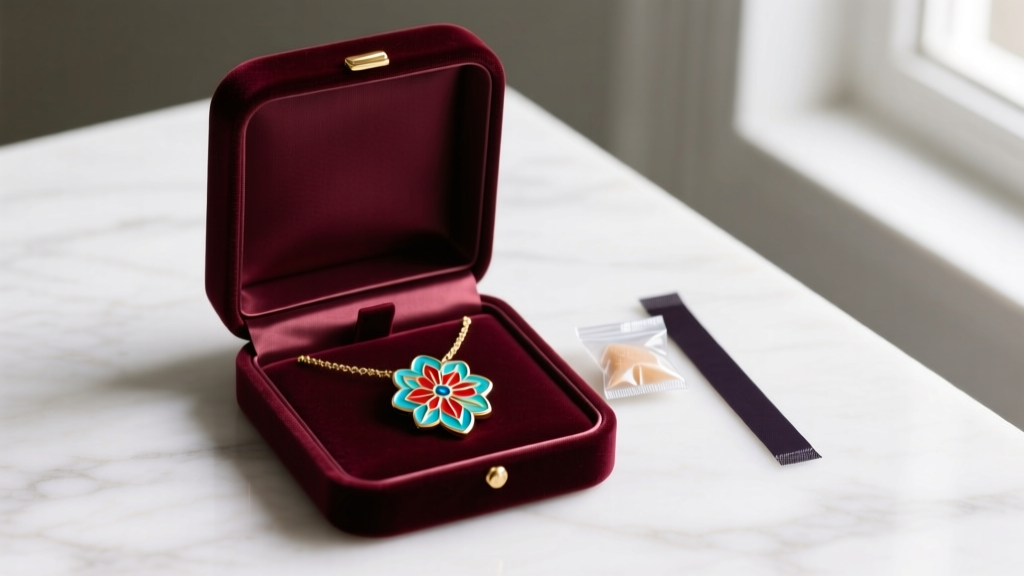 Always unclasp the chain and store the badge pendant separately from your other jewelry. The sharp metal edges or the bail of another necklace can easily chip the enamel or scratch the epoxy dome of your badge if they are tossed into a communal jewelry box.
Troubleshooting Common Necklace Badge Issues
The Bail or Jump Ring Keeps Bending
Badge pendants are often heavier than standard gemstone drops. If the chain you are using is thick or heavy, the constant swinging creates torsion stress on the small jump ring connecting the badge to the chain. Over time, the jump ring will pull apart, and you will lose the badge. The Fix: Take the badge to a jeweler and ask them to replace the standard split jump ring with a soldered closed jump ring or a heavy-duty oval cable link. This eliminates the weak point where the metal splits.
The Base Metal is Turning My Skin Green
If your necklace badge is made of brass or copper and the plating has worn through on the back, the acids in your sweat will react with the copper, creating copper chloride (the green stain). The Fix: Clean the back of the badge thoroughly with alcohol, let it dry completely, and apply two thin coats of clear, hypoallergenic nail polish or a specialized jewelry shield coating. This creates an invisible barrier between the reactive base metal and your skin. Reapply every few months as the coating wears off from friction.
Soft Enamel is Chipping or Flaking
Soft enamel is essentially a hardened acrylic or epoxy paint. If it is chipping, it means the adhesive bond to the metal base has failed, usually due to impact or exposure to extreme heat (like leaving the badge on a car dashboard in the sun). The Fix: Do not attempt to glue the chip back in place; cyanoacrylate (Super Glue) will fog the surrounding enamel. Instead, carefully use a wooden toothpick to gently flake away any loose, lifting edges so they don't catch on your clothing. For valuable or sentimental badges, consult a professional lapel pin manufacturer or a specialized jewelry conservator who can carefully clean the recess and refill it with color-matched cold enamel resin.
Conclusion
A necklace badge is a unique intersection of metallurgy, artistry, and personal history. By understanding the specific materials of your piece—whether it features delicate soft enamel, durable hard cloisonné, or a protective epoxy dome—you can tailor your cleaning approach to avoid catastrophic damage. Stick to pH-neutral soaps, extra-soft brushes, and targeted polishing cloths. When combined with proper, low-humidity storage utilizing anti-tarnish technology, your necklace badge will remain a vibrant, striking centerpiece in your jewelry collection for a lifetime.


